
For the House-Buying Power of 26 Years Ago, The Average Kiwi Wage Would Have to Be $79.25/hr Today

Housing is commonly left out of inflation measures, which is why low inflation rates are always reported. Unfortunately for Kiwis, the reality is that housing costs make up a large and ever-growing proportion of our expenses. This study will show that the average house-buying power of the average Kiwi worker is less than 40% of what it was 26 years ago.

The average house price in New Zealand on the 31st of January 1992 was $105,000, according to Real Estate Institute of New Zealand figures. This is as far back as figures go – 26 years. The average wage in New Zealand was $14.72 in the first quarter of 1992, according to Trading Economics. Assuming a 40-hour workweek, this works out to an average weekly wage of $588.80.

If a person saved 50% of their average wage in 1992, they would save $294.40 a week, which would be $15,351 per year. This would allow that person to buy the average New Zealand house after 6.84 years. So a person who completed university at the end of 1991, at age 21, and got a job at the average wage with their Bachelor’s degree, could expect to own an average house, mortgage-free, before age 30.

Saving half of one’s income is some feat, however, especially if one also has to pay rent or a mortgage. Saving 25% of the average wage, a more attainable proportion, would see a person in 1992 save $147.20 a week. This would be $7675 per year, which makes the average house attainable after 13.68 years.

Still, that means that in 1992, anyone who was willing and able to work at the average wage could own their own house outright within 13.68 years if they could only save a quarter of their income. This means by age 35 if they graduated from university at age 21 and saved a quarter of their income after then. Easy times.

In 2018, things are very different. The average wage has now gone up to $31.08 by the second quarter of 2018, but the average house price has jumped to $560,000 in those 26 years.

Using the example above, a person who qualified from university at the end of 2017 at age 21, and who immediately got a job at the average wage, would earn $1,243.20 per week. 25% of this is $310.80, which works out to $16,206 per year. Because the average house price is now $560,000 in New Zealand, that means that the average Kiwi worker now has to work for 34.56 years before they can expect to own their own house outright.

This means that the average Kiwi in 2018, even if they graduated at age 21 straight into an average wage and saved 25% of their income perpetually, still couldn’t afford to own the average house freehold until age 55, whereas such a thing was attainable 26 years ago by age 35. The middle-class dream is now dead in New Zealand. Kiwis are now tenants in what used to be our own country, enslaved by capital.

Another way of looking at this grim equation is that the average wage in 2018 has a mere 39.6% of the average-house-buying power that the average wage had in 1992. Even a person who managed to save 50% of the average wage from age 21 – a frankly incredible feat in today’s economy – couldn’t own the average house until age 39.

To correct this imbalance, the average wage would have to rise 155%, from $31.08 to $79.25. This is the cold, hard maths of our situation: the average wage would have to be almost $80 to give the average Kiwi worker the same chance of owning the average home as in 1992.

Note that an average wage of $79.25 an hour would represent no change in wealth from 1992. Even with an average wage that high, we would still have no more average-house-buying power than the average wage did in 1992. All of the benefits of the last 26 years of technological and logistical advances would go to their creators and the capital that financed them.

$79.25 is what the average Kiwi worker would have to make per hour today, in order to have the same average-house-buying power as they would have had in 1992. If the average worker got a share of that, the average wage would be over $100 per hour.

Note also that it’s much harder to get a job paying the average wage at age 21 now, compared to 1992. A Bachelor’s degree is no longer the mark of excellence that it was in the mid 1990s – now one needs a Master’s degree to be at that level, which means two more years of no earnings and borrowed money. Moreover, the open borders of neoliberalism mean that you now have to compete with half of the planet just to get that one job.

Note thirdly that $560,000 is the average New Zealand price and is no way representative of Auckland or even Christchurch or Wellington. If you want to buy an average house in a relatively major centre you will be looking at paying even more than $560,000.

In summary, the Baby Boomers of New Zealand have subjected Generation X and the Millenials to what can only be described as intergenerational rape.

*

If you enjoyed reading this essay, you can get a compilation of the Best VJMP Essays and Articles of 2017 from Amazon for Kindle or Amazon for CreateSpace (for international readers), or TradeMe (for Kiwis).

Writing Dependent Personality Disorder

Dependent Personality Disorder (DPD) is a condition characterised by an extreme emotional dependence on other people. It’s usually a long=term condition that makes it much harder to live an ordinary life, and is slightly more common among women and young adults. This article looks at how to accurately write about characters with Dependent Personality Disorder.

People who have DPD have extreme difficulty making decisions on their own on account of their dependence on other people. They tend to lack the self-confidence to back their own instincts and their own decision making. They are rarely certain that they have made a good decision, unless someone else gives it their approval. This approval they constantly seek, and they constantly act to avoid disapproval.

DPD is a Cluster C Personality Disorder, which means that fear and anxiety are ever-present features of it. In this case, the fear and anxiety primarily relates to making wrong decisions. For whatever reason, people with DPD don’t learn that no-one on this planet really knows what they’re doing and that their decisions are usually as good as anyone else’s. Dependent personalities have a strong desire to have someone else give the “stamp of approval” to their behaviours and actions.

If the protagonist of your story encounters a character with DPD, they might perceive that second character as childish, even infantile. Many of their mannerisms will be the same as young children who are yet to learn the boundaries of social behaviour. A common example is when they make a joke but become afraid that it was a social error until someone else laughs, at which point they do too.

This can be frustrating if the protagonist has to get the character with DPD to take adult responsibilities and to be independent. The condition is especially challenging since the harder someone pressures a person with DPD to take responsibility, the more anxious they will become, and consequently the more dependent. The protagonist will have to know patience to succeed, and if they don’t know if they have to learn.

Your protagonist might be resented by a DPD character if that character feels the protagonist is not approving enough. It’s common for people to think disparagingly of someone with DPD because they see dependency as weak and craven. This timidity can breed resentment, so that a character with DPD might easily feel themselves slighted and wish to take revenge. Passive-aggressive behaviour is a common feature.

A protagonist who has DPD themselves probably lives a life of extreme anxiety. Because so many decisions are made in everyday life, a protagonist with DPD will almost certainly have a lot of difficulty living one. They will have great difficulty getting projects or activities started, because they are too dependent on what other people think to take the initiative themselves.

This is especially the case when a person with DPD has to be examined by an authority figure. If a protagonist with DPD has to, for example, sit a driver’s licence test, it’s common for them to work themselves into a state of panic beforehand, thinking about the possibility of making a mistake and earning the instructor’s disapproval. Passing through international customs is also a great trial. Both of these situations induce far more anxiety in someone with DPD than in a person without the condition.

If your protagonist has this condition, they might find it extremely difficult to ask for their rights if they are being taken advantage of. A character with DPD might be so afraid of disapproval from their boss that they don’t seek to enforce their rights, and standing up to one’s parents is out of the question (unless one is really pushed too far). They might also take measures to ensure that they are never alone, because this requires that one think for oneself.

People with this condition tend to be highly motivated to seek out and maintain relationships with people they consider protectors or caregivers. A protagonist who is acting along these lines might find that pledging their allegiance to a leader of some kind alleviates much of their anxiety about not making correct decisions, for good or for ill.

DPD patients usually have a perception of themselves as powerless or incapable of anything, which might betray a life story of having been treated in that manner by authority figures. Mirroring this is a perception of other people as all-powerful and infinitely capable. This is not simply the same as low self-esteem, because DPD doesn’t tend to come with the bitterness and resentment that characterises a poor self-image.

As with many of the conditions in this book, there is believed to be a considerable link between early childhood abuse or neglect and later development of DPD. In particular, it is thought that parenting styles with too much overprotectiveness or authoritarianism correlate with having the condition. Overprotective parents might prevent a child from exposing themselves to danger and therefore from learning that they are capable of overcoming it, whereas authoritarians might create a sense of learned helplessness.

*

This article is an excerpt from Writing With The DSM-V (Writing With Psychology Book 5), edited by Vince McLeod and due for release by VJM Publishing in the summer of 2018/19.

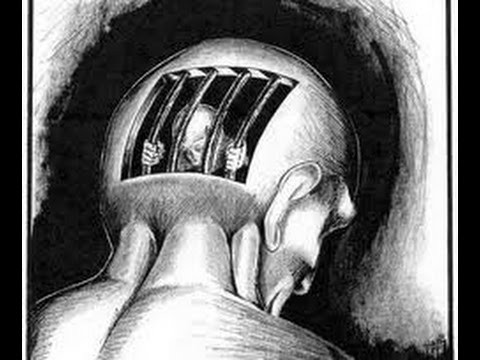
The Four Ways to Become Enslaved

Chains can be physical, mental, or spiritual

There are many different ways that a person can become enslaved to the will of another or to a group of others. Although people usually associate the term ‘slavery’ with the chattel slavery of the American South, there are as many different kinds of slavery in the human world as there are ways of exploitation in the natural world. This essay describes four distinct ways of being enslaved that accord with the four masculine elements.

The four ways to enslave are, effectively, the four different ways of introducing artificial scarcity. Only when a state of artificial scarcity has been induced will another person surrender themselves to the will of another. There are effectively four ways of doing so: two physical, two non-physical.

The most basic way of asserting dominance over another of your own kind can be observed in other mammals, especially other primates, when they fight over their food supply. To enslave another person in this sense is to deny them the peace and solitude to gather food from nature. The alpha primate will not allow any others to eat until he himself is satisfied. Disobedience is punished with violence.

To be enslaved in this manner is to wear chains of clay. This is because a lack of food is the most natural and immediate survival problem that faces life forms such as mammals, primates or humans. To not be able to eat when one needs to nourish oneself is slavery, because hunger will cause one to grow weak.

Chains of iron are what most people think when they hear the term ‘slavery’. This refers to iron manicles and shackles that prevent or hinder movement when fastened around a person’s wrists or ankles. It’s extremely rare to see a person enslaved by chains of iron nowadays, but it’s still common to see people who are more or less enslaved in the same way as a person wearing irons – i.e. by an artificial scarcity of security in that person.

What chains of iron refers to on a metaphysical level is control of another person’s physical safety, and their ability to remain free from wounding and physical harm. This is effectively how criminal gangs establish a presence in a neighbourhood – business owners are guaranteed physical security for them and for their business, but only if those business owners agree to pay for the “service”.

Chains of silver are frequently used metaphorically, usually to denote a person who has been enslaved by wealth. A person who has allowed themselves to become controlled by the physical objects and possessions they have hoarded could indeed be said to be enslaved by chains of silver, but there’s more to it than just that. Metaphysically, chains of silver refers to all tricks of the mind, which is all lesser magic.

In other words, chains of silver refer to an artificial scarcity of knowledge, in particular knowledge relating to the physical world. A person who has thousands of dollars in credit card debt that they can never clear, so that the bank regularly takes a hundred dollars in interest charges every month, just because they bought some crap they saw on television, could be said to wear chains of silver. In this case the term refers to the financial literacy needed to avoid debt traps like credit cards.

Likewise, a person trapped in a political ideology could be said to wear chains of silver. If a person’s social circle all think in a certain way, and their media organs all speak in the same way, and their courts and Police enforce it, a person might forget that there’s any other way of thinking. Many English speakers are subjected to so much capitalist propaganda that they are astonished, travelling overseas, to see other avenues of solidarity.

Very few people are enslaved by chains of clay and iron nowadays, and although most of us wear chains of silver to some extent, they are seldom a heavy burden.

However, the vast majority of people are enslaved by chains of gold, and many of those are so enfeebled by these gossamer bonds that the other forms of enslavement become virtually inevitable. A person enslaved by chains of gold is someone who is not aware of the fact that consciousness is the prima materia, and who consequently believes that the death of their brain means the extermination of their consciousness.

Chains of gold, therefore, refer to an absence of spiritual knowledge. It is the birthright of all humans to be made aware of the true nature of the relationship between consciousness and the physical world, and therefore anyone who does not possess that knowledge has been enslaved by chains of gold. This is something that has purposefully been done to enslave us by way of destroying our natural spiritual traditions, for example by prohibiting entheogen use.

Gold is the softest of all metals, and fittingly, chains of gold are also the weakest. This does not mean that they are the easiest to break. In fact, the opposite is true. These chains of gold are the trickiest of all, and not just because they are invisible. Those who wear them cannot conceive of them, by any sense. A person enslaved by chains of gold cannot be induced to believe in God.

A person enslaved by chains of gold will not believe in God, and consequently they will not believe in chains of gold. No-one enslaved by chains of gold is aware of it; as soon as a person becomes aware of chains of gold they are broken.

It could be argued that a person can only be enslaved with baser elements if they are first tricked into wearing chains of gold. For instance, a spiritual person might be better able to resist the temptation of loaning some money to satisfy a short-term urge. They might also be unafraid of death, and therefore willing to choose death before submitting to chains of iron.

Alchemically speaking, these are the four ways that a person can be enslaved. Although chains made of the baser forms of clay and iron are rare in the modern world, it’s important to remember their historical role, because a return to them is possible if we get weighed down enough by chains of silver and gold.

*

If you enjoyed reading this essay, you can get a compilation of the Best VJMP Essays and Articles of 2017 from Amazon for Kindle or Amazon for CreateSpace (for international readers), or TradeMe (for Kiwis).

Writing Schizotypal Personality Disorder

Frequently confused with schizophrenia, Schizotypal Personality Disorder (STPD) is a schizophrenia spectrum disorder that manifests as an extremely odd or eccentric personality type, with strong social anxiety and unpopular beliefs. The characteristic feature of it is an unwillingness or inability to engage in close social bonds such as friendships. This article looks at how to write engaging and believable characters with STPD.

The concept of a “schizophrenia spectrum” is relatively new and the precise boundaries between the various stages on this spectrum are not yet perfectly clear. One way of thinking of STPD is as a less debilitating and destructive form of schizophrenia. STPD is a Cluster A personality disorder, which means that people with the condition broadly come across as odd or eccentric, but not particularly dangerous or anxious.

Despite affecting around 3% of the population (and a higher percentage in males), so that almost everyone will have met someone with it, STPD is not a well-known condition. A character with STPD might be conspicuous on account of odd habits when it comes to speech or dress. They might mumble and speak vaguely and imprecisely, and they might wear highly unfashionable clothing or styles of clothing without thinking it amiss.

Some theories consider that there are two different forms of schizotypal personality disorder, one which is passive and one which is active. These are called insipid and timorous schizotypy.

If the protagonist of your story encounters an insipid schizotypal person, they might have difficulty with that person’s strange and absent way of being. Sometimes this sort of schizotypy can come across as vacant, as if the person inside was without emotion. If your protagonist is not a worldly type they might mistake a character with STPD for being on heavy drugs.

The protagonist of your story might want to make friends with a character who has a condition like this, only to be constantly frustrated. The other character might have decided as a general rule that other people don’t like them and so it’s not really worth trying to be friends with them, and so they are not interested in a friendship with your protagonist. Your protagonist might try several ways to overcome this social reticence, and may or may not succeed.

People who are timorous schizotypal are likely to create a different set of problems. This version of schizotypy is more active, which means that it is more likely to present as hostility and paranoia. Although a character with this condition is not likely to become aggressive, they are still likely to exhibit much of the suspicion, wariness and hostility that other people often mistake for aggression.

If the protagonist of your story has schizotypal personality disorder, they might find that other people can’t tell the difference between them and a schizophrenic. It is possible that a person with schizotypal personality disorder is not much different from the characters around them, but that this difference is still enough to cause their ostracisation.

As might be guessed from the above descriptions, people who have STPD often have related conditions, such as Paranoid Personality Disorder, Depression or Avoidant Personality Disorder. People with STPD are often genuinely afraid of other people and what those other people might think of them, and this can lead to them becoming paranoid about what other people are saying about them.

A person with STPD might then choose to just stay away from other people so as to not give them a reason to dislike them. A character developing this condition might find themselves discovering more and more reasons for avoiding social contact until they end up becoming a shut in.

Also very common are what are called delusions of reference. This is when a person encounters an event that they interpret as having special meaning just for them. For instance, a character with STPD might hear some advertisement on television and think it’s referring to them specifically, or they might meet a person twice on the same day by total coincidence, and mistake this for being stalked or similar.

Like many of the conditions in this book, schizotypal personality disorder is heavily correlated with early childhood abuse and neglect. There are some theories that suggest that the schizophrenia spectrum, rather than being simply a form of damage, is an adaptation, in which the person afflicted falls into chaos in the hope of reforming in a healthy way, instead of staying hard and risking becoming vicious.

For this reason, the schizotypal personality, like the schizophrenic, often feels hard done by and misunderstood. They might be aware that the usual course of action for a person who has been damaged as badly as them is to become cruel, perhaps vicious, and that their condition has in some sense prevented this. A profound sense of injustice can arise from the reality that their condition will afford a low social status.

*

This article is an excerpt from Writing With The DSM-V (Writing With Psychology Book 5), edited by Vince McLeod and due for release by VJM Publishing in the summer of 2018/19.