
This reading continues from here.
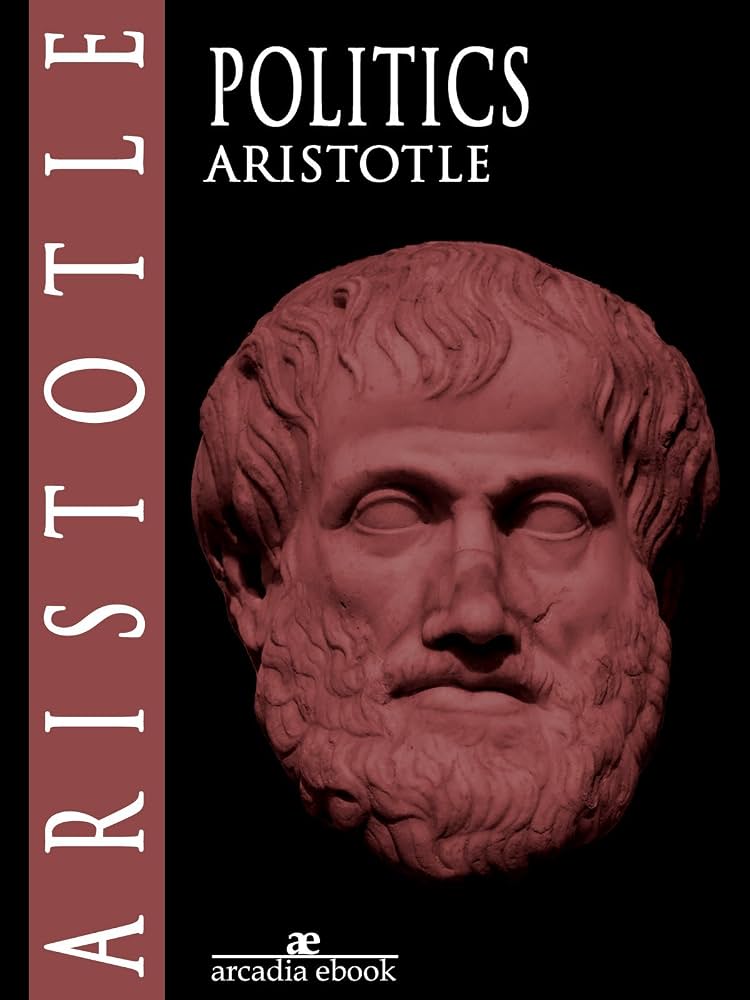
Much of this part is devoted to the question of who counts as a citizen. Speaking about a discussion that is still current 2,300 years later, Aristotle wrote “There is no general agreement on who is a citizen.” Citizenship cannot be a matter of residence, because aliens and slaves share in residence but not citizenship. The best definition of a citizen is one capable of sharing in the administration of justice and in holding office. A city is enough of such people for self-sufficiency.
Constitutions, Aristotle holds, primarily differ in terms of who has sovereignty. He believed that to work with one’s hands was servile, and that to include them in democracy is “extreme”. Manual labourers are not capable of reason to the same extent, and therefore must be excluded from decision making: “The best form of city will not make the mechanic a citizen.” The major difference between a manual labourer and a slave is that the latter works for individuals, the former for the community. Both are incapable of reason.
However, Aristotle was not the elitist that some portray him as. Everyone must take turns at being on top and on the bottom: “It is a good saying that ‘you cannot be ruler unless you have first been ruled'”. He also states that the common interest must come before that of individuals: “The good in the sphere of politics is justice, and justice consists in what tends to promote the common interest.” Barbarians tolerate despotism, Aristotle writes, because they are naturally servile.
Presaging modern mass immigration, Aristotle writes that a shortage of population makes cities expand citizenship to those they shouldn’t. This has consequences in damaging social cohesion. Tyrants are fond of doing this. Aristotle writes “Kings are guarded by the arms of their subjects; tyrants by a foreign force.”
Following on from the Nicomachean Ethics, in which Aristotle claims the meaning of life is happiness, he writes here “The good life is the chief end, both for the community as a whole and for each of us individually.” Happiness, not wealth or power, is the purpose of politics.
His theory of right and perverted constitutions is different to Plato’s. Constitutions that consider the general interest are right; those that only consider the ruling class are perverted. Either breaks down into rule by one, the few or the many. The right constitutions are monarchy if ruled by one, aristocracy if ruled by few, and polity if ruled by many. The perverted constitutions are tyranny if ruled by one, oligarchy if ruled by few and democracy if ruled by many. Here we can see that Plato and Aristotle both considered democracy a degenerate system. Aristotle writes that democracy is not in the interests of all, but in the interests of the poor. However, he also writes that cities are now so big that it’s hard for anything other than democracy to exist.
The best claim to contributing to political life comes from culture or goodness, not birth or wealth. In this sense, Aristotle is a true aristocrat, speaking for the higher and subtler qualities as opposed to the lower and baser ones.
Dispassionate people make better lawmakers, he contends, writing that “most people, as a rule, are bad judges where their own interests are concerned.”
The battle to find the right form of political system is, to a large extent, the battle over which form of superiority is recognised: “All forms alike recognise the claim of some sort of superiority, though the kind of superiority in question varies.” Some recognise superiority of goodness, others of wealth or birth, others still of sheer numbers.
*
For more of VJM’s ideas, see his work on other platforms!
For even more of VJM’s ideas, buy one of his books!
*
If you enjoyed reading this piece, buy a compilation of our best pieces from previous years!
Best VJMP Essays and Articles of 2024-25
Best VJMP Essays and Articles of 2023
Best VJMP Essays and Articles of 2022
Best VJMP Essays and Articles of 2021
Best VJMP Essays and Articles of 2020
Best VJMP Essays and Articles of 2019
Best VJMP Essays and Articles of 2018
Best VJMP Essays and Articles of 2017