
This reading continues from here.
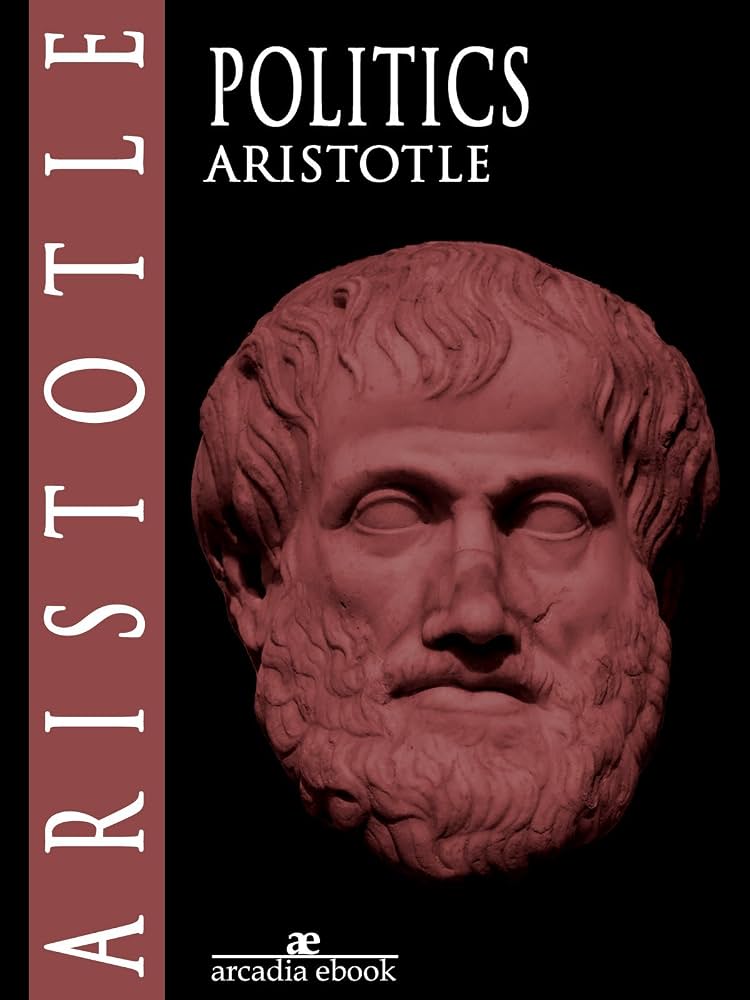
In this book, Aristotle reviews the existing forms of political constitution. Although he is not a fan of democracy, he believes that all groups of citizens must participate in office for there to be justice. The lower classes must get something if they are to support the constitution: “If the constitution is to survive, every part of the city must have a common desire for its existence.” Here also Aristotle emphasises the importance of friendship, which he calls philia, considering it the best defence against factional disputes.
This book contains one of the oldest arguments against communism. In criticising Plato’s proposal for the guardian class of Republic to keep all property in common, Aristotle writes “What is common to the greatest number gets the least amount of care.” and “those who do more work and get less of the produce will be bound to raise complaints against those who get a large reward and do little work.”
Phaleas of Chalcedon proposed the equalisation of property many centuries before Karl Marx. But equality doesn’t work, Aristotle contends, because the educated feel like they deserve more.
The best solution, according to Aristotle, is if property is private, but the owners are persuaded to share the proceeds of it through goodwill. This is primarily the job of the legislator, who achieves this by passing laws that create men disposed to sharing and not to stinginess. Correct regulation of property is also important to avoid factional conflict.
Also Aristotle only hints at this here (he assumes the reader is familiar with Nicomachean Ethics), but part of the solution to politics is spiritual: “It is more necessary to equalise people’s desires than their properties.”
The other leftist dogma to get skewered in this section is the one claiming that criminals commit crimes out of poverty and desperation. Aristotle correctly points out that many crimes are committed for fun: “The greatest crimes are committed not for the sake of necessities, but for the sake of superfluities.”
Those aren’t all of the typically right-wing arguments made herein. Aristotle also argues that changing laws in general is a tricky endeavour because people follow them out of habit. If you change the laws too much, people stop obeying the government.
As in Plato’s Republic, Aristotle agrees that selection by means is characteristic of oligarchy, whereas selection by merit is characteristic of aristocracy. There are several different ways of choosing kings and judges. In Carthage, kings were chosen by election from families that were already outstanding.
*
For more of VJM’s ideas, see his work on other platforms!
For even more of VJM’s ideas, buy one of his books!
*
If you enjoyed reading this piece, buy a compilation of our best pieces from previous years!
Best VJMP Essays and Articles of 2024-25
Best VJMP Essays and Articles of 2023
Best VJMP Essays and Articles of 2022
Best VJMP Essays and Articles of 2021
Best VJMP Essays and Articles of 2020
Best VJMP Essays and Articles of 2019
Best VJMP Essays and Articles of 2018
Best VJMP Essays and Articles of 2017