Good Riddance Jim Bolger, You Evil Bastard

I was overjoyed this week by the news that former New Zealand Prime Minister Jim Bolger finally did something decent and died. Predictably, the hagiographies have already begun to flow, the most absurd of which claiming that he was a champion of the underdog. I want to state the viewpoint from the bottom of society.

I was nine years old in 1990, when Bolger came to power. I supported National in that election because their logo was blue, and blue was my favourite colour. Some of my family voted for him because the television told them to. We soon regretted it.

Because my family was working-class, we were impacted heavily by the reforms of the Fourth National Government. My father abandoned our family when I was two, and so my mother had to raise my brother and I on welfare. This wasn’t much. When Bolger and the Fourth National got in, they gave us Ruthanasia. This involved cutting welfare support, including the Family Support, which was the difference between our family making it and not making it. The stress of balancing the household budget drove my mother into a mental institution a few months after the cuts.

The stress of my mother being in a mental institution caused my own latent psychiatric problems to break out as insomnia. This was at age nine and my nervous system is yet to recover at age 44. There are thousands – perhaps tens of thousands – of us whose lives were destroyed in such ways by Bolger and his government of neglect.

Bolger personified everything evil about Anglos in general and New Zealand in particular: titanic greed mixed with indifference to human suffering. His Fourth National Government taught me that National voters and supporters get off on cruelty. Like a child pulling the wings off a fly, causing harm to the vulnerable makes them feel powerful, and that’s why they do it and will keep doing it.

I do not hate Bolger completely, however, because he taught me a lot of valuable lessons.

The most valuable lesson I learned was my value to New Zealand’s ruling class, which was nil. The Fourth National Government’s utter indifference to the poor, like we were an inconvenience the country would be better off without, is something I never forgot. Thus I have always done what I felt like in my life, with little consideration for wider society. This has not been criminal, but only because I did not want to be a criminal. Many other people I know from families that got Ruthanasiaed (including my own) became criminals. They, like me, reasoned that they don’t live in a society, just a big snake pit, so why not put their own needs above everyone else’s?

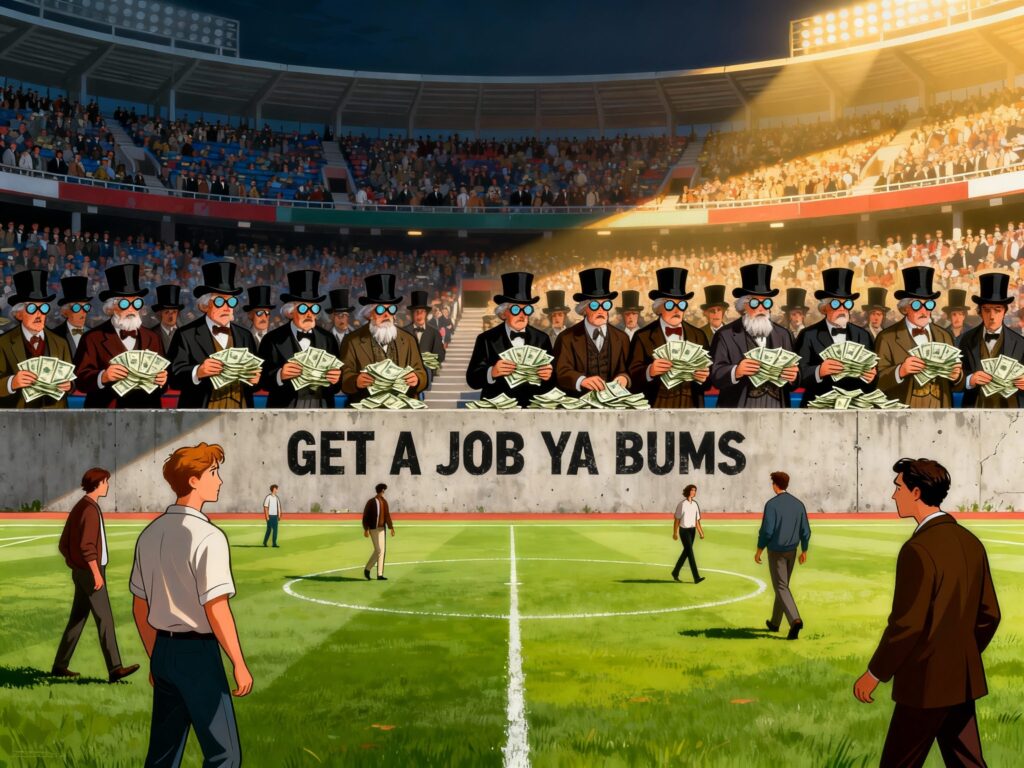
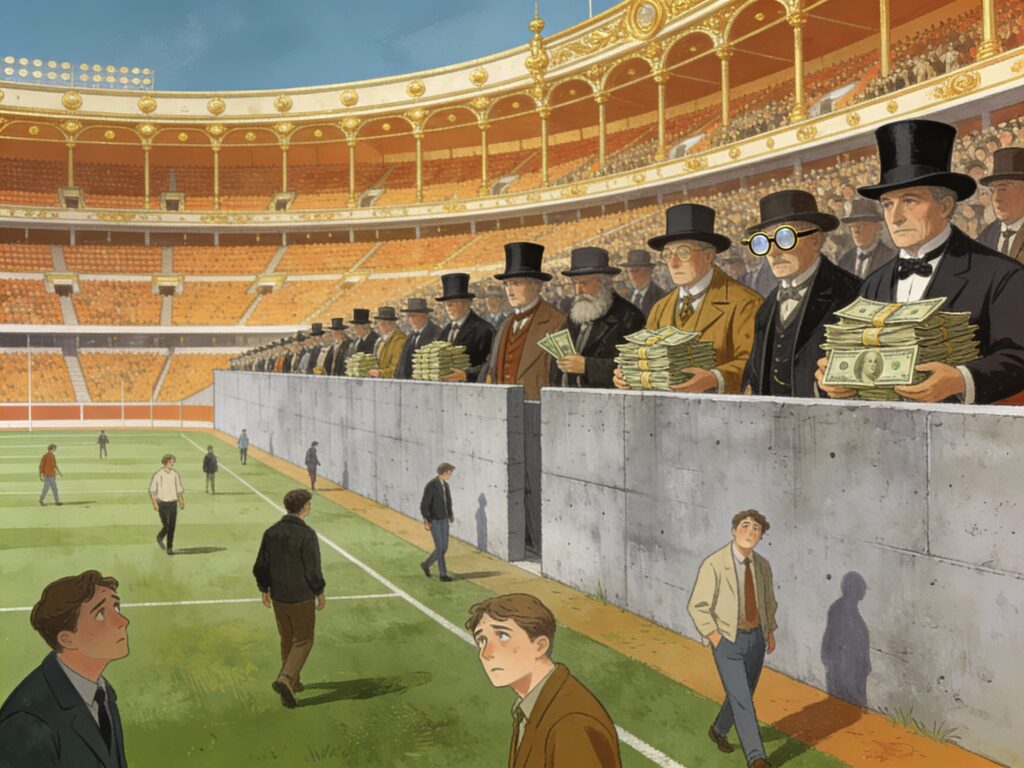
Schooling and media, together with government, create the impression that we’re all on one great team, and therefore sacrifices you make for the collective will be repaid by the collective. But in reality we’re cattle on one great tax farm. The system tolerates you as long as you’re paying in, but, when you need a payout, the system would rather you disappeared.

Many people read about events like World War One, and read about how working-class men were fed to enemy machine guns, and assume that things are different now and that no such thing could happen again. Thanks to Jim Bolger, I am aware that the contempt of the ruling class for the working classes is a permanent fixture of politics. The ruling class truly do hate the poor. They would feed us to machine guns tomorrow if they thought they would profit from it.

Thanks to these lessons, I have not been surprised by the actions of other National Party governments. I was not surprised when John Key slashed funding to mental health care, consigning hundreds of Kiwis to deaths by suicide and thousands of others to lives of despair. Neither was it any shock to me when Judith Collins forced the other National MPs to bloc vote against cannabis law reform at the referendum. I knew that the harm caused to medicinal cannabis users was a feature, not a flaw, of cannabis prohibition. And when Luxon got in and cut benefits under urgency, shovelling billions into the pockets of wealthy landlords, it was about what I expected.

Because of my opposition to mass Third World immigration, I am often pegged as right-wing. But, because of Jim Bolger, I have never voted for a right-wing party in my life, and I never will. I will never even vote for a centrist party that I suspect might support National (such as New Zealand First). I may or may not vote for the mainstream left either, but they aren’t automatically ruled out like National and co. are. The thought that my vote might help another Fourth National Government come to power evokes horror.

There is a wave of dark nihilism passing through New Zealand because of Jim Bolger. Many of the under-40s feel that society doesn’t exist, and that life is every man for himself. These people are essentially psychopathic in orientation, and the blame for this lies on Bolger and the harm he caused to this country. These youngsters have just internalised the selfishness of their elders.

*

For more of VJM’s ideas, see his work on other platforms!
For even more of VJM’s ideas, buy one of his books!

*

If you enjoyed reading this piece, buy a compilation of our best pieces from previous years!

Best VJMP Essays and Articles of 2023
Best VJMP Essays and Articles of 2022
Best VJMP Essays and Articles of 2021
Best VJMP Essays and Articles of 2020
Best VJMP Essays and Articles of 2019
Best VJMP Essays and Articles of 2018
Best VJMP Essays and Articles of 2017

*

If you would like to support our work in other ways, make a donation to our Paypal! Even better, buy any one of our books!
Thoughts On Suicide From Someone Who Hasn’t Done It Yet

I have endured a lot of suicidal ideation in my life. As I have written and spoken about at length previously, I have a traumatic stress disorder that has damaged my nervous system. This has led to constant hyperarousal of the hypothalamic-pituitary-adrenal axis, which is deeply unpleasant to experience. Symptoms of this include nausea, insomnia, anxiety and depression. This has involved a lot of vomiting, a lot of migraines, and a lot of deep breathing until the pain has passed. Although I strive always to say Yes to life, and although I have never made a suicide attempt, I am very tired and will be relieved when this life is over.

This essay has been inspired by the passing of Shane Christie, former Tasman Makos captain, who was well-known in Nelson. I now know a handful of people who have died by suicide, and many others who have made a genuine attempt to die. Many VJMP readers will know at least one suicide victim. The New Zealand nation suffers some 600 suicides every year. Despite our familiarity with the subject, it’s not well understood.

The first thing that people ought to know about suicide is that it’s done because people want the suffering to end.

I was about 13 the first time I felt true suicidal ideation. I had been having a bad time as a result of my mother getting institutionalised for an acute psychotic episode (again). This was the first time it occurred to me that death would solve my problems (I did not believe in reincarnation at this time). I was walking through town, and I realised that I could permanently liberate myself from physical suffering by throwing myself under a truck.

Since then, I have always suffered suicidal ideation to some degree or other, although much less in recent years. It was worst at particular times. 2003, when I realised the West was committing suicide; 2006, when my marriage fell apart; 2013/14, when my grandparents were dying. At these times, the thought of anything in the future evoked the deepest dread. The future itself seemed to be an infinitude of misery, inescapable, an ocean in which I had already drowned and sunk to the bottom. Often I would walk across a bridge and wonder if it could really be so painful to dive head-first onto the road below.

These are typical thoughts for a person tempted by suicide.

I have kept going for mostly two reasons – one, I received unconditional love from my grandparents, which created a large part of me, deep inside, that thought the world was maybe a sort of okay place, despite the bountiful misery elsewhere; two, I was lucky enough to be born really smart and I wanted to see where this could lead. It seemed like an egregious waste to throw that away. In recent years there has been a third reason: the Elementalist imperative to live in a manner that entertains the gods, which involves overcoming suicidal ideation.

People who have more-or-less decent lives usually don’t appreciate how unwelcoming life is for those at the bottom of society. If you were abused as a child, you learn that the world would be better off without your presence. If you were abandoned by one or both parents (and over 20% of New Zealand children grow up without a father in the home), you learn as a child that the world doesn’t want you. Add on top of this the confusion that comes from sexual abuse (this didn’t happen to me, but it happens to many), and it’s understandable why so many make the decision to exit.

I actually hope to die by suicide, which might sound strange. But this is only because I would like to go out on my own terms, mentally prepared. The way Hunter S Thompson did it – just as the decline into old age began – strikes me as ideal (this is still at least 25 years away). Dying in such a manner would not necessarily be a tragedy.

In my religion, Elementalism, there are tragic and understandable suicides. An understandable suicide is when there was, rationally considered, no quality of life remaining. A typical example is an elderly person with terminal cancer. Only sadists would demand that such a person carry on when they don’t want to.

A tragic suicide is when there was significant quality of life remaining. Many tragic suicides are when people surrendered to a bout of depression. These are cases when a person might have gone on to live a decent life, but succumbed in the moment to what should have been a temporary impulse. These cases are truly tragic because of all the lost opportunity they represent.

It’s important to me to reduce the amount of tragic suicides. I support this in my personal life by keeping a friendly ear open for depressed friends and family. I support this in my civic life by advocating for investment in mental health care, particularly for treating depression. Many people don’t realise that a large proportion of suicides are effectively depression deaths. It’s also not well known that depression is usually treatable to a major extent.

The biggest problem with depression is that, when you have it, you don’t think rationally. You become deluded. It’s entirely possible, when depressed, to think that everyone hates you and wants the worst for you. In reality, even if you have a lot of enemies, you don’t have that many. But when depressed, you can feel hate oozing out of every face you see. It’s easy to convince yourself that you’re not wanted on Earth.

Another big problem with depression is that if you ask your doctor about it they will throw you on antidepressants and tell you to get back to work. These antidepressants probably won’t be very effective and will probably come with awful side effects. The doctor won’t do the most helpful thing, which is explain to you what depression is and why you have it. So you will have to learn about it from somewhere else.

What I plan to do is to keep informing people about the reality of depression in particular and of mental illness in general. I feel like my own life has been saved thanks to being able to access useful and accurate information about the condition. I feel great joy at the thought I could save another life by popularising such information.

*

For more of VJM’s ideas, see his work on other platforms!
For even more of VJM’s ideas, buy one of his books!

*

If you enjoyed reading this piece, buy a compilation of our best pieces from previous years!

Best VJMP Essays and Articles of 2023
Best VJMP Essays and Articles of 2022
Best VJMP Essays and Articles of 2021
Best VJMP Essays and Articles of 2020
Best VJMP Essays and Articles of 2019
Best VJMP Essays and Articles of 2018
Best VJMP Essays and Articles of 2017

*

If you would like to support our work in other ways, make a donation to our Paypal! Even better, buy any one of our books!

Coping With The Transition To A Low-Trust Society

Everyone with any sense can feel that society is breaking down. The general atmosphere is much less pleasant than it was ten, even five years ago: more anger, depression, madness. Less laughter is heard. All the economic news is bad, and people no longer speak of the future as a friend, but as an enemy collecting a debt.

There is precedent for understanding what is happening: broken families.

There are many broken families in our society. These families are broken societies in microcosm. It’s common for parents in broken families to be negligent or abusive, even to have abandoned their own children. This is closely analogous to how governments work in broken societies. What the New Zealand Government did to its own people with Ruthanasia differs only in scale from what a parent does when it abandons its family, and Ruthanasia was only the worst of many examples of governmental neglect. More are to come.

Broken families produce low-trust people. Trust is essentially a person’s estimation of the probability of encountering honourable behaviour. Neglecting one’s children is a highly dishonourable act, a total failure to be an adult. A child so neglected will very likely grow up to be a low-trust adult. They will seldom punish dishonourable conduct, having normalised it, and they will seldom reward honourable conduct, believing it to be an aberration.

Broken societies are full of low-trust people. They expect the worst from others. As such, they’re not willing to give any “benefit of the doubt”. This makes them generally unpleasant to be around. But, like broken families, they aren’t natural. They only exist when an authority figure refuses to do their job properly. This is why low-trust societies are full of rebels and revolutionaries. As Western society becomes lower and lower trust, we can expect more dissidents of all kinds, especially violent ones. As low-trust neighbourhoods produce gang members, low-trust societies produce revolutionaries and tyrants.

A high-trust environment is honour based. Respect is apportioned on the basis of honourable conduct. People’s reputations for past honourable conduct determine the extent to which they are respected. Sophocles once said “Better to fail with honour than succeed by fraud”. In high-trust environments, a person can expect to lose but still be respected.

A low-trust environment is fear based. Respect is apportioned on the basis of malice. Only people malicious enough to do harm are respected; everyone else is exploited. In a low-trust environment, exploiting people is seen as intelligent. A caring person is just a target. Kind people are stupid, because if they were smart they would have perceived that they were operating in a low-trust environment. Low-trust people don’t view the kind as the freemasonry of society (which they are in high-trust environments). They view the kind as wolves would view a lamb.

For instance, people in Thailand have different attitudes to theft to people in Singapore. In Thailand, if you leave your property unguarded, the assumption is that you’re too stupid to deserve to own that property, and therefore stealing it is okay. The logic is similar in gang environments: if you’re too weak to defend your property through fighting for it, them you’re too weak to deserve to own that property, and therefore stealing it is okay. This kind of logic will become more common in the future.

In a low-trust environment, you exploit people up until the point where they push back. The low-trust presumption is that they would do they same to you if they could.

In a low-trust environment, you expect people to be lying. Speech is not assumed to be factual: people are assumed to be “talking shit” unless proven otherwise.

Low-trust thinking and short-term thinking overlap a great deal. As such, a high time preference is another psychological weakness we will have to contend with in the future. People in low-trust families don’t make rational long-term decisions. Neither do governments in low-trust societies. Probably Western governments will torch their economies in coming decades to keep Boomers in comfort. What comes after then will be a truly low-trust environment.

Coping with low-trust environments is primarily about lowering expectations. Lose the expectation of honourable conduct. Lose the expectation that your property rights will be respected. This means to become more cynical, paranoid and suspicious, which is a shame. But it’s a reasonable reaction to the way society is going. High-trust people are going to get destroyed.

Also important in the transition to a low-trust environment is learning to control oneself (to some extent this is downstream of lowering expectations). Living in a low-trust environment is stressful. One’s threat detection mechanisms are often running at full power. Adapting to a low-trust environment means suppressing emotion, both in range and intensity. Unfortunately this means that many people will become sadistic, even psychopathic. But many will have to choose between honour or survival in coming years.

Because low-trust environments are fear based, overcoming one’s fear of death will gain you respect. Thus, a genuinely spiritual attitude will gain you respect. People in low-trust environments have only contempt for the superficially spiritual. But if a person’s spirituality enables them to endure physical deprivations, stresses, threats and intimidation, they will do much better in low-trust environments than non-spiritual people.

*

For more of VJM’s ideas, see his work on other platforms!
For even more of VJM’s ideas, buy one of his books!

*

If you enjoyed reading this piece, buy a compilation of our best pieces from previous years!

Best VJMP Essays and Articles of 2023
Best VJMP Essays and Articles of 2022
Best VJMP Essays and Articles of 2021
Best VJMP Essays and Articles of 2020
Best VJMP Essays and Articles of 2019
Best VJMP Essays and Articles of 2018
Best VJMP Essays and Articles of 2017

*

If you would like to support our work in other ways, make a donation to our Paypal! Even better, buy any one of our books!