
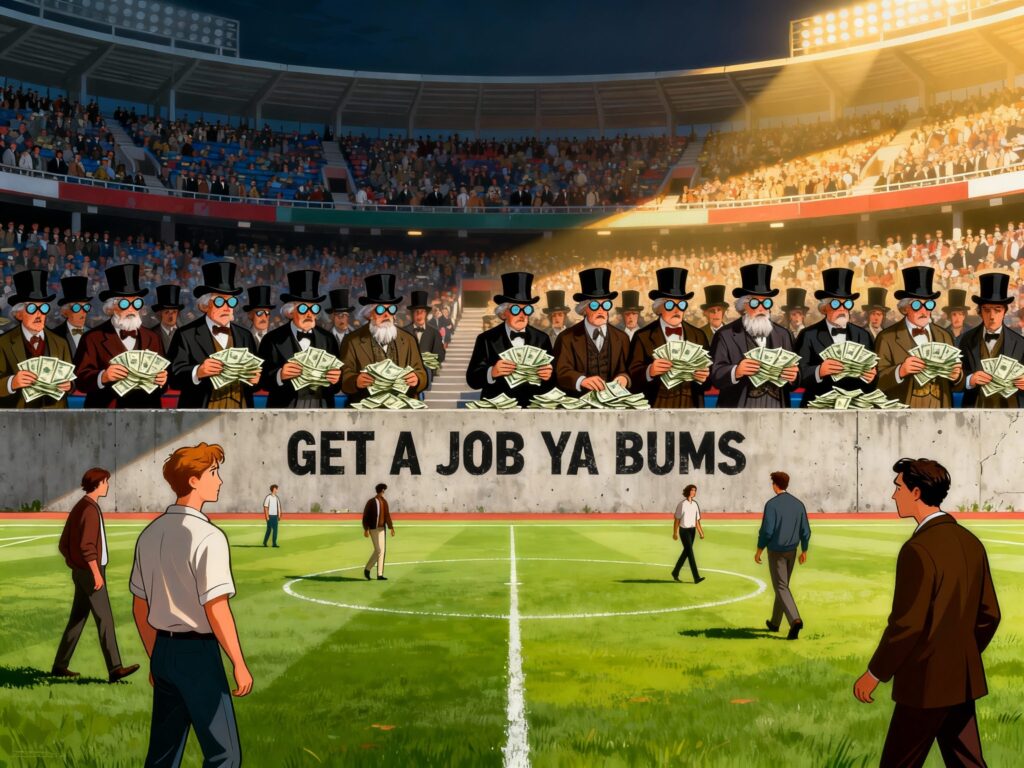
For most of human history, slavery has been central to all economies. Ownership of human livestock has always been the single most profitable endeavour of all, as it allows the owners to claim the productivity of the slaves. Countless wars have been fought both to capture slaves and to free them. But a number of misconceptions have arisen about the practice of slavery, both in the past and in the present.
The story we are given is that slavery has existed forever, and continued up until the British Empire banned the trade in 1807. From there it was gradually banned throughout the rest of the world. Except for one particularly violent disagreement in America in the 1860s, the world was happy to get rid of slavery, and in doing so we all moved forwards into a more equitable and respectful future. Today we are all equals, born with the same opportunities.
In reality, slavery continued, it just switched from the plantation slavery model to the free range slavery model.
In the old days, slaves were usually bound to a particular plot of land. This was because the demand for their labour initially came from landowners, who wanted someone to work their farms without payment. The origin of this practice can be seen in the behaviour of the alphas of chimpanzee troops, who control access to food and sexual resources. In the same way subordinate chimpanzees must obey the alpha or face physical violence, the slaves must obey their masters.
The landowners in such cases were often plantation owners. This is the model of slavery most common to the New World, a.k.a. the hacienda model. In the antebellum American South, slaves would often spend their entire lives on the same plantation. The problem with this model is that the slaves are obviously slaves. Therefore, they are liable to rebel.
Free range slavery is the solution to the problem of rebellion. Permit the slaves some freedom of movement, and the freedom to choose the plantation upon which they will labour, and they won’t get discontented enough to rebel. This is doubly true if you also have a gigantic propaganda apparatus brainwashing everyone into thinking they’re as free as they could ever wish to be. It’s triply true if you also have a security apparatus devoted to destroying anyone who realises any of the above.
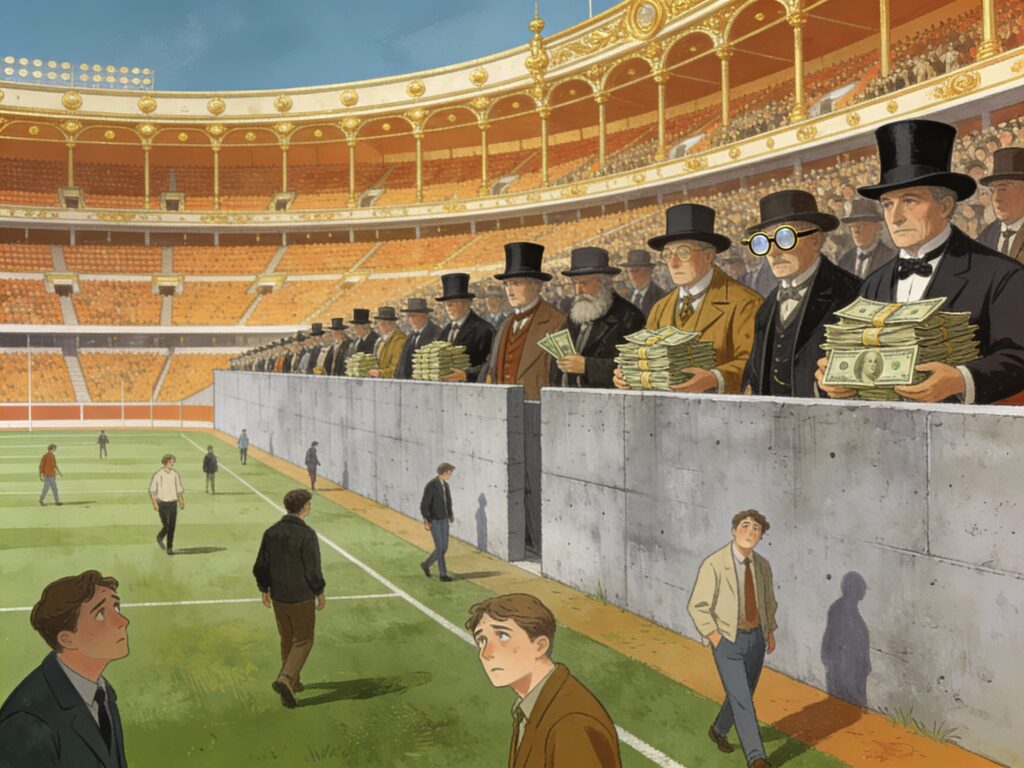
The new ruling class of the Industrial Age were factory owners, not plantation owners. This ruling class had the insight that enclosing the commons, making it impossible for many to sustain themselves, would create a large number of desperate people willing to work for very little. Free range slavery began with the enclosure of the commons in acts such as the Highland Clearances. The people so cleared had to move to the cities and take work in factories, where they were regularly put to work for 70-80 hours per week.
In spirit, free range slavery is enslavement on the class level, something made more possible by modern technology. This technology allows for an unprecedented level of co-operation among the slave-owning classes. These ruling classes co-operate closely through two-way technology such as the telephone, while the middle and working classes are divided and conquered through one-way technology such as the television.
In the free range slavery model, each slave is free to choose the plantation on which they work. But the system is rigged so that, no matter which plantation they choose, they can never overcome slave status. No matter how high their wage, they have to pay so much in taxes, rents and other expenses that they are just as incapable of improving their position as the plantation slave.
A man who works 60 hour weeks, 250 hours/month, making $10/hour, will make about $2000/month after tax. Average rent for a one bedroom apartment is $1000/month in many American states. His bills for groceries, healthcare, electricity and other utilities will come to at least $500/month. This will leave him at most $6,000/year to put towards a house – and the average American house price is now above $370,000, so it will take him at least 60 years to get there. In practice, he will never get there, because working 60 hour weeks for 60 years is not realistic. But he will probably put in a lot of effort before he realises this.
Those who already own all the land are laughing all the way to the bank at this arrangement.
There are several advantages to the free range slavery model, which essentially maximises horizontal freedom at the same time as minimising vertical freedom.
The first, and most obvious, is that the slave owners no longer have to bother with the feeding, shelter and upkeep of the slaves. Those things are now the slaves’ problems. This is much more efficient for the slave owners, who now only have to manage the slaves during working hours. Outside of working hours, the free range slave manages itself.
A second advantage is that the free range slave can be manipulated into believing that his difficulties are his own fault. This makes him much less likely to blame the slave owners and landlords. If a free range slave can’t afford housing, he can simply be told that he isn’t working hard enough. Likewise if he can’t afford decent food. If he gets killed by rent, he can be blamed for choosing to live in a high cost-of-living area. Can’t or won’t relocate? Then he doesn’t really want freedom enough.
The main advantage to the model is that the slaves never figure out that they are slaves. If they were forced to wear shackles, or if they were whipped by overseers, they would figure it out in short order. But because they are free range slaves, any of them who complains about their conditions is met with “You can always get another job somewhere else.” Because they’re always scrambling to find or to keep employment, they never figure out that they are structurally enslaved in a way that individual action cannot overcome.
Free range slavery is, therefore, correctly understood as an ingenious system of mass enslavement with minimal resistance.
*
For more of VJM’s ideas, see his work on other platforms!
For even more of VJM’s ideas, buy one of his books!
*
If you enjoyed reading this piece, buy a compilation of our best pieces from previous years!
Best VJMP Essays and Articles of 2023
Best VJMP Essays and Articles of 2022
Best VJMP Essays and Articles of 2021
Best VJMP Essays and Articles of 2020
Best VJMP Essays and Articles of 2019
Best VJMP Essays and Articles of 2018
Best VJMP Essays and Articles of 2017
*
If you would like to support our work in other ways, make a donation to our Paypal! Even better, buy any one of our books!
Very insightful! And the yoke is currently tightening with the world governments all suspiciously simultaneously deciding to enact vast “digital id” laws to “protect the children” , or so they claim. What digital id will do is lock the world’s population into a digital prison – where every move and thought and speech is tracked, the goal being mass censorship. It will soon be illegal to send a private encrypted message to a friend that is critical of the government. It’s 1984 on steroids. Total thought control. And sadly, millions of the slaves are falling for it, as they trust their govt still, and seek to “protect the children” .
So many people fall for the “think of the children!” meme