
Everyone That Exists Is Descended From Someone Evil

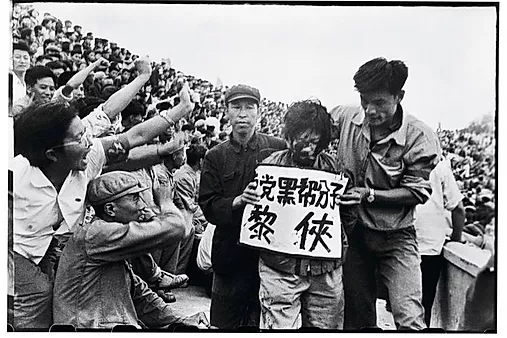
Some people, we are told, are the beneficiaries of unearned privilege. Their ancestors performed evil acts in order to gain power and wealth, then they passed that power and wealth to their descendants. As a result, those descendants are obliged to share their wealth with those whose ancestors were not evil. The reality, as this essay will explain, is that everyone on Earth is descended from someone evil.

The nature of life on this Earth is kill or be killed. At every single level of life, one must kill in order to continue. Life feeds on life, and the only alternative is starvation.

Even if a creature doesn’t eat meat, but only eats plants, they still have to kill for mating opportunities or for territory.

Mating opportunities don’t necessarily come easily – males fight to the death over fertile females in a great number of species. Even if a female goes willingly with a male, there are other males ready to kill him and take his place. Killing a male and raping his female is, as far as Nature is concerned, a perfectly legitimate mating strategy. All Nature cares about is that the female carries to term.

Even if a creature doesn’t try to reproduce, their body’s metabolic demands require that they eat, and this requires that they control territory. This territory will invariably be contested by other creatures who also seek food. Those other creatures are happy to kill their opponents if resisted. So control of territory requires a willingness to kill those others who would control it.

The nature of human history is little different. Humans might be different to animals, but the major behavioural differences between us and them didn’t arise until recently. Before then, the vast majority of us were as vicious, callous and opportunistic as any animal.

Men have always fought over breeding partners. The emotion of jealousy evolved to help motivate us to kill our rivals for them. At times in the human biological past, this rivalry was so intense that a small minority of men controlled a majority of the women. The others usually died in the attempt to get laid.

Men have also always fought over territory (or at least for the resources in those territories). This was an established fact well before the Age of Colonisation began. The first recorded war was some 4,700 years ago, and the warring has never stopped. Any king or ruler who calculated that they could conquer their neighbouring territory usually did. The need to spill blood did not deter them.

Ruthless conflict for ultimately biological causes has been an inescapable feature of human history from the beginning. In truth, even World War II – portrayed as the ultimate struggle between good and evil – boiled down to the control of territory and the resources that came with it. The first man ever to kill a member of the neighbouring tribe probably did so for lebensraum – nothing has ever changed.

World War II was a slaughter for resources, World War I was a slaughter for resources, the Napoleonic Wars were slaughters for resources, the Crusades were slaughters for resources, Julius Caesar slaughtered for resources, Alexander slaughtered for resources. All of these endeavours may have been framed as other things, but fundamentally they were about one’s tribe winning access to land and women.

Everyone who succeeded in this struggle was a killer. This they had to be by virtue of the fact that their aspirations were violently opposed.

The idea that someone can be meek and still thrive is a delusion brought about by the influence of slave cults such as Christianity. Throughout the entirety of human history, the meek were simply cast aside. Those casting them aside won the women, the land and the reproductive opportunities. All who exist today are descended from them.

Today, one can argue that it’s truly possible to be civilised. Kindness is outperforming aggression in an increasing number of work environments, as proven by the fact that women are doing better in them. But this is an extremely recent phenomenon.

The long peace that we have enjoyed since World War II does not change the fact that each and every single one of us, without exception, are descended from grievous criminals. Murderers, rapists, land thieves: those are our ancestors. Had that not been the case, they would not have survived. They would have been killed by other people’s ancestors.

Consequently, it’s pointless to try to make another person feel guilty for supposedly inherited privilege. No matter what class a person occupies, they are descended from those who killed to gain wealth. The best thing would be to widely acknowledge this, and then work towards finding an end to the suffering of all sentient beings.

*

If you enjoyed reading this essay, you can get a compilation of the Best VJMP Essays and Articles of 2019 from Amazon for Kindle or Amazon for CreateSpace (for international readers), or TradeMe (for Kiwis). A compilation of the Best VJMP Essays and Articles of 2018 and the Best VJMP Essays and Articles of 2017 are also available.

*

If you would like to support our work in other ways, please consider subscribing to our SubscribeStar fund. Even better, buy any one of our books!
The Political Implications Of Kinship Intensity

The phrase “kinship intensity” is rare in the behavioural science literature, but it’s making a resurgence thanks to new understandings of genetics. Although the concept of kinship intensity has been thoroughly elaborated upon with regards to mate selection, its inevitable profound impact on our political philosophy has yet to occur. This essay gives a foretaste.

Kinship is the primary organising principle of human societies. The reasons for this have been described at length by evolutionary psychologists and by biologists in works such as The Selfish Gene. In short, kinship organises societies because organisms that co-operate socially are more likely to survive and to reproduce than ones who don’t.

The great political philosophers like Plato, Aristotle, Confucius, Chanakya, Machiavelli and Hobbes didn’t know about genes, and so they had no concept of kinship intensity. Aristotle was aware that families organised into villages, and villages into provinces, and provinces into nations, but he didn’t know that it was kin selection on the basis of shared genes that drove all of that.

Back in the old days, before the Age of Exploration and mass transit, almost everyone lived in a state of high kinship intensity. Most people only knew a couple of hundred other people from their village and a few regional luminaries like the local sheriff or priest. Virtually everyone was related to each other in some way. They celebrated each others’ weddings and birthdays all the time.

In the modern world, most people live in a low state of kinship intensity. Living in big cities, many people encounter strangers all day – not only people from other tribes but from other countries and continents. In big cities, one comes into contact with people whose natural behaviour is so different to one’s own that it seems alien.

This change – from medieval to modern – has had profound effects on our political attitudes.

When a society has a high degree of kinship intensity, people are much more generous and co-operative. It’s logical to be, because any given act of kindness is more likely to benefit someone like you. If many of your kin live in the same society, it makes sense to work towards the betterment of that society, perhaps even making sacrifices for it. Your kin will benefit, and will reciprocate.

When a society has a low degree of kinship intensity, people are much less generous and co-operative. This is also logical, because acts of kindness cost the same amount to perform but will benefit someone unlike you, who is unlikely to reciprocate it. If you’re the only one of your kin in a society, there’s very little reason to work hard to better that society.

The West has always been split into a high kinship intensity Old World and a low kinship intensity New World. As mass immigration continues, the kinship intensity of all societies in the West will continue to fall: the Old World will become like the New and the New World will become like Brazil. This will have predictable consequences for human political behaviour.

As the degree of kinship intensity in Western countries continues to fall, people will care less and less about the people on the bottom of society. Once rich people no longer have much in common with poor people, those rich people will stop wanting to pay taxes or donate to charities that help. Decreasing kinship intensity will inevitably lead to both lower taxes and a corporate mentality where other people are viewed as tools to generate profit, and not as human beings.

If the people you’re exploiting aren’t related to you, then who cares?

The more diversity there is in a society, the more willing people in that society are to exploit others. People tend to enslave outsiders if they can, rather than their neighbours. The Barbary Coast slave traders raided Europe for slaves; the plantation owners of the American South bought theirs from Africa. African slaves constitute the largest proportion of slaves traded today, mostly by Arabs.

By contrast, the societies with the least amount of exploitation are the homogenous ones. Japan, South Korea and Scandinavia are characterised by being high-trust, low-crime societies where people habitually contribute to the common good. Societies like these, with high degrees of kinship intensity, are like large families.

We can see from this that kinship intensity predicts a number of outcomes. The higher it is, the less within-group exploitation there is. The lower it is, the greater within-group exploitation there is.

Kinship intensity predicts outcomes such as weight of taxation. In societies with high kinship intensity (like Scandinavia), people are generally happy to pay high taxes, knowing that the tax money will benefit their kin. In societies with low kinship intensity (like America), people don’t want to pay any taxes, because they feel that the tax money will benefit those who aren’t their kin.

It follows logically, therefore, that lowering the kinship intensity of a society through means such as mass immigration will make people less willing to contribute to the greater good. This apparent selfishness makes perfect sense from a kin selection perspective, and will obtain until intermarriage makes the newcomers the same kin as everyone else (or until there is civil war).

So anyone who wants to have a culture in which people contribute to the greater good, instead of exploiting it, better support policies that maintain a high level of kinship intensity. Crucial to this objective is limiting immigration to a level at which the newcomers can be absorbed into the kin networks of the existing population, rather than forming their own parallel networks.

*

If you enjoyed reading this essay, you can get a compilation of the Best VJMP Essays and Articles of 2019 from Amazon for Kindle or Amazon for CreateSpace (for international readers), or TradeMe (for Kiwis). A compilation of the Best VJMP Essays and Articles of 2018 and the Best VJMP Essays and Articles of 2017 are also available.

*

If you would like to support our work in other ways, please consider subscribing to our SubscribeStar fund. Even better, buy any one of our books!
Debunking The “Structural Racism” Conspiracy Theory

The most prevalent conspiracy theory of our time is so prevalent that it’s accepted as truth by most media entities. This theory has it that black and brown academic and economic underachievement can best be explained by structural racism and white supremacy. The truth is that, like most conspiracy theories, this theory goes directly against the relevant science, and can be disproven by it.

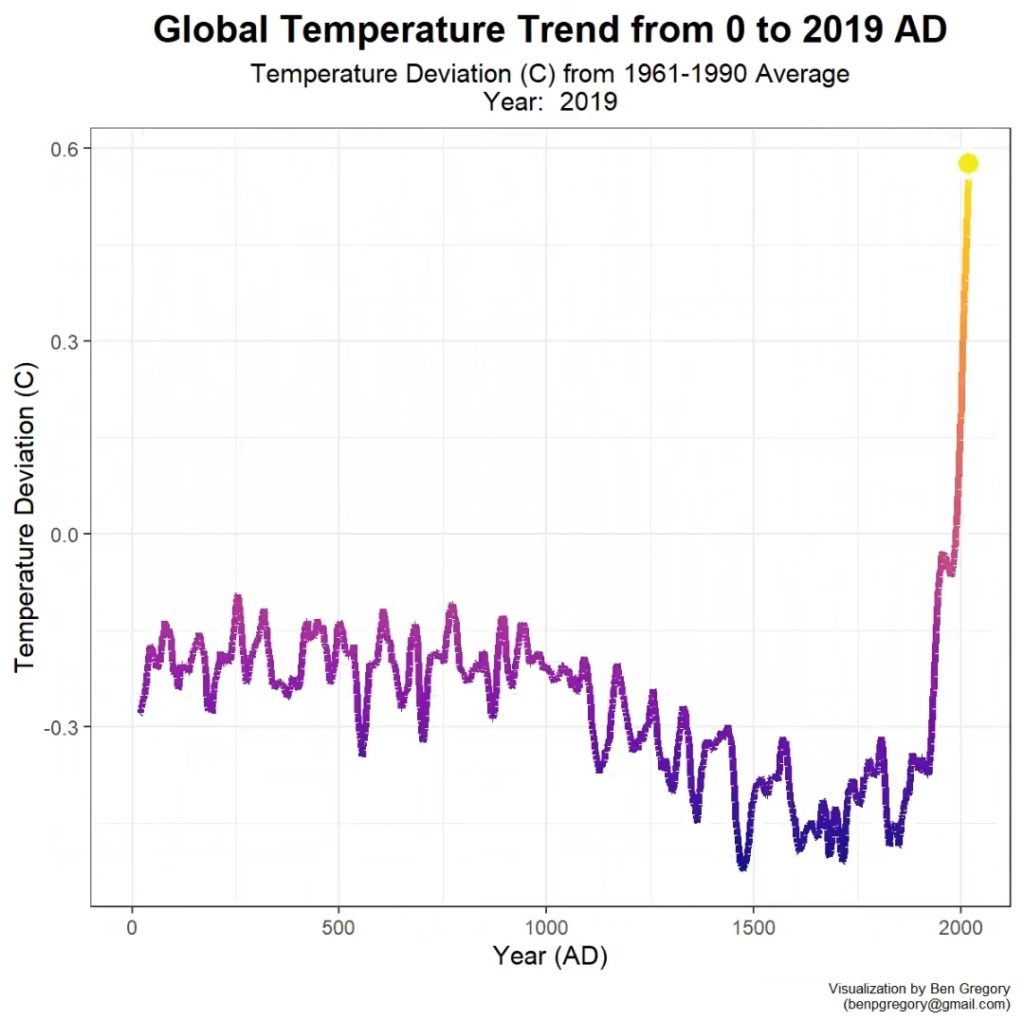
When 9/11 happened, a popular conspiracy theory said it was an inside job. One particular version claimed that, as the melting point of steel is higher than the burning point of jet fuel, the twin towers could not have collapsed on account of being struck by aeroplanes (the official explanation). They had to have been taken down by explosives placed within the structure of the buildings.

The way to refute this theory was to ask people qualified in the relevant science. You could say to a civil engineer or a physicist “Jet fuel can’t melt steel beams,” and they would tell you that it doesn’t have to melt the beams, it just has to heat them up enough so that they become too soft to support the weight of the building, at which point it will collapse. This is what happened in the case of the twin towers. Conspiracy theory debunked.

Anyone wanting to test other conspiracy theories can do likewise. If you want to know whether the Earth is flat you could ask an astronomer. If you wanted to know whether the Earth was 6,000 years old you could ask a geologist. If you wanted to know whether humans landed on the Moon you could ask an aeronautical engineer. And if you wanted to test whether the structural racism conspiracy theory was bullshit, you could ask a psychologist.

This is what a psychologist would tell you.

The science of IQ is the most robust and heavily supported of any social science. There is more evidence backing the validity of it than there is backing anything else. Most importantly, IQ also has more predictive power than any single other variable known to Psychology.

If you disagree about its predictive power, consider the following analogy.

You have two 13-year old boys. One is tested to have an IQ of 115, i.e. one standard deviation above average. The other is tested to have an IQ of 85, one standard deviation below average. The two boys are followed up ten years after the test. Without knowing which boy is which, you’re told that one has recently completed an accounting degree, whereas the other dropped out of school and drifted into petty crime.

Can you guess which is which?

Almost everyone would guess that the boy with an IQ of 115 became the accountant. And, in the vast majority of such cases, they’d be right. Accountancy is intellectually challenging: far more accountants have IQs closer to 115 than to 85. Likewise, far more petty criminals have IQs closer to 85 than to 115. Almost everyone knows this, and almost no-one questions it.

The fact is that IQ is so powerfully predictive that we can already get a rough idea of how a person’s life will turn out just from accurately measuring their IQ. The average person with an IQ of 85 will have much greater trouble learning and recalling information than the average person with an IQ of 100. Their impulse control, measured by ability to delay gratification, will be significantly inferior.

Because their intellectual ability and their discipline are poorer than than of the average person, they will be less able to meet the demands of the modern workplace. As such, they will be marginalised into unemployment and underemployment more often. Any population of people with an average IQ of 85 will be much poorer and much more criminal than any population with an IQ of 100 or higher.

85 is also the average IQ of black Americans and Pacific Islanders, with Maoris being slightly higher (around 90). This we know from the research compiled by researchers like Richard Lynn in books like Race Differences in Intelligence.

Psychological science, therefore, can predict on the basis of IQ alone that black Americans and brown Kiwis will be poorer and will be more involved in the criminal justice system than white Americans and white Kiwis. This can be confidently predicted even in the total absence of structural racism or white supremacy.

At this point, a believer in the structural racism conspiracy theory will argue that structural racism not only makes blacks and browns poorer and more likely to be involved with the criminal justice system, but it also makes their IQs lower on account of things like teachers ignoring them more often during class or discouraging them from study. Therefore, even if they do have lower IQs, it’s still white people’s fault.

For one thing, we know that this contention can’t be true because intelligence is mostly genetic and not environmental. Although the environment can have a powerful effect on the intelligence of young people, the effect of environment on IQ is no more than 0.2 by adulthood – a phenomenon known as the Wilson Effect. Therefore, low adult IQ is primarily a genetic phenomenon.

For another thing, we can observe the experience and outcomes of other racial groups who have similar IQs to white people.

105 is the average IQ of Far East Asians. The structural racism conspiracy theory would predict that Far East Asians do worse than white people, on account of that white people deny them opportunities for advancement and discriminate against them in business and politics. After all, white supremacists don’t like Asians any more than they like blacks.

The psychological science theory would predict that Far East Asians do as well or better than white people, on account of that their high IQs lead to successful careers and less criminality. Being high IQ and having good impulse control, they should study hard and get decent jobs.

As it turns out, Asian Americans earn 7% more than whites at the median. They are also significantly less criminal, despite that more of them are from poor families and many are even refugees. This directly refutes the structural racism conspiracy theory and directly supports the psychological science theory.

Ultimately, the main reason why blacks do worse than whites in America, and the main reason why browns do worse than whites in New Zealand, is because of low IQ. This low IQ leads them to make more impulsive decisions, which leads to poverty. This isn’t at all controversial among those who have studied the relevant science.

The conspiracy theory that says blacks and browns do worse because of white racism is bullshit. This means that the poorer outcomes of blacks and browns cannot be explained by white racism, but by factors inherent to the blacks and browns themselves.

*

If you enjoyed reading this essay, you can get a compilation of the Best VJMP Essays and Articles of 2019 from Amazon for Kindle or Amazon for CreateSpace (for international readers), or TradeMe (for Kiwis). A compilation of the Best VJMP Essays and Articles of 2018 and the Best VJMP Essays and Articles of 2017 are also available.

*

If you would like to support our work in other ways, please consider subscribing to our SubscribeStar fund. Even better, buy any one of our books!

How A Kanye West Run Could Win Trump Re-Election

The 2020 American Presidential Election just got even wackier with news that Kanye West has thrown his hat into the ring. West has no realistic chance of winning the American Presidency, but if he runs as an independent he could still impact the outcome. This article explains how.

In the 1992 American Presidential Election, third party candidate Ross Perot, running as an independent, won almost 19% of the popular vote. Although he didn’t win any Electoral College seats, he won over half as many votes as Republican candidate George W Bush, who lost to Democratic candidate Bill Clinton.

In retrospect, it seems that Clinton’s win was a total fluke, because the right-wing parties won about 59 million votes to his 45 million. Clinton only won thanks to Perot’s run, which split the right-wing vote, as many natural Bush supporters voted for Perot. Their mutually assured destruction saw Clinton coast home.

The same thing happened in the 2000 election, only for the other side. Al Gore won about half a million more popular votes than George W Bush, but Dubya won the election by five Electoral College votes. Gore probably would have won had it not been for Ralph Nader, who won almost three million votes for himself on a Green Party ticket. The vast majority of these votes would have gone to Gore had Nader not contested.

The Nader influence was felt most acutely in Florida. George W Bush won Florida, and its 25 Electoral College votes, after an infamous recount process that dragged on for weeks. In the final tally, Bush carried the state by 537 votes, but Nader won 97,488 votes there. Had Nader not stood in Florida, it’s all but certain that Gore would have carried the state – and with it America.

It can be seen from these examples that arguably the single most important factor for success in an American presidential election is not having a third party candidate running on the same half of the electoral spectrum to you. Because each state in the Electoral College is won on a winner-takes-all and first past the post basis, third party runs do little but split the vote.

So back to Kanye West.

One of the biggest obstacles to Trump’s re-election bid is his low support among blacks. Blacks have always been disinclined to vote Republican, on account of the Republican Party’s support for the War on Drugs and their opposition to welfare. 89% of them voted for Hillary Clinton against Trump, and an even higher percentage supported Barack Obama against his opponents.

Polls suggest that blacks intend to vote heavily for Joe Biden this year. This is for two reasons. The first is that Biden is a Democrat. The second is that blacks remember how Biden was a dutiful and competent Vice President to Obama for eight years. Biden never went against his man or undermined him, and this is remembered by those who were Obama’s strongest supporters.

Kanye West appears to intend to run as an independent. He is 43 years old, black, and works in a creative role. His biggest supporters are from similar demographics. Being one of the world’s most popular musicians, West’s name recognition among Millennial and Zoomer voters is immense. A great number of them will vote for him on this basis alone.

In appealing to these demographics, a West run will split the left-wing vote. The young, the black, the creative voters who will support West are all groups that would have otherwise supported Joe Biden. In other words, a West presidential bid would cost Biden a lot more potential votes than it would cost Donald Trump.

Biden is well ahead of Trump in the polls right now, but the reality is that an incumbent American president hasn’t lost a presidential election since Clinton beat Bush in 1992. Trump was rubbished by the mainstream media leading up to the 2016 election and still won. At worst for Trump, 2020 might be a close loss.

All this means that a Kanye West presidential bid has a very real chance of tipping the balance of this November’s election from a Joe Biden win to a Donald Trump win. West would only need a small percentage of blacks to support him for Biden to risk losing some states – and after Biden’s “if you don’t vote for me, you ain’t black” gaffe, such an outcome is fully plausible.

*

If you enjoyed reading this essay, you can get a compilation of the Best VJMP Essays and Articles of 2019 from Amazon for Kindle or Amazon for CreateSpace (for international readers), or TradeMe (for Kiwis). A compilation of the Best VJMP Essays and Articles of 2018 and the Best VJMP Essays and Articles of 2017 are also available.

*

If you would like to support our work in other ways, please consider subscribing to our SubscribeStar fund. Even better, buy any one of our books!