Why Vaccination Should Never Be Made Compulsory

25 people have been infected by a measles outbreak in Canterbury, and one could predict from the degree of anti-anti-vaccination hysteria that there will soon be a social movement to make vaccination compulsory. Many people are calling for it, and the rhetoric demonising the anti-vaxxers is growing. This essay discusses why compulsory vaccination is the wrong approach.

The joke goes that under totalitarianism, everything is either banned or made compulsory. The panic-based hysteria that fuels the various moral outrages that lead to totalitarianism can be seen in places like this thread on Reddit. Many New Zealanders are apparently happy to force compulsory medical treatment on others, despite it being a violation of Section 11 of the New Zealand Bill of Rights Act.

Compulsory vaccination would be a grossly draconian abuse of state power. But that isn’t why we should avoid it.

Let’s lay it out: vaccination is a good idea. Vaccination is a great idea, especially if the extremely minor side-effects are weighed up against the costs of being infected with measles, rubella, polio, whooping cough or the like. Some of these diseases are capable of crippling people for the remainder of their lives, leaving them in ghastly pain, or just killing them outright. Their presence as part of the human experience was a curse, and eradicating them would be excellent.

Vaccination is such a good idea that a parent ought to listen to their doctors when those doctors recommend vaccination. So if the necessary trust isn’t present in that relationship, something is wrong, and we ought to determine why.

The usual response is to call anti-vaxxers “nutters”, “loonies”, “schizos” and the like, and to attribute their lack of trust to an aggressive paranoia that can only be present on account of moral failure. But the responsibility isn’t on them to become more trusting. The responsibility lies on the Government and on the medical community to earn the trust of the population. It’s not merely an ideal that the population ought to trust that what their doctors is telling them is true – it’s a necessity.

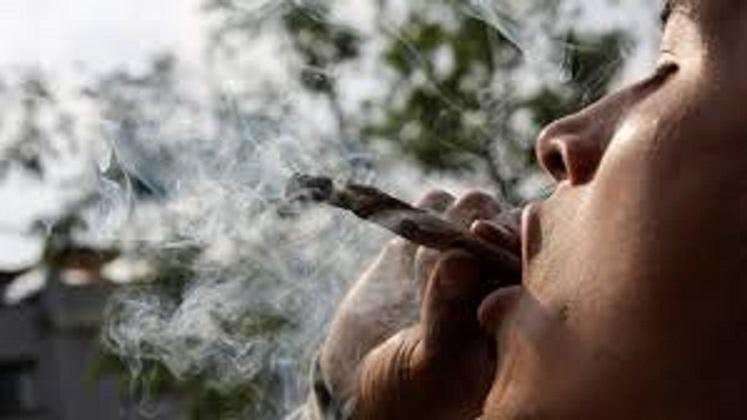
The anti-vaccination movement is particularly strong in Nelson, which has been attributed to our unusually high proportion of nutters, loonies etc. The reality is that Nelson has a high number of anti-vaxxers for the same reason that California does: we were one of the first to understand the medicinal value of cannabis, and thereby one of the first to understand that the medicinal community was lying to us about it.

People know that they’ve been lied to about cannabis. We know that doctors have not been fully honest about the medicinal benefits of this substance for decades. Those who have done the research know that these lies are mostly the result of pressure from Government, disinformation from pharmaceutical companies pushing their product and the usual Kiwi slackness when it comes to doing your job properly.

So how do we know that we’re not being lied to about vaccines? Given the experience with cannabis, it’s entirely possible to suspect that Governments are putting pressure on doctors to ignore the risks of vaccination, or that the manufacturers of the vaccines aren’t honest about their side-effects, or that doctors simply haven’t bothered to research any side-effects.

Given that doctors have been lying about these things when it came to cannabis, it’s only natural that the trust that people had in them has sharply declined among some demographics. This is the error that needs to be corrected, and compulsory vaccination is a ham-fisted solution to something that can be achieved more elegantly.

Introducing compulsory vaccination is a foolish and short-sighted approach that will not only spur more suspicion and paranoia, but which will also help to justify future Governmental abuses. A much braver and wiser move would be for the Government and the medical community to earn back the trust that they have lost.

The best way to achieve this would be for politicians to make a frank and full apology for their parts in misleading the country about cannabis. They would have to not only admit that cannabis was medicinal, but that it was known to be medicinal and previous governments lied about it for whatever reason.

If the politicians would admit that many doctors only withheld the truth from their patients for fear of punishment from the Government, they would help to restore the faith in those doctors necessary for the more sceptical to get their children vaccinated. This is what needs to happen, not compulsory vaccination.

*

If you enjoyed reading this essay, you can get a compilation of the Best VJMP Essays and Articles of 2018 from Amazon for Kindle or Amazon for CreateSpace (for international readers), or TradeMe (for Kiwis). A compilation of the Best VJMP Essays and Articles of 2017 is also available.

The Case For Cannabis: Law Reform Is Not A “Slippery Slope”

The case for cannabis prohibition is essentially based on fear, in particular fear of the unknown. Prohibitionists and other doommongers like to give the impression that cannabis law reform is a “slippery slope” to widespread social decay. As this article will show, cannabis law reform will not be a slippery slope to selling heroin to schoolchildren, or anything like it.

The slippery slope argument is used so often that it has become a formal logical fallacy. In short, this logical fallacy is when a person argues that a certain action must not be allowed, because if it is allowed, it will lead to worse actions also becoming allowed. To prevent those worse actions from coming to pass, we should keep the status quo, because to make even a small change is to step onto a slippery slope that will inevitably lead to disaster.

When we wanted to make it illegal to hit your children, we were told it was a slippery slope to those children beating up their parents. When we wanted to legalise prostitution, we were told it was a slippery slope to Weimar Republic-style child prostitution on the main streets. When we wanted to introduce a capital gains tax, we were told it was a slippery slope to the Government confiscating properties from those it deemed too wealthy.

None of these feared outcomes occurred, which is why the slippery slope fallacy is a recognised fallacy.

The slippery slope argument, then, is wheeled out almost every time someone tries to change any law. So it’s not a surprise that it also gets wheeled out in response to proposals for cannabis law reform. The problem is that we’ve had cannabis prohibition for so long now that almost no-one can remember life from before it was brought in, so we’ve forgotten that prohibition has done more damage than legal cannabis ever could.

The old form of this argument was that cannabis use is a slippery slope to heroin use, and therefore we have to keep cannabis illegal to protect people from getting sucked into heroin, because they’re all some form of “dope”. Nowadays, almost everyone knows that the sort of people who use cannabis have very little in common with those who use heroin, and don’t generally move in the same circles.

Cannabis prohibitionists warn us breathlessly that liberalising the cannabis laws will lead to “THC-laced confectionery” being sold to schoolchildren. The New Zealand media has shown images of gummy bears that are purported to contain 30% or more THC, and the implication is that a small child might gulp down a couple of dozen of them thinking they’re sweets. Ignoring the fact that eating two dozen cannabis-infused gummy bears would still be safer than eating two dozen paracetamol, the argument fails for at least two major reasons.

For one thing, most of the arguments about harm don’t apply to other drugs. It’s fair and reasonable to argue that cannabis causes less harm than alcohol; it’s neither fair nor reasonable to make the same argument of crystal methamphetamine. Neither has anyone ever argued that heroin or methamphetamine was a spiritual sacrament.

Where those arguments do apply, then it’s fair enough to consider them on their own merits. The War on Cannabis is, indeed, one front in the wider War on Drugs, and just because the case for drug law reform is the most obvious in the case of cannabis doesn’t mean it doesn’t exist in the case of other drugs. It happens to also be true that the law against psychedelics is as ridiculous as the cannabis one, if not more so.

The other major reason is that we are entirely free to recriminalise cannabis, should we reform the current laws and then decide the change isn’t working. The people who have looked at the evidence and the previous experience of places that have relaxed their cannabis laws almost all believe that this won’t happen, but it might. If we do decide that cannabis law reform doesn’t work, we will be free to change it back.

The argument that legalising cannabis would be a slippery slope to various kinds of social decay is not valid. Cannabis prohibition is, and never was, a wise move – prohibition is itself the experimental condition. In any case, relaxing the law is not a move into permissiveness but finally having the courage to correct an error that was made generations ago.

*

This article is an excerpt from The Case For Cannabis Law Reform, compiled by Vince McLeod and due for release by VJM Publishing in the summer of 2018/19.
The Three Hurdles

There are many different ways to understand the path to spiritual wisdom. In Elementalism, there are considered to be three major hurdles to spiritual wisdom, each one corresponding to one of the three of the masculine elements which are less precious than gold. This essay elaborates.

The First Hurdle is falling for whatever religion you are brainwashed into from when you are a child. Inevitably, this will be the peasant religion of your community. If you are born to the West of India, it’s very likely that you will fall victim to the Curse of Abraham. In the West that likely means you become a Christian, and in the Middle East that likely means you become a Muslim.

Alchemically speaking, this corresponds to the realm of clay. Its appeal can be understood, therefore, as the allure of community, warmth and friendship. People who fall at this hurdle tend to do so because they are unwilling to fall out with the members of their community who did fall here. Also like the clay, it’s not necessarily a bad thing that most people fall here, as long as they form bonds of solidarity from having done so.

A person who simply goes along with whatever everyone else is doing cannot possibly hope to achieve spiritual wisdom, because they will fall victim to the hysteria of the mob every time it arises. This sort of person is every Nazi, every Communist, every Abrahamist who ever destroyed an innocent person because they felt pressured into doing so. Therefore, their spiritual knowledge is minimal.

The Second Hurdle is the complete rejection of anything even vaguely spiritual, religious or metaphysical. This is the position of fedora-tipping materialist atheism. To fall at this hurdle is to assume that everyone who speaks of magic or metaphysical topics is simply mentally ill. If it can’t be measured, it doesn’t exist. Clearing the First Hurdle means you have to deal with this.

Alchemically speaking, this corresponds to the realm of iron, which has overtones of coldness and sharpness. The best way to understand the attraction is the appeal to invincibility. Those who fall at the Second Hurdle tend to genuinely believe that their obstinate rejection of half of reality makes them pure of mind and clear thinkers, and they derive a sense of power from being unyielding.

Like the iron, people at this level tend to be hard and brittle. They are disinclined to give so much as an inch to anyone claiming to speak of existence beyond the material. This is why, when they finally realise that there is more to life that the material illusion, their entire worldview falls apart, shattered like an iron blade. They have some spiritual knowledge on account of that they have realised that much of reality is illusion, but they have still fallen for illusion.

The Third Hurdle is self-worship. The most characteristic form of this is Satanism. Falling at the Third Hurdle involves submission to a different form of materialism. People who do so are neither peasants nor crude chimpanzee dominators, but rather intellectual snobs, social climbers, egomaniacs, money hoarders and pleasure-seeking degenerates.

So of course, alchemically speaking, this corresponds to the realm of silver. Satanists are reknown for falling prey to the Conceit of Silver. The allure of silver is that one belongs to a small minority of elites, so elite that one’s degeneracy and arrogance in fact represents a higher order of existence.

They aren’t completely wrong – Satanists are almost inevitably a higher quality of person than the average out there. Where they do go wrong is that they don’t understand there is a higher realm – the realm of gold – where one can be silver, iron or clay as best fits. People who fall at the Third Hurdle tend to consider themselves too good to act in either the realm of iron or clay, and their lack of humility is what brings them down.

A crude rule of thumb is that two-thirds of people fall at the First Hurdle, and two-thirds of the remainder fall at the Second Hurdle. The proportion of people who fall at the Third Hurdle varies according to the quality of the age: in a Golden Age it is very few, in a Silver Age about a third, in an Iron Age about two-thirds and in a Clay Age it will be almost all of them.

Only once all of these three hurdles are cleared can genuine spiritual wisdom be found. One might claim that those operating in the realm of gold worship the entire system, but are nevertheless capable of acting as if they didn’t in cases where this is necessary to reduce suffering. Those who have cleared all three hurdles can act in the realms of silver, iron or clay as they see fit.

*

If you enjoyed reading this essay, you can get a compilation of the Best VJMP Essays and Articles of 2018 from Amazon for Kindle or Amazon for CreateSpace (for international readers), or TradeMe (for Kiwis). A compilation of the Best VJMP Essays and Articles of 2017 is also available.

Why Victimhood Is Aggression

In a moral climate as degenerate as ours, weakness has become a virtue. We have come to believe that anyone who is weak must be innocent and the victim of misfortune or prejudice, and is therefore owed compensation. This has led to interest groups scrambling to position themselves as the biggest victim. This essay explains how victimhood is a form of aggression.

Justice is all about setting to rights what people are owed. If someone assaults another person, or steals from them, it’s important that the wider community steps in and sets things to rights. If they don’t, the original victim (or their friends and family) will seek vengeance, which historically has led to blood-feuding, which has frequently led to the destruction of entire areas.

Blood-feuding led to rulers and magistrates enforcing a code of laws – a codified, written set of laws and punishments for anyone who breaks those laws. The advantage of a code of laws is that aggrieved parties appeal to a magistrate for justice instead of taking revenge themselves, which means that grievances tend to settle down instead of festering into blood feuds.

The aggrieved party in any question of justice expects to be compensated. So the giver of justice, in order to keep the peace, tends to pass down rulings that favour the aggrieved. Because of the good nature of other people, it’s usually assumed that any party claiming a grievance must be deserving of compensation, and as a result, the majority of grievances are taken seriously.

The difficulty arises, as it has today, when some people start to realise that a sense of victimhood is highly profitable. A person, or group of people, with a deeply entrenched sense of victimhood can force the society around them to adapt to their wishes. This society does out of a fear of the implied threat of blood-feuding if those grievances are not settled. So artificially stoking a sense of victimhood can bring political power.

New Zealand anarchist philosopher Rick Giles has described this permanent victimhood as Victimhood Culture, one of the four major moral cultures of human history. Giles points out that, no matter how many concessions are given to people in victim mode, it’s never enough. This is because victimhood is an entire culture, a mindset into which people fall and into which they are often raised. It’s characterised by an absence of both honour and dignity.

There are genuine victims, but the proportion of them are ever fewer, and the proportion of grifters and chancers ever higher.

Making out like you’re owed, by exaggerating a sense of victimhood, is an act of aggression. The purpose is to intimidate good-natured people into giving up their wealth or freedom in order to compensate you for the supposed injustice. Because most people have trouble believing that anyone could be as shameless as to pretend to be a victim, most assertions of victimhood are taken at face value.

In reality, the world is an extremely complicated place. There are always a multitude of competing explanations for any political or historical event that might occur or have occurred, or for any sociological phenomenon that may have arisen. Therefore, it’s not always obvious to work out if you have been treated unfairly or not. So whether a person declares that they are a victim or not tells us much about them.

Take the example of the New Zealand Maori. The question of whether they benefitted from colonisation is one that draws a wide variety of responses. The competing explanations are that the British Empire showed up and rescued them from a life of intertribal warfare, slavery and cannibalism (on the one hand), or that they lived in perfect harmony with nature and with each other before the British turned up and corrupted them (on the other), or somewhere in between.

Therefore, it isn’t obvious for individual Maoris to know how much of a sense of victimhood they ought to feel. Inevitably, what ends up happening is that people feel a sense of victimhood that is proportionate to their own level of interpersonal aggression. This is why radicalism and violence go hand-in-hand.

This is true of people in any race, class or religion. If they are naturally aggressive, they will naturally want to take from others, and a sense of victimhood is the perfect justification. All that’s needed is some way of interpreting history so that you or the group you belong to were victimised by some other. Then, that other can be attacked until it pays compensation.

Unfortunately, this means that a sense of victimhood is worth money. If it can be stoked in other people, by suggesting to those people that they are victims and are owed compensation, then this victimhood can be parlayed into cash, jobs and other perks. A person claiming to represent a group of victims can easily siphon wealth into their own pockets. This makes it immensely tempting to stoke victimhood and to aggravate grievances.

The wise thing to do is to be exceptionally wary of anyone, whether an individual or a group, that claims to be a victim. Almost inevitably, this group will have managed to justify aggression against those who they see as oppressors. For this reason, a sense of victimhood, and perpetuating a sense of victimhood, can rightly be seen as a sign of aggression.

*

If you enjoyed reading this essay, you can get a compilation of the Best VJMP Essays and Articles of 2018 from Amazon for Kindle or Amazon for CreateSpace (for international readers), or TradeMe (for Kiwis). A compilation of the Best VJMP Essays and Articles of 2017 is also available.