Free Range Slavery

For most of human history, slavery has been central to all economies. Ownership of human livestock has always been the single most profitable endeavour of all, as it allows the owners to claim the productivity of the slaves. Countless wars have been fought both to capture slaves and to free them. But a number of misconceptions have arisen about the practice of slavery, both in the past and in the present.

The story we are given is that slavery has existed forever, and continued up until the British Empire banned the trade in 1807. From there it was gradually banned throughout the rest of the world. Except for one particularly violent disagreement in America in the 1860s, the world was happy to get rid of slavery, and in doing so we all moved forwards into a more equitable and respectful future. Today we are all equals, born with the same opportunities.

In reality, slavery continued, it just switched from the plantation slavery model to the free range slavery model.

In the old days, slaves were usually bound to a particular plot of land. This was because the demand for their labour initially came from landowners, who wanted someone to work their farms without payment. The origin of this practice can be seen in the behaviour of the alphas of chimpanzee troops, who control access to food and sexual resources. In the same way subordinate chimpanzees must obey the alpha or face physical violence, the slaves must obey their masters.

The landowners in such cases were often plantation owners. This is the model of slavery most common to the New World, a.k.a. the hacienda model. In the antebellum American South, slaves would often spend their entire lives on the same plantation. The problem with this model is that the slaves are obviously slaves. Therefore, they are liable to rebel.

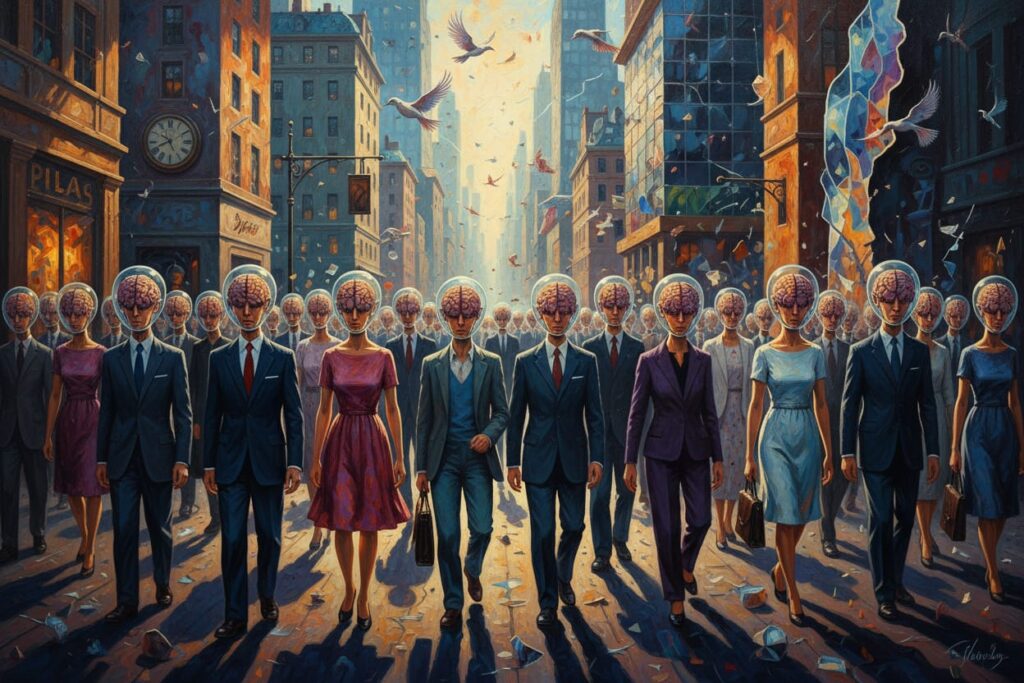
Free range slavery is the solution to the problem of rebellion. Permit the slaves some freedom of movement, and the freedom to choose the plantation upon which they will labour, and they won’t get discontented enough to rebel. This is doubly true if you also have a gigantic propaganda apparatus brainwashing everyone into thinking they’re as free as they could ever wish to be. It’s triply true if you also have a security apparatus devoted to destroying anyone who realises any of the above.

The new ruling class of the Industrial Age were factory owners, not plantation owners. This ruling class had the insight that enclosing the commons, making it impossible for many to sustain themselves, would create a large number of desperate people willing to work for very little. Free range slavery began with the enclosure of the commons in acts such as the Highland Clearances. The people so cleared had to move to the cities and take work in factories, where they were regularly put to work for 70-80 hours per week.

In spirit, free range slavery is enslavement on the class level, something made more possible by modern technology. This technology allows for an unprecedented level of co-operation among the slave-owning classes. These ruling classes co-operate closely through two-way technology such as the telephone, while the middle and working classes are divided and conquered through one-way technology such as the television.

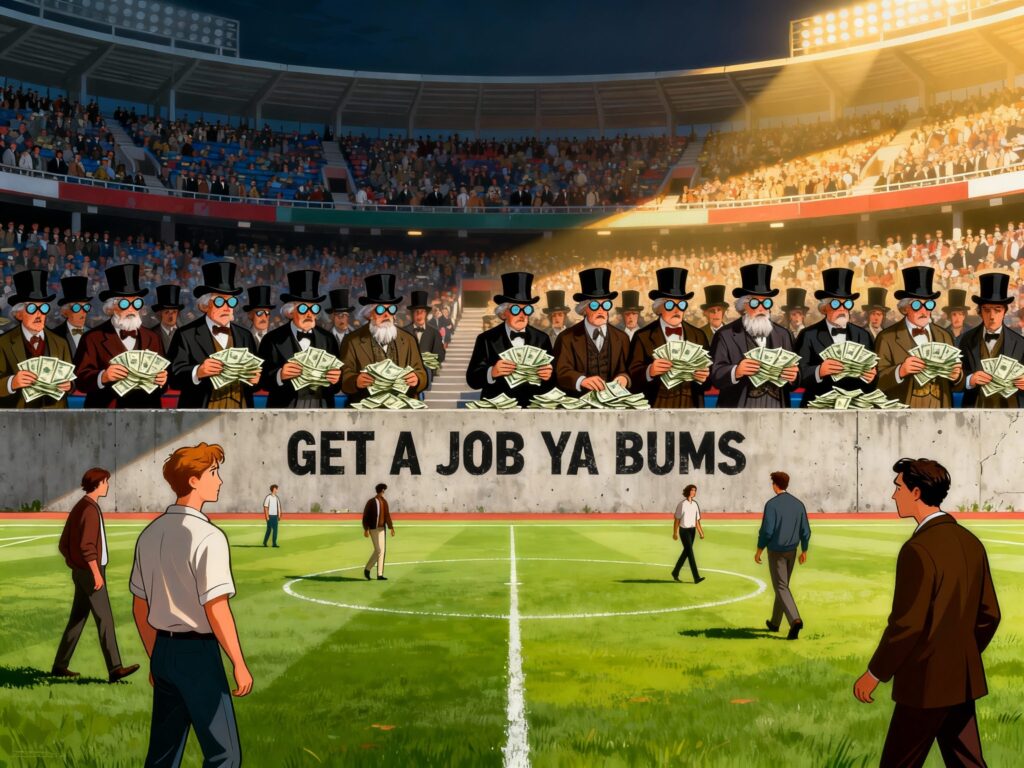
In the free range slavery model, each slave is free to choose the plantation on which they work. But the system is rigged so that, no matter which plantation they choose, they can never overcome slave status. No matter how high their wage, they have to pay so much in taxes, rents and other expenses that they are just as incapable of improving their position as the plantation slave.

A man who works 60 hour weeks, 250 hours/month, making $10/hour, will make about $2000/month after tax. Average rent for a one bedroom apartment is $1000/month in many American states. His bills for groceries, healthcare, electricity and other utilities will come to at least $500/month. This will leave him at most $6,000/year to put towards a house – and the average American house price is now above $370,000, so it will take him at least 60 years to get there. In practice, he will never get there, because working 60 hour weeks for 60 years is not realistic. But he will probably put in a lot of effort before he realises this.

Those who already own all the land are laughing all the way to the bank at this arrangement.

There are several advantages to the free range slavery model, which essentially maximises horizontal freedom at the same time as minimising vertical freedom.

The first, and most obvious, is that the slave owners no longer have to bother with the feeding, shelter and upkeep of the slaves. Those things are now the slaves’ problems. This is much more efficient for the slave owners, who now only have to manage the slaves during working hours. Outside of working hours, the free range slave manages itself.

A second advantage is that the free range slave can be manipulated into believing that his difficulties are his own fault. This makes him much less likely to blame the slave owners and landlords. If a free range slave can’t afford housing, he can simply be told that he isn’t working hard enough. Likewise if he can’t afford decent food. If he gets killed by rent, he can be blamed for choosing to live in a high cost-of-living area. Can’t or won’t relocate? Then he doesn’t really want freedom enough.

The main advantage to the model is that the slaves never figure out that they are slaves. If they were forced to wear shackles, or if they were whipped by overseers, they would figure it out in short order. But because they are free range slaves, any of them who complains about their conditions is met with “You can always get another job somewhere else.” Because they’re always scrambling to find or to keep employment, they never figure out that they are structurally enslaved in a way that individual action cannot overcome.

Free range slavery is, therefore, correctly understood as an ingenious system of mass enslavement with minimal resistance.

*

For more of VJM’s ideas, see his work on other platforms!
For even more of VJM’s ideas, buy one of his books!

*

If you enjoyed reading this piece, buy a compilation of our best pieces from previous years!

Best VJMP Essays and Articles of 2023
Best VJMP Essays and Articles of 2022
Best VJMP Essays and Articles of 2021
Best VJMP Essays and Articles of 2020
Best VJMP Essays and Articles of 2019
Best VJMP Essays and Articles of 2018
Best VJMP Essays and Articles of 2017

*

If you would like to support our work in other ways, make a donation to our Paypal! Even better, buy any one of our books!

Natural And Unnatural Religions

There are many different ways to classify the world’s religions. The usual way is by reference to their group origin: Dharmic, Taoic, Abrahamic etc. Others make the division into Western and Eastern religions, or esoteric and exoteric. A previous VJM Publishing essay made a distinction between spiritual and political religions. This essay will try a new approach: a distinction between natural and unnatural religions.

The central contention of this essay is that there is a natural religious tradition common to the entire human race, and that the many deviations from this are mostly unnatural. In this sense, religion is an inherent behaviour, like making music or building shelter. These natural religions follow a typical path, with some local flavour.

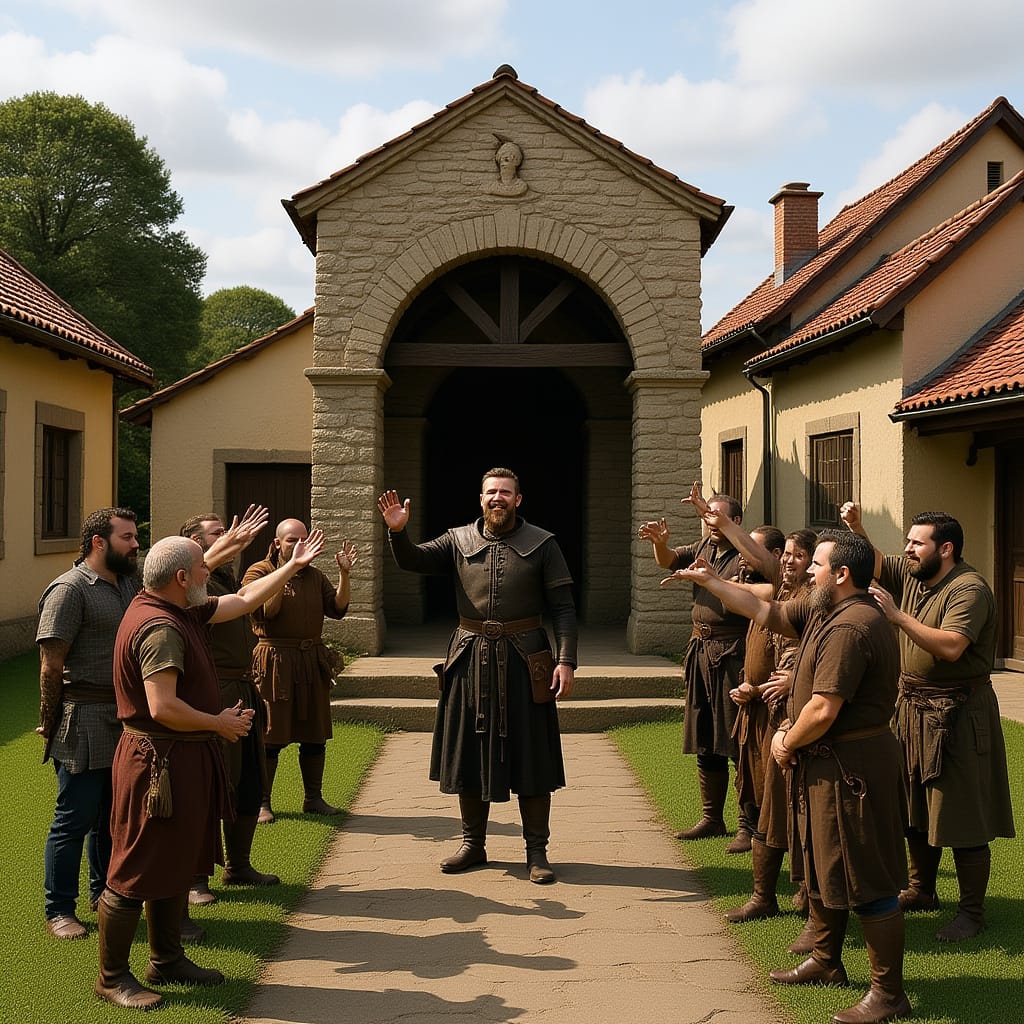
The natural religions start with ancestral veneration. This itself begins with the understanding that the ancestors are the reason why you yourself occupy the societal niche you do. Those who came before you battled the elements and outside enemies in order to defend the space that you now subsist in. Gratitude for this is the first spark of natural spirituality.

Ancestral veneration leads to the understanding that those who follow you will venerate you. As they enter into the niche you have saved for them, if this niche is a good place in which they can thrive, them venerating you is natural. A person who understands this will steward society into a better future instead of acting selfishly and exploiting it.

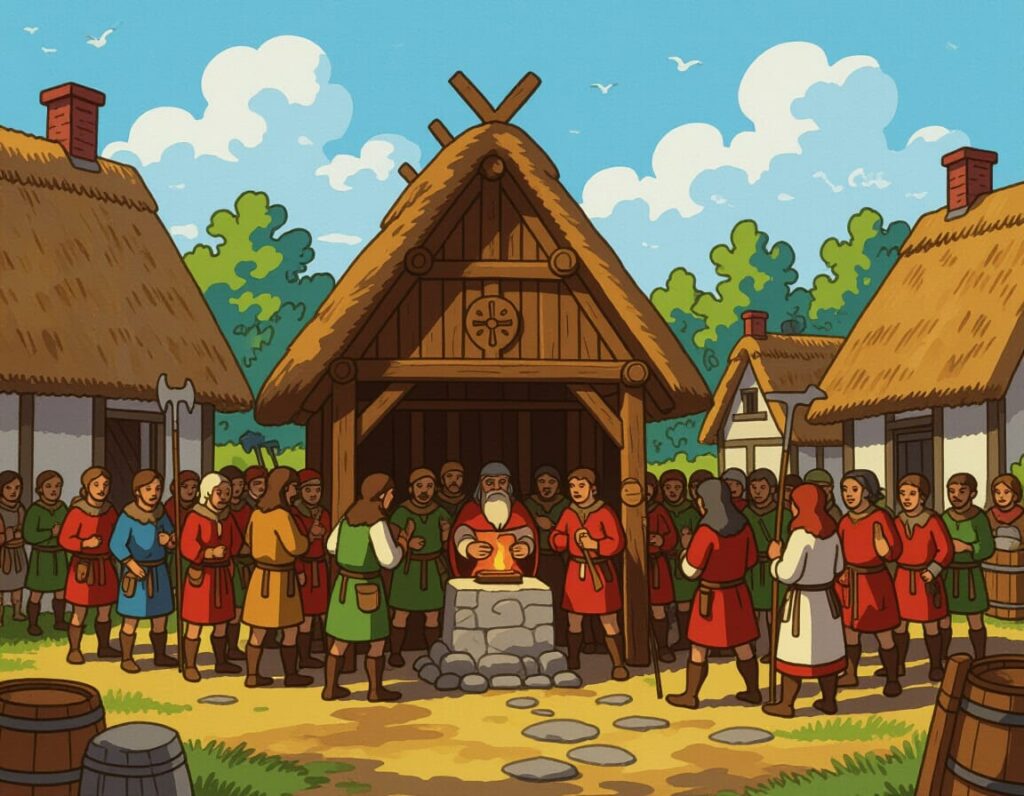
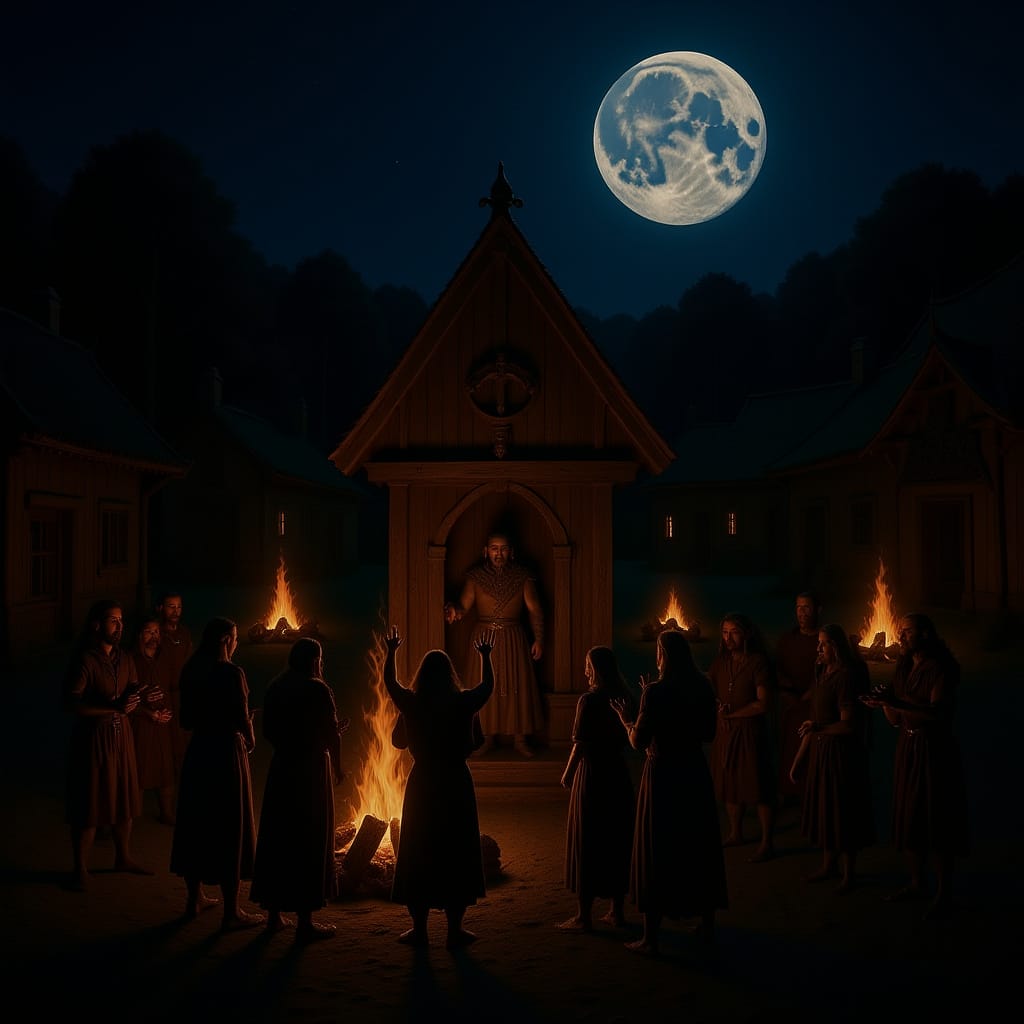
An appreciation of both those who came before and those who come after leads to an appreciation of natural cycles. In the same way that the Sun rises in the morning and sets in the evening, the human being rises in their youth and declines in later adulthood. These cycles are a fundamental part of life. Knowing this, a naturally religious person will – without needing to be prompted by an authority – celebrate the high points of the solar cycle: the solstices and equinoxes. The fact that the world will get darker (or lighter) after a certain date is imbued with a deep spiritual significance.

An appreciation of natural cycles leads to an understanding of reincarnation. If the Sun rises every morning after setting every evening, and if the Spring comes after every Winter, it’s logical to believe that a new birth occurs after every death. This is essentially The Cyclical Argument given for the immortality of the soul in Phaedo.

When Socrates made this argument, he was not stating something he came up with himself. Because Greece of the time followed a natural religious tradition, he was simply stating a widely-believed fact. The ancestral veneration of the Greeks had developed into a pantheon of gods, much as it had in India, China and other places that followed natural religious traditions. This had led to the celebration of the high points of the yearly cycle. From there, the priests among the Greeks (as those in other places) came to understand the truths of reincarnation and karma, as described in Phaedrus, Republic, Timaeus and other dialogues.

Thus it can be seen that the natural religions develop naturally. The unnatural religions, by contrast, are made up for a particular purpose.

For example, Christianity was invented by Jews to place themselves at the centre of the lives of anyone who adopted it. Much of the New Testament was written by Paul, who acted intentionally to bring this Jewish religion to Rome, knowing that Rome could serve as a springboard to spread it to the ends of the Earth. His success has centred Western life around Jews ever since Constantine.

As a result, the Crusaders were more concerned about liberating Jerusalem from Muslim rule than Spain. This is a highly unnatural state of affairs, but, being Christian, Jerusalem was at the centre of their lives, with Europe decentred. Unnatural religions devote the attention of their followers away from their ancestors and towards the creators of those religions.

The Baha’i religion is a transparent attempt to bring all world religion under an Abrahamic umbrella. The deeply unnatural quality of Baha’i is seen in its insistence, against all evidence, on the equality of all human races. Only someone with a desire to subjugate the entire world under one rule would insist on the equality of all its peoples. It’s typical for an unnatural religion to claim to be universalist, but to be arranged so that one particular group is central and thus inevitably in charge, even if informally. In the case of Baha’i, like the other Abrahamic religions, this is Semites.

Unnatural religions do not generally believe in reincarnation and karma, instead pushing a “one judgment for all eternity” narrative in order to create maximum fear, this in order to maximise control. Neither do they use spiritual sacraments, knowing them to decondition people from the brainwashing unnatural religions depend on for power.

Also characteristic of unnatural religions is a rejection of one’s natural allies. The subjugation of women was not a religious principle before Abrahamism, because it was understood that a husband and wife are on the same team. Rabbi Yeshua preached “I have come to ‘set a man against his father, a daughter against her mother, and a daughter-in-law against her mother-in-law’; and ‘a man’s enemies will be those of his own household.’ He who loves father or mother more than Me is not worthy of Me. And he who loves son or daughter more than Me is not worthy of Me”. Yeshua, like any psychopathic cult leader, demanded that followers put him above their own families.

Natural religions, by contrast, emphasise the importance of one’s own ancestors.

Unnatural religions also hate and fear the natural world. Covering all women in burkas is exceptionally unnatural, but Abrahamist sexual prudishness considers anything related to sex to be sinful. In fact, all of biology is denied in the unnatural religions: Abrahamists today deny both evolution and racial differences, an echo of how they used to deny heliocentrism. Perhaps the most invidious aspect of this hatred of the natural world is the hatred of natural spiritual sacraments, especially cannabis and psilocybin mushrooms. This is one of the major causes of the world’s spiritual ignorance today.

Elementalism is a hybrid of natural and unnatural religions. It’s unnatural in the sense that it was deliberately created and not a development of inherent spiritual instinct. However, it is natural in its emphasis on appreciating the cycles of life, on the use of plant-based spiritual sacraments, on the importance of fighting evil and on the truths of reincarnation and karma.

*

For more of VJM’s ideas, see his work on other platforms!
For even more of VJM’s ideas, buy one of his books!

*

If you enjoyed reading this piece, buy a compilation of our best pieces from previous years!

Best VJMP Essays and Articles of 2023
Best VJMP Essays and Articles of 2022
Best VJMP Essays and Articles of 2021
Best VJMP Essays and Articles of 2020
Best VJMP Essays and Articles of 2019
Best VJMP Essays and Articles of 2018
Best VJMP Essays and Articles of 2017

*

If you would like to support our work in other ways, make a donation to our Paypal! Even better, buy any one of our books!
What A Sensible Drug Policy For 2026 And Beyond Might Look Like

The Misuse of Drugs Act was introduced in 1975, a response to President Richard Nixon’s declaration of a War on Drugs in June 1971. These two moves were the end result of decades of puritanical hysteria around altered states of consciousness. This hysteria began with alcohol prohibition and, after the popularisation of psychedelics in the 1960s, reached a peak.

New Zealand, ever the kid brother of the Anglosphere, followed mindlessly along with America in making almost every drug illegal. It’s crazy to have a drugs policy where booze is the only recreational option, but thanks to Christian moralism, atheist fear of the psyche and general ignorance and hysteria, that’s what we ended up with. This essay is an attempt to describe what a sane, rational drug policy would look like, if anyone in power was ever incentivised to bring one in.

The sane and rational place to begin is with the research of Professor David Nutt, the world’s foremost expert on relative drug harms. He has developed a set of criteria for measuring drug harm using an analysis technique called multiple criteria decision analysis, or MCDA. Resulting from Nutt’s research is a scale of relative drug harm, outlined at length in books such as Drugs: Without The Hot Air. In theory, a science-based scale like this should be the foundation of an intelligent drug law.

The scale of relative drug harm varies depending on local factors, so that it’s not possible to apply one uniform scale to all countries. For example: in New Zealand and Australia, a lot more damage is done by methamphetamine than by crack cocaine. It’s the other way around in American inner cities. In any case, it’s possible to draw many valuable insights from Nutt’s analysis.

My sane and rational drug policy would declare that Western culture has already managed to handle alcohol and its effects. There are pubs all over the West and yet our culture has not collapsed. Countless movies, songs, books and plays are full of alcohol references, and yet society has not degenerated (at least not from alcohol). This makes alcohol a baseline to which other drugs can be compared.

Any drug more dangerous than alcohol would remain illegal as it currently is. This would include methamphetamine, crack cocaine and heroin. People involved with importing or manufacturing these drugs would still face severe legal penalties.

Any drug less dangerous than alcohol would become legal with some degree of regulation. The difficulty here, of course, is that a wide range of drugs fall into this category. Most drugs are much less harmful than alcohol and each would need a bespoke legal schedule. Sane and rational people ought to be able to cope with this.

The truly less dangerous drugs, such as cannabis, should be relatively easy to deal with. Cannabis cafes can be legalised along the lines of existing pubs. There is already precedent for this model with the cannabis cafes of the Netherlands and Colorado. Cannabis doesn’t cause people to become aggressive or violent and so doesn’t need to be managed strictly like alcohol does.

Because of the low risk associated with MDMA, specialist MDMA lounges should also be possible. It will also be possible therein to hear music that is different to the usual Boomer rock that one hears at pubs. These lounges will likely target those more interested in a rave-style experience than a booze-up. Those selling MDMA at such venues will be legally tasked with ensuring that their patrons are not harming themselves through excess or irresponsible use.

Psychedelics are also not considered particularly dangerous by Professor Nutt. In fact, magic mushrooms and LSD are among the least harmful of all the drugs surveyed (Nutt’s MCDA doesn’t consider mescaline and ayahuasca, which are more American drugs). A psychedelic policy might involve sale from pharmacies only, with no venue sales. It might involve legal home mushroom grows. In any case, it would abolish any requirement that psychedelics can only be taken under medical supervision, indoors, during working hours.

Opium is less dangerous than alcohol, according to David Nutt, and therefore this policy would include legal opium. However, this would be highly restricted owing to its unfamiliarity to Western culture. The correct degree of regulation here might involve opium lounges akin to private clubs, which would be more discreet than pubs or cannabis cafes (i.e. they would only admit members).

Users of regular amphetamines might not want to use them in public, so this might be another case where the pharmacy-only model would be superior to an alcohol-style pub and club model.

All of these regulations would potentially also include the usual provisions for not selling drugs near schools, not using a motor vehicle while high, not using drugs in public etc.

Therefore, my proposed Drug War Armistice policy would not (at least, not initially) change the legal status of methamphetamine, crack cocaine or heroin. But it would change the legal status of most other drugs, on the basis that they’re all safer than alcohol, and therefore that our society can handle them. Moreover, anything less harmful than alcohol is a potential exit drug from alcohol. Thus, liberalising relatively less harmful drugs will reduce overall alcohol and/or other drug damage.

*

For more of VJM’s ideas, see his work on other platforms!
For even more of VJM’s ideas, buy one of his books!

*

If you enjoyed reading this piece, buy a compilation of our best pieces from previous years!

Best VJMP Essays and Articles of 2023
Best VJMP Essays and Articles of 2022
Best VJMP Essays and Articles of 2021
Best VJMP Essays and Articles of 2020
Best VJMP Essays and Articles of 2019
Best VJMP Essays and Articles of 2018
Best VJMP Essays and Articles of 2017

*

If you would like to support our work in other ways, make a donation to our Paypal! Even better, buy any one of our books!
What Orwell Meant By “War Is Peace” And Why It’s So Relevant

One often hears reference to the phrase “War is Peace” from George Orwell’s 1984. VJM Publishing mentions it all the time. In fact, we mention it so much, that I often cringe when making essay compilations, because it comes up so often. I say “surely this is a cliche now?” In truth, it’s not a cliche because 1984 is as relevant as The Iliad. Everyone knows the basics of it by now because they must.

In 1984, Big Brother has three mottos. The first of these is “War is Peace”. The application of these mottos is how order and control is maintained (this ordering and controlling is discussed at length in the book-within-a-book, The Theory and Practice of Oligarchical Collectivism, which is in my opinion the most important 20 or so pages ever written in English).

It’s understood by most that this phrase refers to external war. If an authoritarian government provokes a state of war with a neighbour, the people’s anger will be deflected from their government to that neighbour. Thus authoritarian rulers start wars to deflect blame for how poorly run their countries are.

Many of us were taught about Saddam Hussein as a classic example of this phenomenon. Hussein, the television told us, attacked Kuwait to deflect the dissatisfaction of those he ruled over onto an external enemy. This is actually a pattern common to Middle Eastern rulers in recent times, and also in various other times and places throughout history.

But not enough people understand that this phrase also refers to internal war.

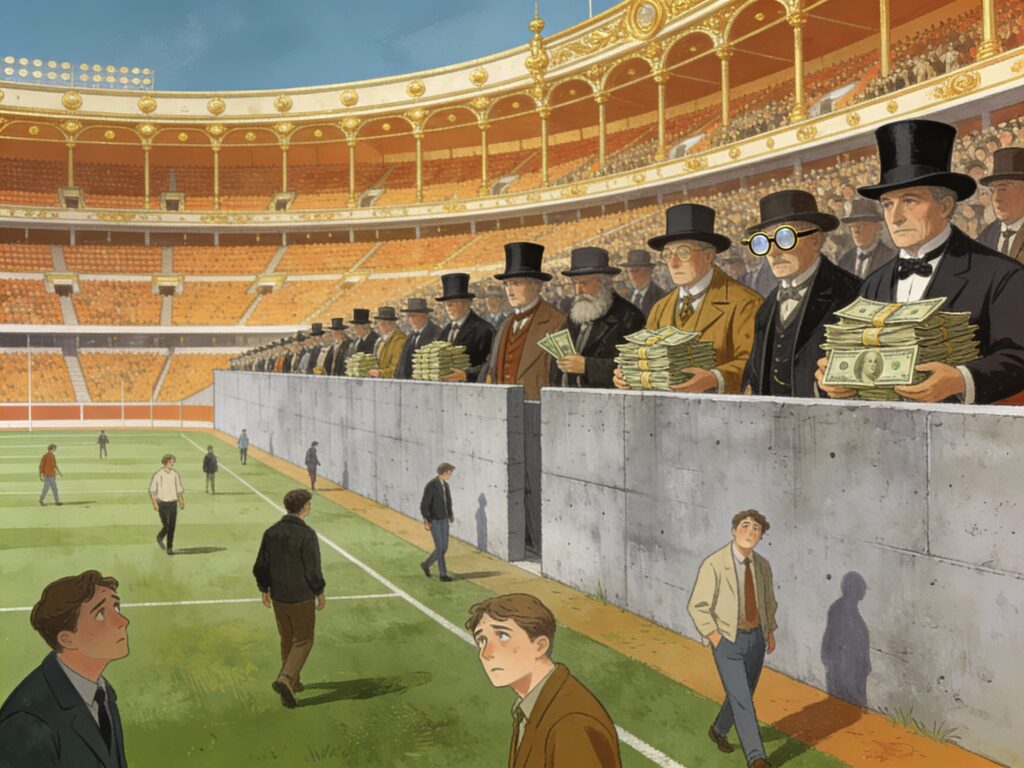
If the ruling class can set the masses against each other, they can secure their own position at the top of the pyramid. They do this, in practice, by fomenting discord along every existing social fracture line, and by creating new ones. The middle class is set against the working class by telling the former that the latter are lazy, and telling the latter that the former are greedy. Whites are set against browns in the same manner. Men are set against women by telling the latter that the former are trying to control them, and by telling the former that the latter are trying to vote away all their money.

In this manner, everyone is encouraged to have someone to hate who isn’t the ruling class. All discontent is directed horizontally at someone else on the same level. This leaves the ruling class safe and secure above it all.

Without this concept, the modern world can’t be explained.

It’s simply impossible to explain why Western ruling classes imported so many Muslims and Africans without reference to War is Peace. Everyone honest and intelligent knew that these Muslims and Africans would attack and harm the people in the neighbourhoods they were dumped in. But it must be understood this was precisely the point. The point was to subject working-class families to countless violent and sexual crimes. The point was to encourage those working-class people to hate the newcomers. In doing so, the working class would forget their grievances against the ruling class. And thus the position of the ruling class was secured.

It’s also impossible to explain the War on Drugs without such a reference. Why would the political establishment destroy so many of the finest minds of their younger generations by saddling them with criminal convictions, when all they wanted to do was explore consciousness and spirituality? War is Peace explains: the ruling class wanted the pro-drug and anti-drug segments of the population to be at each other’s throats. So it must either err on the side of excess restriction (War on Drugs), or err on the side of excess liberty (as with alcohol): it cannot take a reasonable middle ground. In either case, rationality must be eschewed, because that would lead to peace, which, viewed from the perspective of the ruling class, is war.

It’s also impossible to explain why the mainstream media pushes so much cortisol-raising fear porn unless this concept is understood. Why does the mainstream media constantly stir discord and misunderstanding? Why does it platform the worst examples of almost every demographic, and ignore the best? Because the owners of it want discord and misunderstanding. Not because it “drives clicks” – they don’t need money. They want control. They want to be the boot stamping on the face of the masses, forever. To achieve this, they need to foment war among those masses.

Everyone with any real chance of becoming part of the ruling class understands this principle, and habitually applies it by setting normal people against each other. Demonstrating an ability to do this is how people audition for a place in the ruling class.

Essentially, the logic behind “War is Peace” can be explained as: war for my enemies is peace for me. This is relevant because the Western ruling class is using this exact logic to destroy the Western middle and working classes. In most cases where there is clear evidence of social dysfunction or decay, the War is Peace principle is being applied somewhere.

*

For more of VJM’s ideas, see his work on other platforms!
For even more of VJM’s ideas, buy one of his books!

*

If you enjoyed reading this piece, buy a compilation of our best pieces from previous years!

Best VJMP Essays and Articles of 2023
Best VJMP Essays and Articles of 2022
Best VJMP Essays and Articles of 2021
Best VJMP Essays and Articles of 2020
Best VJMP Essays and Articles of 2019
Best VJMP Essays and Articles of 2018
Best VJMP Essays and Articles of 2017

*

If you would like to support our work in other ways, make a donation to our Paypal! Even better, buy any one of our books!