1. The fool believes that this world is all there is.
2. There are an infinite number of other worlds, some better than and some worse than this one. All are different.
3. The Multiverse is the name given to the division of the Great Fractal into worlds that make sense.
4. The Multiverse is a subset of the Great Fractal.
5. The Great Fractal contains all possible sensory and perceptual impressions.
6. The vast majority of possible paths through the Great Fractal make little coherent sense to the fragment of consciousness that would observe them.
7. The gods are more entertained by a path through the Great Fractal that makes coherent narrative sense than by one that does not.
8. In order to maximise the narrative coherency of the experience of moving through the Great Fractal, the Multiverse was created, and with it the illusion of birth and death.
9. The Multiverse is broken up into an infinity of worlds, covering the entirety of the Great Feminine Axis.
10. Each of these worlds has a base vibration and a base frequency.
11. Beings incarnate into worlds wherein the frequency of those worlds matches the frequency of the consciousness of those beings.
12. All beings whose frequency of consciousness is below a certain level will incarnate into the Multiverse, where there is birth and death, instead of the higher parts of the Great Fractal.
13. No-one can complain about the awfulness of this world, because it simply matches the frequency of our fragments of consciousness.
14. For us to be worthy of incarnating into a higher-frequency world, our fragments of consciousness would themselves have to be higher frequency.
15. The Multiverse serves to bind those of us of lower frequencies to a particular world.
16. This action is taken as a kind of quarantine. It prevents, to some extent, beings of higher frequencies from being sullied by the presence of beings of lower frequencies.
17. This quarantine process is voluntary, because it is understood by all honest beings to be necessary.
18. Low-frequency beings might need to incarnate in a world of birth and death before they can become motivated to learn the importance of behaving correctly.
19. High-frequency beings are liberated from the Multiverse, and can explore the Great Fractal without the restrictions of death and incarnation into a physical body.
*
This chapter is an excerpt from Elemental Elementalism, the foundational scripture of the new religion of the Age of Aquarius.
The South-Eastern Territorial Imperative is the name given to the strategy of protecting the high civilisation of the world from the coming catastrophe.
It’s apparent to all that the old order of the world is collapsing. After 20 years of disastrous Middle Eastern military adventurism and 40 years of equally disastrous neoliberalism, only a very few Westerners still have faith in their political rulers. The widespread despair felt today has caused many to drop out of society completely, a phenomenon akin to the behavioural sink of John Calhoun’s Mouse Utopia experiments.
Times like these often involve a massive loss of knowledge and culture. The great risk is of another Dark Age, when the forces of ignorance seize control, and the forces of science and wisdom are marginalised and silenced. Signs of this can already be seen in the New Authoritarianism that seeks to cancel or deplatform anyone who thinks wrongly, where wrongthink is anything that does not serve the interests of globohomo.
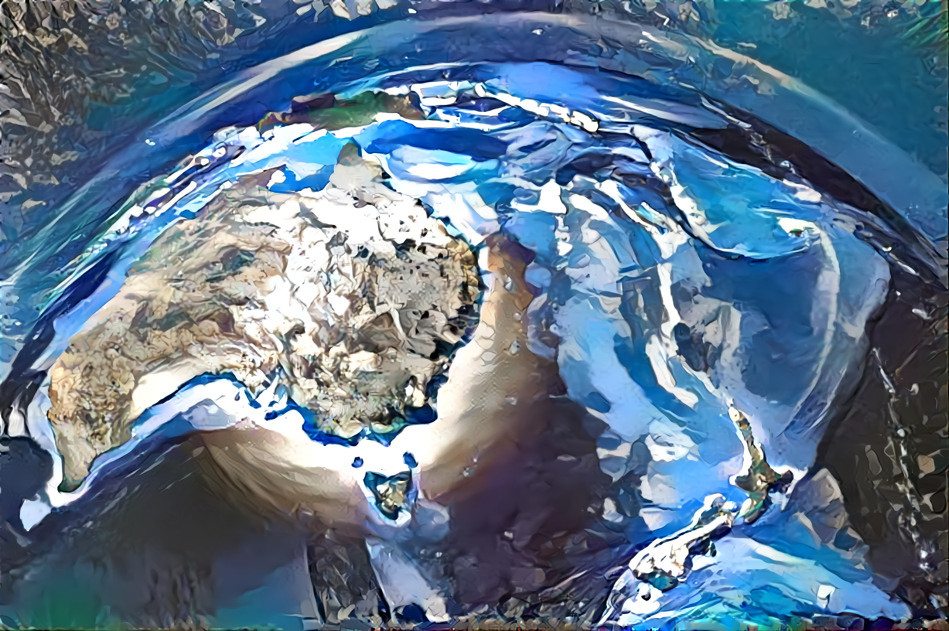
The proposal of the South-East Territorial Imperative is that all the K-selected peoples of the world pull back to the territories currently occupied by Australia and New Zealand, i.e. the Anzac Empire, in the Southeastern corner of the map. In practice, ‘K-selected’ refers to high-IQ people who have relatively few children and who look after them properly. This includes, but is not necessarily limited to, Europeans and Far East Asians.
The South-East Territorial Imperative has a precedent in the settlement of America. The population of the United States in 1860 was around 30 million, or roughly the same as that of Australia and New Zealand combined in 2021. By 1890 this had expanded to 60 million, and by 1930 it had reached 120 million. These rates of growth were not surprising given the opportunities available in America compared to the moribund economies and cultures of Europe.
If the now-present peoples of the South-East would spend this decade winning the propaganda battle, we could spend the rest of the century fighting for the South-East Territorial Imperative. If we did so, then we could have as many K-selected people as Japan by the end of the century. With over 20 times as much land as Japan, our Anzac Empire could even potentially become a world force on the order of Russia by 2100.
There are two major advantages with calling the world’s K-selected peoples to gather in the Southeastern corner of the world.
The first is geographic. The Southeastern corner of the world is protected from the world’s r-selected hordes by vast distances. Whereas Europe and America have Africa and Latin America (respectively) on their doorsteps, the Anzac Empire shares no border with Asia or with anyone else. Europe and America appear to be getting slowly overrun by their rapidly-breeding Southern neighbours, but the Anzac Empire would have no border that could be crossed on foot or by dinghy.
Moreover, the geography encompassed by an Anzac Empire would be sufficient for future growth into a world superpower. Australia and New Zealand combined would already have the world’s 11th largest economy, the third largest amount of agricultural land, and the world’s single largest Exclusive Economic Zone. The only thing we’re missing, and which America, China, India, Japan and Russia possess, is 100 million or more K-selected individuals.
The second is pragmatic. The South-Eastern Territorial Imperative is inherently eugenic, and as such seeks to maximise the ratio of K-selected to r-selected people. There are very few r-selected people already in this Southeastern corner of the world. As such, it’s the closest that we can get to a blank canvas upon which to paint our high civilisation.
Our current rulers aren’t just going to step aside, though. They will have to be removed, and prevented from regaining power, by a concerted and determined effort of the Anzac nation.
A revolution that introduced an Anzac Empire to the world stage would inevitably take inspiration from the American Revolution. As such, it would be necessary for a hard-core of individuals, free from slave morality, to put forward a new and comprehensive system of human rights. The best candidate for any such system would be modelled on the Sevenfold Conception of Human Rights, which posits a spectrum of rights encompassing everything from the grossest aspect of life to the most subtle.
Now is the time to prepare for such a move. America was populated mostly by those who felt that Europe was lost; the Anzac Empire will be populated by those who feel that both America and Europe are lost. Any citizen of either civilisation, once they realise that the future of both places are grim, could be encouraged to pull back to the South-East. If we could attract enough high-quality people looking for a fair deal, we could become what America was 120 years ago.
The difference is that, with enough wit and will, we can prevent the mistakes the Americans made. The worst of their mistakes, and the most important for us to avoid, was the Hart-Celler Act, which opened American borders to the world’s r-selected. In the Anzac Empire of the future, it will be a crime punishable by 20 years imprisonment to agitate for the mass importation of r-selected cheap labour.
The ultimate goal of this nascent empire would be to terraform the Australian interior to the extent that a great inland sea occupied what is now empty desert. This would alter the climate of the desert such that it was habitable for modern Western civilisation. With this achieved, the population of an Anzac Empire could reach 500 million or more. And this would be 500 million of the world’s most K-selected people: the most intelligent, the most rectitudinous, the most industrious and long-sighted.
1. Elementalism conceives of Heaven as the most desirable part of the Great Fractal and Hell as the least desirable part of the Great Fractal.
2. As such, Heaven is represented by the Summer Pole of the Quadrijitu and Hell by the Winter Pole of the Quadrijitu.
3. Following this logic, the Great Masculine Axis spans all the possible localities between the most desirable part of the Great Fractal and the least desirable part of the Great Fractal.
4. Some of the parts of the Great Fractal into which a being can incarnate are inherently more or less heavenly than others.
5. Within those parts, some of the areas into which a being can move are inherently more or less heavenly than others.
6. Within those areas, some of the perceptions which a being can adopt are inherently more or less heavenly than others.
7. Masochism proves that whether or not a person enjoys an experience is a matter of perception. It’s possible to enjoy any experience with the right perception.
8. Therefore, Heaven and Hell are a matter of perception. Heaven feels like living in a city ruled by Augustus. Hell feels like living in a city ruled by criminals.
9. The second-most heavenly perception is to fully understand the First Tenet. The person who does so lives in a state of gnosis.
10. The most heavenly perception is to fully understand the Fourth Tenet. The person who does so lives in a state of ataraxia.
11. The second-most hellish perception is to fall victim to the Prime Illusion. The person who does so cannot make sense of reality.
12. The most hellish perception is to fall victim to the Prime Delusion. The person who does so cannot feel ataraxia.
13. Heaven and Hell are best understood as frequencies of consciousness. As such, people usually get what they deserve.
14. The longer the time frame, the more one gets what one deserves.
15. Although the worlds outside of this one are more heavenly or more hellish, this world provides near-infinite scope to experience any frequency of consciousness.
16. This world is one of the Hell realms, as evidenced by the fact that death is inevitable here.
17. The fact that this world is one of the Hell realms is not cause for despair. It is cause for rejoicing, for herein one has greater opportunity to entertain the gods.
18. A person might be strongly motivated to move towards Heaven and to move away from Hell, but the most important thing is not where they are on the Great Masculine Axis.
19. The most important thing is whether a person’s actions entertain the gods.
*
This chapter is an excerpt from Elemental Elementalism, the foundational scripture of the new religion of the Age of Aquarius.
One of the most common arguments the materialist makes is that nothing divine can be proven. If anything divine existed, so the materialist has it, the believer in the spiritual worlds would be able to present it for scrutiny. If the believer cannot summon the divine to stand before us on command, then it can logically be concluded that nothing divine exists.
The materialist usually demands that the believer produce a magic rabbi with a beard and sandals, this being the conception of the divine in the mind of the herd. Failing that, showing Buddha, Zeus, Krishna or Odin would do. Because no divine being can be so produced, the materialist smugly concludes that nothing divine exists.
Realising evidence of the divine is not a matter of someone bringing it forth as if it were evidence in a court trial. It’s a matter of seeing it. The evidence, in reality, is everywhere. The determining factor is the clarity of one’s vision.
If a sceptic should claim that microbes don’t exist on account of that the sceptic had never seen one, a scientist could give him a microscope. “Simply use this tool called a microscope”, the scientist could say, “and the microbial world will reveal itself to you.” A scene like this happens in high school science classes all over the world every day.
This all sounds logical to a modern person. But what if the sceptic was religious, and didn’t want to look down the microscope for fear of demon possession? Or, what if the sceptic suspected, rightly, that looking down the microscope would so vastly expand his narrow conception of reality that his smug, empty confidence would be shattered?
This might sound absurd, but this is directly analogous to the current situation with psychedelics.
It was known, from the first modern psychedelic wave of Humphrey Osmond and Aldous Huxley in the 1950s, that these sacraments revealed the divine. That’s even where the name comes from: ‘psyche’ means soul, and ‘delic’ comes from ‘deloun’, which means to reveal. In other words, psychedelics reveal the presence of the soul – and thereby the spiritual worlds – to those who could not previously see them.
Anyone who denies this point is obliged to either: take a massive dose of a psychedelic sacrament and take a look for themselves, or keep quiet, and let those who have taken a look do the talking. To refuse to take a psychedelic on any grounds – fear of mental illness or otherwise – and then deny what other people have seen, is childish absurdity.
People may choose not to look through the metaphysical microscope, but they don’t get to deny what others have seen.
The use of psychedelic sacraments is a metaphysical microscope that reveals the spiritual worlds to the observer. If a person denies the spiritual worlds, they are hereby invited to take a large dose of a psychedelic sacrament. Enough is now known about psychedelics for any intelligent person to research a safe dose and to source it from a reputable supplier. Even in the most desperate case, it’s possible to identify and consume a pile of magic mushrooms in the wild.
An unwillingness to do this is not proof that no spiritual worlds exist. It’s merely proof that someone is a coward.
It’s possible to take a heavy dose of a psychedelic and still not see any worlds beyond. This is analogous to how a blind person won’t see any microbes even with a microscope. But neither is this proof that no spiritual worlds exist.
Psychedelics, after all, are not even necessary – it’s possible to see spiritual worlds simply through refining one’s consciousness to a high enough frequency. Since most people don’t have enough time for that, most people take psychedelics. But no-one is blinder than he who will not see.
A microscope is a tool for looking deeper inside the physical world; a psychedelic is a tool for looking deeper inside the metaphysical world.
Those who have seen beyond are as convinced of the existence of spiritual worlds as they are of the existence of Planet Earth. If materialists refuse to use a metaphysical microscope to catch up to those of us who have seen beyond, we will just have to move on without them. They can gather and ponder the contradictions of their worldview while the rest of us can exult in knowing the truth.
Those who do not see are normies, but those who will not see are tards.