
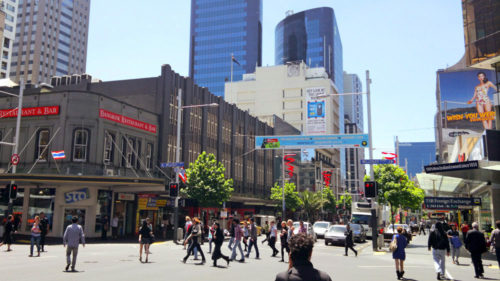
Understanding New Zealand: Demographics of Asian New Zealanders

The main reason why Asian immigration to New Zealand has been the polar opposite to Muslim immigration to Europe in terms of its success and how happy the locals are with it can be seen by the demographics of the group. In particular, the Asians moving here are considerably wealthier, better educated and more middle class – the sort of person that is most likely to make a positive contribution to those around them.

The demographics of Asian New Zealanders, like the voting patterns of this group, are primarily characterised by the fact that the majority are immigrants or descendents of relatively recent immigrants, and as such had to pass the relatively stringent points system.

For example, the correlation between being Asian and being born overseas is an extremely strong 0.91. This tells us that the vast majority of Asians living here were born overseas. The correlation between being Asian and being born in North East Asia was 0.87, but the correlation between being Asian and being born in the Pacific Islands was also fairly strong, at 0.51.

This tells us that, although the bulk of Asians in New Zealand are from China, Hong Kong, Taiwan, South Korea and Japan, there are also many South Asians, and even a fair number of Fijian Indians who are here.

The Asians that do come here certainly do so with higher educations (as mentioned above, this helps them pass the points system). The correlation between being Asian and having a university degree was 0.64 for a Bachelor’s, 0.41 for an Honours, 0.60 for a Master’s and 0.28 for a doctorate.

Interestingly, these figures are not especially indicative of higher earning. The correlation between being Asian and net median income was only 0.22, positive but not significant. This is curious considering that being Asian had a significant positive correlation with either of the two highest income bands: with $100-150K it was 0.32 and with $150K+ it was 0.28.

The reason for this might be that Asians, despite the stereotype of the Chinese slumlord, have not accumulated enough wealth to move into the rentier class yet – a class that is dominated by Kiwis of European descent and Maoris.

It may also be that Asians are much less likely than other Kiwis to live in a family where both parents are working, and that this lowers the average. Although the correlation between being Asian and earning $150K+ was 0.28, the correlation between being Asian and living in a family with an income of $150K+ was only 0.10.

There was a significant negative correlation between being Asian and living in a freehold house (-0.34) and a significant positive one between being Asian and living in a rented house (0.26). There is also a significant negative correlation between being Asian and being self-employed with employees (-0.31) and a significnat positive one between being Asian and working as a professional (0.37).

This group of correlations tells the story of Asians moving to New Zealand recently with professional educations and working professional jobs, but not having been here long enough to become old money and make investment income.

Correspondingly, there are strong correlations between being Asian and working in knowledge-intensive industries and none with either capital or labour-intensive industries.

The correlations between being Asian and working in a particular industry were 0.62 with financial and insurance services, 0.57 with wholesale trade, 0.50 with information media and telecommunications and 0.48 with professional, scientific and technical services.

That Asians tend to be middle-class can be seen from the positive correlation between being Asian and never having smoked tobacco: a very strong 0.77. As anyone who has been to Asia knows, this statistic is far from representative of the people who live there, which suggests that the sort of Asian that emigrates to New Zealand is a cut above their fellows.

The strongest correlation in this entire study – even stronger than the correlation between being Maori and voting Maori Party – is the correlation between being a Buddhist and an Asian – an immensely strong 0.95. This tells us that no matter how trendy Buddhism might be among certain Westerners in Nelson, Grey Lynn and Khandallah, the vast majority of New Zealand Buddhists are Asians who were born into it.

*

This article is an excerpt from Understanding New Zealand, by Dan McGlashan, published by VJM Publishing in the winter of 2017.
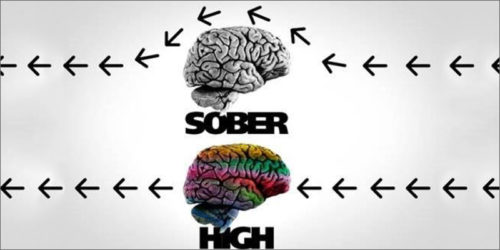
Sobriety Bias Syndrome

Sobriety Bias Syndrome is the tendency for people to erroneously assume that, if there are two competing perceptions of reality, the one that was arrived at while sober (or the most sober) must necessarily be the correct one. This line of thinking has retarded our cultures and had a grossly retrograde effect on our spiritual awareness.

The logic behind this is usually given thus: psychoactive drugs disturb the normal thinking processes of the brain, and these normal processes have evolved to make us optimally adapted to the environment around us, therefore without the influence of psychoactive drugs we will remain in the undisturbed and pure state best suited for accurately perceiving the material world.

This state is known as sobriety, and the term has become a synonym for clear-headed and rational thinking.

It is a very strange belief if one examines it, because it’s not clear what sobriety actually is. Our everyday experience of reality is formed by the interactions of several dozen neurotransmitters in our brains – and that’s even if we don’t smoke, snort, swallow, insufflate or shelve anything.

Even in a state that most people would consider to be fully sober, the conscious experience is strongly influenced by these neurotransmitters. Dopamine, serotonin, oxytocin, GABA, adrenaline, and dozens of others exist, and our mood at any time is mostly a function of the complex interactions between these.

So a sudden spike or trough in any of them can cause a profoundly different mood or attitude – an experience as strong as any “drug” trip.

Not even by meditating can one arrive at a state in which one is not influenced by these neurotransmitters. Meditation might help to inhibit the release of some of these natural drugs (especially noradrenaline), but in doing so it will merely facilitate the release of others (especially serotonin).

In other words, meditation advocates can legitimately be accused of being mere 5-hydroxytryptamine junkies.

Because one is always under the influence of these neurotransmitters, no-one has any way of knowing what sobriety even really is. The usual assumption is that the average, everyday or most common experience must be the natural one and therefore the state in which one does the most rational thinking.

But no person, even if they have definitely not taken any external drugs into their body, has any way of knowing whether their natural neurotransmitter levels are correct.

Many, many people have near-permanently elevated levels of noradrenaline and adrenaline as a consequence of all the stresses of living in a city, which is an extremely unnatural environment and which does not give people in it much opportunity to relax and to find homeostasis of anxiety levels.

It’s very plausible that these elevated levels of what are essentially endogenous war drugs have pushed us into a collective stupor in which we no longer can make decisions with an intelligent long-term perspective.

It’s easy to believe that we are so full of adrenaline that we can only make decisions with immediate rewards in mind, because this would explain the obesity, violence, callousness and stupidity that characterises our societies.

So we’re already not making sober decisions, and so changing the drug laws to reflect that exogenous drugs are not categorically worse for a person than endogenous ones will not necessary lead to the breakdown of social order.

In fact it could be argued that some exogenous drugs – and cannabis is the obvious example – actually serve to reduce the levels of some harmful or stupefying neurotransmitters and therefore cause the smoker to become more rational (this is why Rastafarians call their smoke-ups reasoning sessions).

Sure, we don’t need surgeons taking a hit on the crack pipe before they operate, but a change in attitudes to exogenous drugs need not lead to change in attitudes to professional workplace conduct.

The truth is that people arrive at all kinds of enhanced insights that can be, and have been, used to improve the quality of human life as a consequence of a drug-induced altered state of consciousness.

After all, how else would they do it? Novel solutions demand novel thinking. Novel thinking is certainly not achieved by repetitively going over the same neural pathways for years and years on end.

Some thinkers, like Terence McKenna, even credit the use of psychoactive drugs for much of the initial impulse to civilise our species and for the first stirrings of spirituality in the human creature. It’s also an open secret that much of the creative technological thinking that made reading this website possible was sparked by LSD.

The Sobriety Bias Syndrome, a kind of Puritanical abuse of the bandwagon fallacy, makes all of these insights harder to achieve by binding people’s thinking to the most mundane, banal, plebian simplicities that can be devised.

The sobriety bias is usually promulgated by a decidedly mediocre sort of person, best characterised as being incredibly boring, and sufficiently so to have long since driven all interesting people out of their social circles.

Understanding New Zealand: Demographics of Low-Skill Occupations

The low-skill occupations are generally made up of people who are in the demographics who are struggling. Although they are not doing as badly as beneficiaries, workers in low-skill occupations have to deal with the fact that the supply of low-skill labour is much greater than the demand for it and so wages are poor.

The wages for low-skill occupations are very poor in New Zealand. The correlation between net personal income and working as a machinery operator or driver was -0.59, and with working as a labourer it was -0.51. These are stronger correlations (only in the negative direction) than the one between net personal income and working as a manager.

Ultimately the reason for this is that working in a low-skill occupation does not take much of a personal investment in the form of an education.

The correlations between having no academic qualifications and working in a low-skill occupation were very strong: 0.85 for machinery operators and drivers and 0.82 for labourers.

Both of these fall very sharply towards the negative as academic qualifications increase. The correlation between having a Bachelor’s degree and working as a machinery operator or driver was -0.79, and the correlation between having a Bachelor’s degree and working as a labourer was -0.74.

These occupations are also the ones in which a person is most likely to be injured or to find themselves out of work for seasonal reasons or because of market fluctuations.

As a result, the correlation between working as a machinery operator or driver and being on the invalid’s benefit was 0.67, and with being on the unemployment benefit it was 0.62. The correlation between working as a labourer and being on the invalid’s benefit was 0.71, and with being on the unemployment benefit it was 0.53.

The most favoured industries for machinery operators and drivers were manufacturing (with a correlation of 0.76), transport, postal and warehousing (0.76), construction (0.48) and agriculture, forestry and fishing (0.40).

The most favoured industries for labourers were agriculture, forestry and fishing (0.77), manufacturing (0.72) and construction (0.49).

Consistent with the trend that tobacco use tends to be associated with people who have it relatively hard, the correlation between being a regular smoker and working as a machinery operator or driver was a very strong 0.82, and the correlation between being a regular smoker and working as a labourer was only slightly weaker, at 0.75.

As discussed in several other articles in this study, the immigration system favours the sort of person who is capable of paying a lot of taxes into the future, and this explicitly rules out machinery operators, drivers and labourers, because these occupations are both poorly paid and have a high risk of injury.

Consequently, the correlations between being born in New Zealand and working as a machinery operator or driver was 0.57, and with being a labourer it was 0.77.

The reason why there is a reasonably large gap between these two is because a larger proportion of Pacific Islanders work as machinery operators or drivers compared to labourers. The correlation between being a Pacific Islander and working as a machinery operator or driver was 0.31, compared to -0.19 between being a Pacific Islander and working as a labourer.

In fact, Kiwis of European descent are more likely to work as labourers than Pacific Islanders. The correlation between working as a labourer and being of European descent is 0.11. The main reason for this is probably because of all the general labour that still needs to be done on the South Island.

Being of European descent was, however, significantly negatively correlated with working as a machinery operator or driver – this was -0.31.

Maoris are heavily represented in both low-skill occupations. The correlation between being Maori and working as a machinery operator or driver was 0.66, and with being a labourer it was 0.62.

Consequently, there are relatively few Asians. The correlation between being Asian and working as a machinery operator or driver was -0.42, and with working as a labourer it was -0.67.

There was a moderately strong positive correlation of 0.53 between being a labourer and having the employment status of unpaid work in the family business. This reflects the large number of farm hands on family-run and owned farms, especially on the South Island.

*

This article is an excerpt from Understanding New Zealand, by Dan McGlashan, published by VJM Publishing in the winter of 2017.

Understanding New Zealand: Voting Patterns and Demographics of South Islanders

The South Island is sterotyped as big, cold, old and white. And it is – but there’s more to it than just that. The voting patterns of South Islanders do not fit any neat and obvious pattern.

The most favoured political party by South Islanders were the Greens. The correlation between living on the South Island and voting Green in 2014 was 0.21. The next most favoured party was National. The correlation between living on the South Island and voting National was 0.13.

Some will find this very odd, but it might not be properly appreciated on the North Island the degree to which environmentalism is important to South Islanders, especially those in the North and West.

The correlation between living on the South Island and voting Labour in 2014 was -0.13. This is to be expected given that there is a stronger than average level of National support there. Considering that many young South Islanders vote for the Greens, it is striking that this correlation is not even more strongly negative.

Many will be surprised that the correlation between voting New Zealand First in 2014 and living on the South Island was -0.15. This surprise is because the party is inaccurately stereotyped as a party for old white bigots, whereas in reality most New Zealand First voters are Maori, and there are relatively few Maori on the South Island.

This lack of a strong Maori presence explains the negative correlations between living on the South Island and voting Maori Party in 2014 (-0.15) and with voting Internet MANA in 2014 (-0.17).

There is not, however, a negative correlation between living on the South Island and voting Aotearoa Legalise Cannabis Party in 2014 – this was 0.03. Even though a disproportionate number of ALCP voters are Maoris, and that disproportionately few South Islanders are Maoris, cannabis culture is extremely strong in the North and West of the South Island and very strong elsewhere.

It is true that the South Island is particularly European – the correlation between living there and being European is a moderately strong 0.51. For being Maori it was -0.26, for being a Pacific Islander it was -0.29 and for being Asian it was -0.30.

The staid, dour dependability of South Islanders might be a consequence of the heavy Scottish influence there. This is reflected by the moderately strong correlation of 0.56 between living on the South Island and being Presbytarian.

It may also be that the religious are more well-to-do on the South Island and as a result they do not have the tendency to join those movements who appeal more to the hard done by. The correlations between living on the South Island and having a particular religion was -0.39 for Mormonism, -0.34 for Ratana, -0.33 for Jehovah’s Witness, -0.33 for Pentecostal, -0.31 for Maori Christian, and -0.25 for Methodist. These were all significant.

There was also a significant positive correlation between living on the South Island and having no religion. Considering that South Islanders tend to be older and old people tend to be religious, this is a curiosity. It is best explained by the large numbers of highly religious Pacific Islanders who live on the North Island, especially Auckland.

The correlation between living on the South Island and median age was 0.27. This was significant, and probably so because the bulk of immigrants who move to New Zealand are young and they tend to move to Auckland.

This latter point was evidenced by the sharp distance between the correlation between living on the South Island and being aged 30-49 (-0.07) and the correlation between living on the South Island and being aged 50-64 (0.33).

Curiously, the correlation between living on the South Island and having a Master’s degree (-0.15) was much more negative than the correalation between living on the South Island and having a doctorate (0.10).

This is probably a consequence of the fact that most people with Master’s degrees gravitate towards the power hierarchy, which is mostly established in Wellington and Auckland, whereas people with doctorates gravitate towards where sick people are, and most sick people are elderly and more elderly live on the South Island.

South Islanders are significantly less likely to be on the unemployment benefit. The correlation between living on the South Island and being on the unemployment benefit was -0.30. Probably the main reason for this is that there are fewer South Islanders in the low-skill demographics.

South Islanders’ choice of industry reflect that the South Island is large and sparsely populated.

The correlations between living on the South Island and working in a particular industry were -0.32 for administrative and support services and -0.29 for financial and insurance services, which reflects that the former industry is primarily based in Wellington whereas the latter is primarily based in Auckland.

These correlations were 0.43 for construction, 0.32 for retail trade and 0.23 for hospitality. The first of these reflects the Christchurch rebuild sending demand for construction workers through the roof, and the third reflects the strong tourism industry on the South Island.

Another reflection of the weight that Christchurch has in the South Island is that South Islanders love biking to work, on account of Christchurch being flat. The correlation between living on the South Island and biking to work was a moderately strong 0.54, which could reflect many things, foremost of which might be flatter land, less vehicle traffic, healthier cultural attitudes to exercise etc.

Perhaps the most definitive characteristic of people on the South Island is that they are decidely more middle to upper-middle class than the average Kiwi. This is evinced in three major ways.

The first is that there is a positive correlation between living on the South Island and being in any income band from $15-70K, and a negative correlation between living on the South Island and being in any income band from $0-15K or $70K+.

This means that, although there are more truly highpowered jobs in Auckland and Wellington than on the South Island, there are also considerably more truly broke people.

The second way is the significant positive correlation between living on the South Island and living on freehold land (0.46) and the significant negative correlation between living on the South Island and living on rented land (-0.31).

The third is the significant positive correlation between living on the South Island and being self-employed with employees (0.28). This suggests that South Islanders are more likely to start and to successfully operate a business than North Islanders.

This suggests that South Islanders have a different approach to wealth generation to North Islanders. Whereas North Islanders are more likely to become professionals and work a highly paid job without caring too much about the size of their expenses, South Islanders are more likely to work to minimise expenses first and to invest the resulting surplus.

*

This article is an excerpt from Understanding New Zealand, by Dan McGlashan, published by VJM Publishing in the winter of 2017.