
This reading continues from here.
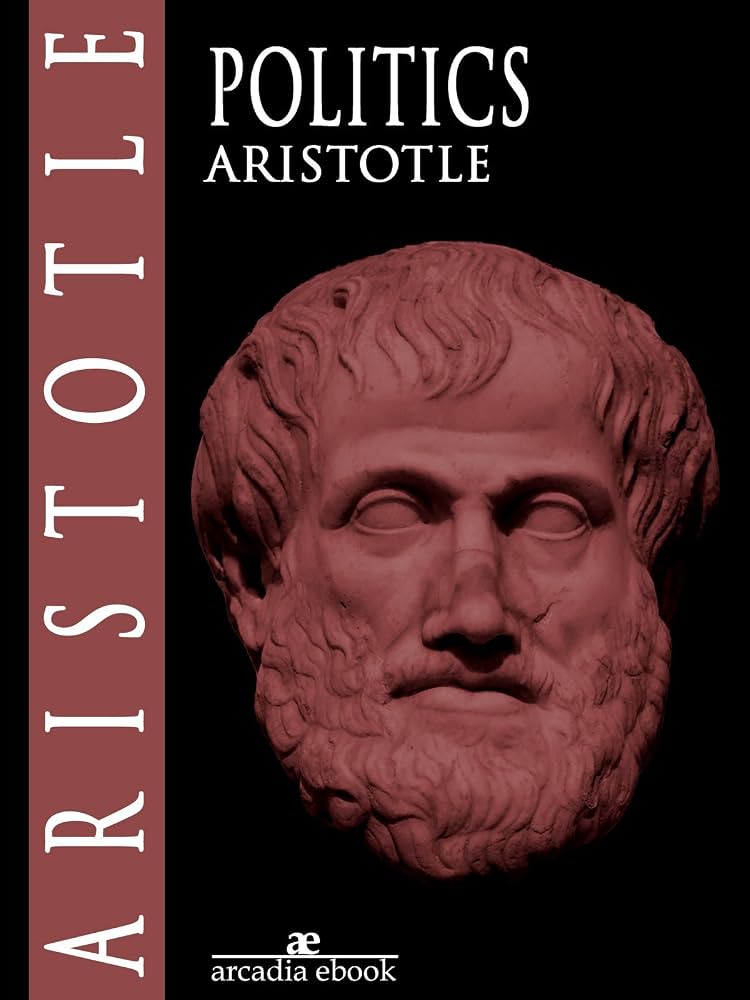
Book V of Politics mostly covers the causes of change or stability in constitutions.
Aristotle foreshadows the logic of Communism when he writes “People are prone to think that the fact of their being equally free-born means that they are all absolutely equal.” Lesser people find reasons to believe they deserve as much as their superiors. This is the primary cause of factionalisation: “It is the passion for equality which is thus at the root of faction.”
There are seven inherent causes of factional conflict: arrogance, profiteering, someone gets dishonoured or sees others honoured, superiority of a person or group, fear by wrongdoers expecting punishment, contempt, and a disproportionate increase of one part of the city.
In a stinging rebuke of modern Western immigration policy, Aristotle writes “Heterogeneity of stocks may lead to faction – at any rate, until they have had time to assimilate. A city cannot be constituted from any chance collection of people.” Thus it was already understood millennia ago that diversity destroys solidarity. “Most of the cities which have admitted others as settlers, either at the time of their foundation or later, have been troubled by faction.”
In fact, any person or group that adds new power to a city will tend to produce faction.
Alluding to the point made in the previous book, Aristotle notes that revolutions often occur in the absence of the moderating effect of a middle class. Treating this middle class with respect and dignity by preventing lawlessness and by not lying to them is the way to prevent constitutional collapse. Factional disputes can arise from inequality, so the middle class should be strengthened. The reasons for revolutions are unjust oppression, fear and contempt. Arrogance, especially, is the most salient form of oppression.
It’s possible to stabilise the constitution by restricting tenure of office so that more people get to have a go. The most important thing is to prevent the corrupt from profiting from holding office. Despite this emphasis on the middle class and an expanded franchise, Aristotle is no egalitarian: “Ordinary people cannot see the beginning of troubles ahead; that requires the genuine statesman.”
There are three qualifications for holders of sovereign office: loyalty to the constitution, high competence and goodness of character (including a sense of justice). This goodness of character and humility is a moderating force in politics: “Those who think that theirs is the only form of goodness, push matters to an extreme.”
Individual moral failings can also be collective moral failings: “If an individual can lack self-control, so can a city.”
Much of this book is devoted to the machinations of tyranny. Herein Aristotle distinguishes tyranny from kingship. Kings are drawn from the upper classes, from the aristoi who have distinguished themselves. Tyrants are drawn from the masses and are much baser men. “The aim of a tyrant is his own pleasure: the aim of a king is the Good.”
Of particular importance to today’s rule by globohomo, Aristotle writes “The guard of a king is comprised of citizens: that of a tyrant is composed of foreigners,” and “It is also a habit of tyrants to prefer the company of aliens to that of citizens at table and in society; citizens, they feel, are enemies, but aliens will offer no opposition.” Both of these quotes reflect the disregard that modern Western leaders have for their own peoples.
Aristotle goes into detail here about how tyrannies are preserved. One way is by the destruction of outstanding men. Another is by the destruction of men of spirit. A third is by preventing mutual confidence and high spirit by prohibiting common meals, clubs or education. A fourth is to forbid cultural societies: “use every means for making every subject as much of a stranger as is possible to every other.” A fifth is to require everyone to appear regularly in public. A sixth is to ensure nothing ever done escapes notice. A seventh is sowing mutual distrust and fostering discord between friends or classes. An eighth is impoverishing the subjects, keeping them too busy for plotting. A ninth is encouraging feminine influence.
This latter point about encouraging feminine influence is relevant to today’s Clown World. Aristotle observes that “Slaves and women are not likely to plot against tyrants: indeed, as they prosper under them, they are bound to look with favour on tyrannies and democracies alike.”
The three main ends of tyrants: to break the spirits of their subjects, to breed mutual distrust, and to make their subjects incapable of action.
*
For more of VJM’s ideas, see his work on other platforms!
For even more of VJM’s ideas, buy one of his books!
*
If you enjoyed reading this piece, buy a compilation of our best pieces from previous years!
Best VJMP Essays and Articles of 2024-25
Best VJMP Essays and Articles of 2023
Best VJMP Essays and Articles of 2022
Best VJMP Essays and Articles of 2021
Best VJMP Essays and Articles of 2020
Best VJMP Essays and Articles of 2019
Best VJMP Essays and Articles of 2018
Best VJMP Essays and Articles of 2017