When Politicians Start Competing For Cannabis Voters, Prohibition Is Over

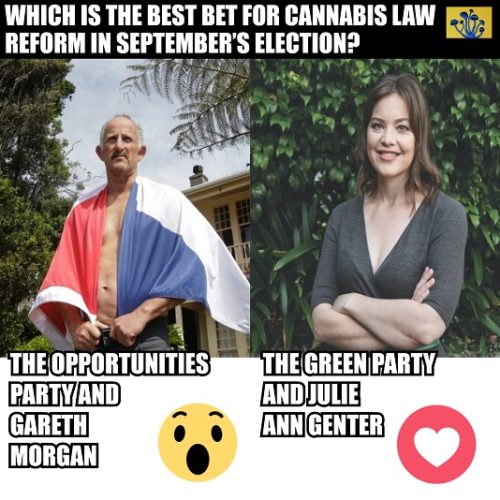
Gareth Morgan showed that he is a cut above the rest of the megalomaniacs who would be king by actually changing his stance on cannabis law reform in response to the wishes of his supporters. This by itself is curious (some are calling the phenomenon “democracy”), but not as curious as the reaction.

The Greens’ health spokeswoman, Julie Anne Genter, responded to the news of Morgan’s intrusion into her political niche like a mother cat protecting her litter.

She made a social media post belittling the capacity of The Opportunity Party to enact reform, calling it “some tiny new political party”, and accused them of planning to be “working with National”.

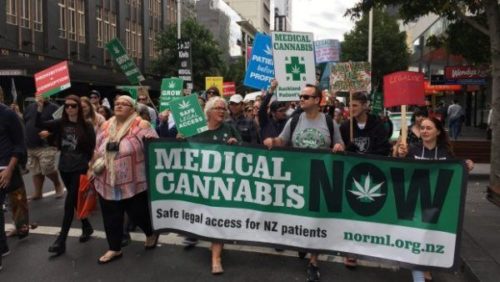
This marks the first time, ever, that politicians in New Zealand have acted like medicinal cannabis users were normal people whose rights were worth defending.

The usual approach, the English-Little-Peters-Shaw approach, is to stand aside and let medicinal cannabis users die for fear of losing votes from people who want to kill them.

If the politicians, the shallowest of shallow whores, are competing for cannabis law reform votes, then it’s fair to say that the cracks in the dam are appearing and that it’s time for those downstream to evacuate.

The next move will be a leader of a big four party stating on the record that cannabis prohibition is unjust. Any consideration of compensation will be out of the question, because to raise the point suggests that politicians can be held accountable for their crimes against the people, but someone might suggest that medicinal cannabis even be subsidised like other medicines.

Maybe one day a politician will do a medicinal cannabis user the honour of having a photo taken with them.

The ridiculous thing will be that, when all of this happens, the politiwhore in question will try to give the impression that they are bravely leading the charge, even though the Aotearoa Legalise Cannabis Party was saying what Julie Anne Genter is now saying since 1996 – 21 years ago.

It’s taken 21 years to even get this far, where there are so many as two second-tier politicians calling for cannabis law reform. Let’s hope it doesn’t take another 21 for a leader of one of the big four parties to find the courage to say something.

Probably the next advance for cannabis law reform in New Zealand will be for someone in the ACT or Labour parties to champion the issue. Damian O’Connor has already dipped a nervous toe in the water, and if he sees the centrist Morgan take up the issue he could well interpret that as a green light to go further.
Understanding New Zealand: Demographics of Beneficiaries

The four benefits split neatly into a well-spaced hierarchy of disenfranchisement, with the unemployed being the most disenfranchised, the invalids the next most, the students the next most, and the pensioners the least.

The stereotype about high numbers of Maoris being on the unemployment benefit is true to a degree – the correlation between being Maori and being on the unemployment benefit was an extremely strong 0.91. The correlation between being Maori and being on the invalid’s benefit was also very strong – this was 0.77.

Of course, these stereotypes also exist for Pacific Islanders, but here the correlations are not so strong. The correlations between being a Pacific Islander and being on the invalid’s benefit is -0.00, and with being on the unemployment benefit it is 0.25.

Probably the reason why these two correlations are weaker is that the immigration system prioritises the sort of person who can work and pay taxes for a long time into the future, and these people generally have not been here long enough to claim a pension yet.

A strong correlation exists between being of European descent and being on the pension – this was 0.65. This is very curious if one considers the commonly held belief that Maoris and Islanders are responsible for a disproportionate amount of welfare spending.

In fact, a tremendous amount of welfare spending goes to paying Pakeha people a pension, and if one considers that many of these people are taking advantage of the system by retiring well before they become incapable of further productive work, it has to be asked in which direction the stereotypes really ought to go.

Interestingly, although being Asian has a weaker negative correlation with being on the unemployment benefit (-0.25) than being of European descent and being on the unemployment benefit (-0.53), the negative correlation between being Asian and being on the invalid’s benefit (-0.56) is much stronger than for being of European descent and being on the invalid’s benefit (-0.12).

Probably the reason for this is an invalid is unlikely to be granted clearance to move to New Zealand, and so the Asian population in New Zealand, a large number of who are foreign-born, will have had a number of invalids selected out of them.

The unemployed and invalids love to smoke cigarettes. This is perhaps obvious to anyone who has spent a lot of time on a benefit, for a number of reasons. For one, there isn’t much else to do; for another, all of the other beneficiaries probably smoke tobacco or heavier.

The correlation between being on the unemployment benefit and being a regular tobacco smoker is an extremely strong 0.87, and between being on the invalid’s benefit and being a regular tobacco smoker is, at 0.85, almost as strong.

Part of the untold story is the fact that people smoke tobacco primarily for mental health reasons (this has been covered elsewhere by VJM Publishing). So it’s not surprising that the unemployed and the invalid’s beneficiaries – the two groups that collectively suffer the majority of the severe mental illness in this country – use the most mental health medicine.

A statistic that many will find surprising is that there is a positive correlation with being female and being on any of the benefit types. The correlation between being female and being on the pension is the weakest, at 0.03, and the correlation between being female and being on the student allowance is, at 0.21, also not significant.

There were significant correlations between being female and being on either the unemployment benefit (0.39) or the invalid’s benefit (0.26). These correlations are both strong enough that a considerable amount of the wage gap between men and women could be explained by them alone.

As mentioned above, it’s difficult for invalids to get into New Zealand as immigrants because the points system prioritises those who are capable of working and paying the greatest amount of taxes. As a consequence, there is a strong positive correlation of 0.74 between being born in New Zealand and being on the invalid’s benefit.

South Islanders are significantly less likely to be on the unemployment benefit. The correlation between living on the South Island and being on the unemployment benefit was 0.30, which probably reflects a cultural appreciation of industriousness, as none of the correlations with other benefit types were significant.

There is a striking curiosity when it comes to benefits and median age. The correlation between median age and being on the unemployment benefit (-0.73) is actually stronger than the correlation between median age and being on the student allowance (-0.70).

This tells is that, as young as students tend to be, the unemployed tend to be even younger. This probably reflects the fact that it takes a certain amount of time to learn the life skills needed to be employable.

*

This article is an excerpt from Understanding New Zealand, by Dan McGlashan, published by VJM Publishing in the winter of 2017.