The Case For Cannabis: There Is No Moral Argument Against Cannabis

Some cannabis prohibitionists contend that cannabis should remain illegal because its use is immoral. This immorality is such that it’s fair to use the criminal justice system to prevent it from happening. As this article will examine, not only is there no moral argument against cannabis, but the moral equation suggests that it should be legal.

The sort of person making this argument is usually some kind of wowser. This is the reason why this argument is becoming less common – proponents of it are dying off.

Usually, the argument takes some form of slippery slope argument. The usual patterns is that smoking cannabis is claimed to lead, by stepwise degeneracy, into the total abandonment of all healthy human values, until the user deteriorates into a wretched shell of the person they once were. Here the spectre of Reefer Madness can be seen once again.

The idea that cannabis use is inherently immoral harkens back to the religious fundamentalist idea that all pleasure is inherently sinful, on account of that it induces a person to worship the material world instead of God. It’s essentially a religious idea, and fundamentalist in the sense that the suffering caused by this admonition is ignored.

In reality, human beings have a need for recreational activity or they will become mentally ill. This is apparent from observing anywhere in history where those activities have been restricted. Pleasure is not inherently immoral, and it’s not immoral to enjoy one’s life, provided that one’s duties are still met and one’s responsibilities still discharged.

To the contrary – there is a moral imperative to enjoy one’s life, for if one does not do so, then bitterness, anger, frustration and depression are the consequences. These emotions invariably take themselves out on other people. Therefore, a person has a moral imperative to keep themselves happy enough that they can have a positive effect on other people. If using cannabis helps achieve this, so be it.

Morally speaking, the correct course of action to take at any given time is the one that minimises the suffering of conscious beings. It isn’t to blindly follow the law, and neither is it to blindly follow some crude ascetic concept of religious purity by banning and avoiding all recreational substances. If such a thing could be summarised, we might say that it’s closer to taking the correct decision in every situation, despite the pressures and temptations to take the wrong one.

Some might argue that people have more important things to do than to use cannabis. That’s all well and good, but it isn’t a sufficient argument to make cannabis illegal. It’s entirely possible that some people use cannabis when they could have been doing something more edifying or productive. This would still not constitute a moral demand to attack these people through the criminal justice system.

Others might argue that the moral imperative lies not with the prospective cannabis user, but with society, who ought to act to make cannabis less widely available. But this, too, is an example of putting abstract rules ahead of a sober calculation of which legal arrangement leads to the least suffering. Punishing cannabis suppliers and users cannot be the way forward.

It can hardly be argued that setting the Police and the criminal justice system onto someone for growing or using cannabis is the morally correct thing to do. The effect of being arrested and potentially dragged through court is more suffering than could ever possibly be prevented by breaking a cannabis habit. If moral considerations are important, then we need to look for a less brutal solution.

The most morally sophisticated way of dealing with cannabis is to make it legal, and to use some of the money freed up by this to fix any problem that might arise. It is estimated that legalising cannabis could save even a small country like New Zealand up to $500 million per year. This would provide ample funding to every drug counselling service in the whole country.

If this was coupled with a cultural change that saw cannabis dependency treated like dependency for legal drugs, instead of a moral failure for which one must be punished, it might be possible to encourage people who were dependent to get help instead of intending to force them away from cannabis by using the Police and prisons. If there is a moral argument around cannabis, that is surely the solution.

*

This article is an excerpt from The Case For Cannabis Law Reform, compiled by Vince McLeod and due for release by VJM Publishing in the summer of 2018/19.
VJMP Reads: Edward Bernays’s Propaganda I

Fittingly, the Propaganda Ministry turns its attention to the granddaddy of all propaganda literature, Propaganda by Edward Bernays. This short book was written by Bernays, a nephew of Sigmund Freud, by way of explaining his own prodigious insight into the manipulation of mass consciousness in the America of 1928.

He opens in the first chapter, “Organising Chaos”, with a stark declaration that the “organised habits and opinions” of the masses are formed according to the will of men who effectively form an unseen government. These men mold our minds and our tastes, mostly without us knowing who they even are.

Bernays contends that this is necessary, owing to the confusion ordinarily created by the democratic process, with its hundreds of different candidates. People would become confused if they were expected to understand the inner workings of all the issues that politicians are faced with. Therefore, the media narrows things down to a range that can be grasped.

Likewise, Bernays claims that society consents to have its choices relating to commercial products narrowed down by way of media propaganda. Because of reasons like these, there is a constant battle going on to capture the minds of individual people.

Bernays mentions that it may have been better to have had committees of wise men, who made decisions about the best way to do things. But we elected for the opposite of this. We have free competition of ideas, and in order for this to not lead to chaos we have to allow for leadership and propaganda to direct attention. This can be misused, but it is necessary nevertheless.

The advent of mass media has changed the way that the world is organised. At the time of the writing of the American Constitution, the village was the basic unit of society. Thanks to the mass media, it has become possible to be organised alongside people who live thousands of miles away.

Our society, instead of being divided by coherent geographical units, is now cleaved by all manner of social, political, ethnic, religious, racial or moral divisions. It is along the lines of these divisions that propaganda is spread. One influential group leader in any of these domains can soon have all the others in that domain following an idea.

Bernays labours the point that these cleavages are nonetheless comprised of individuals who exist in several groups, and therefore these groups are all interlaced. This is, in Bernays’s view, what society is. It is how democracy has chosen to simplify its decision making.

He summarises the book in the final paragraph of the first chapter. It is to explain how the minds of people are molded in modern democratic society, and how the manipulators of it go about their work.

*

If you enjoyed reading this essay, you can get a compilation of the Best VJMP Essays and Articles of 2018 from Amazon for Kindle or Amazon for CreateSpace (for international readers), or TradeMe (for Kiwis). A compilation of the Best VJMP Essays and Articles of 2017 is also available.

The Case For Cannabis: The Market Needs to Be Regulated

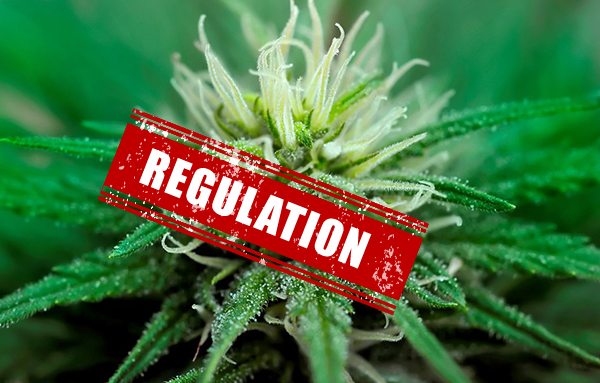
One of the strongest arguments for cannabis law reform is the appeal to regulate the market. The idea that a government can make cannabis illegal and then it just “goes away” is childish, and the historical example has borne this out. As this article will examine, legal cannabis is the only realistic way to regulate the market.

Many people envision that the world before cannabis prohibition was one of chaos. Shady dealers set up outside high schools to sell to pupils, pharmacists pushed untested and unresearched cannabis products on a naive public and criminal enterprises got fat with the income from cannabis bootlegging. The reality is closer to the reverse of this.

When a substance such as cannabis becomes illegal by act of law, what that means in practice is that the manufacture and supply of that good becomes completely unregulated. Making something illegal is not a way of regulating it – it’s a way of putting it into the “too hard” basket. It shifts control from the regulators to the black market.

The black market doesn’t attract nice people. It generally attracts people with no better options – desperados. Because there is currently no opportunity to legally profit from cannabis in New Zealand, the only people who deal with the subject matter are black marketeers. There is no guarantee that such individuals will adhere to what has been established overseas as professional industry standards for manufacture and supply of cannabis products.

Regarding the manufacture of goods on the black market, it’s apparent that there are little in the way of health and safety considerations. This is a relatively minor concern in the case of cannabis, but it’s still possible that any bud manufactured by a criminal enterprise has used unwanted chemicals in the growing process. They might have used chemical fertilisers that leave side-products that people don’t want in their bodies, or treated the bud with something to make it appear danker.

When it comes to supply, the situation is even worse. A normal business primarily competes with others through advertising, whether word-of-mouth or commercial. They don’t compete through intimidation. The manager of the local Countdown would never send an underling to take out Fresh Choice workers for selling on the wrong turf. Black marketeers selling illicit drugs happily take their competitors out such ways though.

The vast majority of the criminal activity associated with cannabis comes about because of prohibition. It’s isn’t natural to cannabis. With no regulatory oversight, there’s nothing stopping the black market selling to 13-year olds or wiping their competitors out in turf wars. Cannabis is already illegal, so it’s not like the victims could go to the Police. Black market actors have free rein until they are arrested.

Practically speaking, there is going to be a cannabis market whether we like it or not, so we might as well make sure that it’s on the level.

Regulation would solve the problem of tainted product, because growers will need to be able to account for their grow methodology and process. End consumers will be prevented from becoming ill because the possibility of dangerous chemicals being used at some point in the process will be minimised. If anyone does become sick, responsibility can be placed on the correct party and appropriate measures taken.

Moreover, a regulated cannabis supplier or dealer is much more likely to comply with public requests for decency than the black market is. Regulation will inevitably mean that cannabis dealers will need to become licensed, which means that they are strongly incentivised to adhere to laws regarding not supplying to minors, not supplying to intoxicated people etc. They also can’t shoot their competitors and expect that this will lead to a greater market share.

A final benefit is that regulation will mean that cannabis suppliers cannot deal with other products as well. As mentioned elsewhere, the gateway drug effect can only occur when people seeking cannabis are exposed to hard drugs. A professional cannabis retailer will not have an incentive to offer their customers methamphetamine, unlike a gang member. In practice, they are unlikely to even be allowed to sell alcohol or tobacco.

All this means that regulation will have the effect of almost taking cannabis away from the black market entirely. Those who are allowed to compete on the legal market for cannabis will have to meet quality standards that ensure that safety of the users (to such a degree that this is possible when people take psychoactive drugs). This will have the overall effect of reducing harm.

Cannabis should be legal because regulation of cannabis causes less suffering than criminalising it. We need to abandon the childish idea that making something illegal makes it go away, and employ a sophisticated and intelligent approach to dealing with the issues caused by cannabis. The only realistic way to do this is through regulation.

*

This article is an excerpt from The Case For Cannabis Law Reform, compiled by Vince McLeod and due for release by VJM Publishing in the summer of 2018/19.