
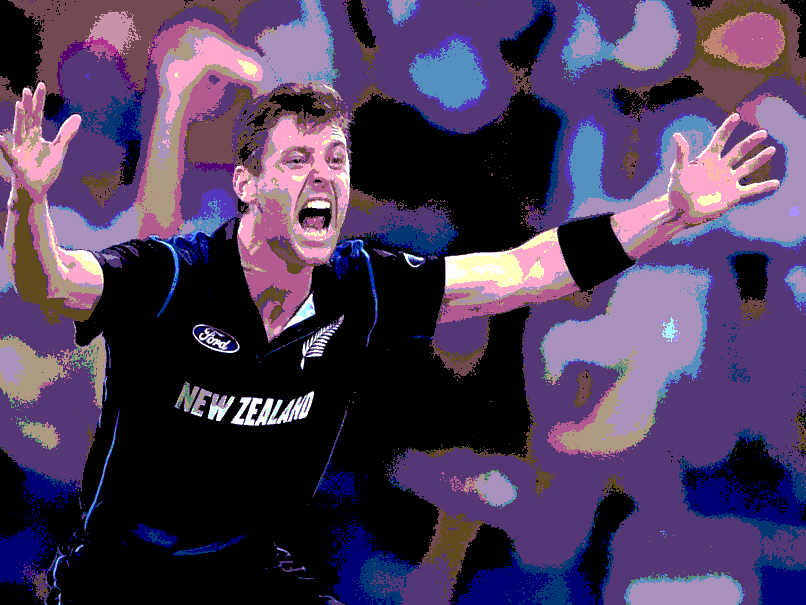
India in New Zealand 2019, First ODI Preview

Having defeated the victorious finalists of the previous World Cup in a 3-match ODI series in Australia earlier this month, the Indian cricket juggernaut now sets its sights on the Black Caps. They will contest a 5-match series beginning tomorrow at 3pm in Napier, which will tell us a lot about how the respective teams match up before the World Cup in England this winter.

The market is expecting a close encounter, with the Black Caps currently paying $2.34 on BetFair to India’s $1.72. India and New Zealand are ranked 2nd and 3rd in the world respectively in ODIs right now, so the series promises to be a heavyweight clash. Both sides will be looking to fine-tune their XIs before the World Cup.

For the Black Caps, there are three major questions to be settled.

The first relates to the form of Colin Munro at the top of the order. The Black Caps have persisted with Munro at the top in the hope that he could replicate his T20 form there. In that format he is one of the world’s best openers, but in ODIs he only averages 26, and 23 from his last 30 matches. In T20Is he averages 33 at a strike rate of 161, and the plan is for him to do what Brendon McCullum did in 2015.

If Munro stays, the Black Caps have a settled top order of Munro, Martin Guptill, Kane Williamson and Ross Taylor. This will be a good enough top order to mount a serious challenge at the World Cup. If Munro is not selected, they might bring in another hitter such as Glenn Phillips, or (more likely) move Latham up from 5, which would bring with it its own questions.

The second question relates to the middle order, in particular positions 5, 6 and 7.

To some extent, the answer to this question depends on the first. If it is decreed that Munro is good enough as Guptill’s opening partner, then Tom Latham bats 5 and keeps wicket. The question then becomes whether the Black Caps choose a hitter like Henry Nicholls at 6, or an all-rounder like Jimmy Neesham. Nicholls’s blazing 124* off 80 in the Black Caps’ last outing against Sri Lanka may have secured him this spot, because such innings will be necessary in England.

If they choose Nicholls at 6, then it becomes necessary to play an all-rounder at 7. This will be either Neesham or, more likely, Colin de Grandhomme. If Munro is not favoured at the top of the innings, then Latham will move up to opener, with Nicholls moving up to 5 and then probably Neesham and de Grandhomme at 6 and 7, which would give captain Williamson a range of bowling options.

The third question relates to Trent Boult’s new ball partner. That Boult is the premier bowler in the country is not contested: he has taken 89 wickets at an average of 26 since the 2015 Cricket World Cup. He will lead the attack in England and the only question is who will partner him.

Until recently, Tim Southee had a lock on the position. This was a combination of incumbency and reward for his outstanding performances in the 2015 tournament. But he has averaged 44 with the ball since then, having only taken 48 wickets in 43 matches. He seems to have fallen out of favour with the selectors as well, having seemingly been dropped for recent matches against Pakistan and Sri Lanka.

The position of Boult’s partner now appears to be a two-horse race between Matt Henry and Lockie Ferguson. Until recently, Henry would have had a solid grasp on the position. He has 71 ODI wickets at just under 27, and was once ranked as high as the 7th best ODI bowler in the world. He only played 6 ODIs in 2017 and 2018 combined, however, and some feel that Lockie Ferguson has already surpassed him.

Ferguson continues to impress as well – he only has 45 ODI wickets but has taken them at an average of 24. Either he or Henry would be hot for the position of Boult’s partner, with Tim Southee’s variations possibly enough to see him take the third seamer’s spot. It might be that Henry is the better new ball choice and Ferguson the better choice in the death overs, so they might both be selected.

Predicted XI for tomorrow:

  1. Guptill
  2. Munro
  3. Williamson
  4. Taylor
  5. Latham
  6. Nicholls
  7. Neesham
  8. Santner
  9. Henry
  10. Ferguson
  11. Boult

*

Dan McGlashan is the man with his finger on the pulse of New Zealand culture. His book, Understanding New Zealand, is the comprehensive guide to the demographics and voting patterns of the New Zealand people. It is available on TradeMe (for Kiwis) and on Amazon (for international readers).
Our Problem Isn’t Too Much Masculinity – It’s Too Little

Our culture is so fucked up that it has a number of things completely backwards. It’s easier to find a doctor willing to tell you about the benefits of male infant genital mutilation than it is to find one willing to tell you about the benefits of medicinal cannabis. As this essay will examine, one of the things we currently have backwards is blaming a lack of masculinity on an excess of it.

The phrase “toxic masculinity” is bandied about, ever more frequently nowadays, as if it described an established phenomenon in psychological science. Ostensibly, the term is limited to the description of particular behaviours, performed by men, that are toxic to others or to society at large. In reality, the term is only ever used in the attempt to belittle men – or masculinity in general.

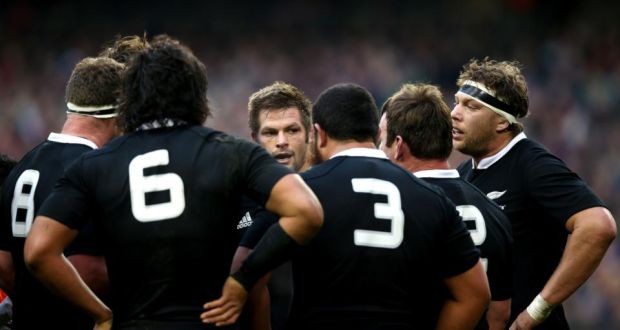
People frequently use the term with the implication that the toxicity comes from an excess of masculinity. But we live in the least masculine age in the history of Planet Earth. In New Zealand at the time of the 2013 Census, around 14% of children were raised by single mothers. When they are at primary school, 88% of their teachers will be women.

This means that most of the adult influence on boys in their formative years is female. Some boys will get to school having never seen a positive male role model or perhaps any at all. If these children are growing up to cause problems because they don’t recognise other people’s physical boundaries, it’s not the sort of problem that more femininity will fix.

The phrase “toxic masculinity” is often used to attack participatory sports, especially under the guise that these sports teach men to be aggressive, domineering and invasive of other people’s personal space.

The reality is – as everyone who has played sport knows – the rules of every game force you to channel aggression into goal-directed activity that does not harm anyone without their consent. You can’t just punch someone on a sporting field, or you’ll be sent off and possibly kicked out of your team. In this regard, the older men (usually) act as models of composure for the younger ones to follow.

Moreover, participatory sports have done more than any government initiative to break down barriers between different race and class groups and encourage them to all meet on the level. On a cricket field, a three doesn’t become a four just because the batsman was brown or middle-class or for any other reason. Masculine energy can therefore be used as a leveller in the interests of horizontalisation just as much as feminine energy can.

Our time in history is so completely feminised, and so confused, that hardly anyone even knows what masculinity is any more. It’s little wonder that some people can call it toxic with a straight face, when they have such a confused conception of it.

We’re so confused nowadays, that we have to go right back. Way, way, way back before even Jesus and even Socrates and Plato, back to the real ancients, who told us: masculinity is the ability to impose order upon chaos. Fundamentally the world is made of a feminine yin-chaos and a masculine yang-order, and in much the same way that the feminine makes chaos out of order, so too does the masculine make order out of chaos.

There are several ways that a person can impose order upon chaos, but correct conduct means that you impose order upon yourself first. This is something that is understood by every actual man, and is not understood by boys or by boys masquerading as men. They go out to impose order upon the world first, and do not realise that the strongest influence is the most subtle.

Socrates, perhaps the foremost Western example of manhood, taught that happiness came from making peace with death. Esoterically, one might describe this as imposing order upon one’s own spirit. As a previous article here has discussed, a failure to impose order upon one’s own spirit by making peace with death is akin to labouring under chains of gold, such that one becomes the slave of anyone who can credibly promise absolution.

A person who has imposed order upon their own spirit is able to impose order upon their mind also. Not being afraid of death means to not be in a state of constant panic at the inevitability of it, which means that it becomes possible to use one’s time on low-intensity pursuits such as reading. They will also be much more able to behave appropriately, on account of having imposed order upon their emotions.

It can be seen here that the common modern conception of masculinity is completely arse about face.

A properly masculine man will not sexually harass women for the simple reason that he has imposed order upon his reproductive instincts and, as such, can discharge them when appropriate, as a matter of will. His animal instincts don’t lead him – that would be an example of chaos being in control.

Likewise, a properly masculine man doesn’t feel the need to dominate everyone, or to boss them around, or to avenge minor insults with violence. He has imposed order upon his own ego, and as such does not have the same insecurities that a less masculine man would have. A truly masculine man has imposed such order upon his emotions that others can not easily knock him off balance. He is in charge of himself.

As such, a properly masculine man attracts the feminine not through force and aggression, but through attracting its freely-willed devotion. Rapists and molesters are not examples of too much masculinity but too little. A real man will have imposed such order upon his life, his behaviour and his appearance, that women will naturally want to be devoted to him, and therefore he doesn’t feel impelled to move on them without their consent.

Men who act on their impulses without consideration for the well-being of others are not “toxic males” – they are shitheads. What our society needs is more masculinity, so that young men can see examples of the correct imposition of order upon chaos. If young males are shown older males being rewarded for correctly imposing order upon themselves, they will imitate it. Thus, what we need is more masculinity, not less.

*

If you enjoyed reading this essay, you can get a compilation of the Best VJMP Essays and Articles of 2018 from Amazon for Kindle or Amazon for CreateSpace (for international readers), or TradeMe (for Kiwis). A compilation of the Best VJMP Essays and Articles of 2017 is also available.

The Case For Cannabis: It Doesn’t Matter That People Have to Pay For Cannabis Users’ Healthcare

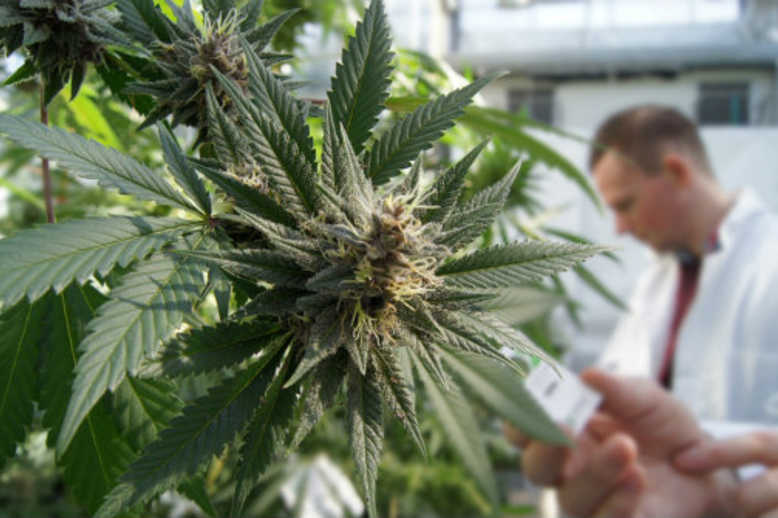
One argument that is often made by people in response to proposals for cannabis law reform is that they don’t want to pay for cannabis users’ healthcare. The logic goes that cannabis law reform is unfair on the general populace, because they have to fork out for the inevitable increased healthcare burden through general taxation. As this article will examine, such an attitude is mistaken.

Like many of the false arguments against cannabis law reform, this one relies on another bogeyman. In this case, it’s the supposedly heavy burden that the health system would suffer under if cannabis were to be made legal. This burden would have to be borne by everyone, and it isn’t fair to expect them to do so.

As with many examples of false logic, this argument depends on seeing the situation incorrectly.

For one thing, it’s possible that, if cannabis were to become legal, some of the adverse consequences of its use would become more widespread. But it’s foolish to think that, in such a case, cannabis use would go up while the rates of all other recreational drugs would stay the same.

In reality, recreational cannabis is a competing good to alcohol. A lot of people use it because they find the ritual of rolling up and smoking a joint as relaxing and enjoyable as drinking a beer, and at least as social. Everywhere that cannabis is legal, at least some of the population have decided that they prefer to socialise over some weed than over some booze.

So the supposed “extra” healthcare burden that would be caused by increased cannabis use is balanced, perhaps even several times over, by the savings that accrue from health problems that were prevented by the reduced use of other recreational drugs.

Alcohol abuse is believed to cost the country $4.9 billion per year. The total cost of cannabis use on our health system right now is, even if one uses the ultra-conservative Drug Harm Index, $431 million. This latter figure is not merely the cost of cannabis use to the healthcare system but also ancillary costs, so the true figure is much lower (this latter figure also includes $126 million of costs due to premature death caused by cannabis use and is therefore somewhat fantastical).

So even if legal cannabis doubled the total harm that the Drug Harm Index says that cannabis does to society, this would be more than compensated for if it reduced the total harm done by alcohol by 10% or more.

A second factor to consider is that the cost of cannabis damage is small compared to the cost of old people just clinging onto life for a few more years.

New Zealand’s total healthcare expenditure was $16.8 billion last year, and people aged over 65 used over 42% of that – and that percentage is increasing. So people over 65 use roughly $8 billion dollars’ worth of taxpayers’ money on health costs every year, much of which is wasted on futile attempts to delay a terminal illness.

Even if we ignore that cannabis use is not higher in jurisdictions where it is legal, and even if we ignore that legal cannabis would mean users could use much less harmful routes of administration, and even if we assume that the total healthcare damage would be double under legalisation than what it is now, it still wouldn’t be a great amount of money compared to what is already spent.

The third argument is, of course, that it simply doesn’t matter if cannabis users’ healthcare has to be paid for out of general taxation. As mentioned above, alcohol abuse costs the country almost five billion dollars a year, which amounts to close to $1,600 per taxpayer. If such a high bar is acceptable for alcohol, then its acceptable for cannabis as well.

Cannabis users are, or should be, part of our society the same way as anyone else is. So in the same way that we’re happy to pay for the healthcare costs of cigarette smokers, alcohol drinkers, Olanzapine takers (the side-effects of many psychiatric medicines are bad for the physical health), rugby players, horse riders and mountain climbers, so too should we be happy to pay for the healthcare costs of cannabis users.

Legal cannabis would make it easier to minimise healthcare costs anyway, because doctors would be able to encourage cannabis users to avoid joints and dabs in favour of edibles and vapourisers. So if healthcare costs really are a concern, legal cannabis is better for more than one reason.

In summary, it’s not fair to object to cannabis law reform on the basis that the general taxpayer would have to pay for a sudden massive healthcare burden. A repeal of cannabis prohibition would not lead to such a burden – in fact, a sober look at the experience suggests the overall healthcare cost of recreational drug use would fall if cannabis became legal.

*

This article is an excerpt from The Case For Cannabis Law Reform, compiled by Vince McLeod and due for release by VJM Publishing in the summer of 2018/19.

Why Intelligence Can Never Be a Fixed Concept

Intelligence is something that everyone appears to understand, but no-one can agree on a definition. Despite this, people are pretty sure that it can be measured. Although tests that measure IQ have been shown to have a lot of predictive value, a precise definition of term remains elusive. But as this essay will examine, intelligence can never be a fixed concept anyway.

What is intelligence? A common definition of intelligence is “ability to recognise patterns and avoid dangers”. Another is “the ability to apply knowledge and skills”, which assumes that intelligence is an entirely different thing to instinct. Other definitions involve a capacity for learning, logic, reasoning, self-awareness etc. Despite this variety, most people think they know it when they see it.

A previous essay here discussed how there are at least two different spectrums of intelligence, and how both of them might appear to be intelligent in some situations and not in others. Another essay suggested that there is both a masculine and a feminine intelligence and stupidity. What’s apparent from all of these different definitions is that some behaviours are intelligent in some circumstances, and unintelligent in other circumstances, depending on how adaptive they are to the environment.

For example, being able to faithfully repeat what you are told is a sign of intelligence when a student has a good teacher who educates them honestly. When the student is a political cadre being indoctrinated into a dangerous ideology, it’s not a sign of intelligence. However, the underlying neurological and psychological attributes that enable either are roughly the same.

Most people can also accept that intelligence is something that evolved, controversial as that may be when one gets into the specifics of it. The reasons for this evolution are presumably because intelligence provided a selective advantage in either staying alive or finding mates and reproducing.

The first one of these points seems pretty obvious: if you are smart you are better able to avoid the dangers that the natural world has created. Intelligence is highly correlated with pattern recognition, and recognising patterns is the key to recognising dangers. If you notice that the last person who did something died, you are less likely to do it. Therefore, you are more likely to survive to reproductive age yourself.

The second point is more subtle, but equally clear if one thinks about it. The more intelligent a creature is the better shape it will keep itself in, therefore the healthier it will be, and the more attractive a mate it will seem to others of its kind. This greater attractiveness will lead to more mating opportunities, and therefore more offspring (all other things being equal).

However, there’s a hidden paradox in this simple biological definition. If intelligence is biological, then it cannot be a fixed concept, because if it’s an adaptation to the environment it will change along with that environment.

Aside from the odd species like crocodiles, who have found one evolutionary niche and just stayed there, animal species tend to be opportunistic. They tend to range across a number of niches and take food, water and reproductive opportunities when they arise. The most excellent example of this is the human being, who has adapted to many environments and who is capable of anything.

As the environment keeps changing, so too will the optimal behaviours within each environment change.

For instance, much of the behaviour that we currently associate with intelligence has much to do with avoiding impulsive behaviours. Someone who stops and thinks before taking action will be almost universally considered more intelligent than someone who does not. Likewise, someone who saves money will be considered more intelligent than someone who wastes it, and someone who reads books will be considered more intelligent than someone who parties.

This is all well and good in a civilised, industrial society like ours. But if society should break down, then the equilibrium point will shift back from cautious deliberation towards opportunism. If there is no law and order, then there’s no advantage in taking one’s time to consider things. The advantage shifts towards those with the propensity to hit and run before the opportunity is lost. Intelligence would then become a matter of understanding the importance of not hesitating.

Another problem is that the kind of skills and aptitudes that made a person become considered intelligent by their peers in the ancient past are not necessarily the same today. Human survival in the past had a lot to do with astrology, animal husbandry and swordsmanship – all skills that are now only practiced by small minorities. A person might have been considered highly intelligent in the past on account of that their brain made them good at animal husbandry, but the same person might be considered low intelligence today if they can’t find a technological skill.

It might even go the other way. Society might continue to become more and more technological, so that the selective advantage wasn’t in favour of impulsivity but in favour of the kind of semi-autistic gadgetry obsession that distinguishes people who are today considered nerds. Such a society might no longer have any need for social intelligence but would rather operate on computer science aptitude.

In all of these cases, the society that results after massive environmental change will define intelligence as adaptation to it, not as adaptation to some other time and place. Neither will they define intelligence as an adaptation to the natural world in which we evolved, because such a thing no longer exists.

In the end, the concept of intelligence is a biological one, and therefore can only be understood relative to a specific environment, or set of environments. Because the natural world keeps changing – and our social world even faster – the concept of intelligence will keep evolving as humans do. It can therefore never be a fixed and clearly defined concept.

*

If you enjoyed reading this essay, you can get a compilation of the Best VJMP Essays and Articles of 2018 from Amazon for Kindle or Amazon for CreateSpace (for international readers), or TradeMe (for Kiwis). A compilation of the Best VJMP Essays and Articles of 2017 is also available.