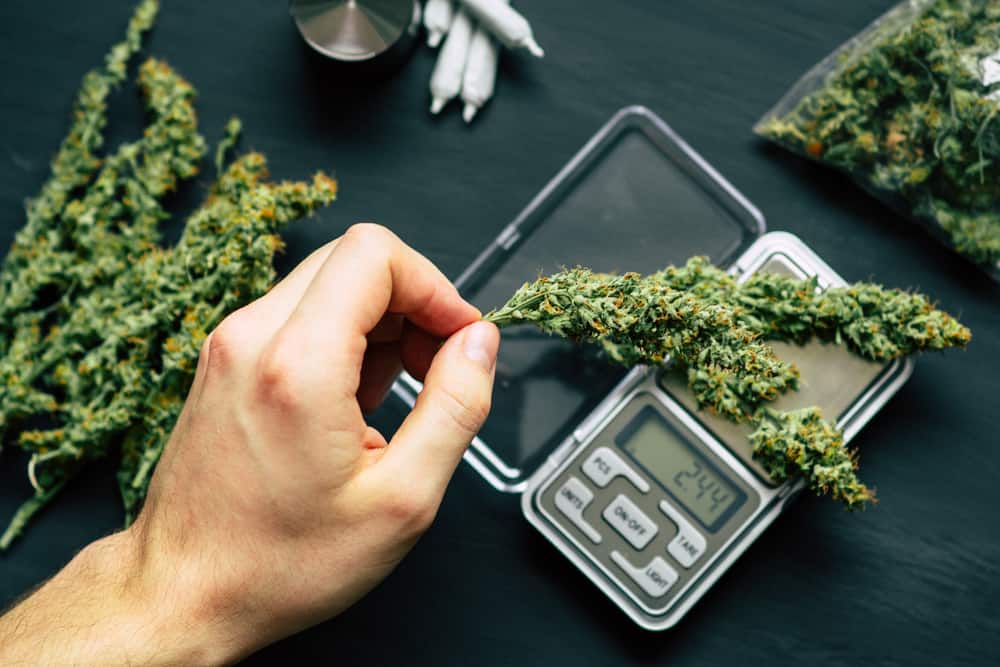
The Case For Cannabis: Prohibition Funds Crime

Other articles here have mentioned that cannabis prohibition doesn’t mean the cannabis market goes away: it just means that it goes onto the black market. There are several deleterious aspects to this, each worthy of separate discussion. This article will look at the role cannabis prohibition plays in funding crime.

The logic is that, by prohibiting cannabis and by attacking cannabis users through the justice system, it becomes possible to prevent cannabis profits from steadily flowing into the hands of criminals, which would prevent them from being able to fund further enterprises. So criminal activity, and thereby the suffering of the citizenry, can be pre-empted by attacking cannabis users and growers.

As we saw with alcohol, the attempt to prohibit a substance just makes everything about it worse. Alcohol prohibition infamously led to the rise of an entire class of gangsters and bootleggers, the most well-known being Al Capone. Because the substance couldn’t be sold lawfully, it was sold on the black market, and the criminal enterprises who made the profits were happy to use that money to find other ventures.

In Capone’s time, much of that black market money was used to buy firearms, which were then used in the commission of robberies and contract killings. Alcohol prohibition ensured a constant flow of money into the coffers of criminal gangs, and this financed further ventures. Consequently, those criminal enterprises flourished.

We don’t have alcohol prohibition any more, but cannabis prohibition has done a fine job of filling that gap.

The New Zealand Drug Harm Index 2016 stated that “Over $70 million in funding for other criminal activities is provided each year from drug trafficking. The majority of this (nearly 90%) is generated from the sale of cannabinoids.” Another way to write this is to say: Cannabis prohibition puts $60 million into the pockets of criminal gangs in every single year, in New Zealand alone.

This money then finances all the murders, robberies and methamphetamine production that the rest of us have to suffer from. The Police are not wrong when they say that illegal cannabis sales fund further crime – they’re just wrong when they say that the solution is to crack down on it. It’s the cracking down on cannabis that makes it valuable, and this attracts the desperate, greedy and short-sighted.

If a criminal wants to fund the purchase of a large amount of precursors to methamphetamine, they might find themselves in need of a few thousand dollars. This is a similar amount of money to what they could make in one cannabis grow under a 600 watt light, after about three months of growing. Because anyone with a real criminal network knows someone with cannabis clones (or at least seeds), just about anyone inclined to set up a meth operation can also get a cannabis grow started.

Moreover, cannabis prohibition makes it possible to cut up a pound of cannabis into $50 bags and sell them piecemeal. They can do it themselves, or they can get gang underlings to do it – after all, $50 is within the reach of even high schoolers. This makes it possible for criminal enterprises to draw more and more people in.

Under a regime of legal cannabis, such things would not be possible, or would at least be strongly disincentivised. For one thing, cannabis prices are much lower in places where it is legal, and this removes most of the incentive to get involved in selling it. A second factor is that the vast majority of people prefer not to deal with criminals if they can get the same goods from a white market vendor.

So cannabis prohibition makes it possible for a variety of criminal enterprises to get funding, whereas they may not have been able to get off the ground without their backers’ ability to sell cannabis on the black market. A lot of this criminal activity only exists because the law makes it possible. Wherever you have an economic niche, white market or black, someone will step into it.

The common counter-argument that, if cannabis was made legal, gangs would just sell hard drugs, turns out to be the opposite of the truth. The scenario we’re given is that criminals will sell drugs anyway, so it’s better for them to sell cannabis to our children than methamphetamine. The assumption seems to be that criminals choose to sell cannabis in preference to methamphetamine etc. out of kindness.

Leaving aside all the other ways in which this argument is wrong, it takes a certain amount of start-up capital to be able to get in on the market for hard drugs, because it’s necessary to deal with major players. Cooking up a batch of meth takes start-up capital, and even buying precursors usually requires a five-figure sum of cash on account of that people dealing in such are disinclined to make petty deals. Cannabis law reform would make those five figures harder for criminals to come by.

Cannabis prohibition should be repealed so as to take a major source of funding away from criminal gangs. Without black market cannabis, a number of criminal enterprises and schemes would not be able to get off the ground, which would keep our communities safer than cannabis prohibition can.

*

This article is an excerpt from The Case For Cannabis Law Reform, compiled by Vince McLeod and due for release by VJM Publishing in the summer of 2018/19.

How The People Are Divided and Conquered

The ruling classes, faced with the fact that they are outnumbered by thousands to one, have refined an array of techniques to divide the people into groups and set them at each other’s throats. This array covers all of the different aspects of human life, so that individuals are made enemies of each other at every turn. This essay describes how the people are divided and conquered across the entire spectrum of life.

Human life covers the complete spectrum from purely physical concerns to purely spiritual concerns. Physical concerns such as blood and soil are different to matters of class and education, and these are in their turn different to religious and spiritual matters. By means of propaganda, people are divided at each part of the spectrum, and made to believe that someone else has stolen from them.

This stealing is how the other side of the spectrum (any spectrum) is characterised as the bad guys, the stealers, the takers. The mouthpieces of the ruling class will tell their listeners that all of the suffering those listeners feel is because those at the other end of the spectrum have stolen from them. The natural result is that the listeners come to hate those others, and in doing so become divided and conquered.

At the physical end, people belonging to any racial group have been led, by way of propaganda, to feel that other races have collectively worked to steal from them. In America, blacks are made to feel that whites have stolen from them through slavery, and owe them compensation; whites are made to feel that blacks have stolen from them through taxation to fund welfare.

The story is the same all over the West. There was a time when New Zealanders considered themselves Kiwis first and their particular ethnic makeup was a secondary thing. But after decades of rhetoric, many Maoris have come to be convinced that colonisation was an act of evil for which they are owed compensation. White people were convinced, at the same time, that Maoris had stolen from them through taxation-funded welfare and crime, and the end result was to split the Kiwi people down the centre.

Less physical issues do not make people less vulnerable to being divided and conquered. Even if everyone was the same race, it is still possible to divide people along class or religious differences.

The most obvious example is of Communist agitation in a factory. The Communist begins by persuading the workers that they are being stolen from because their wages are not equal to the value of their production. If the worker is not intelligent enough to understand the basics of how a business is run, and does not understand that operating a business requires competencies that he does not necessarily have, he may be persuaded that his boss is stealing from him, and that restitution is owed.

Communist agitation in Rhodesia is an example that combines both race and class. Local blacks were convinced that white settlers had stolen land from them and were trying to enslave them. The blacks were told that everything the whites had was stolen from them, and this theft was why they didn’t have it. This led to rising resentment which eventually tore the entire country in two, a blueprint since repeated all across the world.

Education is another spectrum upon which people are divided. The poorly educated are led to believe that the well educated have arrived at their greater position of wealth through sneakery and trickery, not through study and applied competence. As with the other examples, the poorly educated are then made to become resentful, and so come to fight the well educated instead of co-operating with them as yin and yang.

All of this dividing and conquering works because of the state of spiritual ignorance that we have fallen into. People have forgotten that life is suffering, and that suffering is inherent to existence as a mortal being in this world. Because they have forgotten this, it is possible to convince them that their suffering is unnatural, and that someone else must be to blame. This is an example of chains of gold.

All that’s necessary to start it is to find a spectrum of wealth somewhere within society. It can be a spectrum of wealth along race lines, along class lines, along education lines – it doesn’t matter. As long as the people at both ends are told that the people at the other end have stolen from them or are looking to, both groups will dig themselves in and start hating the other.

From there, it’s a simple matter to point the finger at the other side of the national, racial, education or religious divide and say that all the suffering is because those people have stolen from us, and so individuals from that group are personally responsible for restitution. Once this has been achieved, it’s all but guaranteed that those so blamed will point the finger back, and at this point arguing and fighting begins.

Our ruling Establishment encourages divide and conquer logic, because the more effectively the people can be divided, the less able they are to mount a co-ordinated challenge against the will of that Establishment. This is why the media is daily full of propaganda about “injustice”. They don’t care about preventing injustice – they just want to fan the flames of it so that people are angry and blame each other, instead of the rulers.

Certain incompetent individuals also encourage divide and conquer logic, because they know that if the people were united and competent people promoted, those individuals would be left behind. Incompetent individuals, therefore, have an interest in dividing and conquering so that they can slice off their own little piece of turf and rule the smaller group present in it. They want to keep the group small so as to discourage more competent competition for places in the ruling hierarchy of that group.

In summary, people are divided and conquered because their own spiritual ignorance makes it possible for unscrupulous propagandists to blame the natural suffering of life on acts of theft committed by “others”. Blaming all the suffering inherent to life on others ensures that revenge will be sought, that grievances and vendettas will grow, that the cracks diving society will deepen and therefore that the suffering will never be overcome.

Anyone who denies that life is naturally suffering, and who insists that any suffering that exists is the fault of a particular group of people, is working to divide and conquer society. These people must be considered suspect, and their motives potentially malicious. This is true no matter how powerful, rich, numerous or oppressive the so-called bad guys might be.

*

If you enjoyed reading this essay, you can get a compilation of the Best VJMP Essays and Articles of 2018 from Amazon for Kindle or Amazon for CreateSpace (for international readers), or TradeMe (for Kiwis). A compilation of the Best VJMP Essays and Articles of 2017 is also available.

VJMP Reads: Edward Bernays’s Propaganda II

This reading carries on from here.

The second chapter of Propaganda is called ‘The New Propaganda’. Here, Bernays elucidates some of the differences between the original approach to propaganda that arose with the advent of mass media, and the “new” approach that was developed after the application of mass psychology techniques to making propaganda more effective.

The industrial revolution has made kings much less powerful than they once were, relative to the masses. It spread economic power, and, with that, political power. The old democrats used to believe that it was possible to educate everyone up to the level where they could participate in rulership – in reality, the average person falls well short of what is required.

Propaganda fills this gap, serving as the means by which the minority can still rule the majority. “Propaganda is the executive arm of the invisible Government.” The education of the common man, instead of teaching him to think freely, only conditioned him to become receptive to propaganda. Now his mind is receptive to propaganda of all sorts.

Using examples from a daily newspaper, Bernays explains how propaganda works in the mainstream media. Anything stated as true by an authority, such as the State Department, is taken as such. Here Bernays gives us a definition of propaganda: “Modern propaganda is a consistent, enduring effort to create or shape events to influence the relations of the public to an enterprise, idea or group.”

In practice, very little is done nowadays without some kind of propaganda campaign alongside it. Propaganda regiments the public mind every bit as much as the Army regiments the bodies of its soldiers. A group so regimented can be every bit as effective as an army.

Today, the approval of the public is necessary for any large undertaking. Therefore, propaganda is necessary for any large undertaking. Formerly, rulers could set the course of history simply by doing things. Today, the masses have control, so propaganda is needed to wrest that control back. As a consequence, propaganda is here to stay.

It was World War I, and the astonishing success of propaganda in that war to manipulate public opinion, that made people aware of what could be done. This was the first time that not only a multimedia approach was made to encourage people to support the national endeavour, but also key men were brought on board in a massive range of industries.

The new propaganda doesn’t just target the individual, but takes into consideration the structure of society and the way that information spreads through it. This is now a feature of society, because new proposals for reform must be clearly articulated before they will be influential. No-one can get anything done anymore without propaganda.

Bernays concludes this chapter by noting that “In the active proselytizing minorities in whom selfish interests and public interests coincide lie the progress and development of America.” The world is controlled by the small number of men that control propaganda, who make the rest of us think as they will, and society only progresses when their will is in accord with the collective good.

*

If you enjoyed reading this essay, you can get a compilation of the Best VJMP Essays and Articles of 2018 from Amazon for Kindle or Amazon for CreateSpace (for international readers), or TradeMe (for Kiwis). A compilation of the Best VJMP Essays and Articles of 2017 is also available.

Electoral Consequences of the Rise of a New Blue-Green Party in New Zealand

Much recent attention has been given to the possibility that a new blue-green party might arise to contest the 2020 General Election. A man named Vernon Tava has been interviewed outlining his vision for the putative movement, which is said to have some support. In this article, demographer Dan McGlashan, author of Understanding New Zealand, explains the electoral ramifications.

First, we need to determine who might vote for such a blue-green party. Secondly, we will speculate on what might happen if a large number of people do.

Crudely speaking, and this is very crude, we can say that New Zealand divides into four groups: the urban poor, who vote Labour, the urban rich, who vote Green, the rural poor, who vote New Zealand First, and the rural rich, who vote National.

The borderline between the Green and the National parties, therefore, is between the city and the country, and the unifying feature of these two parties is that their constituents are wealthy. So any new blue-green party would primarily target people who were doing better than average, regardless of whether they lived in the city or the country. But to distinguish them from the conservatives, they would need either an environmental or a social justice aspect from the green side.

Green and National voters are also characterised by being better educated than average (indeed, this is the basis of their greater wealth). So a green-blue party might target students, especially those who study at suburban universities. What unifies them, in particular, is that they tend to have globalist sympathies, and they tend to oppose the nationalist sentiments that they observe in Labour and New Zealand First.

This column has previously discussed the fact that the National and Green parties could ally on the basis of both being strong supporters of globalism. A new blue-green party might combine the green commitment to environmental causes with the desire to liberalise free trade and the movement of cheap labour (ignore the contradictions in that for a moment). They would then effectively be a neoliberal party.

The most obvious point is that such a party would compete directly with The Opportunities Party. As I showed shortly after the previous election in 2017, the bulk of TOP voters were disaffected Green voters. They were mostly young and well-educated, of either gender and any ethnicity, and were the ones most easily reached by the heavy investment made by TOP in FaceBook advertising. They have also had the most anti-nationalist conditioning.

Green Party voters would also be tempted towards a new party. The reason for this is many Green voters are well-educated, and so they often find themselves becoming wealthy by the end of their 30s, which means that they start to have an interest in protecting that wealth, and thereby paying less taxes. This pulls them towards the National Party, but they tend to be repelled by National’s indifferent attitude to human suffering.

National voters, for their part, will be hard to tempt to any blue-green party. For one thing, National voters are particularly loyal: the correlation between voting National in 2014 and voting National in 2017 was 0.99, an exceptionally strong correlation and higher than the equivalent figure for any other party. The other reason will be the electoral ramifications, as discussed below.

Second, the other major area of interest is the electoral ramifications of such a party if it would form and seriously contest the 2020 General Election.

One obvious point here is that the rise of a blue-green party would make things exceptionally difficult for The Opportunities Party. Although TOP does not describe itself as a blue-green party, they are competing for almost exactly the same demographic as any such new endeavour would also be competing for. Getting 5% of the electorate vote is hard enough as it is, and having two fledgling parties contesting that vote will make things extremely hard for both.

The obvious major point here relates to the overlap with Green Party voters. The Green Party only just made it over the threshold at the 2017 General Election, winning a mere 6.27% of the total votes. This means that they would only have to lose 30,000 or so votes in 2020 to a new blue-green party to run the risk of falling under the 5% threshold and so dropping out of Parliament entirely.

Ironically, game theory suggests that this is one of the most plausible ways for National to win the election. If a blue-green party did win enough of the Green Party vote that both parties failed to make the 5% threshold, the left bloc would lose all those Green party votes as well as some of the blue-green party ones, whereas the right bloc would only lose some of the blue-green party ones. This would leave National and ACT against Labour, competing for New Zealand First support.

Of course, these options are moot if the proposed party does win 5% of the electorate vote. As explained above, this would almost certainly lead to the obliteration of both the Greens and TOP, who are chasing similar voters. Assuming New Zealand First also won 5%, then there could be another head-to-head fight between Labour and National for the loyalty of the centrist parties, who would then in all probability hold the balance of power.

Because getting 5% of the vote is so difficult, and because the competition for the blue-green niche already so fierce, the future chances of Vernon Tava’s movement look extremely slim. They might have a greater impact as a spoiler that helps to wipe out the Green and Opportunities Parties, for the sake of ensuring that National holds the balance of power after 2020.

*

Understanding New Zealand, by Dan McGlashan and published by VJM Publishing, is the comprehensive guide to the demographics and voting patterns of the New Zealand people. It is available on TradeMe (for Kiwis) and on Amazon (for international readers).