
The Three Fundamental Personality Types

If one chooses not to break the world into two, or into four, but into three, one comes across the three fundamental elements of mercury, sulphur and salt. Here the sulphur represents the masculine, the mercury the feminine and the salt the world. As this essay will investigate, these elements also reflect the three elementary personality types.

Anthropologically speaking, men can be described by the ethological niche that they fall into: they can be an alpha, a beta or an omega. This refers to their position on the dominance hierarchy, where alphas have high status and get the best women, and omegas have low status and no women. In modern parlance, these personality types can be described as chads, bugmen and soyboys.

The alpha is a creator. His nature corresponds to sulphur, which is the creative force. This creative energy makes things out of nothing; it imposes order upon chaos. He is Romulus, Gilgamesh, Alexander. He is the cardinal force, which makes something appear where once only chaos existed. This sort of man builds monuments, nations and empires.

Alphas aren’t generally interested in fitting into pre-existing systems. This is why he is also described as Chad, irresistible to women. The cardinal force is the most attractive to women because the essence of masculinity is precisely the capacity to impose order upon chaos. The chad imposes order upon the world around him, therefore he is masculine, and the feminine element naturally becomes devoted to him.

The beta is a maintainer. His nature corresponds to salt, which represents the world. In this sense, there is nothing remarkable about the beta. He doesn’t have a lot of personality, but he is extremely efficient when there are many like him in a bureaucracy – or a paramilitary group. Less intelligent than the alpha, the beta’s intellect can only encompass a limited sphere, but he is perfectly effective within it.

Betas are described as bugmen in modern parlance. This is because they appear to have neither personality nor free will, much like insects. Betas need alphas to give them direction, because they are afraid of doing the wrong thing and getting punished. He knows, however, that he is next in line to inherit the position of the alpha, and so he wants things to change the least. He therefore represents the fixed force.

The soyboy represents the mutable force, corresponding to mercury. This is because he is at the bottom of the dominance hierarchy, and therefore has nothing to lose and everything to gain from its dissolution. He represents the mutable force because the more things change, the better it is for him. He is also, for these reasons, the destroyer.

In this sense, mercury serves as the divine feminine in her representation as chaos. The soyboy is a natural loser, in that he never gets laid except for by pity, and the world seems to be rigged against him. Consequently, he is the one with the largest incentive to change things. This is why he is associated with resentment and other slave moralities. The mercurial element is unpredictable, because it resents having order imposed upon it.

These three personality types all depend upon, and interplay with, each other. Without the chads, there is no civilisation for the bugmen and soyboys to populate. Without the bugmen, the chads and the soyboys do not have enough in common for the ground to exist upon which a civilisation can be built. Without the soyboys, the chads and the bugmen are constantly at war with each other, having no mutually agreed weaker party to beat down upon.

The three are also natural divisions that reflect reality. This is why we can see the creator-maintainer-destroyer trichotomy in Hinduism, where Brahman acts as creator, Vishnu as maintainer and Shiva as destroyer. In Hinduism, however, it is understood that all three are necessary for life to function, and there is less emphasis on the mercurial element being unwanted.

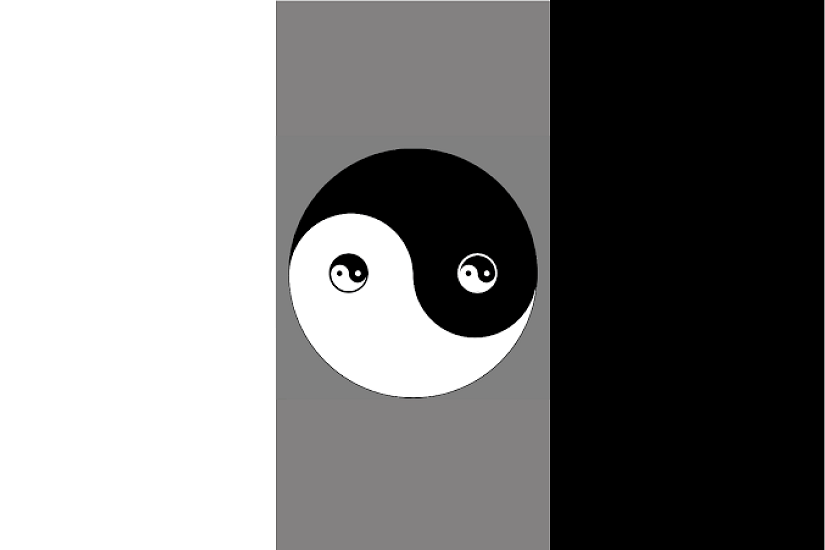
In another sense, the chads and the soyboys follow each other around like the yin and yang of a taijitu, with the yin as mercury and the yang as sulphur. The bugmen are then like the unwobbling pivot of Taoism, as a kind of fulcrum around which the rest of the world turns. This is also reflective of reality in that yin and yang come and go, so that sometimes one is fashionable and the other not, and other times the reverse.

*

If you enjoyed reading this essay, you can get a compilation of the Best VJMP Essays and Articles of 2018 from Amazon for Kindle or Amazon for CreateSpace (for international readers), or TradeMe (for Kiwis). A compilation of the Best VJMP Essays and Articles of 2017 is also available.

Almost All Cases of Growing Cannabis Are Altruistic

New Zealand cannabis law reform supporters were overjoyed on Monday by the news that Rose Renton was discharged without conviction in her case at the Nelson District Court. Charged with the cultivation of 58 plants, she could have been facing seven years’ imprisonment. As this essay will examine, the logic used to exonerate her could be used to exonerate almost any other cannabis grower, and should lead to a change in the cannabis law.

Renton was discharged without conviction on the grounds that her offending was “altrustic” in nature, according to Judge David Ruth, who was quoted as saying: “This was effectively an altruistic endeavour on your behalf to help those for whom that help wasn’t otherwise possible.” This is an entirely fair point, and it’s about time a judge said so, but it goes further than this.

She had been growing cannabis to supply medicine to a variety of people, a job that has been given the title “green fairy”. The ‘green’ refers to cannabis medicine and the ‘fairy’ refers to the fact that this medicine doesn’t come regularly but simply shows up whenever the fairy can make it happen. Renton was supplying clones of a CBD-rich strain to people who then grew the medicine themselves.

A Police officer who came to Renton’s home noticed a cannabis plant there. Instead of ignoring it, the officer made the decision to enforce Parliament’s law against cannabis by arresting her. This decision led to 18 months of suffering on Renton’s part, until discharged without conviction on Monday, for the reasons mentioned above.

Cannabis is a medicine. The main reason why people use it is to escape the suffering caused by either physical or psychological pain. There are several effective substitutes for the effect that cannabis has on physical pain, but there is little that can stop psychological suffering as quickly and efficiently. Countless people have found that a bout of rage, depression or despair can be stopped cold by a dose of cannabis.

It’s rarely admitted to, but there is a lot of suffering in our society. Not just the tedium of the drudge-work that we endure, and the anxiety over our uncertain futures, but the stress of encountering new strangers all the time and the alienation of having no community or political representation all combine to create an existence that is wretched for many. This can be measured by our increasing suicide rate, which hit a record level last year.

Almost all the cannabis that is grown, by anyone, ever, is grown with the intent of reducing some of this suffering. There’s no point to it otherwise. No-one grows cannabis with the intent to cause suffering. Anyone who believes this is simply not in touch with the reality of cannabis use. Everyone who grows it does so with the intent that using the end product will alleviate suffering in some way.

So the concept of non-altruistic cannabis growing makes as much sense as the idea of non-altruistic insulin production.

People who aren’t interested in the medicinal effects of cannabis might still be using it for that reason, even if they smoke it in joints. Even casual joint smokers are often motivated by the decrease in anxiety, stress, nausea or insomnia that comes with using it. This means that the vast majority of cannabis that anyone is growing, anywhere, is for altruistic reasons, much the same as with Rose Renton.

Many people are unwilling to accept this, for the reason that this makes the current law seem extremely cruel. The hard facts are, however, that the current law is extremely cruel. It’s possible that the law prevented Alex from getting hold of a medicine that would have saved his life. We’ll never know.

It’s possible that Rose Renton had to watch her son die for no other reason than that New Zealand politicians were too stupid and cowardly to address the need to repeal cannabis prohibition in time. That might seem unreasonably cruel, perhaps even so cruel that it’s hard to admit to, but that’s what we did. We’ve been doing it for decades, to Kiwi families up and down the country.

We have to face up to the fact that cannabis is a medicine, and that the law withholding it from people is killing those who need its medicinal qualities. It’s time for us to accept that the vast majority of people who are growing cannabis are doing so with the ultimate intent of alleviating human suffering, so we should repeal cannabis prohibition and make it legal.

*

If you enjoyed reading this essay, you can get a compilation of the Best VJMP Essays and Articles of 2018 from Amazon for Kindle or Amazon for CreateSpace (for international readers), or TradeMe (for Kiwis). A compilation of the Best VJMP Essays and Articles of 2017 is also available.
VJMP Reads: Edward Bernays’s Propaganda III

This reading carries on from here.

The third chapter of Edward Bernays’s Propaganda is called ‘The New Propagandists’. Here, Bernays gets to the task of who it is that molds public opinion. “Who are the men who, without us realising it, give us our ideas?”

Bernays admits openly that these molders of public opinion decide for us who we admire and who we despise, and what we think about all manner of political issues. They decide our fashions, our speech, and even what jokes we feel like we’re allowed to make. They decide the shape of everything in our societies – but who are they?

These people include all of the top politicians, all of the leaders of the biggest industries, all of the leaders of the largest cultural organisations, the editors of the largest newspapers and magazines, the heads of the various industry groups, the chancellors of the most prominent universities and the main religious figures. Even so, most of these people, in their turn, get their ideas from elsewhere.

In some cases, it’s clear who the wirepullers are. In most cases, it isn’t. But these people control the destinies of millions. The degree to which a small number of people influence a large number of public figures is generally not appreciated. This number will, however, always be small on account of the great expense involved in manipulating the machinery of propaganda to form public opinion.

This has given rise to the new (in 1928) profession of professional propagandist, which has been euphemised as “public relations counsel”. This role is necessary because all governments, no matter what their type, depend on the acquiescence of the people. Bernays here gives us the maxim “Government is only government by virtue of public acquiescence.” Even commercial enterprises need public approval to succeed.

The propagandist is not simply an advertiser. Although he might use letters to the editor, radio, lectures, magazines and more, his work does not duplicate that of the advertiser. His first business is to make sure that his client’s product is something that the public can be brought to accept. The propagandist’s next job is to analyse the public, and how to approach the leaders of the various groups within it.

Bernays contends that, in the age of mass media, corporations found it necessary to give the appearance of conforming to the public’s sense of decency and honesty. As a result, and much like governments, corporations found propagandists necessary in order to get anything done.

The ideal of the propagandist’s profession is making the client understand what the public wants, and making the public understand the objectives of the client. Propagandising can therein be likened to a form of diplomacy. Bernays labours at length the point that the propagandist does not work to hoodwink the public, and lists the ethical considerations of the profession.

*

If you enjoyed reading this essay, you can get a compilation of the Best VJMP Essays and Articles of 2018 from Amazon for Kindle or Amazon for CreateSpace (for international readers), or TradeMe (for Kiwis). A compilation of the Best VJMP Essays and Articles of 2017 is also available.

VJMP Waitangi Day Address 2019

The only power that scares the Establishment is the unity of the people. Only when Maoris and white people come together, with strong bonds based on mutual appreciation of each other’s talents, do the ruling classes of this country sit up and take notice. Only then do they become afraid of us, instead of the other way around.

There are two very popular, and yet very false, narratives explaining why our society is the way it is. Both of these false narratives serve to divide the nation into two competing blocs, at each others throats. The first is the Imperialist narrative, the second is the Marxist narrative.

The Imperialist narrative has it that Maoris lived in a state of depravity and constant terror. Intertribal warfare and cannibalism were rife; life expectancy was 30 years if you were lucky. According to the Imperialist narrative, Maoris were rescued from this state by the benevolence of the British Empire, which made slavery illegal, and kindly dished out medicine, technology and an end to the Musket Wars.

The Marxist narrative has it that Maoris lived in a state of perfect peace and harmony with Nature. There was no violence and no hunger until the white man turned up. Then the Maoris were driven from their land under musket and cannon fire, into the wilderness to die. The British came here for no other reason than greed, and never saw the Maoris as proper human beings.

Both of these narratives are horseshit. Both have been designed to sow discord and hatred. Both are aggressive, supremacist ideologies, and both are supported by aggressive, low intelligence, egotistical people. Neither has a place in the New Zealand of the new century.

There is a lot of pressure for us to take on one of the false narratives. Many people find it gratifying to blame someone else for their problems, especially an entire group. Many people have chosen a side, not as a Kiwi, but as either a Maori or as a white person, and many of these see the other side of the divide as the enemy who seeks to steal from them.

The British did made slavery illegal, and they did bring technology and medicine here, that is true. They also did some bad things, especially with regards to swindling land from the Maoris, and with creating a society in which money and plastic was valued highly than social and spiritual connections. This is also true.

The Maoris might have problems with violence and abuse and neglect of children, this is true. They have also done outstandingly well compared to other indigenous peoples. Their intelligence and tenacity has enabled them to adapt to the tools of the white man in a way that the others never could. They are much wealthier than Tongans, who were never colonised. This is also true.

We need a new narrative, one that takes us forwards as brothers in arms. Not one that keeps us squabbling in the dirt. Esoteric Aotearoanism can serve as that narrative.

New Zealand society, for the majority of its existence, has been a co-operative enterprise between Maoris and white people. For better or worse, we’re stuck with each other. Neither group of people is going anywhere, and rates of intermarriage are so high that the time will come when there are not only no pure-blooded Maoris left but also no pure-blooded whites apart from immigrants. This is inevitable unless we are divided and conquered by outside forces.

Because of these immensely high rates of interbreeding, and because of the close, sometimes imperceptible, cultural exchange that we have had, Maoris and white people cannot be spoken of as two separate groups. They must be understood as the two major contributing factors to something that is greater than either of them: the Kiwi nation.

There are none of us who are pure Maori, unaffected by the white man’s influence, and neither are there any of us who are pure white people, the same as what can be found in Europe. We are now the yin and the yang of something greater than either of us. Both love rugby, live music, cannabis and exploring the wilderness just as much as the other.

It doesn’t matter what once was.

Co-operation is the only way forward. This demands that we reject the false narratives that cause us to fight each other, and adopt a new narrative that allows each of us to contribute to the greater good in their own way. It doesn’t matter what proportion of Maori blood you have, or what languages you speak, or even what your political attitudes are. There is a niche for you to contribute to the Kiwi nation.

*

If you enjoyed reading this essay, you can get a compilation of the Best VJMP Essays and Articles of 2018 from Amazon for Kindle or Amazon for CreateSpace (for international readers), or TradeMe (for Kiwis). A compilation of the Best VJMP Essays and Articles of 2017 is also available.