VJMP Reads: Edward Bernays’s Propaganda IV


This reading carries on from here.

The fourth chapter of Edward Bernays’s Propaganda is called ‘The Psychology of Public Relations’.

The study of mass psychology made people understand the possibility of the invisible government. We learned that the group has qualities that are distinct from the qualities of individuals. Bernays poses the question here: “is it not possible for us to control and regiment the masses according to our will without them knowing it?”

Bernays says it is possible, with certain limitations owing to the fact that psychological science is not well developed (it’s worth noting here, again, that this book was written in 1928). Propaganda is a human science and can therefore, like economics and sociology, never be exact.

Bernays again makes the point that if you can influence the leaders, you also influence the groups that they influence. Man’s gregarious nature will make him feel that he is part of a herd, and part of this herd psychology is to allow the group to make its imprints on him. Bernays gives the example of the man who buys railroad shares because something has caused him to associate that company with good feelings.

The group mind doesn’t really think, as such. Rather, it has emotions and raw animal impulses. Its first impulse is to follow a trusted leader. In this sense, we can see that the group mind is very primitive. But when a leader is not on hand and “the herd must think for itself”, it tends to do so in the form of simple cliches, whether in word or image form.

The truth is that men are seldom aware of what actually motivates their actions. They believe themselves to be making rational and dispassionate decisions, when in reality they are influenced by crude egotistical and biological desires. Freud was one of those who made people aware of how many of our desires and behaviours are really just expression of suppressed instincts. A man buys a car for status, not for locomotion.

The successful propagandist must understand people’s true motives, and therefore cannot be content with the reasons people give for why they do things. Human desires are “the steam which makes the human machine work”, and only by understanding these can the propagandist control society.

Old propaganda used what Bernays calls “reaction psychology”, in which people are more or less told what to buy. The new propaganda is more subtle. Instead of advertising bacon, the propagandist convinces doctors to tell their patients to eat it. Instead of breaking down sales resistance by direct attack, propagandists now act to remove it through subtle means.

If the propagandist can make it the group custom to buy a particular good, then he has succeeded. The old propaganda asked people to buy that good; the new propaganda convinces people to go into the salesroom and ask to be sold that good.

The leaders who lend their authority to a propagandist’s endeavour will only do so if it accords with their own interests. For this reason, the propagandist must endeavour to understand the aspirations of as many people as possible. There will be cases in which the interests of many different groups overlap, and in that there is power.

The new propaganda is based on “enlightened self-interest”. Bernays concludes this chapter by saying that this, and the three previous chapters, were devoted to giving a general outline of how propaganda works, and in the remainder of the book he will look at specifics.

*

If you enjoyed reading this essay, you can get a compilation of the Best VJMP Essays and Articles of 2018 from Amazon for Kindle or Amazon for CreateSpace (for international readers), or TradeMe (for Kiwis). A compilation of the Best VJMP Essays and Articles of 2017 is also available.


The Case For Cannabis: Prohibition Corrupts the Youth

As this book underlines at length, cannabis prohibition itself does a great amount of damage to our society. Leaving aside the fact that cannabis itself is not harmful, prohibition and the act of enforcing it causes legitimate harm by way of trauma, and usually to people who have done nothing wrong. As this article will examine, prohibition also does damage by corrupting the nation’s youth.

The received wisdom is that cannabis corrupts the youth, by transforming good students into lazy, violent delinquents. The truth is much different. The truth is that cannabis prohibition creates the corruptive effect.

A young person who is taking note of the debate around cannabis law reform couldn’t help but to draw some unsavoury conclusions about how the world works. Watching Bob McCoskrie blatantly lie and scaremonger in the name of Jesus demonstrates clearly to any young people watching that our culture is rotten with crooks, our mainstream religion dead, our mainstream media complicit in it all. What sort of message is that?

The youth aren’t stupid. They know that cannabis prohibition is bullshit. This can be seen from the strong correlation between being young and voting for the Aotearoa Legalise Cannabis Party in 2017. The fact is that anti-cannabis propaganda has had a decreasing impact since the 1970s, by when enough people had experimented with it for there to be subcultures of individuals who knew that the reasons for prohibition were false.

This raises a question that few ask themselves, because of the rush to look tough on crime. What impression are we giving the youth by way of our actions around cannabis? Because the youth of New Zealand are watching their elders, and observing how some of those elders are blatantly lying about the side-effects of cannabis, and clearly trying to scaremonger the population, while ignoring the scientific evidence.

The youth also see the Police enforcing the law, despite the widespread awareness that enforcement of this law only serves to increase the suffering of the New Zealand people. This teaches them that the law is indifferent to the suffering of the people, merely something that is imposed upon them by Parliament, and the Police little better than dogs, merely following orders for the sake of a full belly.

Observing this blatant corruption in action has a hugely corrosive effect on the moral integrity of young people.

Above all this, cannabis prohibition corrupts the youth the worst in lower-class families. Because cannabis is on the black market, it’s possible for someone to make a few thousand dollars in hard cash from running a clandestine grow. When a child sees their parent or uncle making money from growing cannabis, and not from working, then the idea of crime instead of work starts to become normalised.

Imagine if the alternative for at-risk children was watching their family member work on the white market as a cannabis researcher, or even as a budtender. A child is much better off seeing their parents work almost any job on the white market than something on the black one. It’s much better to normalise the idea of making money from legal enterprise, but cannabis needs to be made a legal enterprise before that can happen.

Worst of all is the effect on those young people who see their older family members arrested and sometimes imprisoned for something which they can’t understand is a crime. There’s no way to get a young person, who is wise to the nature of propaganda and brainwashing, to believe that cannabis is evil enough to warrant such treatment. They know that the Government is committing an abuse against them.

The corruptive effect of this is immense. For such a young person, watching a member of your family go through that much suffering just over a plant normalises certain ideas about society. One of the most dangerous of these is that society is their enemy – an enemy that wants to destroy them.

Cannabis prohibition has corrupted our youth, by showing them that truth and justice have no place in the organisation of the world. The way to get ahead is to bribe politicians, scaremonger, lie and cheat. Political decisions about medicines are not made on the basis of evidence and science, and neither are they based on the imperative to end suffering.

It’s impossible to tell a young person that they ought to obey the laws of a society when those laws are transparently arbitrary and ridiculous. This means that cannabis prohibition has had the effect of eroding the otherwise law-abiding nature of people.

It would be much better for the supposed adults to demonstrate honesty and fairness to the young people. This we could do by repealing cannabis prohibition, and then making a commitment to tell the truth about it at all levels of government, education and medicine.

*

This article is an excerpt from The Case For Cannabis Law Reform, compiled by Vince McLeod and due for release by VJM Publishing in the summer of 2018/19.

Government Action on Housing Crisis Missing-In-Action

by MARTIN GRONBACH

I stare wide eyed at my phone and let loose a snort of equal parts disgust and derision.

The listing on TradeMe for my neighbour’s house has revealed their asking price.

$540,000.

This probably won’t be terribly offensive to those of you battling to buy your own home considering the average house price in New Zealand reached an eye watering $645,250 as of last year, but let me put my outrage in context.

This is the asking price for a reasonable 3-bedroom house in Carterton, Wairarapa.

Over half a million for a house in Cartervegas, with me as a neighbour? Get the fuck outta here.

If this what politicians put forward as the “affordable provinces” then any young person aspiring to one day own their own home is pretty damn screwed. Trust fund babies need not consider themselves applicable.

Last year I decided to ask the three local councils as to what actions they were taking to address the housing crisis and housing affordability.

The responses ranged from “We can’t do anything”, “It’s not our problem to solve”, “Define affordable” to “We are waiting on direction and leadership on the issue from central government”.

Local governments are not interested in taking a leading role in solving the housing crisis. Maybe this is due to the nearly non-existent representation of young people in local body politics, but that’s a topic for another time.

If not local government, surely our transformative coalition government could surely be trusted to be kicking arse for the long-suffering Kiwi first home buyer?

Brace yourself for crushing disappointment as the salvation of Generation Rent won’t be found with this current government – at least not this term.

Kiwibuild has been flogged by Labour as the band-aid to fix the housing crisis booboo as far back as 2012. However once in a position to actually implement the policy in 2017, it was quickly revealed just how little thought had gone into it.

The reality was that Labour’s fix for the housing crisis was over-hyped and under-cooked, inaccessible for anyone earning the average wage, that had school age children, or any number of the realities New Zealanders face. With the additional restrictions on selling the property within three years, designed to stop property speculation, people considering Kiwibuild are better off not using the scheme if possible, as buying on the open market doesn’t have any such restrictions and, in the end, any difference in the final price paid was negligible.

It’s a sad state of affairs that even with the supposed singleness of purpose and financial backing of the tax payer, Kiwibuild has completely failed to deliver for the majority of people that voted for it.

With numerous New Zealand based kit-set home manufacturers, even houses built by robots in Wellington, building houses isn’t the bottleneck. Land supply, and the price of ticking the boxes before building, however, is.

Reforming the Resource Management Act to allow for faster development of land should be one of the more obvious issues to deal with if the Government was actually serious about tackling the housing crisis. Likewise, opening up the building materials market to some international competition by way of reforming the New Zealand Building Code could potentially topple the monopoly enjoyed by a select few manufacturers price gouging the currently captive New Zealand market and further decrease building costs.

Another touted solution in the build up to the election was the so-called foreign ownership ban. Put forward by both Labour and New Zealand First, this would stop overseas investment in our domestic housing market. However, this did not mean ALL foreign ownership as Australians, who make up a third of all foreign owners of New Zealand property alone, as well as Singaporean nationals in the pursuit of a YET ANOTHER free-trade agreement, are still able to buy New Zealand property.

Again, this was found to be a relative non-issue as measly three percent of all property sold was to foreign buyers and that three percent was mostly made up of large-scale farms and stations, life-style blocks and shares in new-build apartment blocks. While I don’t agree with any foreign ownership of New Zealand land, in the context of the housing crisis, this is, and continues to be, an outlying issue, if not entirely separate from the housing crisis.

Generation Rent isn’t, and never was, in the market for a thousand acres of pristine South Island sheep country, so the foreign ownership ban had little real impact in this regard.

The main influencers of the housing crisis are two issues. The first was, and continues to be, New Zealand’s high levels of immigration. That contentious issue both Labour AND New Zealand First made a huge deal about during the opposition years and during the 2017 election, which our coalition government now seems reluctant to firmly act on, apart from putting the boot into low hanging fruit like the dodgy export education industry.

Ironically the fallout following the banning of Huawei from supplying equipment for the upcoming 5G rollout, the responsive drop in tourists and wealthy international students from China may end up having more of a tangible impact on addressing housing affordability that anything the Government has intentionally done to date.

The second genuine influencer is the rife accumulation, hoarding and speculation of housing by fellow, and now extremely wealthy, New Zealanders. The final word on cause of the housing crisis is that it is a mess of our own making. Kiwis ripping off Kiwis. Ever heard of a cap or outright ban on the number of investment properties? Me neither, and so long as we keep voting for the same four political parties, you never will.

With Generation Rent’s patience starting to wear thin and half their term over already, the coalition government can’t afford to continue to wear the kiddie gloves for fear of threatening the entitlement culture of wealthy New Zealand nor the construction sector lobbyists whilst avoiding the real causes of our housing crisis. 2019 will either make or break this government and younger people’s trust in it.

At the end of the day I don’t want or need 20 rental properties. No reasonable New Zealander does.

I just want the safety and security of providing a home for my wife and children that won’t be put up for sale as soon as the market conditions are favourable.

But not for over half a million in bloody Carterton, thanks.

*

Martin Gronbach is an unashamed nationalist, self-aware 30-year-old boomer, active political shitposter, father, husband, engineering student and full member of Generation Rent who lives in the Wairarapa.

The Tao of Rugby

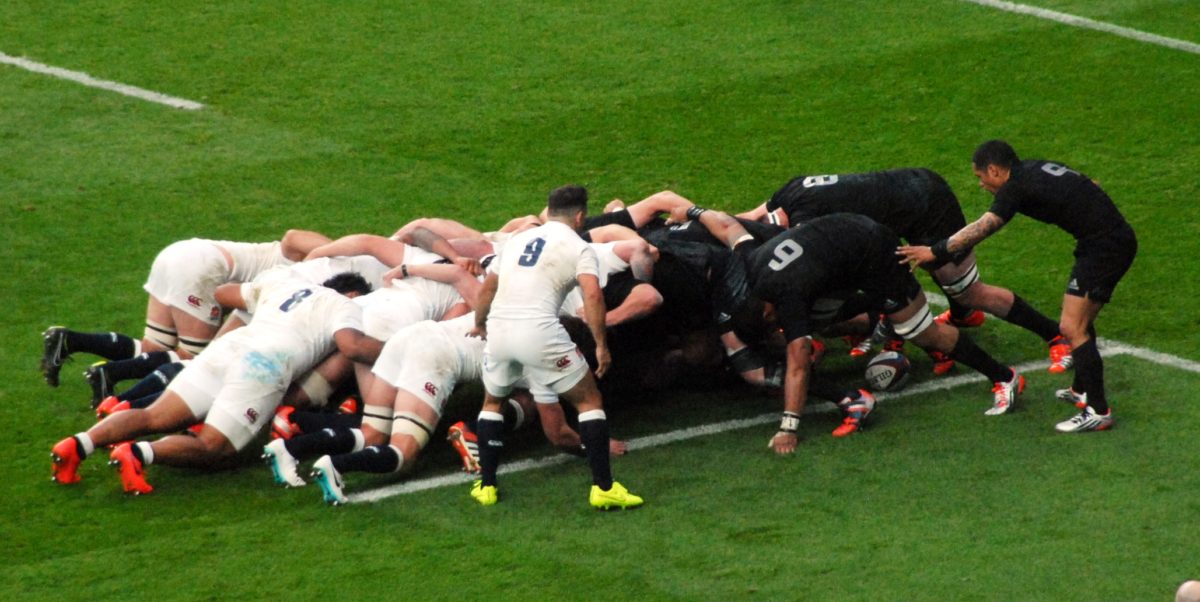
The Tao is in everything. More fundamental than words, more fundamental than forms, the eternal interplay of yin and yang is one powerful way of understanding the reality we are presented with. As the Super Rugby season begins, and in a year of fixtures that contains a Rugby World Cup, we take a look at the Tao of rugby.

The flowing blitzkrieg of an All Blacks backline move is often the first thing a person sees when they are new to the game. It’s impressive because it’s high skill executed at high pace. It’s all very yang and masculine, because it’s fast and dynamic, but there’s another side to the game, because the backs can’t do anything without the ball.

The forwards might be slow, but without the ball the team can only really go backwards. So it doesn’t matter that these players are slow, as long as they are strong, because strength is the main factor that determines who wins a contest for ball possession. The forwards are therefore like the yin: underappreciated, but just as necessary as the rest.

In this sense, a rugby team is like a taijitu. The backs as yang, and the forwards as yin. Both are entirely necessary for the correct operation of a rugby team, because the backs can score points but have trouble winning the ball, and the forwards can win the ball but have trouble scoring points. Neither is superior to the other, and neither can be complete without the other.

There is a deep spiritual truth in this. One solution to the question of the meaning of life is just to play one’s role, whatever that should be. A prop might envy the fitness and speed of the backs, and a winger might envy the strength of the forwards, but at the end of the day all either can do is just to play their role.

The rugby ball, being shaped in such a manner as to prevent it being passed along the ground soccer-style, represents the very centre of the taijitu. This is the position that Taoists refer to as the “unwobbling pivot”, on account of that the rest of the system revolves around it. Without a ball that can bounce in unpredictable ways, there is no game of rugby.

This ball is a very chaotic element, as can be seen on every occasion when a high ball is allowed to hit the ground (and often when it isn’t). In this sense, it also represents Fortune. For a New Zealander of the 21st century, instead of saying “The Lord giveth, the Lord taketh”, we say “That’s just the bounce of the ball.” The sentiment is precisely the same.

These patterns within patterns are part of the reason why rugby is now more of a religion in New Zealand than religion is.

The purpose of religion is not anything to do with any spiritual insights that it may confer. This is merely a ruse. The real purpose of religion is to bind a society together by bringing all of the disparate groups together in a state of equality before something absolute. God knows no division of class or race, and therefore all are equal before God, whether rich or poor.

Coming together in the name of God is an extremely powerful tool for creating social bonds, but New Zealand can no longer attempt to do this in the name of Christianity. That tradition is dead, but it’s not the only way that Kiwis can come together as one.

Rugby also serves this purpose. Rugby serves to bring Kiwis together in a way that no religion or Government enterprise can. At an All Blacks game, one sits in the stand, and it doesn’t matter if the person next to you if of a different class or gender – you are there for the same purpose, to give your energy to the same spectacle. You are all equal before something greater: the ritualised warfare that is rugby.

All of this goes double for those who actually play the game. Because mainstream religion is not inspiring to New Zealanders, we have to learn our moral lessons elsewhere – and historically this has been on the sports field.

On the sports field, we learn that sometimes you win and sometimes you lose. Sometimes you play well and lose, and sometimes you play poorly and win. We learn that arrogance usually leads to a comeuppance of some sort. We learn that a hard tackle is no less hard because the person delivering it was white or brown, or because the person receiving it was rich or poor.

We learn that the bounce of the ball favours neither the international superstar nor the 8-year old. All are equal before the whims of the prolate spheroid, which is, to the Kiwi, the form of God, distributing blessings according to a pattern that cannot be understood by mere mortals. We learn to adopt the humility that is the only correct response to such an almighty force.

So when people say that rugby is a religion to Kiwis, they’re more accurate than even they might realise. Rugby is to us what Taoism was to the everyday folk of ancient China, both bonding the community together and instructing its members about the mysteries of life, luck and death.

*

If you enjoyed reading this essay, you can get a compilation of the Best VJMP Essays and Articles of 2018 from Amazon for Kindle or Amazon for CreateSpace (for international readers), or TradeMe (for Kiwis). A compilation of the Best VJMP Essays and Articles of 2017 is also available.