
Why One Should Be Sceptical Of Labour’s Recent High Polling

Recent opinion polls in New Zealand suggest that the Sixth Labour Government is utterly triumphant. Labour’s polling dominance is such that it has led directly to a change in Leader of the Opposition. However, as this article will show, Labour’s high polling numbers need to be taken with a massive pinch of salt.

Labour supporters have been effusive in their praise for Ardern, claiming that her excellent crisis leadership has been the reason for the polling rise. She has been the very model of calm, collected control, and her high polling is simply because people have come to realise how great she is. She has communicated clearly, listened to the scientists and oh isn’t she marvellous.

The reality is that sitting governments everywhere have received a significant polling boost in recent months as their populace has swung in behind them out of a wartime mindset.

The Social Democrats in Sweden, who had recently suffered the humiliation of falling behind the neo-Nazi Sweden Democrats in the polls, have now leapt back into the lead. Since the coronavirus pandemic began in earnest, they have increased their share of expected voters from 23% to 31%. In other words, the sitting government’s vote share increased by about a third – as it did in New Zealand.

It’s worth noting here that the Swedish approach to the pandemic was almost the opposite of New Zealand’s. Sweden did not have lockdowns, choosing to rely on the inevitable herd immunity of the population. So it’s not simply a matter of sitting governments being rewarded for making the right move. No-one knows yet what the right move was.

A Labour supporter might interject here. They might claim that the Swedish Social Democrats are also a centre-left party, and so their success combined with New Zealand Labour’s success shows that the time has come for the politics of kindness. Regardless of how the coronavirus should have been dealt with, many voters now agree that the time of miserliness and keeping other people down is over.

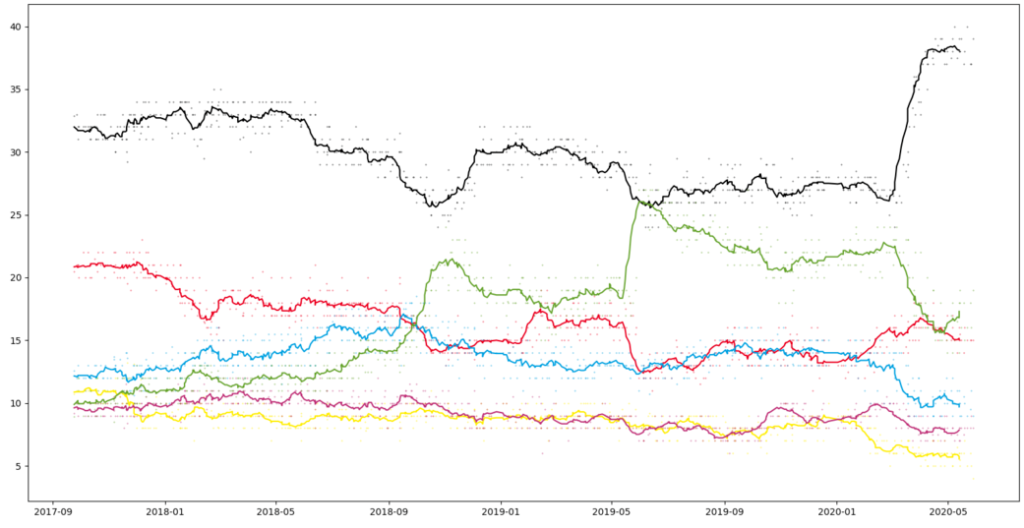
These are lovely sentiments, but the reigning Union Government in Germany is conservative, and they have also seen a poll boost since the coronavirus pandemic started – in their case of some 12% (see image at top of page). So the populations of Western countries have fallen in behind centre-right governments as well as centre-left ones.

Final proof comes from the fact that the Scott Morrison Government in Australia, despite being mired in scandal and accusations of incompetence, has also climbed some 6-7% since the pandemic hit. Morrison had fallen behind Leader of the Opposition Anthony Albanese on the Preferred Prime Minister polls, but has now regained his lead.

There’s an obvious conclusion to draw from all this data. It’s apparent that the public of every Western nation has fallen in behind their leadership on account of anxiety from the coronavirus pandemic. This is clear from the fact that, despite handling the pandemic in very different ways, all sitting governments have seen massive boosts to their polling.

Kings have long known that their underlings plot and scheme against them less when the castle is under siege. Dictators have also long known that their position is never more secure than when the nation is under threat from an outside enemy. In fact, it’s a law of social psychology that group cohesion is a function of the group’s anxiety about external threats.

This is why criticising Jacinda Ardern has become a social misdemeanour. At a time of great need, such as this coronavirus pandemic, it’s almost seen as treason to criticise the leader. This is an emergency, and that demands that everyone put their grievances aside and work together for a greater goal.

The true measure of Labour’s polling will come after the siege mentality brought on by the coronavirus pandemic is lifted. There’s good reason to expect that Labour will fall back to within 5% of their pre-COVID mark of around 42%. If they do, and given that the ACT Party is now polling at 3.5%, then this September’s election could still be very close, despite how high Labour and Ardern are currently riding.

*

If you enjoyed reading this essay, you can get a compilation of the Best VJMP Essays and Articles of 2019 from Amazon for Kindle or Amazon for CreateSpace (for international readers), or TradeMe (for Kiwis). A compilation of the Best VJMP Essays and Articles of 2018 and the Best VJMP Essays and Articles of 2017 are also available.

*

If you would like to support our work in other ways, please consider subscribing to our SubscribeStar fund. Even better, buy any one of our books!
Conservative Parties In Every Western Nation Will Eventually Become White Parties

The National Party has revealed its party list for this year’s General Election, stoking outrage. In an age when it’s not okay to be white, the racial composition of their top ten list candidates is unrepentantly vanilla. This essay will argue that this outcome was not only inevitable, but is likely to intensify in the future.

In the age of social justice, racism is the Original Sin of the white race. The fight against racism, many believe, is one of the most pressing of all social issues. Anyone who doesn’t think so stands alongside Adolf Hitler as a public enemy motivated by sadism. Practically any action can be justified, no matter how ludicrous, if the intent is “anti-racist”.

The social justice warriors seems to think that the best way to fight racism is to minimise the number of white people in positions of power. The best way to achieve this is to oppose white people at every turn. Consequently, Labour and the Greens have become openly anti-white parties.

18 out of Labour’s 46 current MPs are non-white – 39% of the total. This is a much higher percentage than the percentage of non-whites in New Zealand, which is 29%. 11 of those 46 are Maori – 24% of the total. This is also a much higher percentage than the percentage of Maoris in New Zealand (16%). These figures are even more remarkable if one accounts for the size of the Maori presence in the New Zealand First, Maori and Mana parties.

There is nothing wrong with having Maori MPs (or white ones). But if the Labour Party wants to have a disproportionately high number of non-white or Maori MPs, then no-one can be surprised if their opponents in the National Party have a disproportionately low number of non-white or Maori MPs.

This essay predicts that things aren’t going to end there. The problem is that it’s now all but inevitable that National eventually becomes the white person’s party.

As diversity increases in any white country, the in-group solidarity of the white people in that country also increases. This can be extrapolated from known laws of social psychology. As the position of white people gets weaker, and closer to minority status, the more this in-group solidarity will intensify out of a concern to protect their position. Hence, the strongest white in-group solidarity is seen in places like Brazil and South Africa.

As all other Western counties become more like Brazil and South Africa, the white people in those countries will come to face a certain calculus: the more their local social democrat party becomes non-white, the more it makes sense for them to rally behind the local conservative party. This calculus explains why the National top ten is now all white.

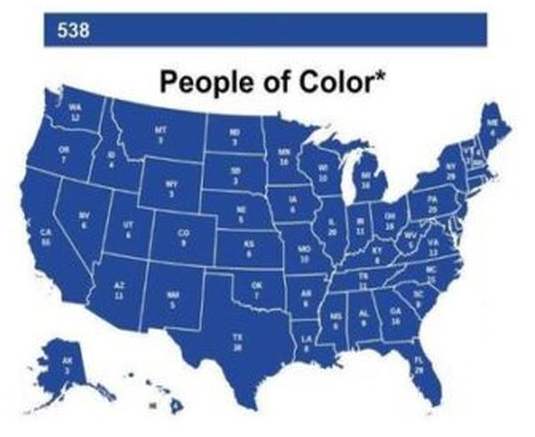
This phenomenon is perhaps most advanced in America, where the Republican Party is now the White Party in all but name, while the Democrats are the Party of The People of Colour. The image at the top of this page shows the reality clearly.

If only non-white Americans voted in Presidential Elections, the Democrats would win every single Electoral College delegate. Something similar is true in all other Western countries – namely, that if only non-whites voted, the social democrats would always win. It is certainly true in New Zealand, as Dan McGlashan showed in Understanding New Zealand.

Conservatism has always been about maintaining the status quo. The logic is that things came to be the way they are by way of the collective applied wisdom of our ancestors. But if progress is equated with a smaller and weaker white presence, then conservatism will necessarily come to be equated with maintaining and protecting that presence.

The National Party top ten might be all white, but this is hard to avoid when Labour positions itself as the brown party. What’s also hard to avoid is that increasing anti-white aggression on the part of Labour and the Greens will intensify these sentiments, making National come to seem like the white man’s last stand.

What would really be a coup, from the perspective of Todd Muller, would be for National to take advantage of these pressures to win working-class whites to their side. If National accepted the inevitability of the grim calculus outlined above, they might realise the need to act upon it immediately, rather than be acted upon.

The Labour Party was founded by working-class whites for working-class whites, but its grip on that constituency has never been weaker. The Labour movement has turned its back on working-class whites all throughout the West, preferring to champion middle-class browns and blacks. This has made it highly vulnerable to being split in two, as it has been in places like Sweden.

The National Party could swoop in here – not from introducing racist measures themselves, but from winding back previously-introduced measures that were motivated by anti-white racism. A broad commitment to get rid of all policies based on skin colour and not need would be a good start.

If the National Party promised to scrap the Ministries of Maori and Pacific Island Affairs, as well as to scrap race-based education and health funding, as well as to scrap all race-based differential treatment in the Justice System, they would steal a march on a Labour Party that expects working-class white people to go to the back of the queue behind recent immigrants.

It would provoke fury from the globalist mainstream media, who are committed to propagandising for cheap labour and its importation. However, it might benefit National’s electoral chances, as did Don Brash’s Orewa speech in 2005. More importantly still, such a move is bound to entertain the gods, upon whose favour we all rely.

*

If you enjoyed reading this essay, you can get a compilation of the Best VJMP Essays and Articles of 2019 from Amazon for Kindle or Amazon for CreateSpace (for international readers), or TradeMe (for Kiwis). A compilation of the Best VJMP Essays and Articles of 2018 and the Best VJMP Essays and Articles of 2017 are also available.

*

If you would like to support our work in other ways, please consider subscribing to our SubscribeStar fund. Even better, buy any one of our books!
Is It Time For New Zealand To Embrace Apartheid?

Most people consider apartheid to be one of the recent century’s many evils. Elderly Kiwis speak with pride of opposing the 1981 Springbok tour and helping to bring the regime in South Africa to its knees. Today, though, it’s apparent that race-based policies are making a comeback. This essay asks the inevitable question.

To Kiwis in Generation X, apartheid was placed along the Holocaust as an example of the worst of all possible crimes – racism. We were made to write essays in school denouncing it. The television and radio told us every day that ending it was one of the world’s most pressing issues. So when apartheid ended with the democratic elections in 1994, we all cheered.

In recent years, however, apartheid has surged back into fashion. The powers that be, for reasons nefarious, have encouraged a renaissance in racial consciousness. In 2020, most people’s identities are once again based primarily around their racial heritage. It’s once again common for people to think of themselves as their race first and as a Kiwi second.

In New Zealand, successive strategic Government decisions have rejected the idea that New Zealanders are one people under one law. They have enshrined separatist sentiments, promulgating the belief that the essential nature of relations between whites and Maoris is one of oppression, deceit and exploitation.

Part of the New New Zealand history is that white people have stolen some innumerable wealth from the Maoris, and that justice demands therefore that the Maoris get their own back on white people whenever they can. This blatantly racist narrative has inspired an anti-racist counter-reaction, as the nation has been set against itself.

Anti-racists were appalled by recent news that the Sixth Labour Government was allocating coronavirus support funding on the basis of race. GPs of Maoris and Pacific Islanders were given $4.50 per patient, but GPs of white people were only given $1.50 unless those patients had been previously marked out as belonging to the poorest quintile. This is a blatantly racist policy, and some were surprised it was even legal.

Given that the most recent Budget allocated $1,000,000,000 to Maori causes alone, some could be forgiven for thinking that the Sixth Labour Government had given up on the white working class completely, and had settled for being a brown party. If this is the case, then we’re arguably on our way to an apartheid system where political factions argue for racial interests first and foremost.

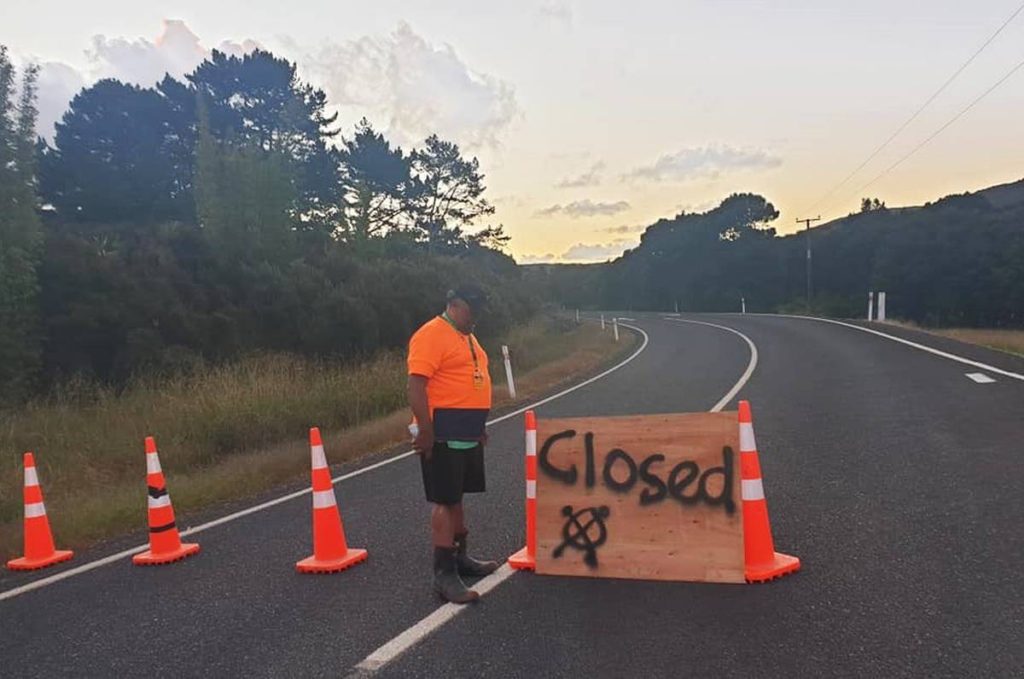
This news came in the context of the realisation that the Police had no intention of stopping certain Maori tribes from blockading public roads, particularly roads in Northland. Despite the fact that blockading a public road is a crime, the Police have not made any arrests, and have even said that they weren’t going to do anything about it.

So many people have supported these actions that it seems as if New Zealand is taking tentative steps towards a fully apartheid system, where different laws apply depending on one’s skin colour.

The question raised by this essay is: should New Zealand embrace this shift, and institute full apartheid? Should we organise our society to reflect a fundamental and unbreachable difference between Maoris and non-Maoris, such that the two different groups cross each others’ paths as little as possible?

The first step would be to entrench the Maori Roll. This would mean that all Maoris were forced to vote in the Maori electorates whether they wanted to or not. Their race being their defining quality, they would no longer be eligible for the General Roll. Correspondingly, Maori voters would not be permitted any influence over non-Maori affairs.

The second step would be to declare certain areas as tribal reservations. In principle, these already exist. The areas being blocked by roadblocks are, by virtue of that residents are allowed to block them, effectively the same as North American-style reservations. Eventually, Maoris would be transported from the cities into these tribal enclaves.

Future steps would entail the institution of separate drinking fountains, toilets and beaches. Sports leagues would also be segregated, with a special Maori league for rugby. Maori players would no longer be eligible for the All Blacks or Black Caps.

The reality, of course, is that apartheid between Maoris and whites in New Zealand is impossible on account of that they’re already too mixed together.

At least 25% of New Zealanders – including the author of this piece – are some kind of mixed-race Northern European/Polynesian. Those of us who are cannot reasonably be expected to pick a side in the great race war that so many seem to be agitating for.

If you’re a mixed race white-Maori, you are probably the result of a relationship in which a white person and a Maori loved each other. Your entire existence is an expression of co-operation and goodwill between these two peoples. Therefore, it’s impossible for a Kiwi of mixed blood to choose one side over the other, any more than they could choose their left hand over their right one.

The majority of New Zealand already has white ancestry. Sooner or later, the majority of the country will also have Maori ancestry – this is inevitable given that Maori ancestry is already carried by many Kiwis who are indistinguishable from fully white people, and that interbreeding rates between Maoris and whites are extremely high (the average Maori woman is more likely to breed with a non-Maori than with another Maori).

Seeing as there is no reproductive barrier between the two groups, it seems inevitable that mixed-race white-Kiwis will eventually comprise a majority of Kiwis. From that point, there’s no looking back.

If apartheid really is impossible, then it’s a mistake to take steps towards it. That means that all separatist measures have to be opposed, both intellectually and legally. No Treaty favouritism, no race-based funding, no Maori roadblocks, no official narrative of hatred, division and revenge. It’s time to replace our national narrative with Esoteric Aotearoanism.

*

If you enjoyed reading this essay, you can get a compilation of the Best VJMP Essays and Articles of 2019 from Amazon for Kindle or Amazon for CreateSpace (for international readers), or TradeMe (for Kiwis). A compilation of the Best VJMP Essays and Articles of 2018 and the Best VJMP Essays and Articles of 2017 are also available.

*

If you would like to support our work in other ways, please consider subscribing to our SubscribeStar fund. Even better, buy any one of our books!

Paula Bennett’s Cannabis Stance Emblematic Of National’s Failure

Yesterday’s Reid Research poll suggested complete and utter failure for the National Party in this September’s election. Most media commentators rushed to congratulate Jacinda Ardern’s Labour Party, and suggested that their steady hand during the ongoing coronavirus pandemic was the reason for the good polling. The alternative explanation, as this essay will explore, is that National are shit.

The poll suggested that Labour is currently favoured to win 56% of the vote at the next general election. This would only be a fraction lower than what the African National Congress won in last year’s general election in South Africa, a country often criticised for being a one-party state. It’s a triumphant poll for Labour supporters; their opposition lies scattered and disorganised.

Predictably, most National supporters reacted by bleating about how Reid Research was in Ardern’s back pocket and how everything will be different once the economic effects of the lockdowns are more widely understood. But it won’t be. The fact is that the country has fundamentally lost confidence in the current National leadership.

This magazine reminded everyone last year, in response to increased complaining about the human rights abuses committed by the Sixth Labour Government, that Labour were only in power because National were shit. The Fifth National Government had unmistakably demonstrated its indifference to the suffering of New Zealand’s working class and younger generations, and, subsequently, Winston Peters went with Labour after the 2017 General Election.

Nothing has changed on National’s part.

Deputy Leader Paula Bennett has announced that she’ll be voting to keep putting cannabis users in cages this September. She isn’t bothered that cannabis prohibition costs the taxpayer $400,000,000 a year to enforce, or that it causes great suffering to many of her fellow citizens for no justifiable reason. She wants to charge on with cannabis prohibition as if we’ve learned nothing at all from the past 45 years of failure.

This position is a microcosm of National’s failings.

We tried the politics of cruelty for nine years – the term of the Fifth National Government. We saw John Key and then Bill English sit on their arses as medicinal cannabis was legalised across the world, leaving desperate Kiwis to suffer needlessly. They wasted some $3,600,000,000 on enforcing cannabis prohibition during their term, with nothing to show for it at the end.

During those nine years, we saw the suicide rate climb as the mental health system was pared down to the bare bones. Banking and finance interests grew fat and wealthy, while working New Zealanders were driven first into debt and then to the wall. The National Party rejected all pleas for relief with the same contemptuous indifference that the previous National Government had shown.

By 2017, New Zealanders decided that they’d had enough cruelty. National lost so much support that they lost their grip on power, and Winston Peters dealt the killing blow. It seems that National didn’t learn much from this, however. They have continued to campaign for a kick in the guts to all the usual victims.

Bennett’s position on cannabis shows that National still don’t give a fuck at all. They don’t give a fuck about science, or evidence, or what’s happening with cannabis law reform overseas. They’re just drifting along, in their own little bubble, as if it were still the 1990s.

Things were different in the 1990s. The Fourth National Government passed a Budget in 1991 that left the children of poor families to go hungry, and were rewarded. Kiwis didn’t care about hungry kids then, so we voted National back into power – twice. In the 1990s, we didn’t give a fuck either. But we do now (at least generally speaking).

New Zealand, and the world, have moved on from beggar thy neighbour politics, but the current National leadership has been slow to see it.

Today’s National Party are so out of touch with the average New Zealander that they might as well have a Deputy Leader who wants to put homosexuals in cages. Bennett’s position on cannabis is ludicrous in the light of existing evidence. The electorate inevitably punishes someone holding antiquated positions, and cannabis prohibition is an antiquated method of dealing with cannabis misuse.

To be in favour of cannabis prohibition today is to deny reality. A person is insane if they think that, by using the criminal justice system to put cannabis users in cages, the Government decreases the sum total of human suffering. Kiwi voters can sense this, and so they have overwhelmingly chosen to support the opposition.

The National Party needs to move away from the politics of hate that have characterised it in recent decades, and accept that policies like cannabis prohibition belong in history’s garbage can. This might necessitate a clearout of their current leadership. Nikki Kaye has previously demonstrated a 21st Century approach to cannabis law reform, and the electorate might reward this good sense over what Bridges and Bennett are offering.

*

Vince McLeod is the author of The Case For Cannabis Law Reform, the comprehensive collection of arguments for ending cannabis prohibition.

*

If you enjoyed reading this essay, you can get a compilation of the Best VJMP Essays and Articles of 2019 from Amazon for Kindle or Amazon for CreateSpace (for international readers), or TradeMe (for Kiwis). A compilation of the Best VJMP Essays and Articles of 2018 and the Best VJMP Essays and Articles of 2017 are also available.

*

If you would like to support our work in other ways, please consider subscribing to our SubscribeStar fund. Even better, buy any one of our books!