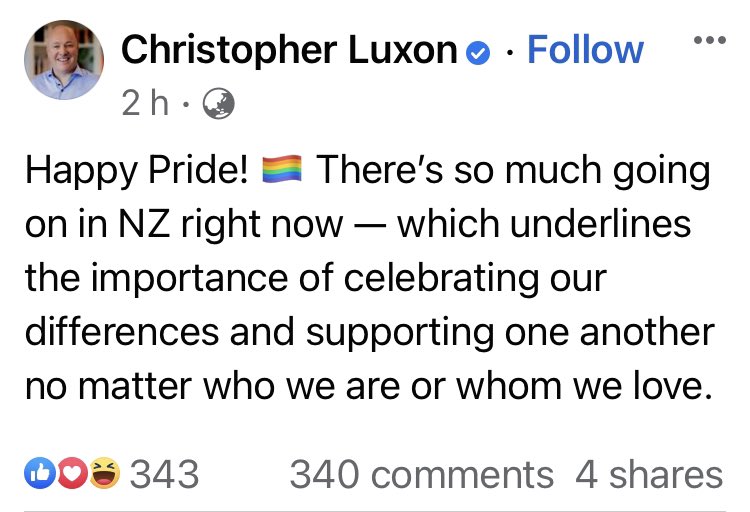
Observers have noticed that conservative forces have thrown themselves whole-heartedly behind the gay pride movement. This seems like a extraordinary change in attitude, considering that conservatives were for so many years the reason that homosexuality was banned. The explanation for this change is actually very simple.
All sections of the ruling class push identity politics in order to distract from class politics.
Politicians don’t really care if men fuck other men up the arse or not. What they care about is maintaining their position at the top of the dominance hierarchy. And the way to do that, as it always has been, is through divide and conquer. Split the masses up and set them against each other: that way, they don’t attack the people above them.
Identity politics, a.k.a. idpol, is the most effective way to divide and conquer. Instead of identifying with their class interests – and viewing the ruling class as their collective enemy – the masses are trained to identify with immutable, natural characteristics, such as race, gender and sexuality, and to hate “bigots” and “racists”. Class concerns are considered less important, and so fall from awareness.
The reason why all differences in economic outcomes between races are considered evidence of racism, and why all differences in economic outcomes between genders are considered evidence of sexism, is because narratives of racism and sexism are essential to divide and conquer the masses. So the ruling class has to whip the masses into hysteria about racial and sexual injustices.
Despite being the leader of a supposedly conservative party, Christopher Luxon can promote homosexuality because he knows that the battle for homosexual acceptance is a distraction from class politics. The more people worry about rights for homosexuals, the less energy they have to worry about rights for the working class. Therefore, promoting this battle serves the interests of the ruling class by weakening their enemies.
Ideally, the population could be manipulated into thinking that politics was all about race, gender and sexuality, and nothing else. Such an outcome would push class concerns to the bottom of the priority list. That way, the ruling class could continue to suck profits, taxes and rents out of the masses without those masses even thinking about coming together to resist.
Cha-ching.
The divide and conquer strategy is sophisticated. The ruling class has to be careful not to campaign for any issue that might inadvertently unite the masses. So they don’t campaign to prevent any actual injustices, like homelessness, the War on Drugs, mental healthcare access or the food inflation resulting from mass money printing in recent years.
Luxon has no interest in promoting cannabis law reform, because cannabis is mostly used by poor people and therefore the issue does not divide the working class as effectively as race, gender and sexuality. The Labour Party doesn’t promote cannabis law reform either, and for the same reason. Neither does the Maori Party, even though almost 80% of Maoris voted for legal cannabis in 2020. Representatives of all of these parties are members of the ruling class first and foremost.
The simple rule is that the ruling class promotes any issue that causes the people to fight and bicker with each other, and ignores any issue that causes the people to unite.
The fact that the working class doesn’t care about the right to fuck a 16-year old boy up the arsehole is precisely why the ruling class promotes pride parades. That way, the ruling class can scream “homophobe!” at anyone who thinks housing or wages are more important issues. Anything to keep the working class at each other’s throats.
And so, the more politicians fight (or pretend to fight) over race, gender and sexuality, the further the working class sinks into the swamp of wage slavery. Never before has more attention been paid to identity politics, and never before has the position of Western workers been worse. These two facts are directly related.
Although most don’t realise it, white people not being allowed to have a white identity is also identity politics. It might be assumed that the promotion of identity politics implies the promotion of a white identity. That is not the case. If every race were allowed to have an identity, we would all know our place and would get along reasonably well.
Maximum division necessitates that white people be denied an identity. This leads to a sense of injustice, which leads to anger. This anger is then directed away from the ruling class by the apparatus of propaganda, which the ruling class controls. This propaganda declares that any white person seeking a white identity is pilloried as a racist or a terrorist.
In summary, the ruling class pushes identity politics to divide and conquer the masses, and to distract from class issues. They have done this ever since the first wave of feminism in the 19th Century. Their efforts intensified after Occupy Wall Street.
The only realistic solution is for a new breed of politicians, who reject identity politics, to rise in the West.
The Maori Party won 33,630 votes in the 2020 General Election, for 1.17% of the total vote. They have been getting a lot of media coverage recently, and have been climbing in the polls as a result, and are now looking to expand their support into previously untapped demographics. This chapter explains who voted for them in 2020.
The obvious assumption is that Maori people vote for The Maori Party, but it’s not as simple as that. For one thing, a significant number of non-Maoris vote for The Maori Party. For another, the Maoris who do vote for The Maori Party are not necessarily representative of the Maori population as a whole.
This chapter will therefore focus mostly on the differences between the average Maori Party voter and the average Maori, and not on the differences between the average Maori Party voter and the average Kiwi. Generally speaking, the average Maori Party voter is significantly more enfranchised than the average Maori, and this is characteristic of the difference between the two populations.
Variable
Voting Maori Party in 2020
European
-0.31
Maori
0.91
Pacific Islander
0.06
Asian
-0.32
Some Kiwis of European descent and Asians vote for The Maori Party on account of general anti-Establishment sentiments. To some, it feels as if Labour, National, The Greens and ACT are all part of the one Establishment. Some votes for The Maori Party, then, are effectively protest votes. Some Pacific Islanders might have voted for The Maori Party on account of general pan-Polynesian sentiments.
The support of any of these three racial groups, however, were dwarfed by Maori support for The Maori Party. The correlation between being Maori and voting for The Maori Party in 2020 was 0.91, one of the strongest in this entire survey.
Variable
Voting Maori Party in 2020
Being Maori
Voting Labour in 2020
-0.37
-0.33
Voting National in 2020
-0.71
-0.65
Voting Greens in 2020
-0.15
-0.27
Voting ACT in 2020
-0.64
-0.58
Voting NZF in 2020
0.07
0.32
Voting New Conservative in 2020
-0.57
-0.44
Voting ALCP in 2020
0.81
0.88
Voting Advance NZ in 2020
0.47
0.63
Curiously, there was a significant negative correlation between voting Maori Party in 2020 and voting either Labour in 2020 (-0.37) or voting National in 2020 (-0.71). The least strong negative correlation between voting Maori Party in 2020 and voting for any of the four other Parliamentary parties in 2020 was with The Greens, at -0.15.
Two of the most striking correlations are these: 0.81 between voting Maori Party in 2020 and voting ALCP in 2020, and 0.88 between being Maori and voting ALCP in 2020. Considering that cannabis prohibition is one of the best examples of a colonial law that disproportionately harms Maori people, one might think there was a great opportunity there for The Maori Party to oppose it.
Some might be surprised to see such an overlap between Maori Party voters and New Zealand First voters. After all, the former are characterised in the mainstream media as far-left extremists and the latter as far-right extremists. The reality is that the former are Maori nationalists and the latter are Kiwi nationalists, and because so many Kiwis are Maori and because white Kiwi nationalists are usually pro-Maori, the two populations have much in common.
Variable
Voting Maori Party in 2020
Being Maori
No qualifications
0.34
0.53
Level 1 certificate
0.28
0.46
Level 2 certificate
0.44
0.59
Level 3 certificate
0.51
0.46
Level 4 certificate
0.33
0.52
Level 5 diploma
0.24
0.37
Level 6 diploma
-0.64
-0.67
Bachelor’s degree
-0.34
-0.53
Honour’s degree
-0.38
-0.55
Master’s degree
-0.31
-0.50
Doctorate
-0.28
-0.43
Maori Party voters are much better educated than the average Maori. Not only are they much more likely to have gone past high school, they’re also much more likely to have a degree.
Maori Party voters were significantly less likely to have a university degree than the average Kiwi, but none of the correlations between voting Maori Party in 2020 and having any of the degrees were stronger than -0.38. By contrast, all of the correlations between being Maori and having any of the degrees were stronger than -0.43.
These correlations reveal the basic truth about Maori Party voters: they represent the Maori elite, and are in many ways more like middle-class white people than they are like the average Maori.
Variable
Voting Maori Party in 2020
Being Maori
Living urban
-0.26
-0.39
Maori Party voters are much more urban than Maori people in general. This is a useful clue when it comes to understanding the average Maori Party voter.
Urban life tends to be cosmopolitan and therefore tends to cultivate pro-globalist sentiments. So if Maori Party voters are more urban, they can be expected to have some globalist sympathies. The average rural Maori is much more likely to favour New Zealand First than the Maori Party.
Urban areas are also where the power is, and the fact that Maori Party voters are more likely to be urbanites than Maoris in general demonstrates the extent to which Maori Party voters are more enfranchised.
Variable
Voting Maori Party in 2020
Being Maori
Median income
-0.11
-0.30
Mean income
-0.08
-0.25
Maori Party voters in 2020 were significantly wealthier than Maoris in general. In fact, the average Maori Party voter in 2020 was not much poorer than the average New Zealander. The average Maori, by contrast, is significantly poorer.
Understanding the correlations of education and wealth, a distinct class division within Maoridom becomes evident. The majority of Maoris tend to vote for the Labour and New Zealand First parties, and these make up the broad Maori masses. The Maori elites, who expect to be granted Government subsidies and handouts, tend to vote for The Maori Party.
Variable
Voting Maori Party in 2020
Being Maori
Managers
-0.36
-0.36
Professionals
-0.27
-0.43
Technicians and Trades Workers
-0.07
0.03
Community and Personal Service Workers
0.51
0.56
Clerical and Administrative Workers
-0.19
-0.27
Sales Workers
-0.04
-0.15
Machinery Operators and Drivers
0.32
0.43
Labourers
0.42
0.58
In comparison to the average Maori, the average Maori Party voter is much more likely to be a professional or a clerical and administrative worker, and much less likely to be a technician and trades worker, a machinery operator or driver or a labourer.
This reinforces the class narrative noted above. Maori Party voters are much more likely to be independent professionals or important members of the Government machinery, whereas Maoris in general are more likely to have working-class professions.
Variable
Voting Maori Party 2020
Being Maori
Working in agriculture, forestry or fishing
0.06
0.23
Working in mining
0.05
0.08
Working in manufacturing
0.16
0.28
Working in electricity, gas, water and waste
0.17
0.29
Working in construction
0.15
0.20
Working in wholesale trade
-0.21
-0.31
Working in retail trade
-0.15
-0.15
Working in accommodation and food services
0.04
-0.05
Working in transport, postal and warehousing
0.42
0.41
Working in information media and telecommunications
-0.14
-0.32
Working in financial and insurance services
-0.22
-0.40
Working in rental, hiring and real estate services
-0.30
-0.40
Working in professional, scientific and technical services
-0.28
-0.46
Working in administrative and support services
0.33
0.29
Working in public administration and safety
0.05
0.04
Working in education and training
0.10
0.09
Working in healthcare and social assistance
-0.06
0.02
Working in arts and recreation services
0.10
-0.03
Looking at occupations, the pattern mentioned above reappears: the more working-class an occupation is, the fewer Maori Party voters it will have in comparison to Maori people in general.
This is most obvious with occupations such as agriculture, forestry and fishing. The correlation between working in this occupation and voting Maori Party in 2020 (0.06) was much weaker than the correlation between working in this occupation and being Maori (0.23). Similar gaps were seen with manufacturing (0.16 and 0.28, respectively) and electricity, gas, water and waste (0.17 and 0.29, respectively).
The opposite pattern was seen with middle-class occupations. The correlation between working in professional, scientific and technical services and voting Maori Party in 2020 (-0.28) was also much weaker than the correlation between working in this occupation and being Maori (-0.46), only negative. Similar gaps were seen with financial and insurance services (-0.22 and -0.40, respectively) and information media and telecommunications (-0.14 and -0.32, respectively).
This supports the tendency that Maori Party voters tend to be more middle-class than Maori people in general.
Variable
Voting Maori Party in 2020
Being Maori
% VAP Enrolled
-0.37
-0.40
Turnout rate
-0.69
-0.67
Many will be surprised to see that the turnout rate is actually lower for the group voting Maori Party in 2020 than for the group who are Maori. If Maori Party voters are more middle-class than Maori people in general, and if middle-class people vote more often working-class ones, then it seems paradoxical that Maori Party supporters would vote less often than Maori people in general.
The reason why can be explained by the demographics below: Maori Party voters are younger than Maoris in general, and younger people are less likely to vote.
Variable
Voting Maori Party in 2020
Being Maori
Median age
-0.01
0.05
Mean age
0.01
0.04
Maori Party voters are slightly younger than Maori people in general. One major reason for this is that The Maori Party is a radical party and young people are more attracted to radical politics. Another major reason is that The Maori Party is a relatively new party, and so has not had time to build lifetime allegiances, in contrast to Labour and New Zealand First. A third reason is that older Maoris tend to be more assimilationist than younger ones.
Variable
Voting Maori Party in 2020
Being Maori
Married (not separated)
-0.69
-0.66
Divorced/separated/widowed
-0.11
0.09
Never married
0.65
0.56
Given that getting married is more common among middle-class Kiwis than among working-class ones, it might come as a surprise that Maori Party voters are less likely to get married than Maori people in general.
The explanation is simple: because Maori Party voters are younger than Maori people in general, they have had less time to get married. This is also why the correlation between never being married and voting Maori Party in 2020 (0.65) was stronger than the correlation between never being married and being Maori (0.56).
The relatively middle-class nature of Maori Party voters reveals itself when comparing the correlation between being divorced/separated/widowed and voting Maori Party in 2020 (-0.11) with the correlation between being divorced/separated/widowed and being Maori (0.09), as middle-class people are, on average, much less likely to get divorced.
Variable
Voting Maori Party 2020
Being Maori
Own or part own house
-0.43
-0.32
Own house in family trust
-0.47
-0.51
Neither ownership nor family trust
0.53
0.45
It might come as a surprise to some that the average Maori Party voter is less likely to own their own home than the average Maori, as homeownership is typically middle-class and Maori Party voters tend to be more middle-class than Maoris in general.
However, it can be readily explained by the fact that Maori Party voters are much more urban than Maoris in general, and urban dwellers are more likely to be renters than homeowners. Furthermore, Maori Party voters are younger than Maoris in general. These two factors explain the lower homeownership rates.
Variable
Voting Maori Party 2020
Being Maori
No children
-0.02
-0.20
One child
-0.03
-0.14
Two children
-0.49
-0.47
Three children
-0.08
0.09
Four children
0.34
0.55
Five children
0.56
0.74
Six children
0.59
0.73
The average Maori Party voter is significantly less likely to have children than the average Maori. There are multiple reasons for this.
The foremost is the previously-mentioned class differences. Maori Party voters tend to be more middle-class than Maori people in general, and middle-class people have fewer children than working-class ones. There is also an age effect – Maori Party voters tend to be slightly younger than Maori people in general, and therefore have had less time to have children.
Variable
Voting Maori Party 2020
Being Maori
Income < $5,000
0.26
0.16
Income $5,000-$10,000
0.38
0.32
Income $10,000-$20,000
0.39
0.59
Income $20,000-$30,000
0.08
0.26
Income $30,000-$50,000
0.03
0.14
Income $50,000-$70,000
-0.40
-0.48
Income > $70,000
-0.35
-0.51
As mentioned in the previously discussed correlations, Maori Party voters tend to be more middle-class than Maori people in general. This is reflected everywhere, including (as most would expect) in income.
Although the average Maori Party voter was more likely than the average Maori to fall into the lowest income bands (those below $10,000), this can be explained by the fact that Maori Party voters are more likely to be students. The average Maori is considerably more likely to belong to the bands typical for working-class Kiwis ($10,000-$50,000).
The largest gap was with the correlation between having an income above $70,000 and voting Maori Party in 2020 (-0.35) and between having an income above $70,000 and being Maori (-0.51). This demonstrates that, all other things being equal, the wealthier a Maori person is, the more likely they are to vote Maori Party.
Variable
Voting Maori Party 2020
Being Maori
Being male
-0.08
-0.06
Other commentators have previously observed that Maori Party voters tend to be more female than male. This mystifies some because there’s no obvious reason why Maori Party policy should appeal more to women than to men.
The explanation is that Maoris in general tend to be more female than male. This is owing to the relatively high death rate among Maori males, a function of high rates of alcohol use, extremely high rates of tobacco use, and disproportionate rates of suicide. As such, because of the extremely strong correlation between being Maori and being a Maori Party voter, it follows that most Maori Party voters are female.
In summary, Maori Party voters occupy similar demographics to Maoris in general, which is unsurprising given the strength of the correlation between the two populations.
The main difference between Maori Party voters and Maoris in general is that the former are more globalist, the latter more nationalist. This is a function of the fact that Maori Party voters are much more part of the Establishment than the average Maori is. The more that any given Maori individual is likely to be close to the levers of power, the more likely they are to vote Maori Party.
*
This article is an excerpt from the upcoming 3rd Edition of Understanding New Zealand, by Dan McGlashan and published by VJM Publishing. Understanding New Zealand is the comprehensive guide to the demographics and voting patterns of the New Zealand people.
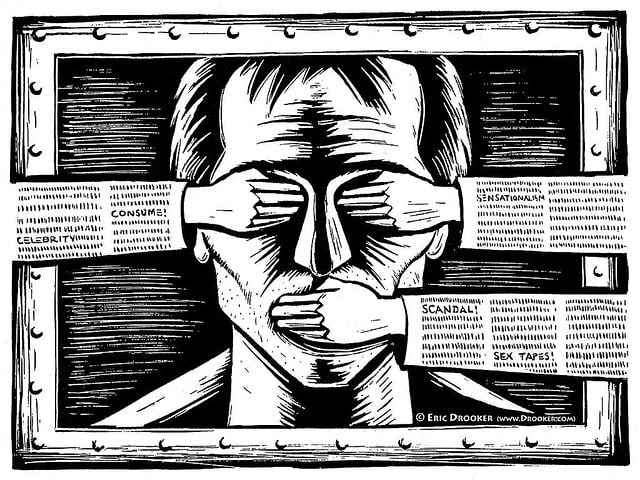
Censorship was straight forward in the 20th Century. If you wrote anything the rulers didn’t like, they confiscated all copies of it or put you in prison. There was no Internet back then, and no social media, and therefore no realistic possibility of building up a following outside of mainstream media and publishing. Things are different in the 21st Century.
Today, it’s more subtle. Instead of the physical gulag, there is the financial gulag. The Establishment uses the financial gulag to achieve the same deterrent effect on others as the physical gulag, but with the political advantage of evading accusations of totalitarianism.
Deplatforming is a central tactic of this decentralised censorship. The modus operandi is for some influencer to persuade dozens or hundreds of their minions to bombard a private company with demands to deplatform some wrongthinker. Any wrongthinker so deplatformed will have a harder time making money to support themselves – this is the financial gulag.
The logic is that the platforming of wrongthink normalises it, and therefore it’s a moral imperative to prevent its platforming whenever possible. Allowing wrongthink to get platformed jeopardises the entire authoritarian plan of shaping the human race into something perfect. As Josef Goebbels wrote, any attempt to establish a mainstream narrative is threatened by the existence of contrary narratives. Therefore they must be banned.
New Zealand saw this logic in action in 2019 when Stefan Molyneux and Lauren Southern had booked the Bruce Mason Centre, and then the Powerstation, to give talks covering a number of topics, including the deleterious effect of mass Muslim immigration. Globalists created a shitstorm of negative media attention, and the booked venues reneged on their deal to provide space for the Canadian duo.
The most recent example of this tactic in New Zealand was last month, when Napoleon Busch’s listing for a first edition CounterSpin mug was taken down. Hordes of virtue-signalling baizuos flooded TradeMe with messages accusing CounterSpin Media of being “disinformation spreaders” (“disinformation spreaders” being Newspeak for ‘wrongthinkers’).
TradeMe initially caved to mob pressure, removing the listing, but have since rescinded this decision. But in any case, the back-and-forth is emblematic of the arbitrary nature of 21st Century censorship.
VJM Publishing also suffered from this assault on free speech. Our best-selling book, Clown World Chronicles, was cancelled from TradeMe after a campaign launched by a self-admitted far-left extremist. Not even a change.org petition with 300+ signatures was enough to persuade TradeMe to relent.
The truth is that the political Establishment and the commercial Establishment are the same people. So the political Establishment can simply ask their friends in the commercial Establishment to ban anyone they don’t like, and their friends in the commercial Establishment are happy to oblige. The persecution of wrongthinkers is just another favour to be traded.
Having your right to speak taken off you is not even the worst aspect of 21st Century censorship.
The Canadian Trucker’s Convoy protests and the response by the Canadian Government gave us a new word in the fight against freedom: ‘debanking’. Debanking is when the Establishment withdraws financial services from people in order to starve them into submission. In the 21st Century, it’s not enough to remove from wrongthinkers the right to speak – they also have to lose the right to eat and pay bills.
Incredibly, the trucker’s convoy protesters were not debanked after a thorough investigation leading to a judge signing a warrant. The Royal Canadian Mounted Police simply gave the banks a list of names, and the banks cancelled the accounts of anyone on the list. If it sounds tyrannical, that’s because it is. And it’s not even the most egregious example.
Lauren Southern’s family came in for similar treatment when they tried to book an AirBNB, only for it to be cancelled on account of their family ties to Southern. Because Southern’s family was “closely associated” with her, and because she was already deplatformed, her family had to get deplatformed as well.
By contrast, no such corporate censorship was levied against Jeffrey Epstein, even after he was convicted of the sex trafficking of children. In fact, Epstein’s bank, JP Morgan, supported his actions even after Epstein was found guilty of soliciting a minor in 2008.
So if you oppose the ruling class, you and your family can be cancelled from any service for any reason, but if you support the ruling class, you can traffic and rape children with no cancellation. It sounds like North Korea, but it’s the modern West.
The political Establishment claims that there’s nothing immoral about this new censorship, because it’s being carried out by commercial and financial entities and not by government departments. As such, it claims, these cancellings are merely the free market in operation, and nothing that we ought to be concerned about.
In reality, this is the political Establishment working together with the commercial and financial Establishment to silence their common enemies. They’ve simply found a loophole in the law that allows them to claim plausible deniability. So instead of using the Police and Army to commit human rights abuses, they now use venue companies, banks, TradeMe, AirBNB and other corporate entities.
Make no mistake: censorship in the 21st Century isn’t the “little people” fighting back against their oppressors by using the weight of numbers. It’s the oppressors destroying their enemies by using the mob. 21st Century censorship might be less brutal than it was in the 20th Century, but its no less immoral.
Most people consider the mental health system to be part of the wider health system. This isn’t true at all. In reality, the mental health system is part of the criminal justice system. In the same way the political Establishment uses the Police, it also uses psychiatrists to destroy their enemies. Psychiatry in the West today is a weapon used to stifle dissent.
In the Soviet Union, dissidents were destroyed for being mentally ill. Dissidence itself was a crime; anyone who did not slavishly obey the authorities risked being diagnosed with “sluggish schizophrenia“. Anyone who pointed out that the Holodomor was a genocide risked getting locked up in a psychiatric institute, never to be seen again.
Like most crimes committed by authoritarians last century, the same thing is happening in Anglo countries today. As with all other crimes committed by Anglo governments, the mainstream media strenuously denies that it’s happening.
A New Zealand woman named Pamela Taylor is now copping the same treatment from the New Zealand mental health system that freethinkers copped in the Soviet Union. Taylor, like those destroyed by Soviet psychiatry, is a dissenter. She attended the Parliament Lawn protests last year, and is well aware of the criminal nature of our current ruling class.
Earlier this week the Police dragged Taylor away to a psychiatric facility in Dunedin where a Dr Nigel Fanshaw “deemed her to have mental dysfunction”. Apparently the psychiatric assessment was ordered by a Family Court Judge in connection with an ongoing dispute with the father of her children, and was prompted by Taylor’s view on the Coronavirus vaccine and the fact that she attended the Wellington protests last year.
Taylor is no longer being held in psychatric “care”, but the damage has been done. As honest legal scholars have pointed out for decades now, the process is the punishment. Simply being forced through the mental health system will serve as a lesson not to question the Government again.
Normies don’t realise it, but the mental health system is tougher than the criminal justice system.
If you chop someone’s head off and rape the corpse, and then get arrested, you will have a lawyer with you at every step of the process to make sure your rights aren’t violated. If you can’t afford a lawyer you’re given one for free by the state. This lawyer will ensure that, if your rights are violated, you will get away with whatever you did (or at least get massive compensation).
No such respect is granted to you if you’re under suspicion of having a mental illness.
If you’re under suspicion of having a mental illness, you can be hauled in front of a psychiatrist for a mental health assessment, without any right to protest. You can be put under the Mental Health Act and have your freedom taken off you, without any recourse to a lawyer, without any recourse to appeal, without any rights at all.
The decision whether to put you under the Mental Health Act will usually be made by one psychiatrist only. You will not have a lawyer present to ensure your rights are not violated. If a bad decision is made, you will not be informed of your rights to overturn that decision (you have no such rights anyway). You can then be hauled off and force medicated.
Psychiatric medication is capable of producing many and varied changes in human behaviour, but one of the most predictable is sedation. These “chemical lobotomies” are ideal ways to smash dissenters. In principle, it doesn’t matter if those so lobotomised are really dissenters or not, as being unable to work is also considered a form of dissent.
All of this horror is justified by the delusion that, because psychiatrists have done nine years of tertiary study, they must be smarter and morally superior to everyone else. In reality, psychiatrists are some of the most depraved and despicable members of our society. Almost all of them are hard-core materialists who believe that spirituality is a mental illness. Having no spiritual sense, they follow the societal herd on all moral questions.
And so, if a psychiatrist puts a patient under the Mental Health Act, that psychiatrist is not obliged to explain their reasoning. It’s assumed that any attempt to explain would be futile owing to the inherent subhumanity of the patient. No such assumptions of subhumanity are made about rapists and murderers, who are given full rights to appeal.
People under suspicion of mental illness are lower than rapists and murderers in New Zealand: that’s weaponised psychiatry.
The grim, brutal truth is that the mental health system is twins with the criminal justice system. Its purpose is primarily to destroy the enemies of the Establishment. The mental health system isn’t there to help, it’s there to punish. Dissenters like Pamela Taylor and VJM Publishing are the prime targets of it.
Weaponised psychiatry is used all over the world today to keep the herds of human livestock under control. This is not only true of the Soviet Union and its descendants but also of America and New Zealand, where psychiatrists routinely violate the Human Rights Act with no consequences. All it takes is a person or group arrogant enough to believe that they can decide what other people’s best interests are.