Like the ACT Party, the Greens have been described as the next generation’s alternative to the Establishment. Also like the ACT Party, the Greens increased their vote from 2017, although the Greens only increased slightly, from 162,443 votes (6.3% of the total) to 226,757 votes (7.9% of the total). This was enough for ten seats in Parliament.
As in previous years, those who voted Greens in 2020 were much better educated than the average New Zealander. This, more than anything else, was the most distinguishing characteristic of the Greens voter.
| Variable | Voting Greens in 2020 |
| No qualifications | -0.64 |
| Level 1 certificate | -0.58 |
| Level 2 certificate | -0.53 |
| Level 3 certificate | 0.31 |
| Level 4 certificate | -0.60 |
| Level 5 diploma | -0.71 |
| Level 6 diploma | 0.05 |
| Bachelor’s degree | 0.59 |
| Honours degree | 0.77 |
| Master’s degree | 0.74 |
| Doctorate | 0.77 |
The correlation between having any one of the three highest university degrees and voting Greens in 2020 was at least 0.74. This is one of the strongest correlations between any demographic variable and voting for a particular party in 2020.
The reason for this is simple, but widely denied. People who can understand scientific literature understand that the human race is on a path to destruction, and that our current lifestyles are not sustainable. As such, they vote for environmentalism. This pattern is replicated in most other Western countries.
On the other hand, the correlation between having no qualifications and voting Greens in 2020 was -0.64. Poorly-educated people often resent the scientific approach taken by the Greens, and don’t consider it particularly intelligent. In general, the more poorly-educated a person is, the more they will resent being told that our current lifestyles are unsustainable.
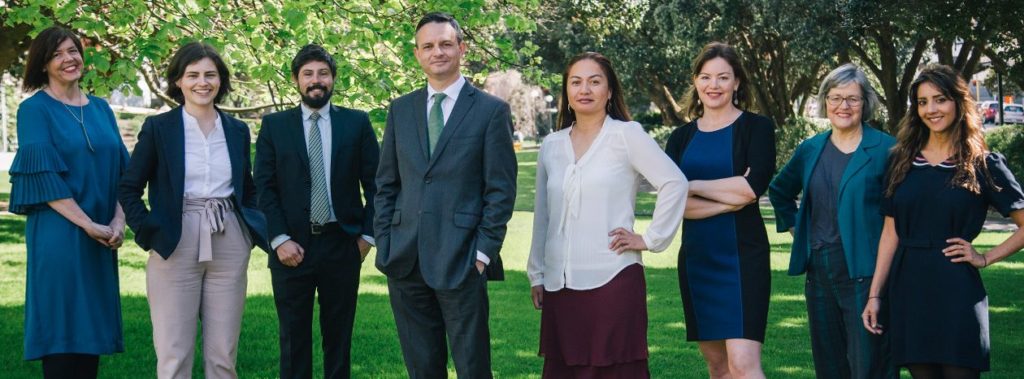
The Greens are a large enough movement to present different faces to different people. Although some might see Marama Davidson and Golriz Ghahraman, and decide that the Greens are a dangerous pack of Brown Communists, others see Chloe Swarbrick and James Shaw and decide that the Greens are the only party who take science and scientific evidence seriously.
| Variable | Voting Greens in 2020 |
| Special voting Yes for euthanasia | 0.70 |
| Special voting Yes for cannabis | 0.68 |
This latter point is shown most clearly in the results of the cannabis referendum. There was a very strong positive correlation of 0.68 between casting a special vote for Yes in the cannabis referendum and voting Greens in 2020.
The reason for this is clear: anyone who actually looks at the scientific evidence will understand that cannabis is medicinal and not anywhere near as harmful as its detractors have claimed it to be (two points that VJM Publishing discussed at length in The Case For Cannabis Law Reform). Given this, it seems unreasonably cruel to keep locking people up for using it.
The correlation was even more strongly positive for the euthanasia referendum, which speaks to the absence of religious superstition among Green Party voters. The most common reason for people to vote No in the euthanasia referendum was a superstitious fear of death, and not many Green voters suffer from this.
| Variable | Voting Greens in 2020 |
| No religion | 0.31 |
| Buddhism | 0.22 |
| Christianity | -0.39 |
| Hinduism | 0.09 |
| Islam | 0.10 |
| Judaism | 0.54 |
| Maori religions | -0.30 |
| Spiritualism and New Age religions | 0.34 |
It’s easily possible to overstate how irreligious the Greens are. Although there was a significant negative correlation between voting Greens in 2020 and being either Christian (-0.39) or a follower of a Maori religion (-0.30), these were the only religions to be so negatively correlated.
The strongest positive correlation between voting Green in 2020 and belonging to a religion was with Judaism, at 0.54. Next was Buddhism, at 0.22. For the most part, this follows the rule that, the better educated a voter is, the more likely they are to vote Green.
The one notable exception is people who follow Spiritualism and New Age religions. This group is not particularly well educated, but they like to vote Green nevertheless. The correlation between being a Spiritualist or New Ager and voting Greens in 2020 was 0.34. The explanation is probably because Spiritualists and New Agers share with the Greens many anti-capitalist and anti-consumerist sentiments.
There was a significant positive correlation, of 0.31, between having no religion and voting Greens in 2020. This speaks to the extent to which Greens supporters are members of the scientific and technical elite, which is educated into a scientific materialist paradigm at high school and university.
| Variable | Voting Greens in 2020 |
| Living in an urban electorate | 0.30 |
| Living on the North Island | -0.08 |
| Percentage of males | -0.16 |
Surprising to many is the fact that Greens voters in 2020 were significantly more urban than rural. Some might suggest that this shows the Greens to not really care much about environmental issues. A more plausible explanation is that educated people have to move to urban environments to get jobs that make the most of their skills, and so it’s the fact that Green voters are highly educated that explains why they are so urban.
Green voters are slightly more likely to live on the South Island. These correlations reveal that their strongest support is in places like Christchurch, Dunedin and Nelson. Indeed, these are the places where environmentalist and anti-consumerist sentiments are strongest.
Green voters are also slightly more likely to be female, although the correlation between voting Greens in 2020 and percentage of males was also not statistically significant, at -0.16. This suggests that educated young women like Julie Anne Genter and Chloe Swarbrick represent the archetypal Green supporter.
| Variable | Voting Greens in 2020 |
| Working as a manager | -0.04 |
| Working as a professional | 0.75 |
| Working as a technician or trades worker | -0.50 |
| Working as a community or personal service worker | -0.03 |
| Working as a clerical or administrative worker | 0.03 |
| Working as a sales worker | -0.09 |
| Working as a machinery operator or driver | -0.58 |
| Working as a labourer | -0.48 |
The most striking thing about Greens voters is how heavily represented they are among professionals. The correlation between voting Greens in 2020 and working as a professional was 0.75, one of the strongest between any party and any occupation. This is inevitable given how well-educated Greens voters and professionals both are.
There were significant negative correlations between voting Greens in 2020 and working as a machinery operator or driver (-0.58), as a technician or trades worker (-0.50) or as a labourer (-0.48), three of the most typically working-class occupations.
These correlations might seem strange, given that the Greens are a firmly left-wing party and therefore are supposed to represent the working class. The paradox at the heart of the Greens is that, despite their positioning, few working-class people vote for them.
The reality is that the Greens, like all Parliamentary parties, represent not a specific part of the population but a specific part of the Establishment. The Greens’ turf is the young, well-educated globalists whose parents usually vote National.
| Variable | Voting Greens in 2020 |
| European | 0.19 |
| Maori | -0.27 |
| Pacific Islander | -0.19 |
| Asian | 0.12 |
Many will also be surprised, given the virtue signalling that the Greens do around Maori issues, that there was a significant negative correlation (-0.27) between voting Greens in 2020 and being Maori. There was also a negative correlation between voting Greens in 2020 and being a Pacific Islander.
On the other hand, there were positive correlations between voting Greens in 2020 and being either a Kiwi of European descent or Asian. Neither of these correlations were significant, but they reflected the general trend that the better-educated any one group of New Zealanders is, the more likely they are to vote for the Green Party.
| Variable | Voting Greens in 2020 |
| < $5,000 | -0.01 |
| $5,001-$10,000 | 0.34 |
| $10,001-$20,000 | -0.37 |
| $20,001-$30,000 | -0.37 |
| $30,001-$50,000 | -0.52 |
| $50,001-$70,000 | -0.04 |
| $70,000+ | 0.52 |
That voting Green is not considered a working-class option is underlined by the fact that there is a negative correlation of -0.52 between voting Greens in 2020 and having an income of $30,001-$50,000. Someone working 2,000 hours a week, or close to it, at or just above minimum wage will be in the middle of this income bracket.
On the other hand, there was a strong positive correlation of 0.52 between voting Greens in 2020 and having an income of $70,000+. Many people in the top 15-20% of income are Greens supporters, which is a function of the fact that Greens supporters tend to be better educated than average and that educated people tend to earn more than average.
| Variable | Voting Greens 2020 |
| Aged 20-24 | 0.56 |
| Aged 25-29 | 0.45 |
| Aged 30-34 | 0.34 |
| Aged 35-39 | 0.24 |
| Aged 40-44 | 0.21 |
| Aged 45-49 | 0.08 |
| Aged 50-54 | -0.02 |
| Aged 55-59 | -0.13 |
| Aged 60-64 | -0.17 |
| Aged 65-69 | -0.16 |
| Aged 70-74 | -0.16 |
| Aged 75-79 | -0.17 |
| Aged 80-84 | -0.15 |
| Aged 85+ | -0.04 |
Up until pension age, there is a clear trend: the younger someone is, the more likely they are to vote Greens.
The aged 20-24 demographic, or the “student” demographic, are the strongest supporters. The correlation between being in this age bracket and voting Greens in 2020 was 0.56. This contrasts sharply with the correlation between being aged 20-24 and voting Labour in 2020, which was -0.02.
For every age bracket older than this up until pension age, the correlation between being in that bracket and voting Greens in 2020 becomes less positive or more negative. The correlation between being aged 60-64 and voting Greens in 2020 was -0.17, and the correlations for older age brackets were similar.
These numbers support the idea of the four basic political niches, with the Greens representing young women (or the alternative left). It remains to be seen whether Green-voting young women switch to Labour in coming years as they get older.
| Variable | Voting Greens 2020 |
| Work in agriculture, forestry and fishing | -0.34 |
| Work in mining | -0.12 |
| Work in manufacturing | -0.69 |
| Work in electricity, gas, water and waste | -0.20 |
| Work in construction | -0.46 |
| Work in wholesale trade | -0.30 |
| Work in retail trade | -0.23 |
| Work in accommodation and food service | 0.41 |
| Work in transport, postal and warehousing | -0.41 |
| Work in information media and telecommunications | 0.64 |
| Work in financial and insurance services | 0.44 |
| Work in rental, hiring and real estate services | 0.05 |
| Work in professional, scientific and technical services | 0.62 |
| Work in administrative and support services | -0.05 |
| Work in public administration and safety | 0.51 |
| Work in education and training | 0.29 |
| Work in healthcare and social assistance | 0.04 |
| Work in arts and recreation services | 0.61 |
Examining the industries in which Greens supporters work reveals that they are heavily represented in cultural and social jobs as well as intellectual ones.
Given the strength of the correlations between having a university degree and voting Greens in 2020, it’s unsurprising that Greens supporters are heavily represented among those working in professional, scientific and technical services. The correlation between working in such services and voting Greens in 2020 was 0.62.
There was an even stronger correlation between working in information media and telecommunications and voting Greens in 2020 – this was 0.64. As with professional, scientific and technical services, employment in this industry generally requires a good education. The information media and telecommunications industry also attracts many young people, which increases the proportion of Greens voters among them.
The third industry to have heavy Green representation is working in arts and recreation services. This industry is heavily populated with the young and talented and these people tend to vote Green. Women like Eleanor Catton are typical of the kind of high-IQ Green supporter that works in the arts.
Green voters are least likely to work in typical working-class industries, which is again surprising to those who consider the Greens to be a leftist movement. There was a significant negative correlation between voting Greens in 2020 and working in manufacturing (-0.69), working in construction (-0.46), working in transport, postal and warehousing (-0.41) or working in agriculture, forestry and fishing (-0.34).
The significant correlation between voting Greens in 2020 and working in accommodation and food services can be explained by the fact that many Greens voters are students, and students comprise a large proportion of those working in that industry.
| Variable | Voting Greens 2020 | Voting Greens 2017 |
| Voting Labour same year | 0.29 | 0.11 |
| Voting National same year | -0.16 | -0.25 |
| Voting ACT same year | -0.08 | 0.17 |
| Voting New Zealand First same year | -0.24 | -0.48 |
| Voting Maori Party same year | -0.15 | -0.06 |
| Voting ALCP same year | -0.23 | -0.13 |
| Voting New Conservative/Conservative same year | -0.35 | -0.33 |
| Voting The Opportunities Party same year | 0.84 | 0.77 |
| Voting Advance NZ same year | -0.36 | n/a |
| Voting Sustainable NZ same year | 0.26 | n/a |
The Greens might not have that much in common with their fellow leftists in Labour, but there was a significant positive correlation between voting Greens in 2020 and voting Labour in 2020 (0.29). The correlation between voting for these parties was not significant in 2017.
The strongest positive correlation between voting Greens in 2020 and voting for any other party that year was with voting The Opportunities Party in 2020, which was 0.84. Both parties seem to be targeting the same niche, of young urban leftists. The danger for the Greens in 2023 will be that The Opportunities Party wins so many votes that the Greens fall under the 5% threshold.
Some might be surprised to see that the correlation between voting Greens in 2020 and voting National in 2020 (-0.16) is more strongly negative than the correlation between voting Greens in 2020 and voting ACT in 2020 (-0.08). After all, ACT is even further to the right than National is, and the Greens are a far-left party.
This can be explained by the fact that both the Greens and ACT appeal primarily to younger and better-educated people, whereas National (like Labour) appeals more to older and more poorly-educated people. This means that the support base of the Greens and ACT overlap demographically in ways that they do not overlap ideologically.
The strongest negative correlations with voting Greens in 2020 were with voting Advance NZ in 2020 (-0.36) or voting New Conservatives in 2020 (-0.35). The reasons for these are obvious: Advance NZ and New Conservatives are the two parties with the most poorly-educated followers. They both attract old, poorly-educated and religious voters, which is the exact opposite of the Greens.
| Variable | Voting Green 2020 |
| Median income | 0.37 |
| Mean income | 0.49 |
Unsurprisingly, given the heavy representation of Greens voters in highly-paid occupations and industries, there were significant positive correlations between voting Greens in 2020 and both median income (0.37) and mean income (0.49). These correlations aren’t quite as strong as the correlations between voting Greens in 2020 and having any of the university degrees, because many Greens voters are still too young to have achieved any workplace seniority.
| Variable | Voting Greens in 2020 |
| Income from wage or salary | 0.44 |
| Income from self-employment or owning own business | 0.15 |
| Income from interest, dividends, rent or other investments | 0.43 |
| Income from ACC or private work insurance | -0.47 |
| Income from NZ Super or Veteran’s pension | -0.20 |
| Income from Jobseeker Support | -0.27 |
| Income from Sole Parent Support | -0.31 |
| Income from Supported Living Payment | -0.06 |
| Income from Student Allowance | 0.54 |
Unsurprisingly for a party with so much student support, the correlation between between voting Greens in 2020 and receiving an income from the Student Allowance (0.54) was stronger than any correlation between voting Greens in 2020 and receiving income from any other source.
Some, however, might be surprised to learn that there was a significant positive correlation between voting Greens in 2020 and receiving an income from interest, dividends, rents or other investments (0.43). This statistic speaks to the paradox at the heart of the Greens: they are privileged people speaking for the non-privileged.
In summary, the typical Greens voter is young and urban, and is either on a Student Allowance or has earned a postgraduate degree and is earning a full-time salary as a professional in a major urban centre.
*
This article is an excerpt from the upcoming 3rd Edition of Understanding New Zealand, by Dan McGlashan and published by VJM Publishing. Understanding New Zealand is the comprehensive guide to the demographics and voting patterns of the New Zealand people.
*
If you enjoyed reading this essay/article, you can get a compilation of the Best VJMP Essays and Articles of 2019 from Amazon for Kindle or Amazon for CreateSpace (for international readers), or TradeMe (for Kiwis). A compilation of the Best VJMP Essays and Articles of 2018 and the Best VJMP Essays and Articles of 2017 are also available.
*
If you would like to support our work in other ways, please consider subscribing to our SubscribeStar fund. Even better, buy any one of our books!