
Signs That A New Spiritual Order Is Arising

With every era that passes, old orders fall and new orders rise. Some of these old orders are military, some are technological and some are spiritual. With every Great Month that passes, a pre-existing spiritual order falls and a new spiritual order rises. This essay explains how we find ourselves now in such a time of change.

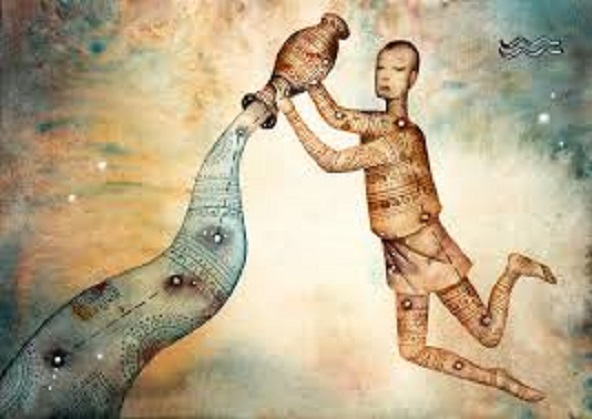
Some have described the changes upon us as the transition between the Age of Pisces, the old order, and the Age of Aquarius, the order to come. With the human entry into the Age of Pisces some 2,000 years ago, we moved out of the Age of Aries, which had been characterised by brutal militaristic sentiments. The Age of Pisces was, then, a reaction to the excesses of the age before it.

Pisces is the mutable water sign, which means that it has a double feminine energy. Arguably, the dominant spiritual ideology of the Age of Pisces has been Christianity, which also has feminine energies – it can be best understood as an attempt to reform Abrahamism from its brutal and hyper-masculine Arian frequency. Christianity has taken a watery form to counter the fiery nature of its predecessor, and the multiplicity of such forms reflects the mutable quality of Pisces.

In this Age of Pisces, people with this double feminine quality have done fairly well. This is not an age in which the strong conquer and dominate, but rather an age where the kind rule through the consent of the masses. The zeitgeist of the age has been to raise up those low down, and to pull down those up high.

Like everything else, however, it has become corrupted over time, and the form of it we now have is a degraded one. In its pure form, those unfairly cast down were lifted up, and those unfairly raised were pulled down. Now, a person is lifted up even if they were low down for natural reasons, or because of their own moral failings, while people who are high for just reasons are dragged down out of resentment.

It has been too long since the original spiritual revelations that began the Age of Pisces for them still to have power, and now a great counter-reaction against their present degraded forms is under way.

This means that the Age of Aquarius will involve a reaction against Christianity and against the ethos of passivity and agreeableness. Unlike the mutable water, the avatars of the Age of Aquarius will move ever-forwards. However, they will also be sure not to fall back into the patterns of the fiery ram-headed Arian aggression. Therefore, the Age of Aquarius will strike an airy balance between the watery Pisces and the fiery Aries.

Aquarius is the fixed air sign, which suggests a dogmatic and inflexible form of intellectualism. Combining this with the gentle masculinism of the age suggests that a kind of nerdiness might be the characteristic of coming centuries, perhaps an uncompromising kind of autism. This may be an outgrowth of today’s scientific materialism, the current dominant paradigm among the world’s ruling classes.

It might be that some kind of scientific materialism remains the dominant intellectual paradigm for the next 2,000 years, with all talk of the spiritual discouraged. It could also be that scientific materialism becomes the dominant paradigm for the ignorant masses only, while the enlightened and the initiated will be aware of the perennial truths that underpin the true philosophies of all times and places.

Certain phenomena predictably arise every time we near the end of a great age, as we now are. The foremost is a gross and paralysing apathy that drives all talk of the spiritual from public life. This can be seen with our current crop of atheistic rulers. However, this enormous apathy is necessary to wash away the vestiges of the old ways, and at its heart is the seed of a new spiritual order. The Age of Aquarius proper will begin when this new spiritual order begins to impose its will upon the world.

The first harbingers of this new spiritual order are those men and women who are rediscovering the spiritual sacraments that revealed the great wisdom that the ancients possessed. The vanguard of the new age of light returning to our benighted world is in those who have learned that psychedelics such as cannabis and psilocybin are capable of reconnecting a person to God and to the perennial wisdom.

There have always been small, clandestine groups of spiritual seekers who have kept the flame of genuine spiritual knowledge alive, despite the oppression from hate ideologies like Abrahamism, Nazism and Communism. These people have retained knowledge of the use of spiritual sacraments and techniques, even though the governments of recent decades have fought to suppress use of them. Most people now accept that the Governments are fighting a losing battle, so these groups have grown rapidly in number and influence.

However, it’s only now that a mass of people are starting to realise that these sacraments have revealed genuine spiritual knowledge to those brave enough to experiment with them. Bearers of light such as VJM Publishing are now able to publish information about spiritual alchemy without persecution – and we are far from the first or only ones. The spread of this knowledge will not stop until a new spiritual age exists upon the Earth.

It’s already possible to see magic mushrooms becoming legalised in places such as Denver. When magic mushrooms become legal more widely, it will become common for intelligent men and women to get together and use them sacramentally, to reconnect with God. When they do this, genuine spiritual knowledge will come to return to the Earth.

Although public sacramental use along the lines of the Eleusinian Mysteries are still some way off, in this general atmosphere of intellectual and spiritual exploration, it won’t be too long before there are some quasi-public rituals involving mass consumption of psychedelics. When this occurs, an entirely new consciousness will arise upon the Earth, involving new ways of relating to and identifying with each other.

If the Age of Aquarius means that scientific materialism completely destroys Abrahamism and the other superstitious cultures, this should clear the way for a return of those schools of thought that had been superstitiously attacked. This could very well lead to genuine spiritual revelation, and this could lead to a new spiritual era of human history and a new Golden Age.

*

If you enjoyed reading this essay, you can get a compilation of the Best VJMP Essays and Articles of 2018 from Amazon for Kindle or Amazon for CreateSpace (for international readers), or TradeMe (for Kiwis). A compilation of the Best VJMP Essays and Articles of 2017 is also available.
The Occult Background of The Magic: The Gathering Five-Colour System

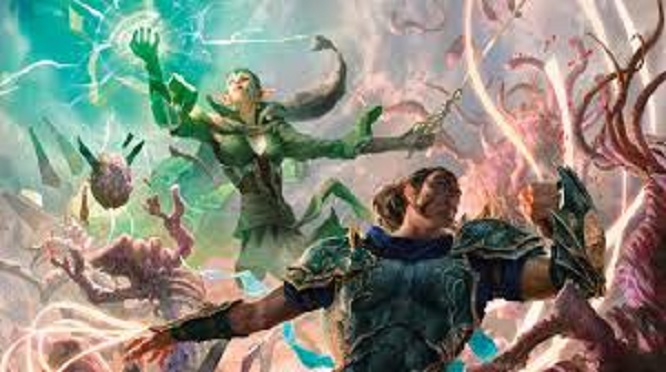
The magical and mystical references and themes of Magic: the Gathering are a rich part of the background of the story world, and many play it for that reason. The reality is that Magic is not just occult in flavour and appearance but also in fundamental structure and gameplay. As this essay will describe, the layout of the five fundamental Magic colours maps out a space in occult philosophy.

Many people are familiar with the conception of four classical elements of earth, water, air and fire. These are said to represent various elemental forces, viz. being cold and dry in the case of earth, cold and wet in the case of water, warm and wet in the case of air and warm and dry in the case of fire. More precisely, these are what are known as the four feminine elements, because they all have equal value.

Being four elements of equal value, they can be distinguished on the basis of yin and yang. The yin elements are Earth and Water, because they are cold and passive. The yang elements are Air and Fire, because they are warm and active. Earth relates to inertia, Water relates to cohesion, Air to expansion and Fire to heat.

There are also such things as the four masculine elements, which all have differing value. These four elements collapse into a basic dichotomy between precious things that need to be guarded or defended and base things that do not. These precious things are usually characterised as white on account of the light nature of silver and gold, whereas base things are usually characterised as black on account of the dark nature of clay and iron.

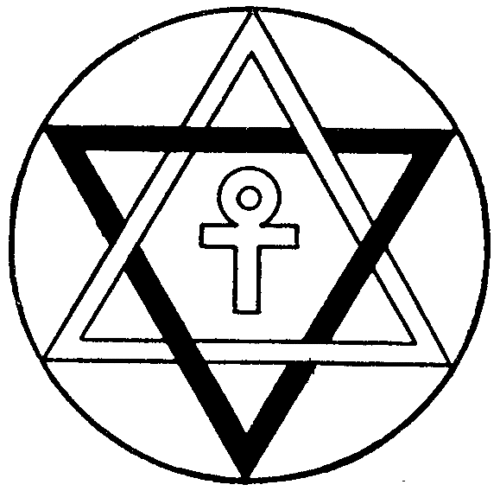
This masculine dichotomy and feminine quadrichotomy combine to give us a system based around six separate points – a system that the reader may have previously seen diagrammed (as below) in various occult symbols and drawings. 

In this model, Air and Fire are the bottom corners of the white triangle, because they are warm and therefore rise upwards. Earth and Water are the top corners of the black triangle, because they are cold and therefore sink downwards. The uppermost point of the white triangle represents spirituality, which seeks to rise above matter, and the bottommost point of the black triangle represents materialism, which indulges in it.

The masculine axis is represented by the vertical line of the central ankh, and the feminine axis by the horizontal line. So in this diagram all of creation is represented: all of the physical, the metaphysical, the feminine, the masculine, the spiritual and the material worlds can be found therein.

Where it gets interesting is how this esoteric diagram maps to the five different colour types in M:tG.

Blue represents both Air Magic and Water Magic. In this it combines the intellectualism of Air with the flexibility of Water to create a magic that tricks, deceives, binds and maddens. It’s also a magic that can open up new intellectual possibilities and mental realms. Air and Water are the two wet elements, and so it’s fitting that blue is a slippery and ephemeral colour. 

Red represents Fire Magic. This is encapsulated not only in the obvious fire, lightning and volcano-related imagery but also in red magic’s use of chaos. Fire is the most chaotic form of matter, because solids, liquids and even gasses all behave in reasonably predictable ways. This is why red uses cards like ‘Wheel of Fortune’.

Green represents Earth Magic. This refers to the natural world and to the procreative qualities of the natural world. The classic Green Magic strategy is to overrun one’s opponent, to crush them by sheer mindless mass or weight of numbers. Trample is the quintessential ability of Green Magic, as are magics that represent damage done by natural phenomena such as hurricanes and poisons.

White represents spirituality, or White Magic. To this end, most of the healing magic is white in nature (in this sense, M:tG lifts many of their concepts from existing esoteric philosophy). The point of White Magic is to banish the darkness or suffering, hence their use of wards and salves. White also plays on the idea of God acting upon the world through cards such as ‘Wrath of God’ and ‘Armageddon’.

Black represents materialism, or Black Magic. Perhaps the characteristic card of this colour is ‘Greed’. Elegant practitioners of Black Magic will use other people’s materialistic desires to exploit them, or to manipulate them into furthering the magician’s wishes. Life imitates art in the sense that Black Magic is essentially the same in M:tG as in real life.

So the five colours of a Magic game represent five alchemical positions on two fundamental axes: masculine on the masculine axis (white), feminine on the masculine axis (black), masculine on the feminine axis (red), feminine on the feminine axis (green) and neutral on the feminine axis (blue).

A game of Magic can be thought of as an alchemical battle, with the player who is greatest able to project power through their mastery of the elements the winner. Curiously, there is no guarantee that the forces of “good” will win any given battle, which is what gives the game its dramatic potential. The side with the angels and God on it can still be defeated by competent Black Magic or by any other alliance.

*

If you enjoyed reading this essay, you can get a compilation of the Best VJMP Essays and Articles of 2018 from Amazon for Kindle or Amazon for CreateSpace (for international readers), or TradeMe (for Kiwis). A compilation of the Best VJMP Essays and Articles of 2017 is also available.

The Golden Right, or The Masculine Aspect of the Precious Right

The essay A Sevenfold Conception of Inherent Human Rights expounded seven human rights that are, after a minimum of thought, clearly understandable to any person. These seven rights stem immediately from a basic understanding of yin and yang, and are encoded directly into the flag of Esoteric Aotearoanism. This essay takes a closer look at what is simply known as the Golden Right.

The black stripe at the bottom of the flag of Esoteric Aotearoanism represents the yin, and when combined with the silver stripe in the context of human rights represents what is known as the Base Right, which is the right to physical liberty. This has two aspects, one pertaining to the right to self-defence and the other to the right to bodily autonomy.

The white stripe at the top represents the yang, and when combined with the silver stripe in the context of human rights represents what is known as the Precious Right, which is the right to cognitive liberty. This also has two aspects.

The Feminine Aspect of the Precious Right is the right to cognitive liberty pertaining to the mind and intellect. In particular, this means the right to free speech and to free expression. The Masculine Aspect of the Precious Right is the right to cognitive liberty pertaining to the soul and spirit. In particular, this means the right to religious belief and religious expression.

The Feminine Aspect of the Precious Right is also known as the Silver Right, and the Masculine Aspect of the Precious Right is also known as the Golden Right. This is because it is the most precious of all rights. Without it, individuals and nations lose their moral compass and will fall.

The right to cognitive liberty in the context of the soul and spirit means the right to explore the soul. This means that people have the inherent right to turn away from the material world for the sake of finding God. The Golden Right, therefore, is the right to reconnect with God at any time and place, by whatever means the individual feels necessary.

Being an aspect of the Precious Right, the Golden Right does not confer the right to cause suffering to anyone else for the sake of religion. The Golden Right yields to the right to free speech, to self-defence and to bodily autonomy. Therefore, no methodology for reconnecting to God can ever be above criticism, because this violates the right to free speech, and neither can it impel anyone to do anything, because this violates the right to bodily autonomy.

However, the Golden Right also recognises that impeding another person’s attempts to connect with God causes suffering, and no Government may therefore do it.

This means that people have the right to perform basic acts of spiritual hygiene. Not only does this include meditation, but it also includes chanting, drumming, singing, gathering in communion and entheogenic ritual. All of these activities can make a person more spiritually healthy by causing them to forget the pressures and temptations of the material world. Therefore, the use of cannabis and psychedelics, as well as of all other spiritual sacraments, is a right granted by God.

The fact that cannabis and psychedelics have thousands of years of use as spiritual sacraments all around the world, and that this is heavily documented, is enough to declare that the Government violates the Will of God by restricting their ability to connect with God. In fact, it’s more than enough.

It’s enough that an individual simply declares a particular course of action to be a methodology that enables them to connect with God, and it is allowed under the Golden Right. This means that, if a person believes that taking LSD (or any other modern chemical) is capable of reconnecting them with God, they have the right to do it.

Of course, if in taking these substances a person comes to violate the baser rights of their fellows, they are to be punished accordingly. The Golden Right does not confer freedom from the consequences of misbehaving under an entheogenic substance. The responsibility is on the user to make sure that they understand the dose they’re taking and that they take it in a controlled environment (to the extent this is appropriate).

Ultimately, the Golden Right is one of the inherent human rights granted by God, and is therefore a right no matter what any human Government might say. Anyone trying to take that right away from someone else is trying to enslave them by removing their inherent rights. According to the principles of anarcho-homicidalism, then, people have the right to kill anyone who impedes their right to connect to God.

*

If you enjoyed reading this essay, you can get a compilation of the Best VJMP Essays and Articles of 2018 from Amazon for Kindle or Amazon for CreateSpace (for international readers), or TradeMe (for Kiwis). A compilation of the Best VJMP Essays and Articles of 2017 is also available.
Good Nationalism and Bad Nationalism, Good Globalism and Bad Globalism

Leo Tolstoy wrote, at the start of Anna Karenina, that “Happy families are all alike; every unhappy family is unhappy in its own way”. Any occultist who understands that law of “as above, so below” also understands that this rule of Tolstoy’s also holds true for individuals – and for nations. Unhappiness expresses itself in a myriad of ways at all levels of reality.

The basis of empathy is the realisation that excessive self-regard leads to an increase in the suffering of other sentient beings. This excessive self-regard does harm on the level of the individual by, for example, inducing the individual to prioritise their own desires above other people’s needs. This leads to people going without and suffering heavily for the sake of a small amount of benefit to one other person.

However, there is also a good form of individualism. Happy individuals don’t feel the need to prioritise themselves over the rest of the world, because they don’t subscribe to a slave morality that tells them that the world owes them anything. But neither do they feel the need to prioritise the world at their own expense because of some masochism or deeply-imbedded guilt trip.

The good form of individualism acknowledges that, although every individual lives in a wider community and even wider communities, the individual themselves gets to decide over their own body and mind (see the Sevenfold Conception of inherent human rights) and not the community. As a result, they resist peer pressure and mob mentality for the sake of making the correct decisions.

So we can see that there is a good individualism and bad individualism. If we go the other way up the Great Fractal, past the family, we can find both nationalism and globalism. Despite the prevalence of the aggressive form of nationalism over much of the past 200 years, the idea that nationalism is automatically bad is globalist propaganda. Nationalism, per se, isn’t any worse than identifying at any other level of the Great Fractal.

As per the Tolstoy quote in the opening paragraph of this essay, we can see that healthy nationalisms are all alike, but unhealthy forms of nationalism are all different.

The good form of nationalism is the same as the good form of caring about one’s family and one’s community. In much the same way that solidarity with one’s family can induce one to have goodwill towards second cousins etc. who one is meeting for the first time, so can solidarity with one’s nation induce one to have goodwill towards countrymen who one meets for the first time.

The bad form of nationalism is the same as the bad form of individualism. It can be found wherever a person (or group of people) make decisions that grant minor benefits to one nation but at the major expense of others – or of the world system. The worst expression of this kind of nationalism could perhaps be found in the colonial actions of Belgium in the Congo during the 19th century, and most globalists claim to be fundamentally motivated by opposition to this kind of nationalism.

All globalists claim to be good globalists. They present themselves as enlightened types who have transcended petty nationalism, and as if they only make decisions with the entirety of all sentient beings in mind. Their attitude is that they are fit to serve as arbiters of planetary justice on account of the impartiality offered by their superior moral fibre. Therefore, they can be trusted to rule a global system.

This is true for some of them (more or less). After all, globalism is arguably nothing more than operating on a higher order of reality. It’s entirely possible to operate there, and there’s no reason to conclude that someone definitely does not belong there, just because they say they do.

However, there is also a bad globalism. In fact, there are two.

The obvious bad globalism is the kind that forces rules and regulations on people and places who do not want them. This is the same kind of tyranny as any other imperialism, in which a person in a distant land makes decisions that get imposed on the locals without their consent.

Cannabis prohibition was mostly a self-inflicted tragedy, but it wasn’t helped by the fact that the United Nations prohibited it with the Single Convention on Narcotic Drugs of 1961. This treaty obliged all signatories to keep cannabis perpetually illegal, regardless of the will of the people of the nations whose leaders had signed them up.

There remains a great risk of this form of globalism, particularly in the form of globohomo. This means the risk that all national cultures in the world will be erased and replaced with a manufactured kind of consumer fetishism that can be easily milked for cash using the same methods anywhere in the world.

There is a much more subtle and insidious form of bad globalism, however. This occurs when people promote globalist values to other people, while secretly maintaining nationalist or racist values for themselves. An example is fervently propagandising for other nations to open their borders while also propagandising for one’s own nation to remain an ethnostate.

This form of globalism is little different to any other kind of hate ideology in that it is supremacist and exploitative. It’s deceptive in the sense that it presents itself as something it isn’t, for the sake of lulling other people into a false sense of security. It plans to leave all nations except for one’s own in a state of chaos.

In summary, it is impossible to equate either nationalism or globalism with good or evil. In much the same way that there are happy and unhappy families and individuals, unhappy people who identify with the nation will tend to express an unhealthy form of nationalism, and unhappy people who identify with the globe will tend to express an unhealthy form of that.

*

If you enjoyed reading this essay, you can get a compilation of the Best VJMP Essays and Articles of 2018 from Amazon for Kindle or Amazon for CreateSpace (for international readers), or TradeMe (for Kiwis). A compilation of the Best VJMP Essays and Articles of 2017 is also available.