
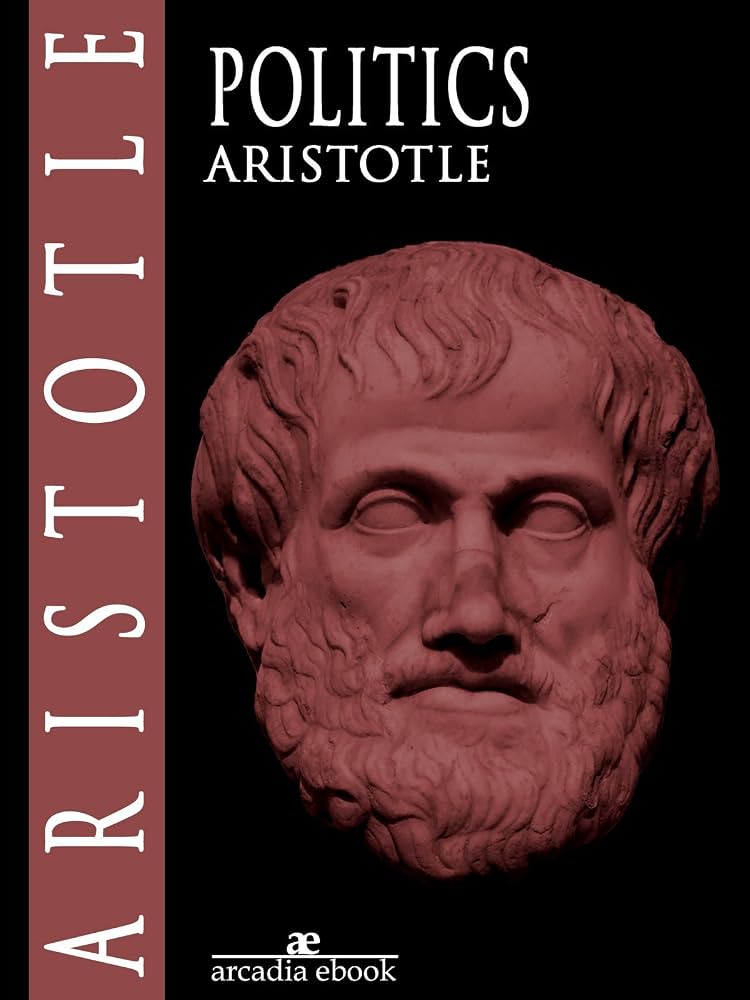
This reading continues from here.
In Book VI of Politics, Aristotle discusses how democracies and oligarchies can be constituted to endure. Appealing to a sense of the epic, he writes that “The maintenance of a constitution is what really matters.” The most important measure of a democracy or an oligarchy is not how democratic or oligarchical it is, but for how long it can endure.
Democracy, for Aristotle, is inspired by liberty and the desire for liberty (in this regard Aristotle follows Plato): “The underlying principle of the democratic form of constitution is liberty.”
Democracy has several characteristics. The first is election of officers by all, and from all (this is very similar to the modern conception of democracy). The second is the system of all ruling over each, and each, in his turn, over all. The third is appointing by lot to all offices (lotteries were considered more democratic than voting). The fourth is no property qualification for voting or office. The fifth is no office ever held twice by the same people. The sixth is that the tenure of every office should be brief. The seventh is that courts should be composed of all (not just the upper classes). The eighth is that the popular assembly should be sovereign in all matters.
Also like Plato, Aristotle had a high degree of contempt for democracy. He writes that “while oligarchy is characterised by good birth, wealth and culture, the attributes of democracy would appear to be the very opposite – low birth, poverty and vulgarity.” The idea that democracy is rule by lowest common denominator is ancient. The poor are considered dishonourable: “The masses covet profits more than they covet honours.”
The poor promote democracy in their self interest, reasoning that they can secure their interest through taking power: “The weaker are always anxious for equality and justice. The strong pay no heed to either.” In this context, it can be noted that the modern obsession with equality comes from the bottom of society, explaining the vulgar ways it is pushed.
Despite his criticisms of democracy, Aristotle also had reservations about putting too much power in too few hands: “the power to act at will leaves no defence against the evil that is present in every human being”. He also echoes the modern left when he writes that “Poverty is the cause of the defects of democracy.”
As mentioned previously, Aristotle considered democracy, oligarchy and tyranny to be perverted forms of constitutions. This means that the tactics used by some are applicable to others: “All the measures adopted by tyrants may equally be regarded as congenial to democracy.”
*
For more of VJM’s ideas, see his work on other platforms!
For even more of VJM’s ideas, buy one of his books!
*
If you enjoyed reading this piece, buy a compilation of our best pieces from previous years!
Best VJMP Essays and Articles of 2024-25
Best VJMP Essays and Articles of 2023
Best VJMP Essays and Articles of 2022
Best VJMP Essays and Articles of 2021
Best VJMP Essays and Articles of 2020
Best VJMP Essays and Articles of 2019
Best VJMP Essays and Articles of 2018
Best VJMP Essays and Articles of 2017