The Second Rejection Of Alternative Centrism

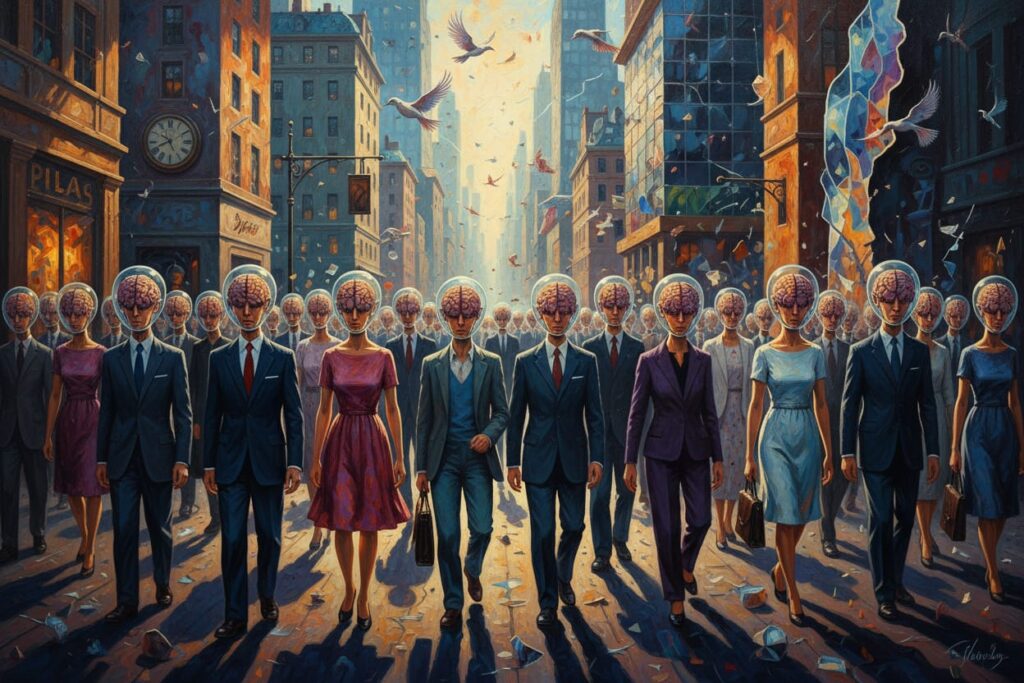
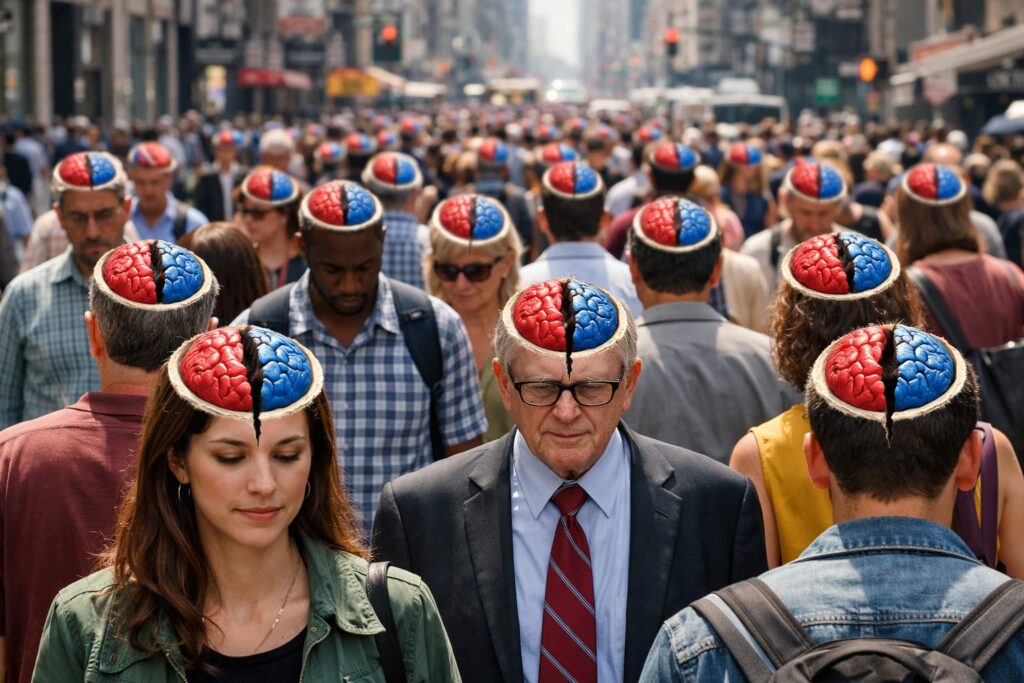
The Second Rejection of alternative centrism is the rejection of excessive freedom. The Second Rejection is the contention that excessive freedom leads to chaos.

Order might be suffocating, and breaking out of an excess of it might feel wonderful. It might feel so wonderful, and the freedom such a relief, that it becomes easy to believe that the more freedom, the better. But, just as with order, it’s possible to have too much of a good thing. When the last vestiges of order are obliterated, one is left with something more resembling chaos than freedom.

In the same way that a classroom becomes chaos without a teacher, because all are maximally free, society becomes chaos without a ruler. If you, like me, have had the experience of being a relief teacher of a class of primary school kids stuck inside on a rainy day, you will understand that even the perception of unlimited freedom leads quickly to chaos. The line between freedom and chaos becomes thinner and thinner the more freedom there is.

The valuation of freedom above all rests on a certain interpretation of human nature. The assumption of the Left – both its establishment and alternative forms – is that human nature is inherently good.

Here they go much further than Mencius’s argument that a person observing a child crawling towards a well will naturally act to prevent it falling in. The argument is closer to that of Rousseau’s noble savage, in which human nature, unspoiled by modernity, is naturally desiring of peace and goodwill for all living beings, unblemished by malice.

The main problem is that people are naturally selfish, even if they are not sadistic. The world is complicated, and it’s not always obvious if a certain action is a fair one. Consequently, many people just act on what is best for themselves, and rely on the outside environment to provide self-correction. Thus, simple ignorance is enough to guarantee that, given enough freedom, people will take advantage of each other. Without at least enough order to have law, social carnage is the result.

This is why the belief that people don’t need rulers is considered childish by the alternative centrist. It reminds one of children asserting that they don’t need bedtimes.

One can easily imagine what would happen to a society without any laws. Films such as The Purge give us some idea: there would be enormous numbers of revenge attacks, reprisals and blood feuds. The history of Anglo-Saxon England before the imposition of the Danelaw is rife with blood feuds. We know from psychological studies such as the Stanford Prison Experiment that there are very dark streams of malevolence within the human heart. To some extent it’s only fear of legal consequences that keeps this under control.

The French Revolution is perhaps the most famous example of sudden extreme freedom. Although freedom was one of the rallying-cries in 1789, by 1793 the revolutionaries were already chopping off heads en masse. It seems that the more extreme the freedom, the more tenuous, and therefore the greater the need to protect it by purging anyone who might threaten it. This can, of course, be considered a new form of order, which illustrates the degree to which the pendulum of history naturally swings between order and chaos.

The common failure of co-operative societies is a further example. It sounds good having a job where you only work if you feel like it, because it affords the maximum possible freedom from slavery. In practice, few people really feel like it unless they keep their production for themselves. So very little gets done.

Perhaps the failure of Communism itself is the ultimate example. “From each according to his ability, to each according to his need” would be a great slogan if human nature was inherently highly altruistic, instead of opportunistic and callous. The freedom to choose not to contribute is too much for most. The vast majority of people will choose idleness over drudgery and submission to a boss.

The freedom to remake society is also the freedom to destroy everything good about it. This is never the plan, but seems to nevertheless keep happening. Awareness of this is what inspires the Second Rejection.

The major flaw of leftism in general is the leftist misconception of human nature. Human nature isn’t evil, but it certainly isn’t good either. The Second Rejection is also, implicitly, a rejection of the naivete of the Left. In rejecting absolute freedom, the alternative centrist rejects the inaccurate (both misguided and stupid) narratives about human nature that have plagued the Left since the beginning.

An excess of freedom is not limited to legal freedom. Social freedoms are also political, and also subject to the Second Rejection. At time of writing, the New Zealand Parliament has a Green MP with a reputation for coprophagia embroiled in an indecency scandal, and the Spanish Parliament recently produced someone similar: a man filmed eating his own excrement. The ongoing trans hysteria is another example of freedom having undesirable consequences. The alternative centrist happily says No to such dubious freedoms.

All of this degeneracy reminds of the madness of the Weimar Republic (which presages the Third Rejection).

The general rule could be described thusly: when social order is overturned, freedom is the result, but if a new order is not imposed – at least to some extent – the freedom will collapse into chaos.

Plato describes this exact phenomenon in detail in Republic. A lower class of person demands freedom above any other consideration, such as propriety: “In democracy […] there’s no compulsion […] to submit to authority if you don’t want to.” As a result, democracies lack moral authorities and moral guidance. People simply follow their most bestial impulses – fear, lust, wrath, greed – unless or until something stops them.

The end result of too much freedom, Plato tells us, is tyranny. People who are too free can never agree on what the right way forward is, and the all-too-inevitable end result is the rise of a dictator who promises to use force to smash through the deadlock. It can seen thusly that an excess of order and an excess of freedom both lead to dystopic misery.

Even worse, the struggle between these two visions of dystopia causes more dystopia. Without a mediating force, the Establishment Right and the Establishment Left fight it out on the battlefield, often resulting in Pyrrhic victories for whichever of the two remains.

The alternative centrist, in both the First and the Second Rejections, rejects both too much order and too much chaos. But the problem of warfare between the two remains: the pendulum of history keeps swinging, and with each return destroys the lives of millions. Some degree of balance needs to be struck between order and freedom. This presages the Third Acceptance.

*

This chapter is from The Alternative Centrist Manifesto, the book that offers the answers to the political problems of the West.

*

For more of VJM’s ideas, see his work on other platforms!
For even more of VJM’s ideas, buy one of his books!

*

If you enjoyed reading this piece, buy a compilation of our best pieces from previous years!

Best VJMP Essays and Articles of 2023
Best VJMP Essays and Articles of 2022
Best VJMP Essays and Articles of 2021
Best VJMP Essays and Articles of 2020
Best VJMP Essays and Articles of 2019
Best VJMP Essays and Articles of 2018
Best VJMP Essays and Articles of 2017

*

If you would like to support our work in other ways, make a donation to our Paypal! Even better, buy any one of our books!
The Cheap Labour Spectrum

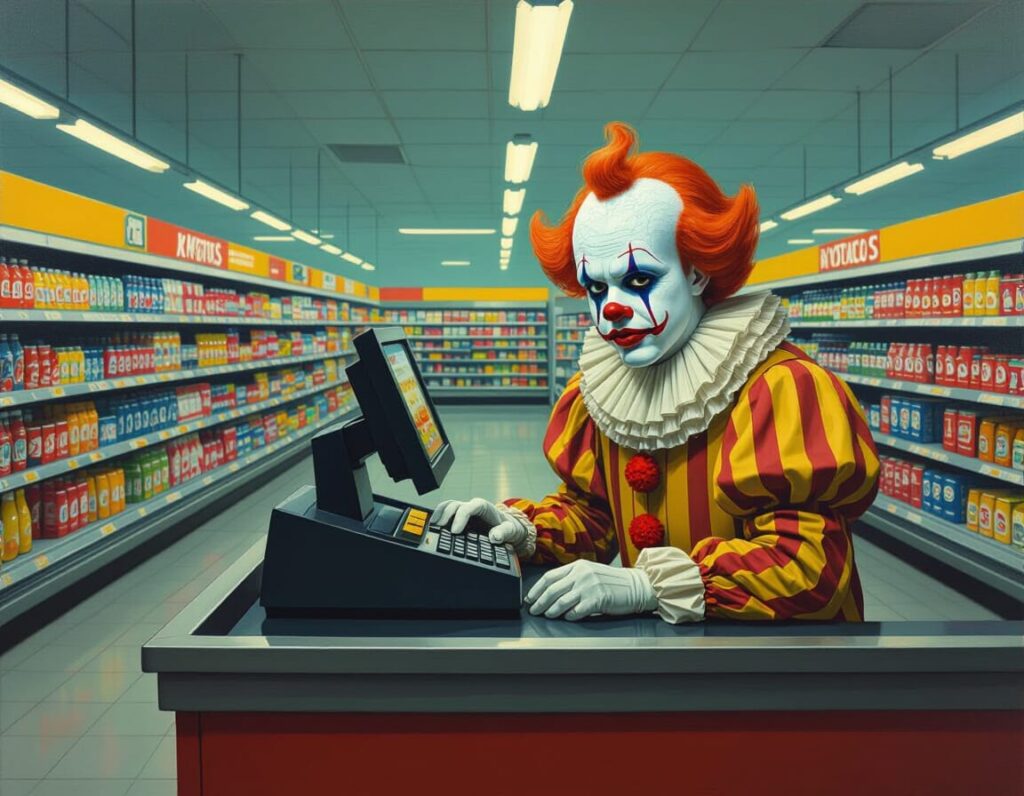
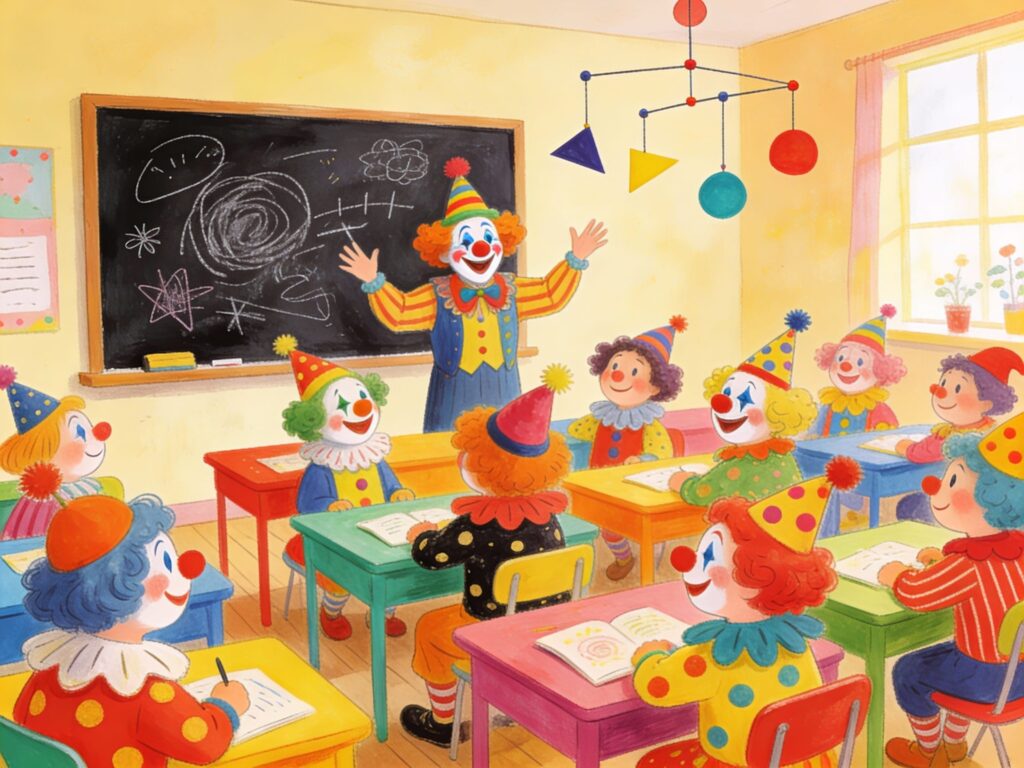
If you are incredibly fortunate (or unfortunate), you will have inherited lands that bring in such an income that you don’t need to work. This will place you in society’s ruling class. If you do not inherit such a fortune, you will have to sell your labour to those who did in order to survive. You will have a position on the Cheap Labour Spectrum.

This position, in turn, is primarily a matter of your negotiating position with regards to employment.

What is the best alternative for you to taking this job? For a member of the upper class, the alternative is to sit at home collecting rents. For everyone else, it’s starvation – there are no longer any commons to hunt or gather as they have all been enclosed. Everyone else is on the Cheap Labour Spectrum, where the upper class tries to pay you as little for your labour as they possibly can.

At the top of the Cheap Labour Spectrum are those in the best negotiating position. This will be friends or family of the upper class. Those who inherit the land usually have someone else manage it. These stewards of the great estates are at the very top of the spectrum. Often they are minor aristocracy themselves, and work to gain political, business or cultural contacts, not because they need to.

In more meritocratic systems, those in possession of the most important skills also have excellent negotiating positions. People who understand how the national electricity grid works, who can perform extensive surgeries, who can lecture the sciences – they will always be able to command an impressive income. They could be said to comprise the upper middle class.

The next level down are the unextraordinary professionals and managers. These people might not be brilliant, but they are willing to work hard for long hours. They sacrifice themselves for the landowners, and this is generally rewarded: the landowners can’t push people willing to work 80 hour weeks down the Cheap Labour Spectrum because there isn’t enough supply of these people. So they make up the core middle class.

In the middle of the Cheap Labour Spectrum are people like you and me (probably). Here one might have a small amount of savings or some skills of minor note, but the general trend is towards getting ground into oblivion. Even if one has a supposedly decent job, time and rent/mortgage pressures will eat heavily into one’s quality of life. This is the fabled lower middle class. In a time of high social mobility (i.e. not today’s Clown World) it’s an okay place to be.

If there’s an upper working class right now, it’s the trades. Many tradesmen today are earning more money than people supposedly above them in the middle class. However, one’s position on the Cheap Labour Spectrum is not a question of income, it’s a question of negotiating power: two related but differing concepts. Even if the tradesman makes more money than some of those in the middle class, he is still more vulnerable to mass immigration.

The middle working class, or core working class, are doing it hard. They’re low enough on the Cheap Labour Spectrum to not be considered fully human by the upper class. As such, they are targeted for replacement. All over the West right now, the simple retail jobs that would have gone to such people now go to cheap labour imports. One can see already that, at the lower levels of the Cheap Labour Spectrum, the quality of life is very low indeed.

Even further towards the lower end of the spectrum are people earning the minimum wage. These are the lower working class, the real precariat. These people have to exhaust themselves through work, but are paid barely enough to live on, and they consider the thought of one day owning a home a sick joke. In the modern West, this is the lower cutoff point of the Cheap Labour Spectrum.

Indentured servants are the next step below this cutoff. Indentured servitude might not legally exist in today’s West, but it has existed in the recent past. Over 300,000 people are believed to have crossed the Atlantic as indentured servants up until the American Revolution, mostly from Britain. A modern form of indentured servitude is when a people smuggler will confiscate a person’s passport while waiting for that person to work off a debt.

Modern wage slavery is akin to indentured servitude. It has been suggested that the secret goal of saddling young people with student loan debts is to make them more desperate and to weaken their employment negotiating position, pushing them down the Cheap Labour Spectrum. Many indentured servants in the Americas were granted land upon the completion of their tenure, a privilege never afforded to 21st Century wage slaves.

Serfdom is the stage below this. In serfdom, a person is bound to a piece of land as a labourer. In theory, the serf and his family get military protection from the landlord, but in practice the lord gets the lion’s share of the serf’s production in exchange for a few promises. The serf might not be cheap enough labour to be expendable, but they’re getting down there.

Slavery is the lowest stage of the Cheap Labour Spectrum; the purpose of the spectrum itself is to drive people towards slavery. Even here, there are divisions. The chattel slavery of the American South was one of the most brutal and dehumanising forms ever practiced. Barbary Coast slavery was also brutal. In certain other slavery systems, the law restricts the extent to which slaves can be abused. Some forms of debt slavery are little different to indentured servitude. In any case, to be a slave is to be at the bottom of the Cheap Labour Spectrum.

In ancient times, slavery meant literally capturing your enemies at spearpoint and enslaving them, or buying them off a king who had enslaved his enemies. In modern times, it’s more a matter of pushing your enemies down the Cheap Labour Spectrum. By opening the borders to hordes of cheap labour, the ruling classes push the middle and working classes further down this spectrum. This is why mass immigration takes place everywhere in the Western World, despite never having been voted for in any democratic election.

For the 99% of us plebs not in the ruling class, social status is primarily a matter of where one is on the Cheap Labour Spectrum. That’s why the number of dollars per hour a person earns is considered the ultimate measure of their value. That number is a measure of how much leverage the upper class has over them – it’s a measure of the degree to which they have not been brought to heel.

Escaping the strictures of the Cheap Labour Spectrum is not an easy task. Because so many of us are on it, a high proportion of us get pushed towards the bottom by sheer competition, making it harder and harder to escape. Perhaps the best hope is a revolution that destroys the modern labour system completely, or a mass dieoff that collapses the labour supply.

*

For more of VJM’s ideas, see his work on other platforms!
For even more of VJM’s ideas, buy one of his books!

*

If you enjoyed reading this piece, buy a compilation of our best pieces from previous years!

Best VJMP Essays and Articles of 2023
Best VJMP Essays and Articles of 2022
Best VJMP Essays and Articles of 2021
Best VJMP Essays and Articles of 2020
Best VJMP Essays and Articles of 2019
Best VJMP Essays and Articles of 2018
Best VJMP Essays and Articles of 2017

*

If you would like to support our work in other ways, make a donation to our Paypal! Even better, buy any one of our books!

The Second Acceptance Of Alternative Centrism

The Second Acceptance of alternative centrism is the acceptance that the Establishment Left is correct when they speak of the importance of freedom.

It may be true that no society can exist without order. Without freedom, however, life isn’t worth living. To exist without freedom is to exist in a state of slavery. It’s a humiliation that might well be worse than death. Countless works of popular culture place freedom at the centre: William Wallace fought for it in Braveheart, the American and South African national anthems proclaim the importance of it and books like Brave New World and 1984 evoke the horror of a world without it.

The Establishment Left isn’t so worried about order for order’s sake, as the Establishment Right is. Neither are they interested in some long-winded lecture about civilisation or immovable fences. They want fun, they want to party and they want to be free. They don’t want to be used as pawns in some feudal lord’s power games.

What concerns the Establishment Left is freedom for freedom’s sake. The American Revolutionaries are a good example of this kind of Establishment Left, as they rebelled against the Establishment Right in the form of the British Crown. For these revolutionaries, freedom and liberty were sufficient reasons to risk their lives against an extremely powerful authority.

The important thing for the Establishment Left is that people accept the importance of freedom, even if they don’t live up to it themselves. For people holding to this position, a lack of freedom is ugly. Excessive order is likened to suffocation and strangulation, impeding the natural flow of life. The Establishment Leftist will point to the workings of Nature and note that excessive order is quickly overcome and replaced with balance.

The Establishment Left, in asserting the Second Acceptance, implicitly makes the claim that they have the right to overthrow excessive order. This claim comes as an outrage to the Establishment Right, who believe that even unjust laws must still be obeyed. The tension between these two forces is what leads to the rise of the Establishment Centre and the Third Acceptance (see later chapters).

History records the development of many things, and one of those things is enslavement. The first enslavers were the Establishment Right, and the first slaves were everyone else. That seemed to be a natural state of affairs as long as the enslavers were stronger than the enslaved. But Nature abhors stasis as much as a vacuum. The enslavers can never maintain their position indefinitely. Sooner or later, the enslaved will find themselves in a stronger position than their enslavers. And when the realisation of the truth of this dawns, the enslaved find themselves wanting freedom.

A very similar phenomenon occurs in chimpanzee troops when younger males overthrow tyrannical older ones. The older males naturally form an Establishment Right; having monopolised all the mating opportunities, they want to maintain the status quo (i.e. order) above everything else. The younger males are tyrannised by this order, which distributes all the reproductive resources to older males. So they get angry, rise up, and overthrow the existing rulers.

In the human animal, younger males generally start adult life with few to no resources. This is mostly accepted, as long as there is an established path to resources, e.g. through working hard and saving money. When this becomes impossible – perhaps because wages are too low, or housing too expensive – the younger males are pushed towards enslavement. A corruption-free Establishment Right will not enslave their own younger people, but corrupt ones will. When the slavery gets humiliating enough, anger rises, and with it rises the left (which is, at least initially, the Establishment Left).

The Establishment Left defaults to freedom on almost all issues.

Free speech is perhaps the single most important freedom issue of them all. In the dark old days of the Establishment Right, criticising the king meant death. Even criticising his government could be met with harsh reprisals. The George Orwell line “If liberty means anything at all, it means the right to tell people what they do not want to hear” sums up the Establishment Left attitude here.

The modern anti-free speech attitude coming from the left is because of the Alternative Left (see later chapters). This part of the left is more concerned with their very specific conceptions of justice, and don’t tolerate disagreement. They don’t care for natural expressions of exuberance, as the Establishment Left does.

This resolute support of freedom is why the Establishment Left believes in legal cannabis and other recreational alternatives to alcohol or spiritual sacraments. The Establishment Right is terrified of cannabis and psychedelics because both are deconditioning agents that facilitate free thought: it’s much more orderly if everyone is conditioned to think the same way. But the Establishment Left thinks – as it asserted strongly in the 1960s – that people ought to be free to explore their own minds and their own consciousness.

They have always been big supporters of LGBTQ rights for similar reasons. Even though a person might find LGBTQ activity disgusting, that person can still support it being legal on general freedom grounds.

The Second Acceptance evokes an anti-Chesterton’s Fence, asserting that everything should be legal unless there’s a clearly understood reason to make it illegal. This logic is often associated with the ideas of Enlightenment philosophers such as John Locke (who considered freedom a natural right inherent to all people), John Stuart Mill (whose “harm principle” suggested that people should be free to do what they like up until the point where it harms others) and Thomas Paine (who considered freedom the basis of a just society).

The Second Acceptance also asserts the Establishment Left has a point when they speak against conscription. Even if they don’t go as far as asserting anarcho-homicidalism, the Establishment Left belief is that people have the right to be free from getting used as cannon fodder in military adventures.

In all of these ways, the Establishment Left has clashed with the Establishment Right, particularly the religious part of it. The monarchy, and those it would send into battle, are closely analogous to the Establishment Right and the Establishment Left respectively (conscripted soldiers might not be part of the Establishment, but those who speak for them are).

Aside from legal freedoms, the Establishment Left is also concerned with fashion and fashions. They like to have the freedom to assert things that don’t matter, to be whimsical. They are horrified that Cromwell’s Roundheads banned singing and dancing, and that today’s Islamic State does the same.

The Establishment Left is, to a major extent, made up of those who are high agency but who were born into a low station. These are the ones who suffer most from excessive order, and are the ones who become resentful and revolutionary in the presence of it. The same high-thumos individuals who resist tyrannical chimpanzee chiefs also resist tyrannical kings and mobs.

There is a great deal of resentment in the Establishment Left’s insistence on freedom at all costs. This is their spiritual weakness. Other positions can see the focus on freedom as irresponsible, even childish. It has elements of a toddler asserting that his parents are not the boss of him. It’s for these reasons that the Establishment Left and its Second Acceptance are only accepted in modified form by the other positions.

The clash between the Establishment Right and the Establishment Left on the relative merits of order vs. freedom presages the Second Rejection, and the rise of the Establishment Centre.

*

This chapter is from The Alternative Centrist Manifesto, the book that offers the answers to the political problems of the West.

The Long Walk Out Of The Desert

Of all the trials and travails that the West has suffered over the past 120 years, one of the most arduous remains. Although the West went through a renaissance of its own greatness some centuries ago, this was mostly limited to scientific and artistic achievements. There is still a Major Renaissance to come. The first stage of this is to overcome Abrahamism in all aspects: the Long Walk out of the Desert.

The phrase ‘Long Walk out of the Desert’ was coined by an X poster known as MarbleBust. In this context, “The Desert” refers to the desert of Abrahamic religion, where white people have been wandering, lost, for many centuries.

Desert life is infamously cheap. The history of the Near and Middle East is the history of one massacre after another. Out-group antipathy has never in human history reached such extremes as in these desert cultures. And their religions reflect this: they are cruel, deceitful, treacherous, monstrous. All of Judaism, Christianity and Islam are supremacist in nature, considering outsiders somewhere between filth and cattle.

Whether owing to exaggerated and prolonged degeneracy, unfortunate chance historical events, a counter-reaction to the Roman Empire, an unusual gullibility on the part of the Europeans or perhaps that we are now in the Kali Yuga, the desert religions are predominant in Europe today. This puts us in a situation where, in order for us to return to spiritual narratives suited for us, we must abandon those that have been pushed on us for centuries. We must take that Long Walk out of the Desert. That requires a solid grounding in our history.

The desert religions conquered the West in stages.

The first stage was the decision of Constantine in 313 CE, with the Edict of Milan, to accept Christianity as a legitimate religion. Up until then, it had been recognised by the Romans for what it was: yet another Jewish slave cult based around some egomaniac’s claims to be the prophecised Messiah. They treated it as they would have done any other degeneracy. But with the Edict of Milan, Christianity started to be treated with respect by European rulers.

The second stage was the decision of Theodosius in 380 CE, with the Edict of Thessalonica, to make Christianity the official religion of the Roman Empire. This was the date upon which Europeans abandoned the religions of Europe for the religions of the desert. If there was a Long Walk into the Desert, this was when it began.

The third stage was when Theodosius, in 391 CE, outlawed the practice of European religion. This was mostly due to pressure from Christians obeying passages such as Exodus 22:20, which calls for the destruction of worshippers of gods other than Yahweh (Yahweh is a jealous god). From this moment onwards, the European religions were in the descendancy.

The fourth stage was the destruction of the Eleusinian Mysteries and the murder of its priests in 396 CE, under the Christian and Gothic king Alaric. The mystery school at Eleusis was one of the major reasons for the greatness of Greco-Roman culture: it was famous for liberating its participants from fear of death, which allowed them to live heroic lives from then on. With these mysteries destroyed, Europeans entered an age of fear and superstition involving subjugation to the desert religions. Thus, we have been “in the desert” for over 1,600 years already.

The fifth stage was the progressive Christianisation of Northern Europe, with events such as the Massacre of Verden (in 782 CE) and the Northern Crusades. The Albigensian Crusade could perhaps be included here. These events saw the murder of great numbers of people for refusing to abandon the European religions.

After Christians had hunted down the last remaining followers of the European religions to the remotest islands and forests, Christianity reached the apogee of its power. But because Christianity was not natural to us, and was forced on us, as soon as it weakened it began to die. European culture returned with the Renaissance, and, although Christians killed as many as they could to keep it down, it flourished.

Some 800 years after the start of the Renaissance, few Westerners are still Christian. But many Christian habits still linger, and many Christian assumptions are still taken for granted, especially moral assumptions. These lingering artefacts continue to lower the quality of life all over the West.

The Long Walk out of the Desert refers to the replacement of all Abrahamic morality and thought with a morality and thought appropriate to Westerners today.

We must stop seeing Jews as people who brought us spiritual gifts, and start seeing them as spiritual enslavers. Abrahamism did not bring us liberation from spiritual ignorance: we already had Plato. Neither did it bring us sophisticated ethics or metaphysics: we already had Aristotle. What it did bring us was a replacement of our own native culture and moral philosophy with one that put Jews, and Jewish culture, front and centre.

We must also realise that Abrahamism was forced on our ancestors through violence. The narrative that our ancestors realised European religions were for savages, and switched them out for a Jewish religion based around a dead rabbi, is nonsense. Our ancestors were murdered by Christian invaders and forced to submit, in much the same way that people in Africa, the Middle East and Asia are forced by Islamic invaders to submit to the god of Abraham today.

Perhaps most importantly, we must stop seeing Christian morality as an advance over Greco-Roman morality, and see it for what it is: a massive retrograde step. It did not end human sacrifice. It did not end slavery. It did not unite us in a vision of something higher. What it did do was deliver us into mindless superstition and a thousand-year Dark Age. It switched the master morality that had brought us so much glory for a wretched slave morality that brought us a millennium of stagnation.

Part of this moral revaluation is to no longer view passivity, tolerance and weakness as virtues. This does not, in any sense, mean that we have to swing to the exact opposite of those supposed virtues like Muslims. The correct approach is as Aristotle recommended in The Nicomachean Ethics: to find the correct balance between too much and too little. The right amount of assertiveness, instead of all or nothing like a Semite.

This will require that we get over our squeamishness about e.g. the death penalty, drugs and border enforcement. Christian “sanctity of life” must be replaced with an understanding that life, although precious, is sometimes not worth living. Christian hysteria about pharmakeia must be abolished. National borders must be enforced again, no matter what the Catholic Pope says about Rabbi Yeshua having been a refugee. We have to do all of these things to save ourselves.

The Long Walk out of the Desert, and the desert religions, will be complete when we have constructed a theological, philosophical, moral and ethical system that can guide us through this century and beyond.

*

For more of VJM’s ideas, see his work on other platforms!
For even more of VJM’s ideas, buy one of his books!

*

If you enjoyed reading this piece, buy a compilation of our best pieces from previous years!

Best VJMP Essays and Articles of 2023
Best VJMP Essays and Articles of 2022
Best VJMP Essays and Articles of 2021
Best VJMP Essays and Articles of 2020
Best VJMP Essays and Articles of 2019
Best VJMP Essays and Articles of 2018
Best VJMP Essays and Articles of 2017

*

If you would like to support our work in other ways, make a donation to our Paypal! Even better, buy any one of our books!