
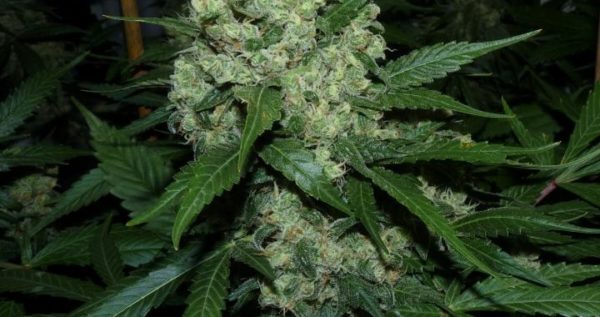
The Case For Cannabis: It Doesn’t Matter That High-THC Strains Now Exist

A prohibitionist argument beloved of the Police is that cannabis should stay illegal because it now contains much more THC than it used to. This is commonly employed as a counterargument to imply that, even though the dangers of cannabis use have been massively exaggerated, it should still be illegal, because the warnings have become accurate over time. This article explains why this argument is false.

This BBC article is a good example of the ridiculous propaganda that people have been exposed to over the years. It claims that “high-potency cannabis or skunk” is a completely different form of cannabis to the herbal cannabis that people usually smoke. This is done in an effort to make people think that the threat posed by legalisation is categorically more extreme than it was in the past.

It’s true that some cannabis strains today are much, much stronger than what used to exist, despite the nostalgic recollections of old hippies. Breeders have had decades to experiment with these strains, and some of them have cultivated varieties that are much higher in THC than anything that could have existed previously.

Because a high-THC strain will offer more of a buzz per unit of volume, it naturally makes for a superior product from a criminal point of view. The greater the buzz per unit of volume, the easier it is to transport, to hide and to smuggle. Black market dealers can charge more if their product gets a reputation for being superpowered, and all of this has caused high-THC strains to dominate the market in many places.

Although it’s true that a high-THC strain of cannabis can create unwanted reactions, particularly by producing a more intense experience than desired, this is only a problem if cannabis is sold on the black market. Like many of the arguments for cannabis prohibition that appeal to the harms of cannabis, further investigation shows that the harm is caused by prohibition and not by cannabis itself.

A high-THC strain of cannabis can get a person stoned faster than a low-THC strain, and perhaps also more heavily, but this is not anything close to a legitimate argument in favour of cannabis prohibition. The safest way to protect people from getting a more intense buzz than they wanted is actually to legalise cannabis, for two reasons.

Legal, properly regulated cannabis means that whatever a person consumes must be clearly labelled with a cannabinoid profile. This means that the user will know what they’re getting. If a person is inexperienced with cannabis they might want specifically to avoid a high-THC strain or to use a high-CBD strain. Even if they are experienced, they might want to know they’re using a high-CBD strain.

As mentioned elsewhere, only legal cannabis can make this possible, because only cannabis produced by legitimate white market professionals will be tested and analysed to determine its precise cannabinoid profile. Therefore, only legal cannabis can ensure that the user knows what they’re getting and can take the appropriate measures.

This approach synergises with having honest education about cannabis use at high school level. In the same way the high schoolers are educated about sex, driving and alcohol, an honest approach would see them educated about cannabis as well. Part of this approach would involve being told that high-THC strains can provoke effects that are more powerful than intended.

The second reason is that regulating cannabis makes it possible to pass a law, as has been done in some American jurisdictions, so that the recreational cannabis being sold in shops must contain a minimum percentage of CBD. This is done with the intent of minimising psychotic responses, as there is evidence that the CBD in cannabis has an anti-psychotic effect that balances that psychotogenic effect of the THC.

Regulation means that the circumstances in which people use cannabis can be controlled with a view to preventing adverse outcomes such as overdoses on super high-THC skunk. Even if it was not deemed necessary to legislate for a minimum CBD level for all cannabis, it could be ensured that the cannabis consumed publicly in cafes had such a limitation.

Prohibiting cannabis because of the fear of high-THC strains is like prohibiting alcohol because absinthe exists. It’s a dumb move that just leads to more suffering in the end. It would be much better to legalise cannabis so that people both knew how to use cannabis properly and also the chemical makeup of any strain they may wish to use.

*

This article is an excerpt from The Case For Cannabis Law Reform, compiled by Vince McLeod and due for release by VJM Publishing in the summer of 2018/19.

You Will Never Be Allowed Any Alternative to Neoliberalism

Workers and labourers were disappointed on Wednesday by the news that the Sixth Labour Government had ruled out a capital gains tax. Many working Kiwis felt it unfair that their labour continues to be taxed at such a high rate while unearned income remains untaxed, and felt that the Labour Party had betrayed them. As this essay will argue, they better get used to it, because New Zealanders will never be allowed an alternative to neoliberalism.

Jacinda Ardern had come to power with a promise that “neoliberalism had failed“, and gave every impression that the Labour Party would offer a new approach. The 35-year experiment of putting money above people had only delivered misery, and Ardern and her Labour Party had caused many to believe that their ascent to power would mark a change in attitude.

Like most utterances from politicians, this was total shit.

The reality is that Ardern and her Labour Party are just as much puppets of globalist industrial and finance interests as their National predecessors, and this is obvious if one looks at their actions in the 18 months they have been in power.

One of the first things Labour did was to double the refugee quota, increasing the flow of cheap labour into the country at the expense of New Zealand wage earners. As this newspaper has mentioned elsewhere, neoliberals love refugees, because they work for cheap and because they destroy the solidarity of the native working classes, thereby weakening their negotiating position.

Labour has also ignored cannabis law reform their whole time in power. While Andrew Little enthusiastically fast-tracks all kinds of laws to take Kiwi freedoms away, he lacks the courage even to say that cannabis is a medicine. Neoliberals are almost always materialists, and they fear cannabis because they fear that it will turn people away from the acquisitive greed that our economies are propped up by.

Perhaps the worst slap in the face, though, was when Labour ruled out a capital gains tax. Their refusal to tax the unearned income of property speculators meant that the burden of funding the government had to come from wage earners instead. Effectively, Jacinda Ardern chose to subsidise the unearned income of the rich with the labour of the poor.

The reality for New Zealand voters, who had cast the Fifth National Government out of power after nine years of neglect, is stark. There is no alternative to neoliberalism. It doesn’t matter how much suffering the Kiwi people have to endure; it doesn’t matter if you can never own a house on the average wage. We will never be allowed, within our current political system, to put our own people above money.

A reader might object here that voters could vote for a third party if they didn’t want neoliberalism, but the system is rigged so that only Labour and National can hold power.

Not only is there an electoral threshold of 5%, which has the effect of preventing any alternative to neoliberalism from getting a foothold in Parliament, but funding for electoral broadcasts is apportioned according to party size. Labour and National together get over half of all allocated electoral broadcast funding, which entrenches both these parties and the neoliberalism they represent.

There is no alternative, within our existing system, to neoliberalism. Everything Labour and National do benefits the wealthy at the expense of the poor, and especially the wealthy with no ties to the nation. Nothing they do will benefit the Kiwi worker whose hands build our roads, tend our crops and care for our sick.

Therefore, there is no alternative to skyrocketing rents, falling wages and the mass importation of cheap labour in the form of refugees. The only way that the Kiwi nation can ever get respite from this is revolution.

*

If you enjoyed reading this essay, you can get a compilation of the Best VJMP Essays and Articles of 2018 from Amazon for Kindle or Amazon for CreateSpace (for international readers), or TradeMe (for Kiwis). A compilation of the Best VJMP Essays and Articles of 2017 is also available.

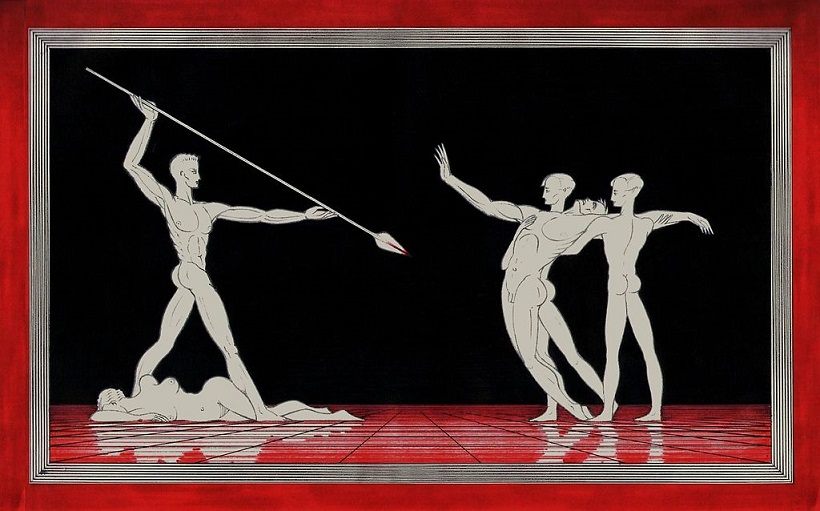
The Spear of Destiny

Many people with a passing familiarity with occultism will have heard of something called the Spear of Destiny. This is an extremely powerful concept with deep importance for the future of our planet. This essay discusses the occult meaning of the Spear of Destiny, and its implications.

Like many occult concepts, there is an exoteric and an esoteric form of the Spear of Destiny.

The exoteric form is the one that people are the most familiar with. The usual story is that the Spear of Destiny was the one held by the Roman centurion Longinus, which he used to pierce the abdomen of Jesus Christ while on the cross at Calvary. This spear apparently became a valuable relic, otherwise known as the Holy Lance.

The spear came into possession of the Holy Roman Emperors around 1,000 years ago, and has remained in Central Europe ever since. It was said that Adolf Hitler was obsessed with the Spear, and set a detachment of crack Waffen-SS troops to capture it when the Nazis annexed Austria. Today, it lies in the “Worldly Treasure-chamber” of Hofberg Palace in Austria.

However, that’s not what the Spear of Destiny really is. There’s an esoteric explanation that makes a lot more sense.

The real Spear of Destiny is a metaphysical object, and it is held by the most influential person on Earth, whoever that is. There is always one person on Earth whose initiative controls the destiny of the human race, one person who is more powerful than all others. This person has the ability to rewrite reality according to their will, as long as they continue to wield the Spear.

The first to hold the Spear of Destiny may have been Gilgamesh, the first king of Sumeria and arguably the progenitor of civilisation. As the first king in the world, Gilgamesh was the first man to truly put the environment around him to order. Therefore, he was the greatest and most powerful man on Earth, at least for a time.

The Spear of Destiny then moved to the West and to the North, as it would continue to do for at least four thousand years. The next inheritor of it may have been a leader of the Akkadian Empire that arose after Sumeria, probably Sargon of Akkad. The Spear would remain in Mesopotamia for many centuries, as it was the only place that civilisation and order existed to a meaningful degree.

Babylonian kings no doubt held the Spear for some time. Hammurabi would have held it when he composed his famous set of laws. Ashurbanipal may have held it at the time of the neo-Assyrian Empire, and the neo-Babylonians held it after him. Nebuchadnezzar may have held it at about the time the dream from the Book of Daniel occurred.

At some time around 500 B.C., the Spear of Destiny left the Ancient Near East, and came to Greece in time for their Golden Age. The Spear of Destiny was certainly held by Alexander as his Macedonian armies conquered almost the entire world known to them. Alexander was probably the single most influential man who ever existed, and he made the Spear his own.

After Alexander’s Empire collapsed and the Golden Age of Greek culture began to fall away, the Spear continued its Westward motion, ending up in Italy in time for the ascent of the Roman Empire. Without doubt, it was held by Julius Caesar, who used it to become one of history’s most influential statesmen. Trajan would have held it as the Roman Empire reached its greatest influence.

Before Trajan, however, there was Jesus Christ, whose dramatic and total reformation of Abrahamism created a religious movement that would grow to become the world’s largest. Longinus may well have held the metaphysical Spear of Destiny on the date of Christ’s crucifixion, because Jesus Christ was the most influential individual of his time, and Longinus took that mantle by killing him.

The Spear of Destiny remained with the Roman Emperors for a few hundred years after Trajan. Who held it during the Dark Ages is unclear, but it can be perceived again in the possession of Charlemagne, as the Frankish king put order to much of Western Europe. The Spear spent some time in the Holy Roman Empire, which was founded by Charlemagne in 800.

William the Conqueror may have held it in 1066 during the invasion of England, and Marco Polo may have held it during his travels in the 13th century. In any case, the Mediterranean rulers of Venice, Genoa and the later Iberians appeared to be in control of the world’s destiny at this time.

As the Age of Exploration began, the Spear may have been held by Christopher Columbus, but was more likely held by his patrons, King Ferdinand of Aragon and Queen Isabella of Castile. As Iberian dominance wound down, to be replaced by Northern European control, the Spear moved to Holland.

The Spear of Destiny was held by William of Orange at the peak of the Dutch Empire, and dramatically leapt over the English Channel after the Glorious Revolution of 1688. Shortly after this event, England would combine with Scotland into “One Kingdom by the Name of Great Britain.” This soon became the British Empire, the largest and most powerful the world had ever seen.

The Spear of Destiny would remain in Britain for at least two centuries, being held at one point by Queen Victoria as the British Empire expanded into a force capable of conquering the globe. After the carnage of World War One, the Spear of Destiny became attracted across the Atlantic, probably to New York, and probably into the hands of Theodore Roosevelt.

Adolf Hitler’s supposed obsession with the Spear can be better understood in this context. The exoteric story is that “Hitler believed the power of the weapon would give him the power to conquer the world“, and that Hitler said, of seeing the Holy Lance, “I myself had once claimed it as my talisman of power and held the destiny of the world in my hands.”

The esoteric story is much different. Hitler knew of the metaphysical Spear of Destiny and wished to take it back from the Anglo-Americans. Had he succeeded in conquering Europe and bringing Britain and America to the peace table, Hitler may well have taken possession of it, and he may well then have held the destiny of the world in his hands.

History, of course, had other ideas. From the East Coast of America, the Spear seems to have travelled further West, and probably now resides in California. It’s possible that Donald Trump holds it, but it’s also possible that it’s in the possession of a Los Angeles movie or music magnate, considering the reach of American soft power.

The future, of course, is unknown. But we can predict, given the relentless Westward motion of the Spear of Destiny over the past 4,000 years, that it will at some point cross the Pacific. Most people already believe that China is destined to supplant America as the world’s foremost power, and this means that the Spear might move there in coming centuries.

This is no guarantee, of course. The Spear might pass to Japan first, or even Korea or Indonesia. Another possibility, considered by very few, is that it may pass to Australia, as the Southern Kingdom has the land area to build a monumental empire over the next few hundred years. After that it may move to India.

All that can be said for sure is that the Spear of Destiny is the single most sought after object in this section of the Great Fractal, and therefore it can be predicted that people will fight for control of it as long as human civilisation exists.

*

If you enjoyed reading this essay, you can get a compilation of the Best VJMP Essays and Articles of 2018 from Amazon for Kindle or Amazon for CreateSpace (for international readers), or TradeMe (for Kiwis). A compilation of the Best VJMP Essays and Articles of 2017 is also available.

The Case For Cannabis: Cannabis Does Not Make People Impotent

Everyone by now has seen the propaganda image on the back of the tobacco packet that depicts a droopy cigarette, imitating erectile dysfunction. Cannabis has undergone a similar propaganda attack, with many people coming to believe that cannabis can make people impotent. This article shows that the truth, once again, is very different to what we have been told.

Like many things that the authorities want to forbid, cannabis has variously been blamed for pretty much everything that could go wrong in a person’s life. Cannabis causes psychosis, it causes cancer, it causes crime, and we’re also told that it makes people impotent.

Now, it’s certainly true that smoking things is not healthy. Smoking anything, cannabis or tobacco, leads to unhealthy lungs and worse circulation. It also leads to heart disease. All of this makes it much harder for smokers to get healthy erections, as this is a function of the health of the circulatory system.

It’s also true that not all cannabis users are healthy. Part of the reason for this is because they smoke things (as mentioned above), but most of the reason is that cannabis is a medicine, and medicines are not typically used by healthy people. People who aren’t healthy also tend to be sexually dysfunctional, for obvious reasons, so there’s a clear reason to expect the presence of a link between the two.

However, the simple facts are that cannabis does not make people impotent. In fact, like so many of the things that people have come to believe about cannabis on account of the propaganda, the truth is closer to the opposite of what we have been told. In fact, cannabis is an aphrodisiac, and has been employed as such for a very long time.

Indeed, cannabis has been known to be an aphrodisiac for millennia. There are references to it in Ayurvedic folk medicine from 2,500 years ago, and its use as an aphrodisiac may be as much as 3,000 years old. The efficacy of cannabis for such purposes is well-known among young and free-thinking people today.

There are several reasons for this, as any hippie could tell you. Most of the reasons are psychological, the most obvious being one that cannabis shares with alcohol: it’s an anxiolytic. People are often too physically anxious and wound up to be able to make love, because their bodies are in fight mode, and so being touched releases cortisol instead of oxytocin.

Cannabis can change that by putting a person into a calmer, more relaxed mood. It can have the effect of stopping runaway, neurotic or aggressive thoughts and replacing them with more placid and appreciative feelings. Cannabis has the ability to get people into the right mood for sex, probably a combination of its anxiolytic effects and the increased physical sensitivity it offers.

Another psychological obstacle to enjoying the sexual experience is deep religious brainwashing in childhood. Many people have been deeply conditioned, since early childhood, to believe that sex was evil and that enjoying the sexual impulse was an act of evil. For some of these people, it’s no longer possible to enjoy having sex while in a normal state of mind.

Yet another common psychological obstacle is previous sexual trauma. Many women who have been sexually molested or raped have difficulty letting go of the trauma enough to trust a man in bed. Likewise, many men find it difficult to achieve the desired level of responsiveness on account of previous humiliations. These kinds of prior traumas often make it difficult for a person to properly enjoy having sex.

Cannabis can help overcome all of these obstacles, thanks to the deconditioning effect that it has on the mind. Because cannabis is good for breaking down old thought patterns, it can break down the conditioned emotional response that occurs when a person is exposed to a stimulus that reminds them of a previous trauma.

One reason why cannabis has become associated with psychosis is because it makes people more open and more willing to explore. This is also one of the reasons why cannabis does the opposite of making people impotent. Sometimes a person is closed off to the idea of intimacy, and not because of trauma or any of the above reasons, but from sheer natural boringness. Cannabis can be what’s needed to open such a person up.

Of course, all this is part of the reason why cannabis was banned in the first place. It’s the basis for the “Reefer makes darkies think they’re as good as white men” comment that led to the prohibition of cannabis. The deconditioning effect of cannabis is a danger to those who benefit from the initial conditioning. Those brainwashers have a profound influence on our lawmakers.

Again, the correct approach must be one that maximises freedom while minimising new danger and risk. The apparent paradox that daily cannabis use can decrease sexual function, while occasional cannabis use can increase it, needs to be recognised. This can only become possible if our current dishonest approach to cannabis is replaced with an honest one.

From there, it will be possible to both get medical treatment for those who use too much cannabis, and to get medical treatment for those who have problems with impotency and who could benefit from cannabis. The humane thing to do would be to legalise it so that people can get the help they need, when they need it, without interference from the law.

*

This article is an excerpt from The Case For Cannabis Law Reform, compiled by Vince McLeod and due for release by VJM Publishing in the summer of 2018/19.