
Why Vaccination Should Never Be Made Compulsory

25 people have been infected by a measles outbreak in Canterbury, and one could predict from the degree of anti-anti-vaccination hysteria that there will soon be a social movement to make vaccination compulsory. Many people are calling for it, and the rhetoric demonising the anti-vaxxers is growing. This essay discusses why compulsory vaccination is the wrong approach.

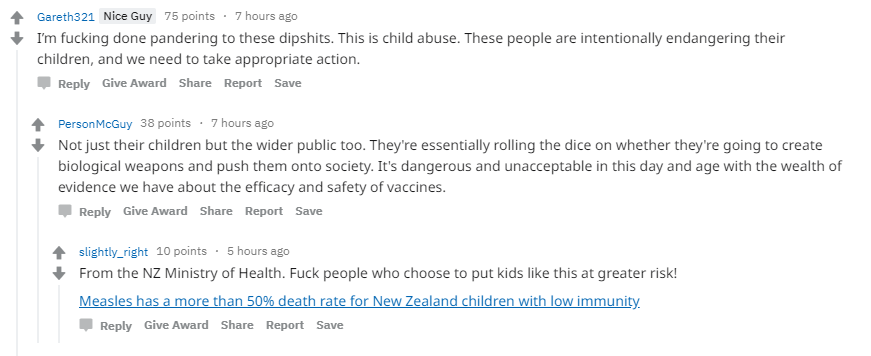
The joke goes that under totalitarianism, everything is either banned or made compulsory. The panic-based hysteria that fuels the various moral outrages that lead to totalitarianism can be seen in places like this thread on Reddit. Many New Zealanders are apparently happy to force compulsory medical treatment on others, despite it being a violation of Section 11 of the New Zealand Bill of Rights Act.

Compulsory vaccination would be a grossly draconian abuse of state power. But that isn’t why we should avoid it.

Let’s lay it out: vaccination is a good idea. Vaccination is a great idea, especially if the extremely minor side-effects are weighed up against the costs of being infected with measles, rubella, polio, whooping cough or the like. Some of these diseases are capable of crippling people for the remainder of their lives, leaving them in ghastly pain, or just killing them outright. Their presence as part of the human experience was a curse, and eradicating them would be excellent.

Vaccination is such a good idea that a parent ought to listen to their doctors when those doctors recommend vaccination. So if the necessary trust isn’t present in that relationship, something is wrong, and we ought to determine why.

The usual response is to call anti-vaxxers “nutters”, “loonies”, “schizos” and the like, and to attribute their lack of trust to an aggressive paranoia that can only be present on account of moral failure. But the responsibility isn’t on them to become more trusting. The responsibility lies on the Government and on the medical community to earn the trust of the population. It’s not merely an ideal that the population ought to trust that what their doctors is telling them is true – it’s a necessity.

The anti-vaccination movement is particularly strong in Nelson, which has been attributed to our unusually high proportion of nutters, loonies etc. The reality is that Nelson has a high number of anti-vaxxers for the same reason that California does: we were one of the first to understand the medicinal value of cannabis, and thereby one of the first to understand that the medicinal community was lying to us about it.

People know that they’ve been lied to about cannabis. We know that doctors have not been fully honest about the medicinal benefits of this substance for decades. Those who have done the research know that these lies are mostly the result of pressure from Government, disinformation from pharmaceutical companies pushing their product and the usual Kiwi slackness when it comes to doing your job properly.

So how do we know that we’re not being lied to about vaccines? Given the experience with cannabis, it’s entirely possible to suspect that Governments are putting pressure on doctors to ignore the risks of vaccination, or that the manufacturers of the vaccines aren’t honest about their side-effects, or that doctors simply haven’t bothered to research any side-effects.

Given that doctors have been lying about these things when it came to cannabis, it’s only natural that the trust that people had in them has sharply declined among some demographics. This is the error that needs to be corrected, and compulsory vaccination is a ham-fisted solution to something that can be achieved more elegantly.

Introducing compulsory vaccination is a foolish and short-sighted approach that will not only spur more suspicion and paranoia, but which will also help to justify future Governmental abuses. A much braver and wiser move would be for the Government and the medical community to earn back the trust that they have lost.

The best way to achieve this would be for politicians to make a frank and full apology for their parts in misleading the country about cannabis. They would have to not only admit that cannabis was medicinal, but that it was known to be medicinal and previous governments lied about it for whatever reason.

If the politicians would admit that many doctors only withheld the truth from their patients for fear of punishment from the Government, they would help to restore the faith in those doctors necessary for the more sceptical to get their children vaccinated. This is what needs to happen, not compulsory vaccination.

*

If you enjoyed reading this essay, you can get a compilation of the Best VJMP Essays and Articles of 2018 from Amazon for Kindle or Amazon for CreateSpace (for international readers), or TradeMe (for Kiwis). A compilation of the Best VJMP Essays and Articles of 2017 is also available.
The Case For Cannabis: Legalisation is Better For the Environment

Recent studies suggest that the future prospects for Earth’s environment are poor. The situation is dire enough that, finally, an awareness is growing that certain measures will have to be taken if the human species is to survive – and soon. This article explains how cannabis law reform is one of those measures (if a minor one).

Many people labour under the idea that cannabis prohibition stops people from using cannabis. Therefore, they assume, cannabis prohibition prevents it from being grown and used. The truth, of course, is that evil laws don’t prevent actions, because human nature is to defy evil laws, and so people grow cannabis everywhere anyway. In any case, cannabis is a medicine, and people will not simply go without a medicine because of the law.

Because of things like Police helicopters that go searching the hills and forests for outdoor grows, a majority of people who grow cannabis do so indoors, and most of these grows are simple setups under a 400 or 600 Watt bulb. These generally cost somewhere between $70 and $100 a month to run, and can produce several ounces of weed over a eight- or ten-week cycle.

This is a great outcome for an individual cannabis user who doesn’t want to deal with the black market, but it’s not the best outcome for the environment.

A study by American scientist Evan Mills found that indoor cannabis grows use up to 1% of America’s entire energy supply. If a similar proportion holds true in New Zealand, it would mean that indoor cannabis grows in New Zealand suck up electricity equivalent to that used by a city the size of Nelson every year. This represents some $60 million worth of electricity, every year.

Another way to put this is that a four-plant grows uses as much electricity as running 29 fridges. It’s a lot of energy being used for something that doesn’t really need to happen. After all, these grows are only done indoors for the sake of evading detection.

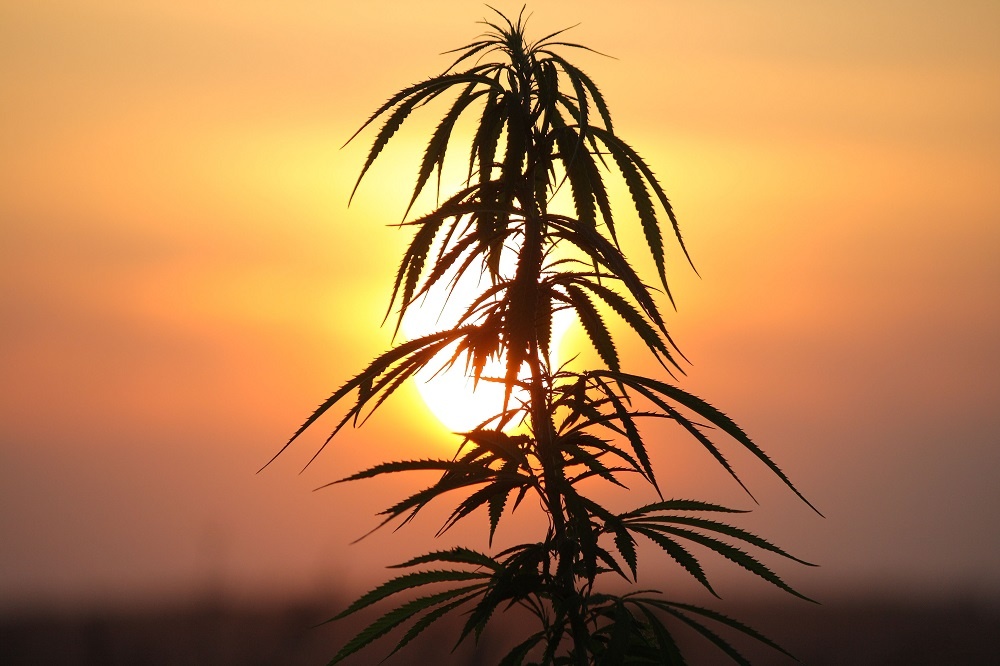
Legal cannabis would mean that cannabis growers could simply put a plant outside and let it grow in the Sun, without fear of being spotted by Police helicopters. There would be no energy requirements at all, and the cost of grow nutrients and the like would be minimal on account of that the plant would just be allowed to grow as large as possible.

Not all indoor cannabis growing could immediately be switched to outdoors. Many people simply don’t have the appropriate facilities. However, the vast majority of it could be, on account of that people would rather buy cannabis from a shop or get it from a pharmacy than grow it themselves, for a greater cost, and have to worry about watering, spider mites, replacement bulbs, buying potting mix, getting ripped off etc.

So legal cannabis would mean that companies would be able to build entire outdoor cannabis farms, and these farms would be much better for the environment than the current arrangement, in which everyone has a home grow operation because they can’t buy it legally and they need to avoid getting arrested. All of those highly inefficient home grows can be wound down in favour of commercial operations that achieve economies of scale.

The tricky thing about this argument is that the sort of person who cares about the environment already knows that cannabis should be legal. In much the same way that anyone who has bothered to look at the climate science knows that changes need to be made, anyone who has bothered to look at the science behind cannabis knew that cannabis prohibition should have been repealed 20 years ago.

The sort of person who genuinely believes that it’s a good idea to put people in cages for growing or using cannabis are, almost inevitably, the same kind of people who don’t care at all about the environment or what the state of it might be after we are gone. The characteristic feature of such people is an absence of empathy for others, and an inability to consider their suffering to be real. So the environmental argument will convince few who are not already convinced.

However, the fact remains that cannabis law reform is a better move for the environment. It would greatly reduce the carbon footprint of the cannabis cultivation industry, as well as reducing the amount of wastage in other areas. Given the pressing need to consider environmental impacts in all areas, we should make it legal for individuals to grow cannabis outside at home.

*

This article is an excerpt from The Case For Cannabis Law Reform, compiled by Vince McLeod and due for release by VJM Publishing in the summer of 2018/19.

Why Don’t Maori Leaders Represent Their People When It Comes to Cannabis?

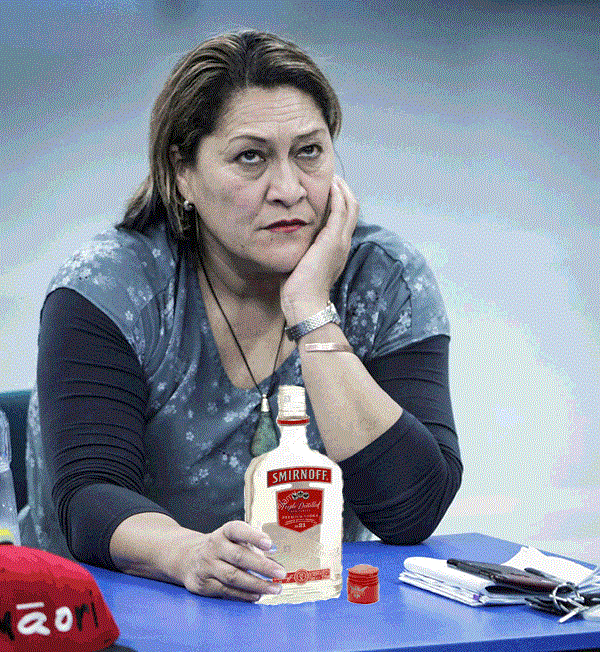
(Photoshop credit: Kayla Chamberlain)

It’s not a secret to VJM Publishing readers that there is a great love of cannabis among the Maori population. The Maori people were never convinced that cannabis prohibition was a good idea, and they were always more heavily impacted by the enforcement of the law than non-Maoris. So why don’t Maori leaders represent their people when it comes to changing the cannabis laws? This essay explains.

Dan McGlashan showed in Understanding New Zealand that there was an extremely strong correlation between being Maori and voting for the Aotearoa Legalise Cannabis Party in 2017: 0.91. This is one of the strongest correlations between any two factors in New Zealand society, even stronger than the correlation between personal income and voting ACT, or being on the unemployment benefit and voting Labour.

So those of us in the know were not at all surprised by the Horizon Research poll announced yesterday, which stated that 75% of Maori voters intend to vote to legalise cannabis when the referendum comes around. Moreover, of the remainder, only 14% intended to vote no, with 11% being unsure. This means that up to 86% of Maoris would vote yes on the referendum if it were held tomorrow.

The question arises, however: if a vast majority of Maoris support legal cannabis, why are Maori leaders so pathetically gutless on this issue?

First of all, it should be pointed out that the bulk of non-Maori leaders are equally as cowardly, so it’s partly a disease of our own political class. Jacinda Ardern and Andrew Little have also been pathetic on this issue, as has every member of the National Party. Cowardice is a characteristic feature of New Zealand politicians, and when it comes to cannabis this seems to double.

However, the bulk of non-Maori leaders are not representing a population as heavily impacted by cannabis prohibition as Maori leaders are. The British settlers were long since used to alcohol, but for the Maoris its introduction was akin to the deployment of a bioweapon. This makes the need for cannabis law reform more pressing for Maoris, and thereby the current crop of Maori leaders more negligent than the others.

Secondly, it’s also a fact that young people are much more likely to favour cannabis law reform than the old ones who suffered most of the propaganda. Again as shown by McGlashan, the correlation between median age and voting for the Aotearoa Legalise Cannabis Party in 2014 was -0.55, which supports the Horizon Research poll suggesting that Maoris under 55 years of age are much more likely to support legalisation.

Most of the Members of Parliament who are Maori are old, so it can be seen that their attitudes are very likely the same prejudices against cannabis held by other old people. After all, they all went through the same reefer madness brainwashing as the other old people. At least part of the failure of Maori leaders on this issue can be attributed to the general failure of the Boomer generation to appreciate the perspectives of other generations. They’re simply out of touch.

Thirdly – and this is a very sad and depressing fact – there is a lot of lobbyist money from anti-cannabis sources flowing into the coffers of various politicians. A previous study here at VJM Publishing showed that at least 7% of National Party funding came directly from alcohol manufacturers and their associations, and those groups will have leaned heavily on the recipients to vote against any recreational alternative to alcohol.

We can’t say that any of these Maori leaders are taking money from alcohol, tobacco or pharmaceutical interests, because we don’t have any evidence for that. But there is a fuckton of anti-cannabis lobbyist money and these politicians are taking positions consistent with what the lobbyists want them to take. They’re certainly signalling a willingness to take money from such lobbyists. Ockham’s Razor would suggest that we at least be suspicious.

All of this helps to explain why Willie Jackson, Peeni Henare, Meka Whaitiri, and all the Maori members of the New Zealand First caucus voted against Chloe Swarbrick’s medicinal cannabis bill. Basically, they don’t give a shit about the reality of life on the ground for the average Maori, they just want their votes on the way to the Parliament trough.

The reality of life on the ground is that a great proportion of the Maori people have taken to cannabis because it’s a recreational alternative to alcohol. The arrival of alcohol had a similar effect on Maoris as it did on most New World people suddenly exposed to it: utter carnage, and they are smart enough to have learned that a session on cannabis tends up to end up much happier than a booze one.

We can’t realistically expect courage or leadership from a New Zealand politician, but we can at least expect them to understand and acknowledge when the winds of opinion have changed among the people they’re supposed to be representing, and to act accordingly. Maori leaders need to come out and publicly state that cannabis law reform is the way forward, not just for their constituents but for the entire nation.

*

If you enjoyed reading this essay, you can get a compilation of the Best VJMP Essays and Articles of 2018 from Amazon for Kindle or Amazon for CreateSpace (for international readers), or TradeMe (for Kiwis). A compilation of the Best VJMP Essays and Articles of 2017 is also available.

The Case For Cannabis: Prohibition Destroys Families

Cannabis prohibition is a destructive approach in many ways. Because of the need to use law enforcement officers to attack people who use cannabis, massive emotional trauma and psychological damage is the inevitable result of prohibition. As this article will examine, some of the worst damage is that inflicted upon families of cannabis users.

The most severe way that cannabis prohibition affects families is through law enforcement. To fully appreciate the destructive effect that prohibition has had on families, it helps to imagine the situation from the perspective of a child who has had a parent taken way on account of a cannabis offence.

The psychological literature is replete with information about the devastating effect that losing a parent, even temporarily, has on the child’s mental health. It’s common for children in such a situation to feel a powerful sense of neglect and loss. They don’t understand why their parent has been taken away and put in a cage – after all, most adults don’t understand cannabis prohibition either, so how can a child?

Cannabis prohibition means that children are deprived of bonding time with their parents, sometimes even for years, because of the need to put people in prison for violating the cannabis laws. This regularly has a devastating effect on the child’s mental health – for no real benefit to anyone.

Another way that prohibition destroys families is by driving a wedge between generations. As mentioned elsewhere in this book, the young are almost universally in favour of cannabis law reform. They know it’s much safer than alcohol, and they’ve seen the carnage alcohol has caused to their parents’ and grandparents’ generations.

So when their parents start lecturing them about how they should avoid cannabis because it causes psychosis, and how they should drink alcohol instead because it’s not a drug, the predictable response is that the children come to lose faith in their parents, and to trust them less.

The most extreme example of this is when one family member is using medicinal cannabis and living in the same house as another one. This often causes conflict when the owner of the house is afraid that the presence of cannabis will attract the Police. In cases like this, it’s possible for the tension to lead to a family being pulled apart, and this can all be attributed to the law against cannabis.

It should be pointed out here that the damage done to families is worse than it seems at first glance. The sort of people who grow cannabis are frequently in a precarious social situations. After all, one of the main reasons why people smoke it is to deal with the anxiety and depression that comes with being on society’s fringes.

For these people, the safety net of the family is sometimes the difference between life or death. Vulnerable people generally don’t have much else to rely on. Putting an adult in prison can have the effect of removing an important node from their family’s social net, meaning that families have to go without income and children have to go without parents. Even more distant relatives like cousins, nephews and nieces can be affected.

It’s common for the imprisonment of one parent to lead to the rest of the family having to move home or school. Breaking up these social networks, merely because a person grew a medicinal plant, is unconscionable. This suffering caused to family members of cannabis users is not justifiable.

Cannabis ought to be made legal so that Kiwi families are no longer made to suffer as collateral damage. A repeal of cannabis prohibition would mean that the integrity of the family could no longer be damaged by the actions of law enforcement. This would avoid causing severe emotional damage to the children and wider family members of anyone imprisoned, a much more humane and compassionate approach to the one currently used.

*

This article is an excerpt from The Case For Cannabis Law Reform, compiled by Vince McLeod and due for release by VJM Publishing in the summer of 2018/19.