
Why You Should Join A Gang Instead Of Working

New Zealand now has over 7,000 gang members, an increase of some 13% from a year previous. Many theories have been put forward to explain this sudden rise, but none of them are adequately grounded in economic psychology. This essay makes a seemingly preposterous argument: that it makes more sense to join a gang nowadays than to work.

According to the Real Estate Institute of New Zealand, the average New Zealand house price is now $810,000, up 19% from a year earlier. According to interest.co.nz, the ratio of this average house price to the median household income is now 8.43.

This ratio was 5.87 as recently as July 2016. Even back then, it meant that a working couple able to save 25% of their total wage could expect to take over 23 years to pay for the average house. That was considered “severely unaffordable” by all honest commentators. But it’s now almost 50% worse than even that.

These are terrifying statistics for anyone at, or near, the bottom of the educational ladder. The average household income, according to the stats mentioned above, is $96,114. That means over 33 years for the average couple, saving 25% of their total wage, to pay for the average house. Any household with a minimum wage earner will likely have it much harder than this.

This means it’s now realistically impossible for a significant, and growing, proportion of New Zealand workers to ever own a home on their wage. It’s even more difficult for those who aren’t part of a steady couple.

Historically speaking, those at the bottom of society have always had one universal method of radically improving their position: crime. And the bigger the crime, the better. Many people say that crime doesn’t pay, but this is only true for the lower classes. Pull off a big enough heist and you can go up an entire league.

As Chuang Tzu once observed: “The petty thief is imprisoned but the big thief becomes a feudal lord.” Petty thievery won’t get you into a house that you can raise a family in, but full-time drug running is another story.

A young New Zealander without an education might have no chance of ever owning a house by working for one, but there’s a ready alternative: to join a gang, and get $810,000 through crime.

It’s common for dedicated meth users to go through $1,000 of meth in a week. Someone supplying it need only have a dozen customers with this level of demand and they could sell $600,000 worth of meth in a single year. Assuming $400,000 of expenses in precursor/bulk wholesale costs, rip-offs and fees to one’s own gang so as to keep covering for your operations, this means an income of $200,000 per year – tax free.

The only major downside is a small risk of getting killed or imprisoned.

Gangbanging is relatively dangerous, but the vast majority of gang members manage to conduct their affairs without getting killed. In recent years, New Zealand has averaged about 61 homicides a year. Even assuming that the majority of those were gang-related, it means that a person in a gang has little more than a 0.5% chance of being killed in any given year.

Even if this risk is 50 times higher than the risk of being murdered if one isn’t in a gang, it’s still a fairly low risk. It means that, after four years of selling meth and saving $4,000 a week, one would have earned enough to buy the average house, with a mere 2% chance of getting killed (approximately).

The risk of being imprisoned is also relatively minor. Furthermore, as shit as prison might be, it’s not a whole lot worse than busting a gut for 40 hours a week and being left with nothing after taxes, bills and rents are paid. At least rent is free in prison, and while there you can easily make the contacts that will help you sell meth more discreetly once you get out.

In the cold light of day, a young New Zealand man, one with ambitions to own a home so that he can raise a family in it, is better off joining a gang and getting taxed at 0% than getting educated, earning a professional wage and getting taxed at 39%. He can actually own a house the first way, whereas the second demands decades of work for partial equity in one. Even if he does manage to own a house the second way, he likely won’t have enough spare energy to raise a family in it.

What many middle-class people – especially those who inherit wealth – don’t realise is that few people join gangs purely out of malice and spite. Some of them join gangs because, on balance, they can have a better life in one. The prospect of working for 50 years to merely own some equity in a cold, damp house is a miserable one. It’s not surprising that the more daring of the country’s young men are tempted to gamble for a better life.

The solution to New Zealand’s rising gang problem will inevitably be a multifaceted one, but the basis of it must be enabling even poorly-educated workers to own their own home and raise a family. As long as workers aren’t getting paid enough for this to be possible, they’re better off joining gangs.

*

If you enjoyed reading this essay/article, you can get a compilation of the Best VJMP Essays and Articles of 2020 from Amazon for Kindle or Amazon for CreateSpace (for international readers), or TradeMe (for Kiwis). A compilation of the Best VJMP Essays and Articles of 2019, the Best VJMP Essays and Articles of 2018 and the Best VJMP Essays and Articles of 2017 are also available.

*

If you would like to support our work in other ways, please consider subscribing to our SubscribeStar fund. Even better, buy any one of our books!
Could New Zealand Legalise Cannabis On Maori Land?

The outcome of last year’s cannabis referendum was bitter for many Maori people. Despite that some 80% of Maoris voted in favour of changing the law, heavy anti-cannabis sentiment among Pacific Islander and Asian voters saw the referendum ultimately fail. Fortunately for all, an elegant solution exists overseas, and we could copy it.

The 2020 cannabis referendum was close. 50.7% of eligible voters wanted to continue with cannabis prohibition, and 48.4% did not. There was a significant positive correlation between being New Zealand-born and voting Yes in the referendum, so within that 50.7% were a large number of recent immigrants, particularly Chinese ones. Some 80% of Chinese voters voted in favour of locking Kiwi cannabis users in cages.

There are roughly 250,000 ethnic Chinese in New Zealand. Assuming that 80% of them were eligible to vote in the referendum, and assuming that 80% of those did, that gives us 160,000 ethnic Chinese voters. We know from above that 80% of those voted in favour of cannabis prohibition, which gives us 128,000 Chinese No voters opposed to 32,000 Chinese Yes voters. This represents a majority of around 96,000 for the No side among Chinese voters.

In the cannabis referendum overall, 1,474,635 people voted in favour of the continued persecution of cannabis users, and 1,406,973 voted to end it (for more detail on who these people were, see Understanding New Zealand 3). This means that the No side won the cannabis referendum by 67,662 votes.

So a little bit of primary school-level maths shows us that non-Chinese voters wanted to change the cannabis laws. But the native Kiwi majority that wanted reform was forced to endure further prohibition because of the wishes of recent immigrants, often from totalitarian political systems, and with little understanding of our culture.

For someone born in New Zealand, with centuries-deep roots in New Zealand, it seems outrageous to me that voters who came to New Zealand in the last decade took away our right to use cannabis. The voters who have flooded into the country since John Key threw the borders open have no real loyalty to, or respect for, the New Zealand people. They shouldn’t be deciding what rights the rest of us have.

That mostly rural-dwelling Maoris wanted legal cannabis, but got trumped by city-dwelling Pacific Islanders and Asians, has worsened existing social tensions in New Zealand. Maoris already had reason to resent the cannabis laws, which were forced on them by outsiders in the first place. The Sixth Labour Government’s response to their 80% support for legal cannabis has been, so far, to tell them to go fuck themselves.

One obvious, and obviously superior, solution presents itself.

In 2014, the United States Federal Government stated that it would not interfere with any Indian reservation or territory that wanted to legalise cannabis on its land. This declaration was a formality that followed from their already declared policy of non-interference with legal cannabis in Colorado.

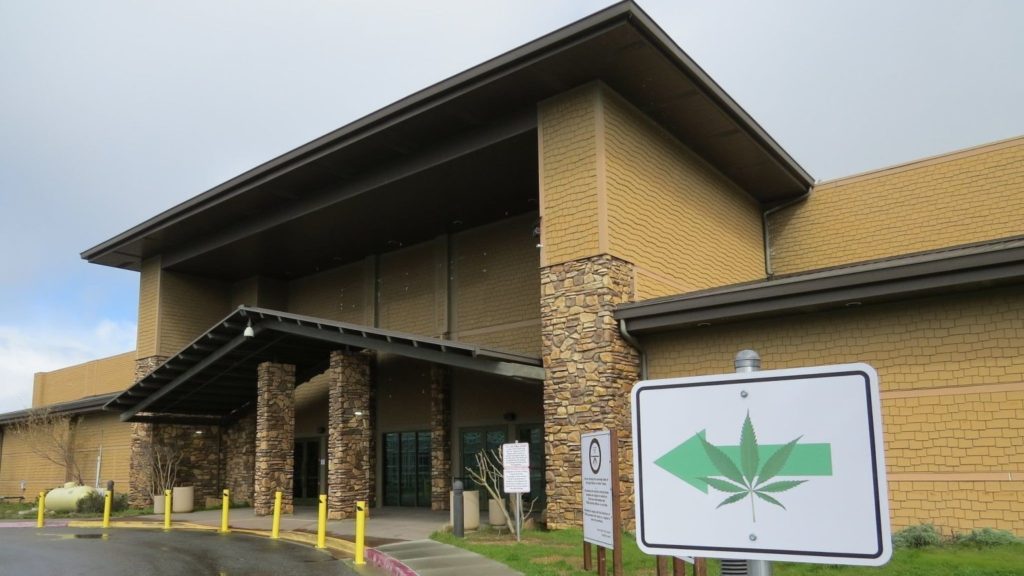
One tribe, that of Squaxin Island in Washington, opened a legal cannabis store called ‘Elevation’ in 2015. First nations peoples in Canada have also allowed for legal cannabis sales on their lands. Native tribes in the Americas are generally pro-cannabis for the same reasons that Maoris are: they know it’s much better for them than alcohol is and that cannabis prohibition was pushed on them by outsiders.

This article proposes that the New Zealand Government allow individual Maori tribes to legalise and sell cannabis on their land.

There are two major benefits to this proposal.

The first, and most major, is that it shows some respect to the 48.4% of Kiwis and roughly 80% of Maoris who want a legal respite from cannabis prohibition. Currently, these two groups of people are told that they just have to eat shit, because neither a Labour nor a National Government will do anything about the cannabis laws.

Legal cannabis sales on Maori land would allow for the pro-cannabis half of the population to freely access and to use cannabis there, away from the judgment of those who think they’re scum. This would allow for the custodians of that land to build cannabis dispensaries, cafes and accommodation for the cannabis tourists. If the anti-cannabis half of the population doesn’t like it, they can stay in the cities and drink booze.

The second major benefit, or group of benefits, relate to the tourism potential of this proposal.

If you’re a young Western tourist, and you can choose between travelling to the American West Coast and using cannabis and alcohol, or travelling to New Zealand and using alcohol only, it’s an easy decision. About as easy as choosing between travelling to a Western country and using alcohol or travelling to a Middle Eastern theocracy and using nothing.

Legalising cannabis on Maori land would create a massive tourism boost in rural and impoverished areas like Northland and the East Coast of the North Island. These areas would benefit from both domestic and international tourists, and it would also create a spillover tourism effect for non-Maori businesses who catered to the international tourists who would otherwise have gone to a country with legal cannabis.

The idea of legalising cannabis on Maori land is a sure win for the first party to propose it. It’s the kind of solution that New Zealand needs. Unfortunately, our current parties are either bereft of imagination or more interested in grandstanding than making positive, practical solutions.

*

If you enjoyed reading this essay/article, you can get a compilation of the Best VJMP Essays and Articles of 2020 from Amazon for Kindle or Amazon for CreateSpace (for international readers), or TradeMe (for Kiwis). A compilation of the Best VJMP Essays and Articles of 2019, the Best VJMP Essays and Articles of 2018 and the Best VJMP Essays and Articles of 2017 are also available.

*

If you would like to support our work in other ways, please consider subscribing to our SubscribeStar fund. Even better, buy any one of our books!
The Three Worst Historical Crimes Of The New Zealand Government

The New Zealand Government is fairly benign as far as governments go. Despite that, the nature of government is to act as a force that commits crimes against the people it rules. Government officials often calculate that they must do so out of a duty to maintain order. This essay discusses the three worst atrocities the New Zealand Government has ever committed.

The third worst atrocity is waging a War on Drugs against the New Zealand people.

In doing so, the New Zealand Government unmistakably revealed a tyrannical mindset. It declared that the mind of every individual New Zealander belongs to the Government, and this Government has the right to decide what goes in those minds. The Government claimed the right to program those minds to best serve it, and it claimed the right to prevent those minds from deprogramming themselves.

The Sixth Labour Government has upheld this commitment to crushing cognitive liberty. Despite holding an absolute majority of Parliamentary seats, they appear content to keep destroying New Zealanders who use cannabis. A recent case in the Dunedin District Court saw a cannabis grower sentenced to a longer prison term than what other men get for killing people or for raping their own stepdaughter over several years.

Their excuse for doing so is respecting the will of the recent cannabis referendum. But in acceding to the No voters, they respect their awful reasons for voting that way. Dan McGlashan showed that the vast majority of No voters were poorly educated, and these people followed the propaganda and not the science. Many other No voters had stated that they voted the way they did because they hated cannabis users. It’s a crime for the New Zealand Government to respect such malicious sentiments.

The second worst atrocity is forcing mass Third World immigration on the New Zealand people.

After sacrificing themselves by the thousands in World War II, the returned servicemen of New Zealand expected that their Government would take care of them. Instead, the globalist victors of that conflict opened the borders of New Zealand to cheap Third World immigration. Anyone who objected was called a racist and said to be on Hitler’s side.

After seventy years of globalist immigration policy, New Zealand wages have collapsed so far that it’s all but impossible for a simple labourer to own a home to raise a family in. In 1992, it was possible to buy the average New Zealand home with the equivalent of 7,000 hours of labour at the average wage. By 2020, this ratio has become over 21,000 hours of labour to own the average house.

The mass importation of Third World cheap labour constitutes an atrocity for the destructive effect it has had on the ability of the New Zealand working class to lead decent lives. Even worse is the now constant threat of violence, property and sex crimes that New Zealand’s working class have to live with on account of sharing neighbourhood space with Third World imports who hate them.

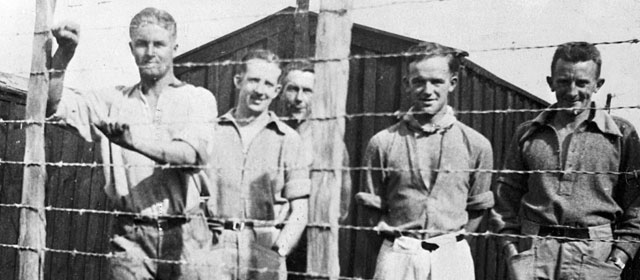
The single worst atrocity ever committed by the New Zealand Government was the conscription of New Zealand men into military service during World War One.

The War on Drugs may have destroyed thousands of families and pushed many to suicide, and the mass importation of cheap labour may have wrecked communities all over the country and pushed many families into wage and rent slavery, but both evils pale in comparison to forcing unwilling Kiwi men to fight in a war that did not concern them.

Over 32,000 New Zealand men were conscripted into the abattoir of the Great War – some 3% of the national population at the time. Assuming a death rate roughly equal to that of the volunteer soldiers, around 3,000 of these conscripts would have lost their lives. To force men to kill and die in this manner, against their wills, is the worst atrocity the New Zealand Government has ever committed.

The great military strategist Basil Henry Liddell Hart, writing in Why Don’t We Learn From History?, ranked conscription as one of the worst evils of history. Not only did it make war more likely, as he realised in the aftermath of World War One, but it also led to widespread moral degeneration on account of normalising the use of force to compel people to act against their wills.

Many families are still suffering from the effects of World War One today. The Post-Traumatic Stress Disorder incurred from being conscripted into a senseless slaughter, and made to kill other working-class people, was never healed. New Zealand’s appalling rates of child abuse can be directly traced back to the normalisation of cruelty and violence during World Wars One and Two.

At Gallipoli, Passchendaele, El Alamein and Monte Cassino we learned that cruelty and violence was how one exerts one’s will in this world. Unfortunately, we didn’t fully unlearn this lesson and heal. This is why child abuse rates in Sweden and Switzerland, who did not participate in these wars, are a fraction of what they are in New Zealand.

Most of this unhealed trauma was passed down to the Silent and Boomer generations, who then manifested it as anxiety, depression and a relaxed attitude to child abuse. These mental illnesses are less present in Generation X and the Millennials, but they still exist – a testament to the magnitude of the initial damage.

The New Zealand Government has never apologised for any of these crimes, and probably never will, because all of these abuses show the New Zealand people who the boss is. They stand as the three worst historical atrocities ever committed by the New Zealand Government.

*

If you enjoyed reading this essay/article, you can get a compilation of the Best VJMP Essays and Articles of 2020 from Amazon for Kindle or Amazon for CreateSpace (for international readers), or TradeMe (for Kiwis). A compilation of the Best VJMP Essays and Articles of 2019, the Best VJMP Essays and Articles of 2018 and the Best VJMP Essays and Articles of 2017 are also available.

*

If you would like to support our work in other ways, please consider subscribing to our SubscribeStar fund. Even better, buy any one of our books!

VJMP Anzac Day Address 2021: A Radical Proposal For The Future Of Anzac Civilisation

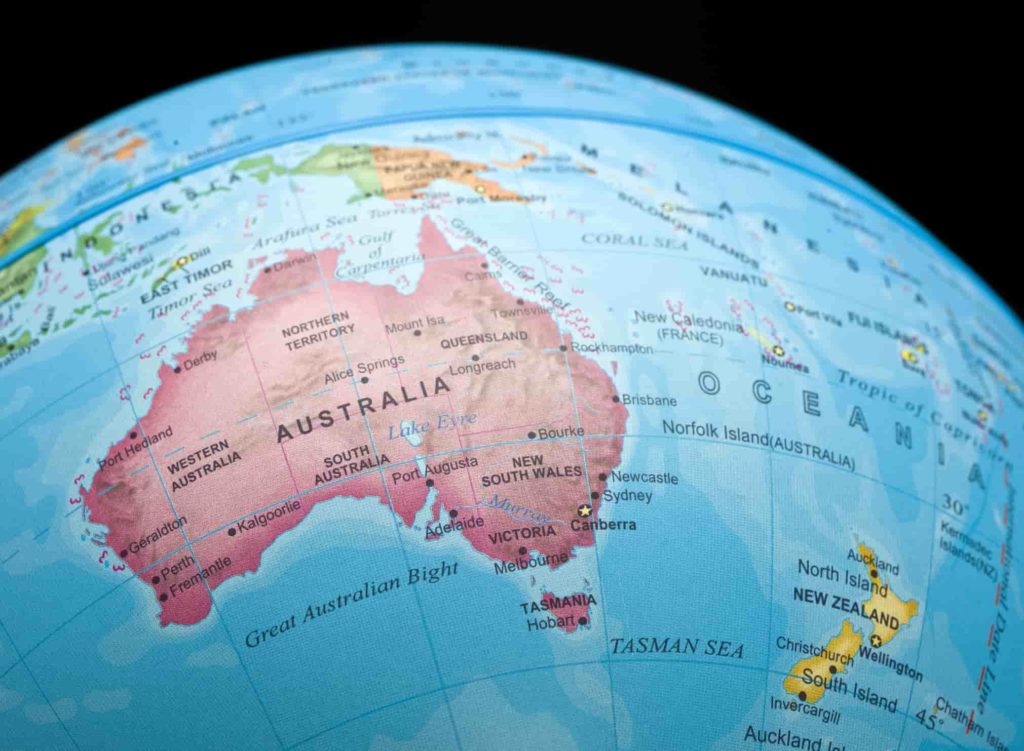
The future of Western Civilisation is starting to look grim. It appears as if we are transitioning into tyranny – as Plato and Aristotle warned was the inevitable fate of democracies. This proposal suggests that the Anzac Empire intentionally position itself as the last bastion of free civilisation, in stated opposition to globalist tyranny.

The cancer of identity politics has destroyed both America and Europe. No-one knows who they are anymore. No-one can agree on anything anymore. The resulting confusion has led to a permanent state of low-level civil war. Aristotle explained in Politics how this state inevitably leads to the rise of a dictator, as people realise that only a ruthless strongman can get anything done.

This cancer has also infected Anzac civilisation. Over recent decades, a concerted effort has been made to erase our culture and to create a division between the white settlers and the natives. Today’s mainstream media pushes a narrative of white Anzacs battling for supremacy against the natives, as if any victory for one side inevitably meant a defeat for the other.

However, the low population of Anzacistan means that the emotional pressure of this cancer is weak. In the same way that the low population of revolutionary America allowed it to make rapid ideological changes that took it on a greatly different path to Europe, so too can we make rapid ideological changes that take us on a greatly different path to the rest of the West.

Americans have been enslaved by a power structure that has deliberately pit them against an implacable African minority. Europeans have, likewise, been enslaved by a power structure that has deliberately pit them against an implacable Muslim minority. It is apparent that this globalist power structure has a similar plan to divide and conquer Anzac civilisation.

That is, unless we organise to stop them.

It’s time for a revolutionary vanguard of Anzac nationalists to stand up and take control of the direction of our civilisation. In doing so, we must explicitly reject the neoliberal totalitarianism that has befallen the West over the past four decades. We must explicitly reject the debt slavery, the open borders, the soulless consumerism and the struggle sessions. We must plot a new course through this new century.

This proposal is for the Anzac people to recognise:

1 – That the current order of the world is disintegrating;

2 – That this disintegration will cause immense suffering to those peoples of the world who rely on good order to provide a decent upbringing for their children;

3 – That the most effective way for those people to avoid this suffering is to reassemble in the Southeastern corner of the world and bring a new political order into being.

The great waves of colonisation, from Europe and elsewhere to the New World, primarily attracted a certain type of person. The landed gentry and the peasantry mostly stayed behind, unwilling or unable to change their environment. Those who did make the move were mostly those from the rising middle classes. This is why people from the New World today are more masculine than their Old World counterparts.

People from the New World, in comparison to people from the Old, are extraverted, adventurous, assertive, dynamic and determined. These are the kind of people who build new countries. They are the same ones who built Australia and New Zealand, and we can enlist them to build an Anzac Empire.

This Anzac Empire could rise by intentionally attracting 100 million or so of the most creative, ambitious and tenacious people from America and Europe as they collapse into brazilianised cesspits over the next 80 years. In doing so, we would chiefly appeal to the young and educated people who are currently getting strangled by their moribund home economies and suicidal popular cultures.

This proposal would make the lands of Anzac into one great citadel of civilisation, where the valued learnings of the past can be preserved as the rest of world disintegrates into chaos. By attracting the most intelligent people from the formerly wealthy parts of the world, we will ensure a rise akin to that of America during the 19th and 20th Centuries.

In 1860, the population of America was just over 30 million, roughly the same as that of the Anzac Empire today. A century later, the American population was 180 million and the nation was established as the most powerful military, economic, scientific and cultural force since the Roman Empire.

The Anzac Empire could undergo a similar transformation – from middle power to world’s leading nation – over the next century. All we would have to do is maintain (or, even better, improve) the genetic and cultural infrastructure of these lands by encouraging immigration from high-IQ cultures that look after their children, and discouraging immigration from low-IQ cultures that don’t look after their children.

First of all, we need to clear the current crop of scum out of our ruling institutions. This will require that our revolutionary vanguard swear never to work with, accommodate or appease any globalist or authoritarian elements. Any and all such elements must be forever excluded, because their presence will prevent the rest of us from introducing a fair set of laws that suit our genetic and cultural temperament.

One of the laws of this new empire must be that anyone promoting the mass importation of cheap labour, or immigration from r-selected countries, is sentenced to death. Anyone championing mass immigration for the sake of pumping up house prices must die so that the Anzac people – and the world – may live.

Other laws can follow the Sevenfold Conception of Inherent Human Rights.

This radical proposal for the future of Anzac civilisation is that the K-selected and noble people of the world fall back to our Southeastern corner, so as to best outlive the deluge of chaos and misery that the ongoing population explosion of the r-selected is inflicting upon the rest of Planet Earth. Let the Anzac Empire become an eternal citadel of all that is valuable in the world, the worthy heir to the Greco-Roman-Anglo culture that preceded us.

*

If you enjoyed reading this essay/article, you can get a compilation of the Best VJMP Essays and Articles of 2019 from Amazon for Kindle or Amazon for CreateSpace (for international readers), or TradeMe (for Kiwis). A compilation of the Best VJMP Essays and Articles of 2018 and the Best VJMP Essays and Articles of 2017 are also available.

*

If you would like to support our work in other ways, please consider subscribing to our SubscribeStar fund. Even better, buy any one of our books!