
Category: politics
The Abrahamic Origins Of Wokeness

A new moral fanaticism has swept the upper echelons of Western society in recent years. Called Wokeness, it’s cancelling wrongthinkers everywhere with the fervour of a jihadist driving a van through a crowd of Christmas shoppers. Although most people consider it an entirely new phenomenon, Wokeness is, in fact, another form of Abrahamic religion. This essay explains.
As first observed by Sri Dharma Pravartaka Acharya, Marxism is itself another form of Abrahamic religion. He defined it as an atheistic Abrahamism, in recognition of the fact that the Abrahamic cults are political religions and not spiritual ones. As a form of Abrahamism, Marxism shares with Judaism, Christianity, Islam and Baha’i a megalomanical desire to control the world and a psychopathic hatred of outsiders.
Wokeness developed out of Marxism in a similar manner to how Christianity and Islam developed out of Judaism. The only major difference between Wokeness and Marxism is that the latter was concerned with class questions, whereas the former has abandoned those for identity politics. In any case, Wokeness shares many characteristics with the Abrahamic religions.
Sri Dharma Pravartaka Acharya observed that the Abrahamic cults shared “A profound sense of religious exclusivity, creating two strictly delineated camps of ‘believers’ in opposition to everyone else.” The ‘with-us-or-against-us’ logic of Abrahamism has been adopted directly into Wokeness. The absurd outcomes of this can be seen in the purity spiral phenomenon.
One central belief of Wokeness is that those who follow it are considered saved, in the sense that they need not fear future judgment, whereas those who don’t follow it are considered damned. This judgment is absolute: anything a person may have achieved in their lives, any good works they may have done, are secondary to the question of whether they were Woke. In this manner, Wokeness builds a sense of community in the same way that the Abrahamic cults do: through hatred of outsiders.
Another observation of Sri Dharma Pravartaka Acharya is that the Abrahamic cults share “The belief that there is only the sole true faith, and that any other form of religious expression external to the ‘one true faith’ is necessarily wrong.” The Woke follow this belief, only with regard to political expressions.
They don’t care much what your religious beliefs are, but if you hold a contrary political opinion then you are the enemy. This is because the Woke have never questioned their own righteousness, not even once. So if you disagree with a Wokist, you’re simply wrong. There is no room for dialogue or discussion, because, to them, that would be to platform evil.
This attitude is similar to the Abrahamic attitude that no outside religious ideas can ever be entertained, lest it lead to a crisis of faith. The same way that Abrahamists seek to eradicate all trace of competing religious dogmas, the Woke seek to eradicate all trace of completing political dogmas. As their idol, Joseph Stalin, once said: “Ideas are more powerful than guns. We would not let our enemies have guns, why should we let them have ideas?”

Yet another observation is that the Abrahamic cults share “The acceptance of terrorism, violence, mob action, looting and aggressive missionary tactics to spread their religion.”
The Wokeness equivalent of crusading and jihading is cancel culture. The Woke don’t like to use mob terrorism to lynch people – that’s too working-class. The middle-class way to use mob terrorism is by doxxing wrongthinkers and trying to get them fired or deplatformed. The apogee of cancel culture is getting the mainstream media to run a hitpiece on someone.
Like the Abrahamists, the Woke derive a powerful sense of group bonding from destroying outsiders. The thought that those outsiders might take revenge thrills them because it suggests an escalation of conflict. Also like the Abrahamists, the Woke look forward to the one glorious day when they might destroy their enemies completely.
A further aspect of Wokeness shared by Abrahamism is “A common sense of being at a war to the death with the Dharmic (‘Pagan’) world that preceded Abrahamic ascendency.”
It has often been remarked that, for all their blustering about tyranny and oppression, the Woke don’t really care about the prohibition of spiritual sacraments such as cannabis and the psychedelics, and the countless people whose lives have been ruined by its enforcement. VJM Publishing has produced multiple books on the subject of cannabis law reform. But the Woke still consider us bad guys.
Some find this highly odd, but the explanation is simple. The Woke are politically religious, not spiritually religious, and as such they fear genuine spirituality, which they see as a competing ideology. Being soulless, the freedom to use spiritual sacraments such as cannabis and the psychedelics is not important to them. Moreover, people who do use such sacraments are usually anti-authoritarian, and therefore anti-Woke.
There are further similarities between Wokeness and the Abrahamic cults besides those observed by Sri Dharma Pravartaka Acharya.
Like Abrahamism, Wokeness is a conduit for sadistic and controlling urges, and attracts people with those urges. The sneering, arrogant superiority of the Woke is a mirror image of how Abrahamists behave towards non-believers. The Woke, just like the Abrahamist, want people punished for rejecting their religion. Also like the Abrahamic cults, Wokeness appeals to that base desire to punish.
Wokeness is also a universalist religion. A core part of Woke mentality is that it is a mindset for all times and all peoples. In the same way that individuals today can be judged as unworthy of respect for not being Woke, so too can individuals from centuries ago. Any person or any group of people is morally obliged to be Woke, even if they didn’t know about it.
The Woke believe that the Laws of Wokeness are written upon the hearts of men at birth.
Like Marxism and Christianity, Wokeness explicitly seeks to raise up the low and tear down the high. The difference is that instead of raising the proletariat above the bourgeoisie, or the meek above the cruel, the Woke raise the dark-skinned above the light-skinned, the homosexual above the heterosexual, the insane above the sane. The fact that this mentality harms the white working-class is seen as a bonus, as it punishes them for their rejection of Wokeness.
The most telling fact of all is that Wokeness is heavily promoted by Abrahamists. Jews, Christians and Muslims love nothing more than lecturing goyim/infidels/kaffirs about how concern for one’s own nation is the same kind of in-group favouritism that inspires genocides, and therefore evil. Wokeness can therein be understood as an ideology that serves the wider Abrahamic objective of destroying natural political organisation, and thereby competitors to Abrahamism.
Ultimately, Abrahamism and Wokeness share a great many characteristics because they are both forms of slave morality. Just like the Abrahamic cults, Wokeness is based on resentment for life, and saying No to it. As such, Wokeness can rightly be considered an evil that increases the human suffering in the world.
*
If you enjoyed reading this essay/article, you can get a compilation of the Best VJMP Essays and Articles of 2020 from Amazon for Kindle or Amazon for CreateSpace (for international readers), or TradeMe (for Kiwis). A compilation of the Best VJMP Essays and Articles of 2019, the Best VJMP Essays and Articles of 2018 and the Best VJMP Essays and Articles of 2017 are also available.
*
If you would like to support our work in other ways, subscribe to our SubscribeStar fund. Even better, buy any one of our books!
A Promise To My Working-Class Chinese Friends

I understand that the ruling elites of my country want war with you. This is apparent not only from the strategic situation but from the propaganda those elites are pushing on us, the citizens of the West. This propaganda is intended to stir us up into a war frenzy, a killing frenzy, which those ruling elites then intend to direct at their rivals in China. This letter is therefore my promise to you.
When I say “ruling elites of my country” I also mean the ruling elites of the world, because they are the same people. I’m referring to the international banking and finance interests, primarily Anglo-American, who took control of the world after defeating their national socialist and international socialist oppositions in World War II and the Cold War.
These banking and finance interests, thanks to their control of the mainstream media, have total control of the minds of Westerners. Everything we think is what they tell us to think. Everything we value is what they tell us to value. If they tell us that China is a threat to the world and we need to destroy it, we will howl for your destruction. But I will not.
The last time there was a real threat to the control of the world by Anglo-American banking and finance interests, in the form of national socialist Germany, those banking and finance interests instigated war. They were happy to conscript working-class men from my country, send them to the other side of the world, and force them to kill working-class men from Germany.
They do the same even when there isn’t a real threat, such as with Saddam Hussein’s Iraq or Moammar Gaddafi’s Libya. Both nations were destroyed because they refused to submit to the global order. The destruction of these nations were two of the worst crimes committed this century, but the perpetrators of them will suffer no penalty, because they were acting on the orders of the same international banking and finance interests who control the application of justice.
China today practices the same nationalist socialism that was practiced by Germany and Libya. As with Germany and Libya, freedom from international parasites has unleashed a wave of creativity and generated immense wealth. Everyone knows that China, on its current trajectory, will soon surpass the West on many important measures of power. This brings with it a sharply increased likelihood of conflict.
The same moneylenders who goaded the Anglosphere into war against Libya, Iraq, Afghanistan, Vietnam, Germany and others – and always based on lies – are about to start goading us into war against you. It’s already clear that the apparatus of propaganda is conditioning us to consent to a war against you. They want us manning the missile launchers and the aircraft carriers, waiting for them give the signal.
This letter is to confirm that I will never, ever take part in military action against you.
I do not say this because I am a coward – I have seen people die and have made peace with the fact that my physical body will also die one day. Neither do I say this because I am a traitor – my nation is a natural extension of my clan and family and therefore an extension of myself, and so my goodwill lies with it. My motivations are spiritual. I am concerned with behaving in accordance with the will of the divine.
Not only am I willing to promise that I will never take up arms against you on the lies of globalists, I am willing to go one step further.
I promise that if a conscription officer should come to my house to tell me that I have to kill you, I will instead kill that conscription officer on the spot. It doesn’t matter how. I will push him down the stairs, bronco stomp his ribcage in, smash his brains out with a brick. I will do this in full knowledge of the fact that I will be executed for it. Then I will cut his head off and put it on YouTube, explaining my actions.
The explanation: better to die than to be used as a tool for evil!
I cannot promise that I can succeed in influencing the course of events, because our enemy has an entire media apparatus in service of their aims, and this apparatus demonises men like me, smearing us as insane and dangerous. My people would kill me if the television told them to, and just as readily as they would kill you. However, this I can promise: the truth has at least one friend in New Zealand.
*
If you enjoyed reading this essay/article, you can get a compilation of the Best VJMP Essays and Articles of 2020 from Amazon for Kindle or Amazon for CreateSpace (for international readers), or TradeMe (for Kiwis). A compilation of the Best VJMP Essays and Articles of 2019, the Best VJMP Essays and Articles of 2018 and the Best VJMP Essays and Articles of 2017 are also available.
*
If you would like to support our work in other ways, please consider subscribing to our SubscribeStar fund. Even better, buy any one of our books!
Political History Follows A Reverse Sawtooth Wave Function
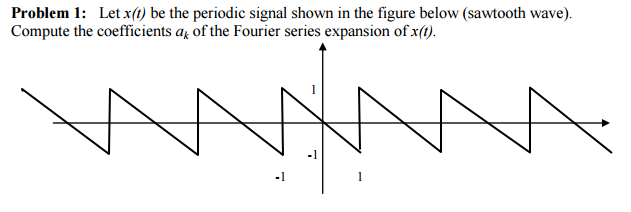
We live in a world of explicate order. Because this order is hard to understand, the events of our lives often seem random, or at least unpredictable. But understanding the implicate order underneath the surface phenomena can give us great insight into how those phenomena will develop. Within this implicate order are the repeating patterns of history.
A sawtooth wave is a pattern like a sine wave, only the rise is much slower and the fall much faster. The sawtooth wave pattern is often seen in Nature, such as when a population slowly grows until it has consumed all available resources, and then plummets sharply. The reverse sawtooth wave is the same except the rise is extremely rapid, and the descent gradual.
Political history follows this pattern of a reverse sawtooth wave. If we imagine that the x-axis is time and the y-axis is the quality of leadership, a distinct pattern can be observed. The quality of political leadership gets gradually worse and worse over time until a revolutionary vanguard of high-quality leaders, excluded from the old system, overthrow that system and institute a new one.
This pattern is so old that Plato was able to write about it 2,300 years ago. Book VIII of Republic recounts the political cycle as observed by Plato. It begins with humanity’s natural rulers – an aristocracy of philosopher-kings – in charge. This leads to an initial state of maximum happiness but, over time, bad decisions are made when it comes to selecting new rulers from among the young people, and the quality of leadership starts to degrade.
The cumulative effect of these bad decisions is that the ruling class comes to think less about wisdom or rectitude and more about honour. This leads to a high-spirited militarism which creates more suffering than the enlightened benevolence of the philosopher-kings. This alone wouldn’t be so bad, if it didn’t lead to further degradation.
The tension between the aristocratic way of governing and what Plato called the timocratic way of governing leads to another step downwards, in the form of oligarchy. Eventually, rulers stop valuing money as an instrument to honour and start valuing it for its own sake. Once money starts determining who may hold public office, oligarchy is in effect.
This isn’t the end. Once money rules, people start using it to indulge their unnecessary desires. This leads to a base form of man taking control – the democratic man. The democratic man follows no higher order. He simply lurches from one whimsy to another. Much like today’s Baby Boomers, the democratic man lives a life of pure indulgence. This has serious consequences, in particular the rise of the tyrannical man.
Once people start living for indulgences instead of virtue, and society loses all discipline, the lowest form of man takes control. This is a man motivated by base lusts and consumed by lawless desires – the tyrant. His spiritual functions are entirely absent. Rule by tyrant leads to immense suffering, especially when contrasted by rule with philosopher-king.
This immense suffering brings about the humility necessary for people to finally listen to the philosopher-kings, instead of indulging their base desires. Chastened by the hangover of their indulgence, the people recognise the philosopher-kings as the most excellent among them, and make them leaders. This aristocratic revolution reinstalls the philosopher-kings as the ruling class, whereupon the cycle begins anew.
In Republic, Plato suggests that this pattern of gradual decline leading to revolution is inevitable, owing to the inevitable imperfections within each successive generation of people. This idea – that perfection existed in the past but decayed as time progressed – is one that the ancient Greeks shared with their co-religionists in ancient India, but not with today’s Westerners.
Most Westerners today adhere to an erroneous view of history that follows a regular sawtooth wave, in which progress is slowly made until resources are exhausted, at which point the system collapses. This regular sawtooth wave pattern is more typical of material phenomena, whereas the reverse sawtooth wave pattern is more typical of spiritual phenomena. It follows that history is fundamentally a spiritual phenomenon.
A modern understanding of political psychology sheds some light on how this could be possible. The potential risk in allowing society to degenerate one step further is small, whereas the potential risk in revolution is massive. Therefore, the temptation is to “kick the can down the road”. The best, most recent example of this phenomenon is the money printing of the last 14 years in response to the Global Financial Crisis.
So the future of Clown World is easy to predict. Our political difficulties, and our suffering, will both further intensify. At some point, people will get so pissed off about it that they decide to risk their lives in revolution. The only people willing to risk their lives so that their kin can avoid suffering are the best of all people, the philosopher-kings.
Before this happens, high-frequency young people will, in ever-greater numbers, reject Clown World in preference of simple lives away from the big cities (presaged today by the Chinese Lie Flat movement). These young people will have realised that money and pleasure do not provide meaningful happiness, following the example of voluntary poverty set by William James and Henry Thoreau. In seeing beyond the trappings of materialism, this cohort will have proven that it is fit to rule.
Away from the degeneracy of the cities, these young people will eventually form their own aristocratic and revolutionary culture, more excellent than anything that has gone before. So when the Globohomo Gayplex collapses, as it always does, these young aristocrats will surge into the halls of power, aided by all those who are glad to see the back of tyranny.
Our current position in Clown World can be understood as a point, found near -1 on the y axis, on a reverse sawtooth wave function. Our currently intense confusion and suffering presages a revolutionary vanguard of philosopher-kings. When the revolution comes and this aristocracy of philosopher-kings are installed as leaders, Clown World will end and a new spiritual golden age will begin.
*
If you enjoyed reading this essay/article, you can get a compilation of the Best VJMP Essays and Articles of 2020 from Amazon for Kindle or Amazon for CreateSpace (for international readers), or TradeMe (for Kiwis). A compilation of the Best VJMP Essays and Articles of 2019, the Best VJMP Essays and Articles of 2018 and the Best VJMP Essays and Articles of 2017 are also available.
*
If you would like to support our work in other ways, please consider subscribing to our SubscribeStar fund. Even better, buy any one of our books!