Ardern Is Only In Power Because National Was Shit

Numerous voices are bitching about the things that the Sixth Labour Government has done since seizing power. Persecution mania has ramped up to the point where many people feel personally aggrieved and targeted by the actions of Jacinda Ardern and her supporters. As this essay will show, the abuses of the Sixth Labour Government are a direct result of the neglect of the Fifth National Government.

People like to complain. Seldom do they like to consider that they themselves may have played a role in what has transpired. Even more seldom to people like to consider that they are part of an interdependent system with, and no more important that, all of the things they hate, compared to which they are like yin to yang.

When John Key’s Fifth National Government came to power, they inherited a number of social issues that had festered for a long time. There were large numbers of Kiwis who were desperate for a change to the housing situation, or the mental health system, or to the medicinal cannabis laws. Many of them had reason to believe that a change in Government from Helen Clark’s autocratic style to a more classical liberal style would bring relief.

All of these people were flat out ignored for nine years.

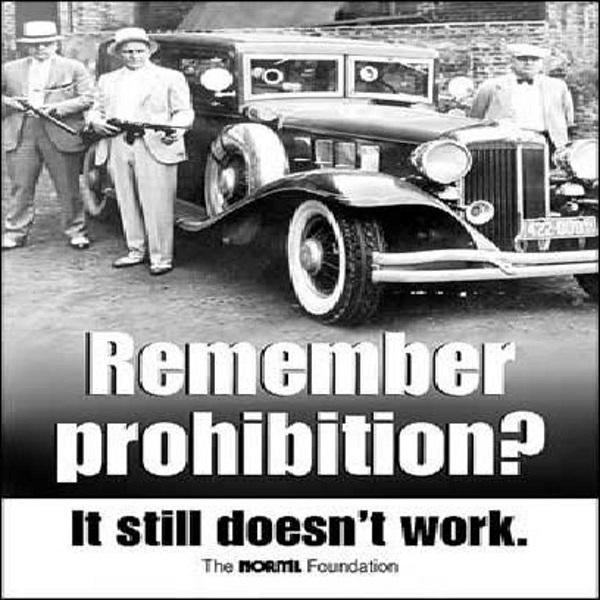
In this act of ignoring people with legitimate grievances, National sowed the seed for their own failure. All National had to do was to acknowledge that spending $400,000,000 per year on enforcing cannabis prohibition was poor fiscal management – a perfectly reasonable argument. That there was no good case to force taxpayers to stump up for the immense cost of enforcing a law that most of them didn’t want, especially when health and infrastructure were underfunded and could have used the money.

But they couldn’t even do this!

If the National Party wasn’t capable of understanding something as simple as the need for cannabis law reform – something that Third World countries like Uruguay understood years ago – then it’s a fair conclusion that they simply aren’t competent. So why not vote them out?

The situation with the mental health system is equally as jarring an example. The Fifth Labour Government didn’t do much to help those who had lost out from neoliberalism, but the attitude of the National Party towards the mentally ill was “just let ’em die.” Key ended his term with the highest suicide rate since records began.

National’s refusal to respect the will of the people wasn’t just a matter of degree. Sometimes it was categorical, as in the case for asset sales, where they were told explicitly that the nation didn’t want them sold, but did it anyway. This is the sort of arrogance that leads thinking supporters to switch allegiances.

So no-one who supported the Fifth National Government ought to grizzle about socialism or communism now. If you’re willing to sit on your arse while your fellows are needlessly suffering, even in cases where they’re not asking you for money but simply an end to the misery, then you’re also willing to accept the consequences of this neglect.

The Labour Party gets consent for the abuses it commits from the neglect shown by the National Party before it. Because one half of the population looked the other way when Kiwis were put into cages for growing medicinal plants, so does the other half of the population look the other way when the right to free speech is violated. The fact that we have the right to both grow medicinal plants and to speak freely is lost.

The great problem, from the perspective of a member of the Kiwi nation, is that this cycle of one bunch of incompetents getting revenge on the previous bunch of incompetents by punishing their supporters – almost all of who are Kiwis – is not helpful.

Labour and National are effectively a one-party dictatorship that has agreed to a power-sharing arrangement between the left and right wing factions. Perversely, the worse one wing of the Establishment Party does, the worse the other wing also gets to do, as there is no alternative to the National/Labour duoligarchy. Thus, anyone complaining about how crap Ardern is must also give some thought to the system that put her in power.

It might be true that Ardern and her Government panicked in response to the Christchurch mosque shootings, and overreacted by working to ban semi-automatic rifles. It might also be true that their actions to violate our right to free speech are obscene and bordering on tyrannical. It might even be true that none of this would have happened if National had still been in power – but National would still be in power if they hadn’t been so shit in the first place.

If we don’t like this arrangement, then the onus is on us to organise ourselves in ways that leave the Establishment no place to step in and take control. One way to do this might be to mutually agree on the sevenfold conception of inherent human rights. If all Kiwis mutually agreed that each other possessed those rights inherently, then we would have the solidarity necessary to enforce them.

*

If you enjoyed reading this essay, you can get a compilation of the Best VJMP Essays and Articles of 2018 from Amazon for Kindle or Amazon for CreateSpace (for international readers), or TradeMe (for Kiwis). A compilation of the Best VJMP Essays and Articles of 2017 is also available.

The Case For Cannabis: Other Acceptable Drugs Are More Harmful

The standard argument is that cannabis is too harmful to be allowed and this is why it has been made illegal. This extreme level of harm is ostensibly the reason why criminal penalties are applied to its possession and cultivation. However, as this article will examine, this argument is hypocritical and dishonest.

There’s no doubt that alcohol and tobacco are more harmful than cannabis. In New Zealand, alcohol is believed to kill between 600 and 800 people every year, mostly from cancer, heart failure and liver failure. This is a horrendeous body count by any standard, even higher than the suicide count and the road toll.

The butcher’s bill for tobacco is even worse – this is believed to kill 5,000 people in New Zealand every year. 1 in every 1,000 Kiwis killed every year by one legal drug can only really be described as carnage. It’s orders of magnitude more destructive than cannabis, which is not conclusively known to kill anyone.

This argument for cannabis law reform is therefore very simple. If alcohol and tobacco do not meet the threshold for causing sufficient harm to be banned, then neither does cannabis. Put another way, if either alcohol or tobacco are acceptable when judged by balance of harm, then so is cannabis.

Others will respond that there’s no reason to add yet another harmful drug to what’s already available.

As mentioned elsewhere, this argument is ignorant of human psychology. People who want to get high will use whatever is available to them. There are no perfectly sober people enjoying their lives right now who are at risk of becoming a cannabis addict after one puff. There are, however, a lot of hard-core alcohol, tobacco and pharmaceutical users who would switch to using cannabis instead if it were available.

In much the same way that voting in an election means supporting one evil for the sake of defying a greater evil, many people use cannabis instead of a drug that is more harmful. In other words, cannabis can serve as a substitute for alcohol. This point has been argued at length elsewhere, but it’s important enough to be worth bring up again here.

If you could reduce the nation’s alcohol consumption by a quarter, you should also reduce the nation’s death toll by 150-200 every year. A proportion of people would use cannabis instead of alcohol if they were given the opportunity, so if legal cannabis would reduce the alcohol intake then it would save lives.

Even if a third of those who gave up alcohol for cannabis died from complications related to cannabis use (a ridiculous idea if one realises that legalisation will mean vaping instead of smoking), this would still represent a saving of 100 or so lives every year. So if other drugs are both more harmful than cannabis and legal, then it makes sense that cannabis should also be legal, because then some people could switch to it.

Some will respond that alcohol and tobacco are “part of our culture”. Well, we cannabis users would respond that cannabis is part of our culture. Certainly no-one asked us what our culture was, and if they had asked, many of us would have told them that we prefer to use cannabis. The people who made the decision are in the pockets of big alcohol manufacturers – they’re not objective judges.

For those of us who are part of the cannabis culture, using cannabis simply fills the same niche as those who recreationally use alcohol or tobacco. We know that it’s slightly physically harmful and can be mentally harmful if misused. Everyone knows this. It’s just that we believe the social, emotional and psychological benefits of recreational cannabis use outweigh the minor harms.

Yet others will argue that “the horse has bolted” when it comes to alcohol and tobacco. These drugs are so widespread that they are now impossible to prohibit.

However, the same is true of cannabis. Cannabis is easier to manufacture than alcohol, and getting hold of seeds is barely more difficult than getting hold of seeds for any other plant. Cannabis is everywhere in New Zealand, and plenty of people are willing to help others get seeds (or even clones) simply to defy the Government. An entire underground culture dedicated to its survival and propagation exists.

If it’s too late to enforce alcohol prohibition, then it’s too late to enforce cannabis prohibition as well.

In the end, the fact that there are drugs that are both more harmful than cannabis and legal is proof that our drug laws are not logical. Indeed, our drug laws are based more on past hysteria than any sober appraisal of the evidence. Cannabis law reform would be the first step in rewriting these laws to achieve harm minimisation.

*

This article is an excerpt from The Case For Cannabis Law Reform, compiled by Vince McLeod and due for release by VJM Publishing in the summer of 2018/19.
The Creeping Normalisation of Political Violence

“Milkshaking” and “Egg Boy” are new terms in the popular mediascape, as minor political violence continues to become normalised. Both of these phrases refer to a spate of minor assaults on anti-Establishment politicians in Britain, Australia and elsewhere. This essay looks at how this phenomenon arose and where it might lead to.

In 2002, the European political Establishment had a serious challenger in the form of Pim Fortuyn. This flamboyant Dutchman was a ferocious opponent of mass Muslim immigration, stating that the Abrahamic cult was “an extraordinary threat”. His attitude was that, as a homosexual, he had a lot to lose from increased Islamic influence in Dutch society, as did women.

Like all anti-Establishment figures, Fortuyn believed strongly in free speech, stating that it was more important than any other freedom. This was probably driven by his (correct) perception that there were many who wanted him silenced.

The Dutch Establishment, addicted to the ready supply of cheap labour that the Muslims represented, responded by throwing all kinds of invective at him. Like Emmanuel Goldstein in 1984, Fortuyn was demonised every day in the Dutch media, compared to Hitler and described as a megalomaniacal psychopath. This steady stream of rhetoric had inevitable consequences.

On 14th March 2002, Fortuyn had a pie thrown at him. This was a minor incident, but it foreshadowed the next move. On the 6th May, he was shot dead by a deranged leftist, who stated at his trial that he didn’t want Muslims to become scapegoats for populism.

The murder of Fortuyn follows the blueprint for how the Establishment defends itself against ideological mavericks. They don’t need to send the Police to arrest men like Fortuyn and put them in concentration camps – those are crude and unsophisticated methods that provoke reactions. Much better to manufacture popular consent for that person’s destruction and let social forces do the dirty work.

The sophisticated, modern method is for the Establishment to use its control of the apparatus of propaganda, in particular mainstream media, to create the impression that the anti-Establishment target simply has to be destroyed for the sake of the greater good, and that anyone who does so will be a hero. It is by way of such encouragement that assassinations have been conducted ever since President McKinley was killed in 1901.

Make no mistake – the Establishment has always supported violence against its challengers. The Establishment has always demonised them, caricatured them as evil and dangerous, blamed them for the Establishment’s own failures and whipped up fear among the masses. It does this primarily through the mainstream media, which legitimises and normalises these sentiments.

They know that if they do this successfully enough, some weak-minded fool will let the propaganda get the better of them and strike out against one of the people that the Establishment has painted a target on. There will always be some young, impressionable idiot who doesn’t have the sense to understand how they’re being manipulated, and many of these are happy to do something obscene for the sake of fame.

So when anti-Establishment candidates in 2019 have milkshakes thrown over them and eggs cracked over their heads, and when the mainstream media lionises the people doing so and justifies their actions, we can observe that this is simply a repeat of the same pattern that the Establishment used to destroy Fortuyn. The Establishment are hoping that the mob will kill their enemies, and are shaping the mob’s behaviour in that direction.

Although no-one has yet tried to kill Fraser Anning or Nigel Farage, there have been several violent attacks on Tommy Robinson, some involving mobs hurling bricks. With the hysteria about Brexit reaching fever pitch, it’s possible that the milkshaking attacks will lead to a murder attempt. The mentality that Farage is destroying Britain by scapegoating the oppressed is not far from the mentality that Fortuyn’s killer possessed.

The Establishment would love nothing more than for another far-left extremist to put a bullet in a Marine Le Pen, a Jimmie Akesson or a Thierry Baudet, because such acts of terror would discourage other nationalists from coming forward to represent their people. The Establishment is unashamedly globalist, and therefore nationalists are anti-Establishment by default.

What the rest of us can probably expect are increasing tensions that eventually lead to outright conflict. It’s as clear as day from the reactions to the milkshaking and egg cracking that the pro-Establishment masses are howling for the blood of those who challenge their masters. They bear massive resentment borne of their own weakness and ineptitude, and they hate to see anyone strong enough to challenge the system.

One can expect that this increase in tensions will lead to further violent actions. Whether this leads to any genuine acts of anarcho-homicidalism are unclear. So far, the attackers are only attacking those who challenge the Establishment, not the Establishment itself. The creeping normalisation of political violence will, however, put the idea in a lot of people’s heads.

Eventually, however, we can predict that something like the Freikorps vs. Communist street battles of 1920s Germany will return as tensions lead to people chimping out. At this point, either things will disintegrate into chaos or someone imposes a new philosophical order. If the former, the violence will be terminal; if the latter, a new Golden Age will arise.

*

If you enjoyed reading this essay, you can get a compilation of the Best VJMP Essays and Articles of 2018 from Amazon for Kindle or Amazon for CreateSpace (for international readers), or TradeMe (for Kiwis). A compilation of the Best VJMP Essays and Articles of 2017 is also available.

The 2020 General Election Will Be The Royal Rumble of New Zealand Elections

Next year’s General Election is going to be the Royal Rumble of New Zealand elections. Everyone wants to play a part in it, but only one can win. It seems that every fortnight a new party casts its hat into the ring. Numbers man Dan McGlashan, author of Understanding New Zealand, explains the electoral ramifications of this large field.

We already know that all of the parties with a finger on the brass ring will try to keep it there or to strengthen their grip. Labour, National, the Greens, New Zealand First and ACT will all get a fat chunk of electoral funding pre-election and mainstream media publicity leading up to it, on account of their current Parliamentary presence. These parties, however, will have to contend with an usually wide field of challengers.

Not only are all the usual challengers present, but so are a range of newcomers.

The Aotearoa Legalise Cannabis Party will run again, potentially taking a seat’s worth of votes from other parties. Despite heavy pressure from the Greens to shut down their operations, the ALCP looks likely to not only run again but to do better than usual. Many people who habitually don’t vote on account of having no confidence in politicians will turn out to vote in the cannabis referendum, and they will be heavily tempted to throw a vote the ALCP’s way.

Green supporters tend to make the lazy assumption that, because the Greens champion cannabis law reform, ALCP voters must naturally have strong sympathies for them. In reality, the bulk of ALCP voters are Maoris and New Zealand-born white people, both of who are highly suspicious of the globalism of the Greens. ALCP voters are also much more rural than the urbanite Greens.

The Maori and Mana parties will be back, as the supporters of both parties have previously experienced the Parliamentary trough and want to be return there. Both of these parties appeal to a slightly wealthier constituency than the Maoris and Pacific Islanders who vote for Labour, which means that the presence of those parties threatens to skim those voters off the current Labour support.

This week brought news that Brian Tamaki of the Destiny Church is having another crack at Parliament. Tamaki already ran in 2005 with the Destiny New Zealand movement, winning 14,210 votes. Although this was less than 1% of the total vote, he seems to have been encouraged enough by the experience, and has entered his Coalition New Zealand Party into the 2020 race.

Tamaki’s voters will no doubt reflect the demographics of his church, which are being pulled apart by the two opposing poles. On the one hand, his constituents are poor, which inclines them to vote Labour, but on the other hand, they are horrified by Labour’s passionate support for the most degenerate aspects of the Globohomo Gayplex. His voters will be those who feel caught in the middle, as they will be most easily persuaded to vote for someone else.

Also running for the first time is the Sustainable New Zealand Party, led by Vernon Tava. This putative blue-green movement seeks to strike a balance between entrepreneurialism and ecomanagement. They are aiming at the centre of the political spectrum on account of their belief that the Greens cannot effectively negotiate from the left of Labour.

As I have written previously, Tava’s movement will compete directly with The Opportunities Party, who aren’t lying down. Although TOP have been beset by internal squabbling, they still have the cash, the profile and the will to mount another campaign. They came about halfway to getting over the 5% threshold last time, and this will enthuse them to try again.

The combined effect of all of these parties will probably be to draw votes away from the Labour Party (in the case of the Coalition New Zealand, Mana, Maori and ALCP parties), from the Green Party (in the case of Sustainable New Zealand and TOP) and from New Zealand First (in the case of the same parties as Labour). None are likely to win representation.

This doesn’t mean that the situation favours National. Not only can they expect to lose some votes to Sustainable New Zealand and perhaps even to Coalition New Zealand, but they have their own new challengers on the right to worry about.

The hard conservative vote will be stretched by the New Conservatives, led by Leighton Baker and Elliot Ikilei. They appear to appeal to the remnants of Colin Crag’s Conservative Party – conservatives who are disaffected by the current direction of things, i.e. reactionaries. They already have a devoted social media following, and they aren’t the only ones contesting the right-wing protest vote.

Alfred Ngaro looks set to run some kind of Christian Zionist party aimed at a demographic that is similar to Tamaki’s, only wealthier. This party will also fight for the votes of those who oppose reform on issues such as abortion and euthanasia. This will mean that the Christian centrist voters will be split over at least three new parties.

If all of this sounds to you like these new parties have very little chance of achieving anything, you’d be correct.

The bizarre irony of our political system is that there is almost no point to setting up on either wing, because the most you can hope for is to win 5% off the largest party on that wing, and what you will realistically achieve is to suck a few percent away and to cause that wing to get less representation in Parliament. Setting up on the left tends to favour the right, and vice versa.

Thus, the net result of all these parties running – and all but certainly not winning any representation – is, ironically, to disenfranchise their own voters, who might have otherwise supported a similar party that did win seats.

In any case, much like the actual Royal Rumbles, New Zealand elections are rigged. Labour and National have set up a system where challenging them is almost impossible. Not only do challengers get a fraction of the electoral broadcast funding that the Establishment parties get, but they also have to overcome a MMP threshold designed to deny momentum to any new movement.

It’s as if Andre the Giant and the Undertaker got together with Vince McMahon and arranged to have them enter the Royal Rumble last and second-to-last, and with a five-minute gap between their entry and the third-to-last competitor.

The realistic mostly likely outcome of having a large number of small parties competing is the complete fracture of the territory they are contesting, i.e. the centre and the far wings. This will mean that the winner of the 2020 Election will be the largest of the remainder of Labour or National. They will win not because of superior policy or popular support, but from having the fewest competitors for their voters.

Most alarmingly, whoever wins might well win an absolute majority, on account of that the centre will be shattered. This will lead to an absence of any moderating force that can act to restrain the majority winner, as New Zealand First did after the 2017 General Election. The possibility of an absolute Labour or National majority in 18 months’ time is very real.

*

Understanding New Zealand, by Dan McGlashan and published by VJM Publishing, is the comprehensive guide to the demographics and voting patterns of the New Zealand people. It is available on TradeMe (for Kiwis) and on Amazon (for international readers).