

What The “Thug’s Veto” Means For New Zealand

Further confirmation that the New Zealand Justice System is comprised of arse-licking cowards was delivered by this week’s verdict in favour of the Auckland Council and Phil Goff, who had last year banned a couple of Canadian speakers from speaking at council-owned venues. Despite the fact that the ban was clearly a breach of the New Zealand Bill of Rights Act, the New Zealand High Court let them get away with it. This article discusses what this decision means for New Zealand.

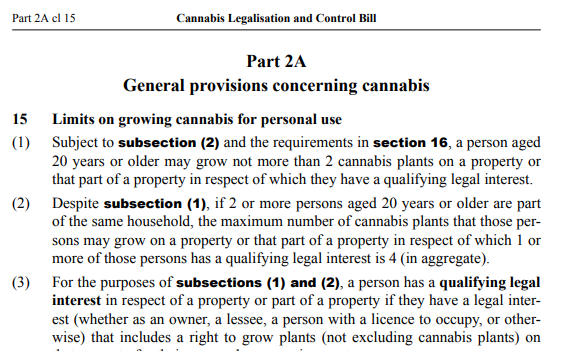
It seems when the men and women of our Justice System aren’t locking up cannabis growers for years while letting repeat sexual marauders go free, they’re busy undermining our God-given and natural human rights.

New Zealanders have the right to free expression and the right to freely share opinions. This right is not only granted by the Will of God, but it’s also written into our Bill of Rights Act, Section 14 of which reads: “Everyone has the right to freedom of expression, including the freedom to seek, receive, and impart information and opinions of any kind in any form.”

We also have the right to freedom of assembly (viz. Section 16: “Everyone has the right to freedom of peaceful assembly.”) and the right to association (viz. Section 17: “Everyone has the right to freedom of association.”) and the right “to adopt and to hold opinions without interference” (Section 13).

Therefore, New Zealanders had the right to attend the Molyneux-Southern talk, and the move to ban it was in violation of those rights.

The High Court decision clearing the Auckland Council and Goff from any wrongdoing sets a very worrying precedent. It’s now official in New Zealand that if you want to silence someone, all you have to do is threaten violence, and that person will be kept quiet out of safety concerns, and then the courts will take your side.

This is not the first time such a thing has happened. In Nelson last year, author Bruce Moon had been due to give a talk at the Nelson Public Library, but it was cancelled on account of threats made to library staff.

Neither those whose threats cancelled the Molyneux-Southern event nor those whose threats cancelled the Moon talk were ever prosecuted. This is astonishing – and deeply worrying – because both acts were undeniably acts of terrorism. Using the threat of violence to deny New Zealanders the right to assemble peacefully and to peacefully share ideas is terrorism by any honest standard.

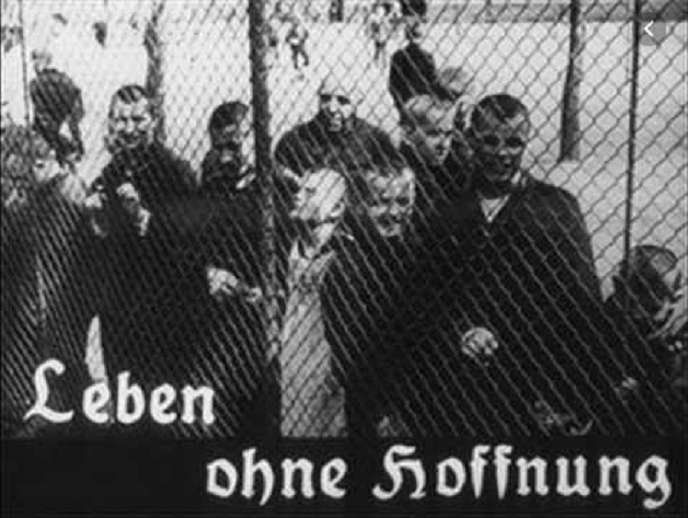
What these two cases have in common is that, in both cases, the alt-left were the terrorists and they were motivated by a desire to silence those they perceive as political enemies. Central to alt-left mentality is a persecution mania revolving around a supposed Nazi resurgence. This persecution mania leads to alt-leftists justifying all kinds of abuses in the name of the greater good (yes, history repeats).

The worry for many, especially those who understand how free speech is absolutely vital to the correct functioning of civilisation, is that the cowardly High Court decision will give the greenlight to further threats of violence. Now that it’s possible to silence your political enemies by threatening violence, more of society’s dregs will be motivated to do it.

This is of particular concern to us, being a media enterprise that champions free speech. VJM Publishing, despite a committed adherence to alt-centrism, is in no way exempt from being targeted by the alt-left, as our Fan Mail column proves (we have also been targeted by the Human Rights Commission). Therefore, a High Court ruling encouraging violence against those perceived to be enemies of the alt-left must be cause for concern.

All of this is part of a wider leftist rejection of free speech as a tool that upholds oppression. As those who identify with the left continue to sink into Slave Culture, they will become ever more resentful of those with the ability to freely discuss intellectual ideas about political issues that concern them. This resentment, coupled with the High Court’s approval for threats of violence, means that future attacks on free speech are likely.

Unfortunately, as this column has previously mentioned, the left doesn’t care about free speech, or much else to do with freedom. They have happily drifted into authoritarianism, and they now fight for that. This week’s victory for the authoritarian left is a loss for New Zealand. The rest of us can only hope that the judgment is overturned on appeal.

*

If you enjoyed reading this essay, you can get a compilation of the Best VJMP Essays and Articles of 2018 from Amazon for Kindle or Amazon for CreateSpace (for international readers), or TradeMe (for Kiwis). A compilation of the Best VJMP Essays and Articles of 2017 is also available.

If you would like to support our work in other ways, please consider subscribing to our SubscribeStar fund.
The Political Struggle of Our Time is Globalism vs. Nationalism

A recent United Nations gathering saw the two new political extremes face off against each other. These extremes represent the two competing sides in the great struggle of our time, which is not royalty versus the nobles and neither is it the capitalists versus the workers. The struggle of our time is globalism versus nationalism.

Globalist darling Jacinda Ardern essentially laid out the globalist agenda at her recent speech to the United Nations. It calls for excoriation of white people and their history, promotion of Islam, crackdowns on free speech (especially criticism of religion) and open borders. It’s tantamount to a declaration of war against the people of the West.

Ardern said in this speech “We are borderless.” This is a point that cannot be overemphasised. The globalists do not believe in national borders. They do not believe in the right to national self-determination. Every nation is to be used as the globalist elites see fit, for the “greater good”. In much the same way that every plot of land (and the serfs that come with it) is ultimately the property of the feudal lord, so is every nation (and the tax money that comes with it) the property of the globalist elite.

The globalist creed could run: From each nation according to its ability, to each nation according to its need.

American President Donald Trump stands as the counterweight to this globalist wave. His speech was the opposite to Ardern’s – he said “If you want peace, love your nation,” and “The future does not belong to globalists.” Unrepentantly a man of and for the American people, Trump criticised globalist mentality at several points. For Trump, the nation is, as it once was, the wider kin group – essentially an extended family.

If Ardern’s speech was a declaration of war against the peoples of the world, Trump’s was a declaration of war against the globalists.

The Trump-Ardern dichotomy reflects the new fundamental division in the political world. The capitalists and the Communists found some kind of postwar accommodation by coming together under the banner of globalism in the name of materialist economic growth. This put the Nazis, who had become extremely unfashionable on account of World War II, on the side of the common people in the new battle lines. This is one of globalist elites versus nationalist everymen.

The globalists are a coalition of the victorious forces from World War II. One half of them are capitalist interests with no loyalty to any nation, and the other half are Communists who see the nation-state as something to be actively destroyed as an impediment to the establishment of a world government. They disagree on much, but they also agree on a lot. They are both materialistic, with no sense of God or any higher purpose, and they both believe in open borders for cheap labour.

Globalism is in no way the same thing as either left or right. It’s a new dimension entirely. Both the left and the right can agree that they want the mass importation of cheap labour – they only disagree on the reasons for it. The left wants to do it to help bring about a world government, the right wants to do it to drive down native wages and to destroy solidarity among the working class.

Seen in this context, the tensions around Brexit make much more sense. The reason why the Brexit issue has inflamed such passions is that it runs along the same fault line as the globalist/nationalist split. The globalists want Britain to remain in the European Union, as they see any move to consolidate power supranationally as a move towards a world government. The nationalists want Britain to leave the European Union for the sake of regaining national sovereignty.

The Brexit battlelines throw into stark relief the existence of the capitalist-Communist alliance fighting together under the banner of globalism. All of the major British banking interests came together with the Marxists to oppose Brexit, whereas nationalist and anti-Communist forces came together to support it.

This globalist/nationalist division has certainly come to New Zealand. As Dan McGlashan has previously pointed out for this column, forces within New Zealand could conceivably come together in support of globalism. It’s even possible to argue that the vast majority of Parliament align with globalism, despite that the population does not (a recent poll on the VJM Publishing FaceBook page found 84% of readers in favour of nationalism and only 16% in favour of globalism, from 179 responses).

In a way, it’s all but inevitable that an ambitious person from a small country will tend towards globalism. New Zealand simply isn’t large enough to meet the ambitions of Jacinda Ardern, much as it wasn’t for Helen Clark. John Key is another – his working life was mostly spent outside of New Zealand, perhaps explaining why he thought so little of impoverishing entire swathes of the population.

The problem with this fashion for globalism is that it really is a form of treason. The people who support globalism are working in the service of foreign interests at the detriment of the interests of their own people. Ardern is asking us to open our arms to barbaric cultures that bring poverty and violence with them wherever they go. She’s asking us to bow our heads to those who would slice them from our necks.

This passive surrender in the face of an expansionary evil is something that naturally evokes rage among those who would take a more masculine approach. This is why British MP Jo Cox was stabbed to death by an enraged nationalist, and it’s why German politican Walter Luebcke was executed. Both of these acts were arguably acts of anarcho-homicidalism and therefore not murders – and the sentiments that provoked them are only growing stronger.

The Brexit situation might not be resolvable without bloodshed, because such an outcome is always on the cards when one has a minority who refuses to accede to majority will. The globalist/nationalist struggle has replaced left/right and status quo/change as the new political faultline in the world. It may even delineate the front lines of a coming civil war.

*

If you enjoyed reading this essay, you can get a compilation of the Best VJMP Essays and Articles of 2018 from Amazon for Kindle or Amazon for CreateSpace (for international readers), or TradeMe (for Kiwis). A compilation of the Best VJMP Essays and Articles of 2017 is also available.

If you would like to support our work in other ways, please consider subscribing to our SubscribeStar fund.

Weapons of Mass Psychological Destruction

The phrase “Weapons of Mass Destruction” evokes a special horror, with thoughts of Hiroshima and the incineration of a hundred thousand people in a matter of heartbeats. The geopolitics of today have made the use of such weapons impossible, but this only affects the physical realm. In the psychological realm, weapons of mass destruction are still being employed. This essays discusses some of these weapons of mass psychological destruction.

There are four basic ways to enslave a person or group of people. The two physical ways are through threats of starvation and violence, but there are also two psychological ways. These are confusing the mind and confusing the spirit. In the same way that weapons of mass destruction can destroy people in the physical realm, so too do weapons of mass psychological destruction destroy people in the intellectual and spiritual realms.

The primary weapon of mass psychological destruction is the mainstream media, in particular the television, but also YouTube to a major (and increasing) extent. The mainstream media serves the purpose of delivering disinformation to the people, so that they can no longer tell truth from fiction. It does this both by lying about the truth and by selective focus on the truth.

Because humans are naturally trusting, most people believe that the mainstream media is a reliable source of information, or that if manipulation exists it is only minor and easily countered. Consequently, if the television states something as true, then it is taken as true. Anyone questioning the authority of the television risks becoming ostracised, which is how the ruling class keeps people in check when they can’t imprison or starve them.

The mainstream media serves as a weapon of mass psychological destruction by telling lies that misdirect the will of the people. Instead of telling them who is really to blame, the media funnels rage towards a panoply of petty criminals. By such means, a racist remark to a waitress becomes a national scandal, while the theft of an entire generation’s wealth goes without mention.

The publishing industry is very much a part of this. As Otago University Professor James Flynn discovered this week, the mainstream publishers will simply refuse to publish anything that’s too honest. Professor Flynn’s book about free speech revealed a brutal truth: the mainstream publishing industry censors information in order to shape public opinion to suit its agenda.

Because the mainstream media is owned by foreign banking and finance interests, the crimes of those interests are covered up by that media. Only the alternative media reports on the fact that the nation is being plundered by foreign banks, with a massive transfer of wealth away from New Zealanders to the shareholders of those banks. ANZ alone made almost $2 billion in net profit last year – $500 for every Kiwi adult.

The second major weapon of mass psychological destruction is the school system. The school system conditions people, much like lab rats, to be submissive to authority. Over the course of a decade or more, children are punished for doing, saying or thinking anything that they have not specifically been given permission for.

This is a true weapon of mass psychological destruction because it makes it possible to manufacture consent for all manner of Government atrocities. Had it not been for the normalisation of the Prussian style of schooling to meet the needs of industrialisation, the mass slaughters of the first half of the 20th century may have been impossible. A population conditioned into obedience is liable to do anything without hesitation.

Today’s world doesn’t condition people for physical warfare, but it conditions them for the psychological warfare that is characteristic of our age – the propagandising, the relentless advertising, the passive and cowardly nature of our political discourse. In particular, it conditions them to sit and passively absorb such information under the assumption that it’s coming from an authority and is therefore true.

The school system punishes children for the slightest refusal to submit to authority. For over a decade, children are conditioned to surrender all day, every day, their every thought and action determined wholly by the will of the relevant authority. By the end of school, children have been so brutalised that they can’t offer the Government or their employer any meaningful resistance.

The Government serves as a third way that weapons of mass psychological destruction are employed against the populace. The Government passes arbitrary and immoral laws that serve to set people against each other, with the honest half of the population defying such laws and the submissive half obeying them. This puts them at each other’s throats, making ruling over them easy.

They also take from the productive to finance a variety of schemes. Although many of these schemes increase the productivity of the populace (such as healthcare and infrastructure), many of them pointedly do not (such as enforcing cannabis prohibition and importing Third World refugees). By such means is the people’s wealth wasted, making it harder for them to achieve independence. The frustration and humiliation that this engenders also promotes submission.

The Government teaches people that the course of their lives are not decided by them, but dictated from above by powers the people have no control over. The people learn that laws such as cannabis prohibition just have to be surrendered to. By these means, the actions of the Government serve as a weapon of mass psychological destruction that saps the people’s will to resist the predation of the ruling class.

The purpose of deploying all of these weapons against people is very simple – it’s the usual story of greed. There are limited resources on this planet, so we either have to share them or force each other into positions of dependency. The people who have arrogated to themselves the position of ruling class want to have the power to not share those resources. Consequently, we must fight for social position.

Weapons of mass psychological destruction are a much greater problem, in today’s world, than weapons of mass physical destruction. The latter can’t realistically ever be used, whereas the former are continually employed against the peoples of all nations of the world by their ruling classes. These weapons of mass psychological destruction make it much harder for those peoples to resist oppression and exploitation, primarily by undermining our solidarity and capacity to organise.

*

If you enjoyed reading this essay, you can get a compilation of the Best VJMP Essays and Articles of 2018 from Amazon for Kindle or Amazon for CreateSpace (for international readers), or TradeMe (for Kiwis). A compilation of the Best VJMP Essays and Articles of 2017 is also available.

If you would like to support our work in other ways, please consider subscribing to our SubscribeStar fund.

The Sixth Labour Government Kicks The Kiwi Working Class In The Guts – Again

Any last hope that the Sixth Labour Government was still operating on behalf of the New Zealand working class was dashed earlier this week by the announcement of new working visa rules. “Up to 30,000 businesses across the country will benefit” from Labour’s latest kick to the guts of the marginal workforce. This essay explains.

Immigration Minister Iain Lees-Galloway claims that the new work visa rules will “assist between 25,000-30,000 businesses to fill shortages.” Unsurprisingly, the mainstream media is spinning this as a victory for New Zealand businesses, which it undoubtedly is. What they don’t mention, however, is how it’s a commensurate loss for the New Zealand working class.

As this page has previously pointed out, the wage of working-class people is a function of the supply of cheap labour. Increase the supply of cheap labour, as the “Labour” Party have done here, and you weaken the bargaining position of the working class. The more cheap labour there is, the greater the choice for the employers – and they will choose the cheapest labour they can, this being one of their greatest expenses.

The way the economy is supposed to work is that labour shortages force businesses to increase the wages they pay, which leads to marginal workers becoming attracted to those offers. The way the economy works in Clown World is that labour shortages cause employers to go crying to the Minister of Immigration, who fast-tracks visas for cheap labour to move here and undercut the native working class.

The sad truth is that the Labour Party is just as neoliberal and just as beholden to corporate interests as the National Party is – and neoliberals love mass immigration. The only difference is that the Sixth Labour Government is willing to throw the working class a bone in the form of a Winter Heating Allowance, a referendum about cannabis law reform or a bit of money to our mental health system (or what passes for it).

When it comes to actually running the country, however, they’re still very much in bed with the large New Zealand employers, and they still run the country more or less on instruction from those employers. The sad irony is that there was once a time when the Labour Party did stand for the New Zealand worker, and would have heavily criticised a move like this had it been National who brought it in.

Today’s Labour Party is unrepentantly the heir of Rogernomics. Protecting the negotiating position of the New Zealand worker is of no interest to them. Neoliberalism is still very much the way forwards, and the ever-rising suicide rate just something to be shrugged off, despite that adverse economic conditions contribute greatly to it.

The New Zealand media plays an essential role in manufacturing consent among the public for moves like these. Being entirely owned by foreign finance companies and banking interests, the media is beholden to people who profit handsomely from mass immigration driving up housing prices, increasing demands for mortgages and lowering wages.

This is why the media constantly runs stories with titles like “Growers say fruit will rot unless govt speeds up migrant worker decision,” “Labour shortage as Auckland construction ‘goes off’,” and “Why horticulture industry is facing a labour shortage.” These stories are effectively propaganda pieces, run on behalf of corporate interests, to massage the New Zealand population into accepting the mass importation of cheap labour.

Notably, no trade unionist was asked for their opinion on the Government’s move.

One of the stories linked above quotes ACT Party leader David Seymour as saying there simply aren’t “enough New Zealand workers willing to pick [the fruit].” This is a complete lie, because it leaves out half of the equation. Seymour’s sentence makes no mention of the wages being offered. The full sentence should read “enough New Zealand workers willing to pick at the wages being offered.”

Seymour, the consummate neoliberal, loves nothing more than importing cheap labour for the benefit of capital interests and at the expense of the native working class. As Dan McGlashan showed in Understanding New Zealand, no other party has a higher proportion of foreign-born voters than ACT, with a correlation of -0.74 between being born in New Zealand and voting for ACT in 2014.

Short-term opportunism can be expected of Seymour, who knows no loyalty other than to the dollar. It’s a real shame when this mentality guides the actions of the supposed social democrats. If the Labour Party won’t take measures to strengthen the negotiating position of the New Zealand working class, then who will?

The alliance of politicians, corporations and media make it all but impossible for the New Zealand worker to get a fair deal today. Given that the cost of housing is rising much faster than wages, which are already nowhere near high enough to buy houses on, a fair deal seems like it’s getting even further away. An entirely new socioeconomic arrangement is becoming necessary, perhaps one based around a universal basic income.

*

If you enjoyed reading this essay, you can get a compilation of the Best VJMP Essays and Articles of 2018 from Amazon for Kindle or Amazon for CreateSpace (for international readers), or TradeMe (for Kiwis). A compilation of the Best VJMP Essays and Articles of 2017 is also available.

If you would like to support our work in other ways, please consider subscribing to our SubscribeStar fund.