

A Former Black Magician Provides a Magical Analysis of the Christchurch Mosque Shootings

Mass killings almost always have the effect of spreading terror throughout the population that was slaughtered. Most of the time, this terror is the intent of the act. When it is, the killings could be said to be black magic rituals, acts of Greater Magic intended to force the will of the perpetrator onto all the people who observed it. The Christchurch mosque shootings of March 15 can be considered such a deed.

According to one perspective, there are three elementary kinds of magic. The kind that I am interested in here is black magic. This uses the power of fear to cause change in others according to the will of the magician. The other kinds are white magic, which takes fear away, and grey magic, which causes confusion.

The easy way to understand black magic is to understand it as intimidation. It’s why the Police wear uniforms, and caps with black and white chequered bands, and why security guards wear black t-shirts and shoes with thick soles. It’s why the Undertaker wears black, why the Waffen-SS wore black, and why it was said by Gareth Edwards of the All Blacks jersey that “There is something about the blackness of their jersey that strikes fear into your heart.”

Black magic could also be understood as the art of domination. A successful black magician is dominant because of the fear that other people have for them. The best way to intimidate and dominate a person, of course, is to cause them direct physical and personal injury, or credibly threaten to. If they are not able to retaliate to this then they will be forced to submit.

The Christchurch mosque shootings were black magic rituals intended to strike fear into the hearts of certain populations in New Zealand. In this sense, they were much like the John F Kennedy assassination and 9/11. The hope was that the killings would incite submission. This is the most effective way to understand them, and to explain both the actions of the shooter and the response of the nation. Furthermore, it allows us to predict the future.

Jacinda Ardern, and the New Zealand mainstream media, being atheists and non-believers in magic, made a number of grave errors in the aftermath of those shootings. They made these errors because they did not account for being in the domain of magic. Some decisions, although they may have made sense from the perspective of being nice and soothing tensions, didn’t make much sense from the perspective of countering black magic.

When Ardern decided that the name of Branton Tarrant shall not be spoken in polite company, she raised his black magic power to the level of Voldemort from the Harry Potter series. Oddly, there’s a scene from Harry Potter and the Sorcerer’s Stone in which Harry is told: “Call him Voldemort, Harry. Always use the proper name for things. Fear of a name increases fear of the thing itself.”

This is advice that Ardern should really have heeded. When she spoke to Parliament and made a particular effort not to mention Tarrant’s name, she demonstrated that the nation had collectively shit itself in response to the shootings. We showed that they had affected us very deeply and that we were greatly shaken. Tarrant was living rent-free in our heads.

The problem with this, from a black magic perspective, is that is shows vulnerability, and vulnerability attracts more cruelty. I’ll repeat that again: vulnerability attracts cruelty. A lot of people don’t like to accept this, on account of that it is so cruel, but it’s nevertheless how things work. Black magicians like to seek out vulnerability because it means that their magic will have a greater impact.

So any budding black magicians out there, thinking of a way to make their actions as powerful as possible, may have observed Ardern’s response, and taken note of the vulnerability displayed. This is a very bad sign, because it predicts a high likelihood of future attacks, whether follow-up moves by white nationalists or reprisals by Islamists.

After all, Tarrant himself was the victim of a previous act of black magic: the Drottninggatan truck attack in Stockholm in 2015 that left three dead, including an eight-year old girl named Ebba Åkerlund. Images of Åkerlund’s body torn into several pieces left a powerful impression on many Internet dwellers, in particular those on the chans. Tarrant was affected so heavily that he mentioned it in his manifesto.

The downside of black magic, of course, is that if the intended victims of it do not submit then their fear will turn naturally to hatred. When it does, it’s possible for cycles of revenge attacks to arise, and even to become normalised. The horror of the Drottninggatan truck attack was insufficient to cause Tarrant to submit, and as such it turned to the hatred that we saw expressed on March 15.

The way to counter black magic is with fearlessness. London’s response to the 7/7 bus attacks of 2005, which killed 56 people, is the model to follow. Instead of the response that Vince McLeod dubbed “The Great New Zealand Chimpout“, the British response made a point of being business as usual, thereby denying the perpetrators the emotional impact that they desired.

It was noted by all that various criminal gangs, in particular the Mongrel Mob, took a front and centre role in the community response to the shootings. The most visible response involved leading a public haka. The haka needs to be understood, in this context, as a black magic ritual. Its purpose is to demonstrate to the enemy your vigour, determination and unity of purpose. In this, a haka is little different to any other war dance.

The point of performing a haka after such a mass shooting was to demonstrate to the unseen “bad guys” out there that we are strong, we are ready and we are willing to fight. We will not be cowed. This is often the context in which a haka was performed in pre-contact New Zealand: someone would spot a member of an enemy war party in the bush, alert the others, and a haka would be performed to show that enemy that they were going to die if they continued to intrude. This was understood as black magic and called mākutu.

Certainly the New Zealand nation is currently in a state of extreme fear. Acts of national unity are necessary, but they have to be carefully considered owing to the extreme circumstances. In that regard, Tarrant’s actions have to be considered one of the, if not the single most, powerful acts of black magic ever performed in New Zealand. The only real comparison in recent history would be the Rainbow Warrior bombing, which only killed one person.

If the New Zealand nation wants to go forward without attracting further black magicians, and further ritual sacrifices (no matter who conducts them), they need to demonstrate that they are not afraid of death. This is chiefly done by enjoying life, and continuing to enjoy life as we had done before the shootings. Full attendance of Super Rugby games is one example. This will demonstrate to all the black magicians out there that we are not weak and not to waste their efforts on us.

*

Viktor Hellman is a regular contributor to VJM Publishing and author of the upcoming Anarcho-Homicidalist Manifesto.

Red Pill, White Pill, Blue Pill, Black Pill

There are many theories that describe the change in personality traits over generations. The most well-known is the Strauss-Howe conception of generations that gave us terms like “Baby Boomer”. Local anarchist philosopher Rick Giles has expanded on this conception, giving us a spiral idea of history based around the ebb and flow of moral cycles. This essay attempts to map both these theories onto the “pill theory” of modern Internet culture.

The Red Pill-Blue Pill dichotomy is a metaphor seen everywhere on the Internet of today. It is based on the famous scene from The Matrix, the film that made a powerful impression on Generation X and, consequently, Internet culture. In this scene, the character Morpheus offers the protagonist Neo a choice of one of two pills: a blue one that will send him back to the dream world of being a normal person, and a red one that will awaken him to the truth of reality and show him “how deep this rabbithole goes”.

It’s a metaphor that hearkens back to Plato’s Cave and the mystery schools before that. The idea is that anyone who has taken the red pill is someone who has voluntarily accepted the truth of reality, no matter how terrible, and who has escaped delusion. They are therefore enlightened, so much so that their lives are now fundamentally different to the bluepilled. Thus, ‘bluepilled’ is effectively a synonym for ‘unenlightened’, ‘gullible’ or ‘a sucker/pleb’.

A related conception is the dichotomy of the White and Black Pills. These serve as rough spiritual metaphors. The idea is that anyone who has taken the white pill is optimistic, full of life, happy and positive. The blackpilled, by contrast, are pessimistic, morbid, depressed and emo. One way of characterising this axis is using the Bloomer and Doomer images, the former blossoming like a spring flower, the latter seeing death and decay around every corner.

As this essay will now demonstrate, it’s possible to map the Blue Pill-Red Pill-White Pill-Black Pill quadrichotomy from popular Internet culture onto both Strauss-Howe’s and Giles’s conceptions of human generational change.

The generation that fought in World War II are the red pilled. They got redpilled harder than anyone since could really understand. It’s impossible to have any illusions when you are facing an artillery barrage or a Panzer charge – you appraise reality accurately and act accordingly or you die, simple as that.

As the war was winding up, they naturally got together, first in their companies and then in their Returned Services Associations, and asked themselves what the fuck the whole war was really about, and who was ultimately to blame. Eventually, they came to understand that the whole idea of a heroic narrative was a complete sham, designed to manufacture consent for a war that really only benefitted arms manufacturers, bankers and politicians. To understand that the world works like this is to be redpilled.

Commensurate with being red pilled is a somewhat traumatised disposition. As a highly social, highly traumatised generation, they hit the booze, and hard. Theirs is an Honour Culture in Giles’s conception, because they risked everything for what they have, and only very rarely complain or show pain or weakness.

The Silent Generation are the white pilled. They grew up during the Great Depression, and so became accustomed to having very little. This has meant that they instinctively feel gratitude for the plenty that we currently do have. They also grew up hearing about how the previous generation saved the world from terrible evil, so they grew up believing that they lived in a society where their forebears only wanted the best for them and where authorities could be trusted.

They are white pilled because they are naturally the most optimistic. This generation grew up with the suspicion that God may well have favoured the Anglo-American style of governance over its German, Soviet and Japanese alternatives. For them, everything works out in the end, and success is simply a matter of continuing long enough.

Their characteristic drug is tobacco, which is appropriate because they are a social generation, and also for the reason that you have to be whitepilled to smoke tobacco because you have to ignore the likelihood that it will kill you. Theirs is more of a Dignity Culture because they haven’t had the need to fight quite as hard as the World War II Generation. They’re not inclined to butt heads over honour; they would rather let things slide.

The Baby Boomer generation is bluepilled. They are Cypher from the Matrix. They don’t care at all about thinking or struggling to overcome, they just want an easy ride and someone to wipe their arse when they get old. For them, staying informed is a simple matter of switching the television on and being told what the truth is. They have a vague sense that reality is truly terrible, so it’s best to not look too deeply into things.

Their problem is that they are essentially doubly gullible. Not only are they not aware of how reality works, having been raised by televisions in an age of wealth, but their parents weren’t redpilled either, having lived in an age of plenty. The Boomers don’t really get it at all, which is why their characteristic drug is opiates. Preferably administered rectally by cheap immigrant labour.

The bluepilled don’t want to think, they just want their entitlements. This is why they correspond to a Victimhood Culture in Giles’s conception. Every obligation they are made to feel is considered an unreasonable imposition, and they deeply resent the implication that they’ve fucked up the world. Their greatest fear is someone cutting their pensions.

The offspring of the Boomers, Generation X, are the black pilled. This is the natural result of having bluepilled parents. Because their parents wanted nothing but the easiest ride possible, they didn’t end up passing on as much knowledge as they could have. Indeed, Generation X were pretty much left to it, many becoming “latchkey kids” who had both parents working. They felt that their parents not giving a shit, and that led to them not giving one either.

Among Generation X, the highest moral value is not giving a shit. This manifests in an exaggerated sense of coolness. To give a shit about anything is to be uncool, which is to be shunned. This is why grunge was so popular among this generation’s teenage years, and why they have been so apathetic towards politics and religion. Apathy means that you can be trusted; ambition means that you might abandon them like their parents did.

Generation X is a natural slave cohort, which is the result of their apathy towards politics. Because they have shunned those who tried to understand the political world and to organise, they are almost completely bereft of both guidance and power. Their characteristic drug is cannabis, because once you realise that there truly is no hope and that no-one gives a shit, you might as well just spark one up and enjoy your day.

It’s not clear how the Millennials will end up defining themselves, because at the moment they seem to be an extended form of Generation X, replete with nihilism and apathy. At some point, one would expect there to be a revolution so that some kind of Honour Culture reasserted itself, but whether this will come at the hands of the Millennials or of a generation that comes later remains to be seen.

What can be predicted is that the nihilistic apathy of the younger generations today will lead to a cataclysm of some kind. It might be military in nature, it might be climate-related, or it might be simple revenge on the Boomers. Whatever happens, the generation that follows the bloodshed will be redpilled, and the cycle will begin anew.

*

If you enjoyed reading this essay, you can get a compilation of the Best VJMP Essays and Articles of 2018 from Amazon for Kindle or Amazon for CreateSpace (for international readers), or TradeMe (for Kiwis). A compilation of the Best VJMP Essays and Articles of 2017 is also available.

A Sevenfold Conception of Inherent Human Rights

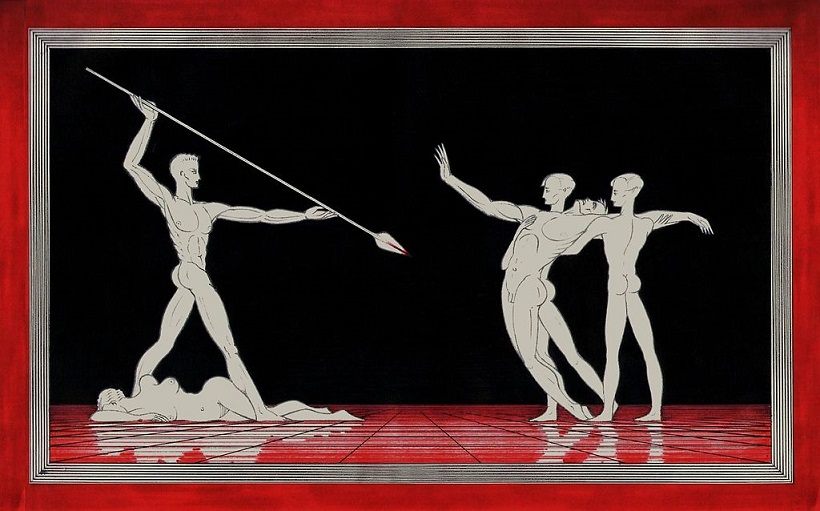
In this age of tyranny and chaos, many people have lost their natural understanding of the inherent rights of human beings. Many of us have strayed so far from reality, and drifted so far into slave morality, that we honestly believe that rights are granted by the goodwill of the Government. This essay will argue that human rights are not only inherent, and necessary for any civilisation to exist, but also that they are sevenfold, at three different levels of resolution.

To understand our inherent rights, it is necessary to turn to a philosophy that accurately describes reality. We do so here with reference to elementalism, in particular the hierarchy of the four masculine elements. The four masculine elements are clay, iron, silver and gold, in ascending order of rarity and value.

Clay is the most fundamental of the masculine elements, and represents the feminine realm of Nature. In this sense, it represents the rights relating to a person’s life, their right to life and their right to self-ownership. Inherent human rights in the realm of clay means that people inherently have the right to life.

Applying the paradigm of clay to human rights tells us that the State does not have the right to kill its citizens, and neither may it claim right over a person’s body without that person’s consent. The Government may not use the people for medical experimentation, and neither may they be conscripted, whether as soldiers or labourers.

More specifically, the Government ought not to levy taxes on basic food produce, and neither should they interrupt the right of people to gather food and water from the wilderness, because both processes are essential for life. Some would go as far as to argue that the State ought to supply a universal basic income to compensate for the imposition of private property.

Iron is the next most fundamental element, and refers to the masculine realm of war and defence. Inherent human rights in the realm of iron means that people inherently have the right to physical self-defence. They have the right to own and carry weapons, both to protect their own person and their home. They also have the right to expect that the State will act to defend the physical integrity of the nation, and that it will act to protect their private property.

It is also recognised here that the people themselves are the ultimate guarantor of their rights. The realm of iron is the realm of masculine wisdom, and here it is understood that the Government is not always the friend of the people, and is all too often its enemy. Being wisdom, and not excess, there are limits here: people may only harm others if those others are posing a direct, immediate and actionable threat.

Anarcho-homicidalism is enshrined as a right under the realm of iron. The people are never obliged to be slaves – this right is absolute and fundamental. Therefore, they have the right to take any measures necessary to resist enslavement – up to, and including, killing their enslavers. The point at which it is necessary to do so is a question for the people themselves, and never a question for their government.

Silver is the first of the precious masculine elements, and refers to the realm of the mind and intellect. Inherent human rights in the realm of silver means that people inherently have the right to pursue and to discuss the truth. This is otherwise known as the “right to free inquiry” because it is in the nature of gentlemen, when their baser duties are discharged, to discuss such things.

This implies that the rights of the people to freely research, read, discuss and impart information shall not be restricted, except in cases where there is an immediate risk of physical suffering (i.e. incitement of violence). People must always have the right to gather to discuss subjects and to impart information to each other. The State has no right to interfere with a person’s life because they expressed a certain piece of information, whether fact or opinion.

These rights mean that institutions like the Office of Chief Censor are to immediately be abolished. Nothing is to be censored, however certain information might be classified as unsuitable for some audiences, in that exposure to it may cause them harm. Note that, with the realm of iron, there are limits to rights here: the right to free speech does not legalise fraud, nor outright lying for the sake of defamation.

Gold is the most precious of the masculine elements, and refers to the realm of consciousness and God. Because God is more fundamental than language, and therefore cannot be spoken of, it’s not easy to speak about what inherent rights a person has in the realm of gold. Like gold, these rights are precious, and sometimes very rare. In principle, the paradigm of gold here relates to the rights to religious and spiritual freedom.

Inherent human rights in the realm of gold means that people inherently have the right to conduct any ritual, and to consume any spiritual sacrament, that they believe will get them closer to God. These rights are subject to the three more fundamental rights, in that they cannot infringe on any other person’s free speech (i.e. no blasphemy laws), they cannot infringe on any other person’s bodily integrity (i.e. no infant genital mutilation) and they cannot infringe on any other person’s right to life (i.e. no convert or die).

This means that the State has absolutely no right to restrict the consumption and sharing of spiritual sacraments such as cannabis, psilocybin and DMT. No-one has to go through a court and argue that these substances are part of any recognised religious tradition – they simply have the inherent right to use them. Citizens inherently have the right to take any action they feel will bring them closer to God, as long as it does not cause suffering to others.

It is also recognised here that rights are granted by the Will of God, which is more fundamental than the right of any human institution, whether governmental, ecclesiastical, military or otherwise. Therefore, because these rights are granted by God, no such institution can rightly take them away. If it tries to, the people have the right to resist, and they have God’s approval to do so. These rights are inherent to the nature of reality, which is something more fundamental than human governments.

There is another layer behind these four masculine elements. It could be said that, in the same way that the four masculine elements divide into base and precious, so too do our rights divide into a base right that can easily be understood by all people, no matter their intellect, and a precious right that that is harder to grasp but which must be fought for with a determination befitting its value.

The fundamental feminine right, then, relates to the physical world. It is the right to not suffer physically at the hands of the State; the right to physical liberty. What this means in practice can be seen be examining the realms of iron and clay. We can summarise it as the right to bodily integrity, or the right to not have one’s bodily integrity harmed by the State.

The right to physical liberty means that people have the fundamental right to decide how their bodies are used, and what goes into them, and what stays in them – this is known as the Base Right because even animals intuitively understand it. The State does not have the right to impede the physical security or harm the physical integrity of its citizens, whether at the group or individual level. Neither does it have the right to impede their access to territory, unless suffering should be caused by doing so.

In practice, this means that the State does not have the right to interfere with the reproductive rights of its citizens. It cannot mandate a limit to family size, for example, and neither can it prohibit abortion. Nor can it force vaccinations on people, or any health treatment on people, without their consent – the Base Right forbids it. It also means that people, at the group level, have the right to free assembly.

The fundamental masculine right, on the other hand, relates to the metaphysical world. It is the right not to suffer metaphysically at the hands of the State. What this means in practice can be seen by examining the realms of silver and gold. It can be summarised as the right to metaphysical integrity, or the right to not have one’s metaphysical integrity harmed by the state.

In much the same way that people have the right to decide what goes into their bodies and how their bodies are used, they also have the right to decide what goes into their minds and how their minds are used. This right is called the Precious Right because, like masculinity itself, it isn’t always clearly understood.

It means that people have the right to cognitive liberty. Although much of this is already covered under the realm of silver and its rights to free speech, there is more here. The State may not infringe on the rights of the people to express themselves, and may not interfere with the psychological integrity of its citizens, whether at a group or individual level. Neither may it decide that certain practices are legitimate spiritual ones and others not.

There is a third and final level, a right even more fundamental than the Base and Precious Rights, the seventh right that ties all the others together. It is, simply put, the right not to suffer at the hands of the State. This is known as the Fundamental Right and is to be used as the guiding principle whenever it is not clear how to proceed.

The right not to suffer at the hands of the State underpins all of the Base Right, the Precious Right, the right to life, the right to self-defence, the right to free inquiry and the right to spiritual exploration. The Fundamental Right recognises that the State may not cause suffering to people in any of the physical, metaphysical, spiritual, intellectual, martial or biological realms.

Describing our rights like this, in elemental terms, is now necessary owing to the confusion that has arisen from the meshing together of hundreds of incompatible value systems. Our current governmental models have refused to recognise our rights as human beings, and so it has become necessary for us to rally around a new conception of those rights and to see that it is enforced in the space around us. This sevenfold elemental conception of human rights is the way forward.

*

If you enjoyed reading this essay, you can get a compilation of the Best VJMP Essays and Articles of 2018 from Amazon for Kindle or Amazon for CreateSpace (for international readers), or TradeMe (for Kiwis). A compilation of the Best VJMP Essays and Articles of 2017 is also available.

Clown World Chronicles: What is ‘Accelerationism’?

Following the Christchurch mosque shootings, and the study of shooter Branton Tarrant’s manifesto, many people have found themselves newly aware of something called accelerationism. Understanding the political landscape of the coming years demands that we understand this political philosophy and the reasoning behind it. This essay explains.

The key to understanding accelerationism is understanding the boiling frog metaphor. This metaphor has it that a frog placed into a pot of boiling water will hop straight out. If one wishes to boil the frog alive, it’s necessary to put the frog in lukewarm water and then to raise the temperature slowly enough that the frog doesn’t sense the increase. Then, by the time it realises that it’s being boiled, it’s too late.

Some people realised, in the aftermath of World War II, that Adolf Hitler probably wouldn’t have caused anywhere near as much carnage as he did if the other nations had all ganged up on him earlier. Hitler had boiled the frog by going after a number of smaller countries in succession, first by peace and then by war, but always gradually enough so that the rest of them never felt the impetus to ally against him.

This lesson was learned again when the world became aware of the horrors of the Soviet Union. The gradual removal of personal rights, and the slow but relentless gulagisation of political opponents, showed the world that a totalitarian government can go as far as it likes, and people will not resist as long as the process happens slowly enough.

We could have learned the lesson much earlier than this. Machiavelli wrote about this exact concept when he stated that “Wars can never be avoided, only postponed to the benefit of one or the other party.” One implication of this wisdom is to not overvalue peace, because doing so can lead to a long and slow decline that gives your enemies time to gather strength, to the point where the inevitable future war is much worse than it would have been if it had started sooner. Better to smash them while the advantage is yours.

Branton Tarrant’s logic, the logic of accelerationism, could be expressed like this: the proportion of white people in white countries is falling, and will continue to fall as long as the current government structure remains in place. Eventually, the proportion of white people will be so low that they can (and will) be eliminated, Haiti-style. Because the white population is decreasing slowly, their destruction is akin to that of the frog in the slowly boiling pot.

In much the same way that the frog in the boiling pot could be saved by turning the heat up so high that it realised it was being boiled, so could the white race be saved by accelerating the destruction of their government and the destruction of the capitalist system that demands the importation of cheap labour from wherever it could be found. This could be achieved by raising political tensions to boilover point.

If there is to be an apocalyptic race war, Tarrant reasoned, better to start it today, while the numbers are still favourable, than to wait until mass immigration has reduced the position of white people to South Africa levels. If a mosque shooting helps accelerate tensions towards that race war, then great.

It sounds like the logic of a monster – and it is – but the sad irony is that Tarrant got almost everything he wanted from his deed. The New Zealand Government leaped into the trap with both feet.

First the Government banned semi-automatic firearms, driving a wedge between rural gun owners and the safety-obsessed darlings in the cities. Then leftists on social media started hurling all kinds of abuse at working-class people concerned about the effects of mass immigration on their wages, calling them ‘racists’ and ‘Nazis’. Most ghastly of all, Radio NZ went as far as broadcasting the Muslim call to prayer, enraging Christians and atheists alike.

The jackpot was the hysterical finger pointing and mutual recrimination that swept the nation, as everyone on the left called Tarrant a white supremacist and said that his actions were facilitated by the free speech policy of people on the right, while everyone on the right called Tarrant a working-class ecofascist and said that his actions were facilitated by the immigration policy of people on the left. The nation tore itself down the middle.

If Tarrant had had Internet access in his cell, he would have laughed his bollocks off.

However, just because he got what he wanted with regard to the immediate social chaos, he may not have got what he wanted with regard to wider acceptance of his ideals. After all, there’s one massive, and obvious, flaw with accelerationism: it’s hard to distinguish from just wrecking things.

Any person considering accelerationism has to ask themselves: what are we actually accelerating towards?

Because if we’re accelerating towards a collapse of the current social system, at what point do we stop trying to accelerate collapse and instead try to resist entropy and rebuild a society worth living in? Do we accelerate back to the Victorian Age? The Medieval Age? The Stone Age? In the end, it seems like accelerationism is just another form of anarcho-nihilism, a masculine energy turned self-destructive for lack of correct direction.

A truly decent masculine ideology would, rather, than destroying and increasing chaos, seek to create and to increase order. This it would do by not focusing on a narrative of collective future destruction. Instead, it ought to focus on a narrative of collective future creation, of building a world in which suffering is limited more effectively than in the worlds of our ancestors. Promulgation of such a thing, and acceptance of it by the working class, is necessary to counteract the appeal of accelerationism.

*

If you enjoyed reading this essay, you can get a compilation of the Best VJMP Essays and Articles of 2018 from Amazon for Kindle or Amazon for CreateSpace (for international readers), or TradeMe (for Kiwis). A compilation of the Best VJMP Essays and Articles of 2017 is also available.