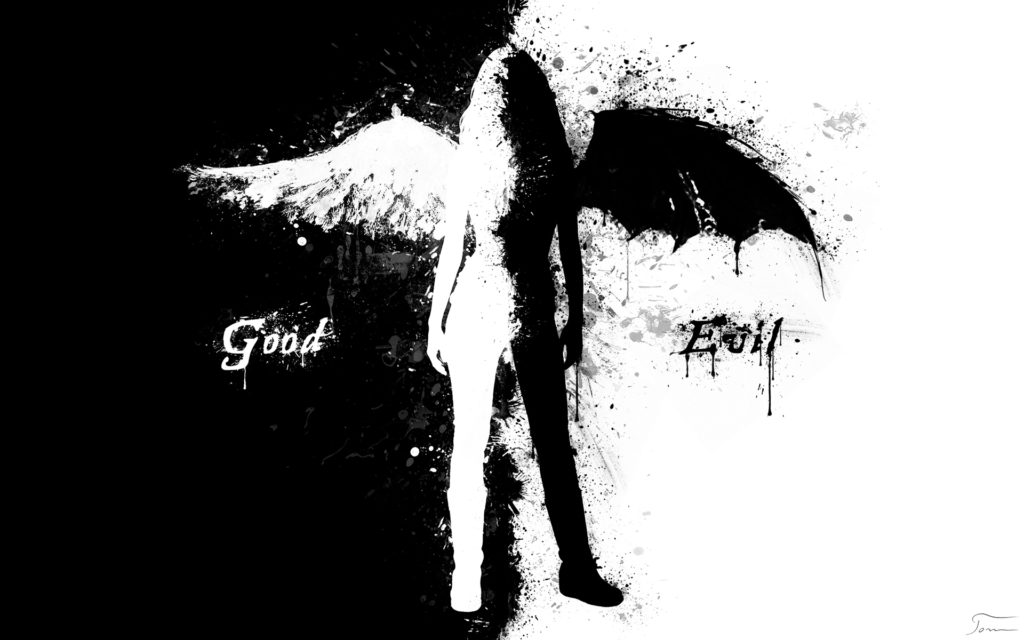
1. The Third Tenet reminds us that the Great Fractal is the eternal and infinite interplay of the war between good and evil and the dance between masculine and feminine.
2. When two sides exchange in the belief that the other is evil, one has war.
3. When two sides exchange in the belief that the other is good, one has peace.
4. War is when good and evil exchange.
5. Peace is when masculine and feminine exchange.
6. The absence of exchange does not connotate peace, but an excess of order. Because an excess of order does not entertain the gods, they tend to cause it to dissolve in warfare.
7. War is not an inherent evil, but rather an intensification of the experience of passing through the Great Fractal.
8. Peace is not an inherent good, but rather a relaxation of the experience of passing through the Great Fractal.
9. While at war, one can be certain that the gods are watching.
10. While at festival, one can also be certain that the gods are watching.
11. It is false that peace does not entertain the gods, but they prefer festivals to stagnant peace.
12. The gods are appalled by those who live in peace but fail to appreciate it. They bring war upon such ungrateful types.
13. If one can learn to overcome the suffering of war, then one is likely to entertain the gods.
14. If one can learn to appreciate the suffering of war, then one is certain to entertain the gods.
15. War is the natural order of material life, therefore those who overcome it entertain the gods.
16. Peace inherently entertains the gods by virtue of being unusual. A stagnating peace, however, causes them to will chaos upon the stagnant.
17. Without awareness of the Four Tenets, there exists only war.
18. Understanding the First Tenet means having compassion for all living beings.
19. Understanding the Fourth Tenet means that one’s fragment of consciousness radiates peace into the material world.
20. The Elementalist is not prejudiced, neither for or against, either war or peace. The most important thing is to play one’s role in entertaining the gods.
21. War and peace span a spectrum of intensity that is akin to the spectrum spanned by fire and earth. The most intense warfare can be compared to the hottest fire.
*
This chapter is an excerpt from Elemental Elementalism, the foundational scripture of the new religion of the Age of Aquarius.
1. Many ask how a God who created this world full of horrors could be anything other than evil.
2. It seems that we are born just to suffer, grow old, get sick and die. One comes to consciousness just to observe one’s body disintegrate in agony.
3. Such thoughts lead to colossal suffering for an enormous number of people.
4. The Elementalist does not suffer from such thoughts. Understanding the Tenets, the Elementalist is free from spiritual suffering.
5. The First, Second and Third Tenets remind us that consciousness is the prima materia, and the material world – in which all suffering occurs – just an illusion.
6. The Fourth Tenet reminds us that the natural state of consciousness is one of perfect bliss – and thus, perfect boredom.
7. As such, all suffering has been dreamed up by the divine for the sole purpose of entertaining itself.
8. The Elementalist understands that the Great Fractal is akin to an unsleeping slaughterhouse, in which living creatures, in competition for scarce resources, battle each other to the death before they starve.
9. That life on Earth is a neverending slaughterfest is not, by itself, cause to succumb to horror.
10. The Elementalist says “Let it be worse! Let me be torn to pieces by wolves! If my suffering should entertain the gods, it is my will!”
11. Suffering is inherent to life so that one can entertain the gods by overcoming it.
12. The greater the intensity of the suffering, the greater the opportunity to entertain the gods.
13. The gods are most entertained by that which overcomes the most extreme suffering.
14. Although the greatest good is to entertain the gods, there are several other positives to the inherent horror of life.
15. The foremost of these: the great suffering caused by the horror of this world affords us great potential to alter our frequencies of consciousness.
16. That immense suffering is inherent to life gives us unlimited opportunity to say No to suffering.
17. Every instance of suffering is an opportunity to increase the frequency of one’s consciousness.
18. This world may be one of the Hell Realms, as suggested by the fact that we are bound to die. This makes all of us a kind of spiritual pentitent.
19. The intensity of the suffering in this Hell Realm affords a greater opportunity to alter the frequencies of our consciousness than if we had incarnated into a more pleasant part of the Great Fractal.
20. Like elemental fire, the inherent horror of this world offers great potential to control one’s destiny.
*
This chapter is an excerpt from Elemental Elementalism, the foundational scripture of the new religion of the Age of Aquarius.
We live in a world of explicate order. Because this order is hard to understand, the events of our lives often seem random, or at least unpredictable. But understanding the implicate order underneath the surface phenomena can give us great insight into how those phenomena will develop. Within this implicate order are the repeating patterns of history.
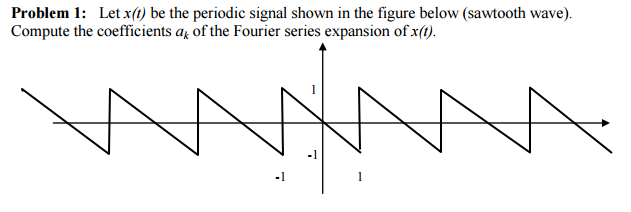
A sawtooth wave is a pattern like a sine wave, only the rise is much slower and the fall much faster. The sawtooth wave pattern is often seen in Nature, such as when a population slowly grows until it has consumed all available resources, and then plummets sharply. The reverse sawtooth wave is the same except the rise is extremely rapid, and the descent gradual.
Political history follows this pattern of a reverse sawtooth wave. If we imagine that the x-axis is time and the y-axis is the quality of leadership, a distinct pattern can be observed. The quality of political leadership gets gradually worse and worse over time until a revolutionary vanguard of high-quality leaders, excluded from the old system, overthrow that system and institute a new one.
This pattern is so old that Plato was able to write about it 2,300 years ago. Book VIII of Republic recounts the political cycle as observed by Plato. It begins with humanity’s natural rulers – an aristocracy of philosopher-kings – in charge. This leads to an initial state of maximum happiness but, over time, bad decisions are made when it comes to selecting new rulers from among the young people, and the quality of leadership starts to degrade.
The cumulative effect of these bad decisions is that the ruling class comes to think less about wisdom or rectitude and more about honour. This leads to a high-spirited militarism which creates more suffering than the enlightened benevolence of the philosopher-kings. This alone wouldn’t be so bad, if it didn’t lead to further degradation.
The tension between the aristocratic way of governing and what Plato called the timocratic way of governing leads to another step downwards, in the form of oligarchy. Eventually, rulers stop valuing money as an instrument to honour and start valuing it for its own sake. Once money starts determining who may hold public office, oligarchy is in effect.
This isn’t the end. Once money rules, people start using it to indulge their unnecessary desires. This leads to a base form of man taking control – the democratic man. The democratic man follows no higher order. He simply lurches from one whimsy to another. Much like today’s Baby Boomers, the democratic man lives a life of pure indulgence. This has serious consequences, in particular the rise of the tyrannical man.
Once people start living for indulgences instead of virtue, and society loses all discipline, the lowest form of man takes control. This is a man motivated by base lusts and consumed by lawless desires – the tyrant. His spiritual functions are entirely absent. Rule by tyrant leads to immense suffering, especially when contrasted by rule with philosopher-king.
This immense suffering brings about the humility necessary for people to finally listen to the philosopher-kings, instead of indulging their base desires. Chastened by the hangover of their indulgence, the people recognise the philosopher-kings as the most excellent among them, and make them leaders. This aristocratic revolution reinstalls the philosopher-kings as the ruling class, whereupon the cycle begins anew.
In Republic, Plato suggests that this pattern of gradual decline leading to revolution is inevitable, owing to the inevitable imperfections within each successive generation of people. This idea – that perfection existed in the past but decayed as time progressed – is one that the ancient Greeks shared with their co-religionists in ancient India, but not with today’s Westerners.
Most Westerners today adhere to an erroneous view of history that follows a regular sawtooth wave, in which progress is slowly made until resources are exhausted, at which point the system collapses. This regular sawtooth wave pattern is more typical of material phenomena, whereas the reverse sawtooth wave pattern is more typical of spiritual phenomena. It follows that history is fundamentally a spiritual phenomenon.
A modern understanding of political psychology sheds some light on how this could be possible. The potential risk in allowing society to degenerate one step further is small, whereas the potential risk in revolution is massive. Therefore, the temptation is to “kick the can down the road”. The best, most recent example of this phenomenon is the money printing of the last 14 years in response to the Global Financial Crisis.
So the future of Clown World is easy to predict. Our political difficulties, and our suffering, will both further intensify. At some point, people will get so pissed off about it that they decide to risk their lives in revolution. The only people willing to risk their lives so that their kin can avoid suffering are the best of all people, the philosopher-kings.
Before this happens, high-frequency young people will, in ever-greater numbers, reject Clown World in preference of simple lives away from the big cities (presaged today by the Chinese Lie Flat movement). These young people will have realised that money and pleasure do not provide meaningful happiness, following the example of voluntary poverty set by William James and Henry Thoreau. In seeing beyond the trappings of materialism, this cohort will have proven that it is fit to rule.
Away from the degeneracy of the cities, these young people will eventually form their own aristocratic and revolutionary culture, more excellent than anything that has gone before. So when the Globohomo Gayplex collapses, as it always does, these young aristocrats will surge into the halls of power, aided by all those who are glad to see the back of tyranny.
Our current position in Clown World can be understood as a point, found near -1 on the y axis, on a reverse sawtooth wave function. Our currently intense confusion and suffering presages a revolutionary vanguard of philosopher-kings. When the revolution comes and this aristocracy of philosopher-kings are installed as leaders, Clown World will end and a new spiritual golden age will begin.
2. The ultimate evil is to cause the gods to avert their gaze from you.
3. The penultimate goods are knowledge of the divine and knowledge of the world beyond.
4. The penultimate evils are ignorance of the divine and ignorance of the world beyond.
5. What common men call good and evil are merely fashions.
6. One age holds women up, another one holds them down. One empire holds women up, another one holds them down. One sect holds women up, another one holds them down.
7. One age holds users of spiritual sacraments up, another one holds them down. One empire holds users of spiritual sacraments up, another one holds them down. One sect holds users of spiritual sacraments up, another one holds them down.
8. One age holds dissidents up, another one holds them down. One empire holds dissidents up, another one holds them down. One sect holds dissidents up, another one holds them down.
9. One age holds the feminine up, another one equates it with evil. One age holds the masculine up, another one equates it with evil.
10. One empire holds the feminine up, another one equates it with evil. One empire holds the masculine up, another one equates it with evil.
11. One sect holds the feminine up, another one equates it with evil. One sect holds the masculine up, another one equates it with evil.
12. Everything that common men call good and evil are merely fashions. Usually these fashions are reactions to previous moral fashions.
13. The measure of the swing towards good is the measure of the swing towards evil. The measure of the swing towards evil is the measure of the swing towards good.
14. The Normie will label something good if it furthers his Minor Aspiration. The Normie will label something evil if it hinders his Minor Aspiration.
15. The Elementalist will label something good if it furthers his Major Aspiration. The Elementalist will label something evil if it hinders his Major Aspiration.
16. Forcing conceptions of good and evil on a person achieves, in the realm of silver, what violence achieves in the realm of iron.
17. To force a conception of good and evil on another person is to descend from the realm of gold into the realm of silver.
18. The gods are immensely entertained by those who overcome the conceptions of good and evil forced on them by other people.
*
This chapter is an excerpt from Elemental Elementalism, the foundational scripture of the new religion of the Age of Aquarius.