
They Want To Cause Suffering To People They Hate

The latest cannabis referendum poll suggests that 54% of New Zealanders will vote ‘Yes’ in the referendum on September 19. According to the poll, there are significant differences in levels of support for the referendum between supporters of the various parties. Some people have found this hard to explain. For their benefit, this essay elucidates.

Paul Manning, Chief Executive of Helius Therapeutics, asked the question “What do they want?” in response to the news that many elderly and conservative voters plan to vote against the cannabis referendum. He points out that these people understand that cannabis is widely available and that cannabis prohibition is not working. So why do they support it?

The reason why most elderly and conservative voters intend to vote ‘No’ is because they hate the sort of person who uses cannabis and they want to cause them suffering. This might sound uncharitable, or even cynical, but it has to be understood that most elderly and conservative Kiwis are twisted creatures of hate.

For their entire lives, this generation of New Zealanders has been exposed to propaganda inducing them to hate cannabis users. Ever since the 1930s, when Reefer Madness came out, popular culture has normalised the idea that cannabis users are depraved, anti-social maniacs. This propaganda has had the intended effect on the elderly of the West, who mostly swallowed it hook, line and sinker.

This anti-cannabis propaganda stems from two main sources, both of which hate cannabis for its ability to induce free thinking.

The first is the Church, who have always hated freethinkers because freethinkers question religious dogma. For centuries, the Church has relied on the acquiescence of its subjects in order to brainwash them. Freethinkers were the enemy because they threatened this acquiescence, and thereby Church control – this is why the Church has always persecuted them, going back to the murder of Hypatia and beyond.

The second is the Government, which wants a compliant population of submissive worker drones. Their ideal citizen is one with an IQ of 90, who goes to work everyday and produces widgets or basic services without ever complaining. As far as the Government is concerned, they are running a tax farm, and their chief concern is to milk the livestock as profitably as possible. The last thing that want is someone rocking the boat with free thought.

The elderly have internalised almost a century of this propaganda. As such, they genuinely believe that cannabis users are dangerous radicals who threaten to destroy the foundations of society itself, and who therefore deserve all the abuse they get. This hatred, in their minds, justifies cannabis prohibition.

In America, it was admitted that the purpose of the War on Drugs was to smash people they hated. John Ehrlichman, aide to Richard Nixon during the latter’s presidency, admitted that the purpose of the War on Drugs was to target anti-war hippies and black people. In an interview with Harper Magazine, Ehrlichman is quoted as saying:

“We knew we couldn’t make it illegal to be either against the war or black, but by getting the public to associate the hippies with marijuana and blacks with heroin, and then criminalizing both heavily, we could disrupt those communities. We could arrest their leaders, raid their homes, break up their meetings, and vilify them night after night on the evening news. Did we know we were lying about the drugs? Of course we did.”

Although it hasn’t been admitted, the same calculus applies in New Zealand.

There are almost no blacks in New Zealand, but elderly and conservative New Zealanders hate Maoris just as much as their American counterparts hate blacks. Elderly and conservative New Zealanders also hate hippies, who they associate with Communism and with the free and honest sex lives they wish they had had.

It’s well known that Maoris are strong supporters of cannabis law reform – the correlation between being Maori and voting for the Aotearoa Legalise Cannabis Party in 2017 was a whopping 0.91. The reason for this immensely strong support is because Maoris are adversely affected by cannabis prohibition to a much greater degree than other New Zealanders.

However, this disproportionate harm is considered a good thing by many elderly and conservative New Zealanders. They see Maoris as the enemy anyway – a thieving, bludging, ungrateful, violent enemy – so if cannabis prohibition harms them, that’s a good thing.

These elderly and conservative New Zealanders also hate other cannabis using demographics, such as young people, artists, hippies and freethinkers. Elderly and conservative New Zealanders do plenty of drugs, but their drugs are sedatives, alcohol and opiates. Cannabis prohibition doesn’t target them.

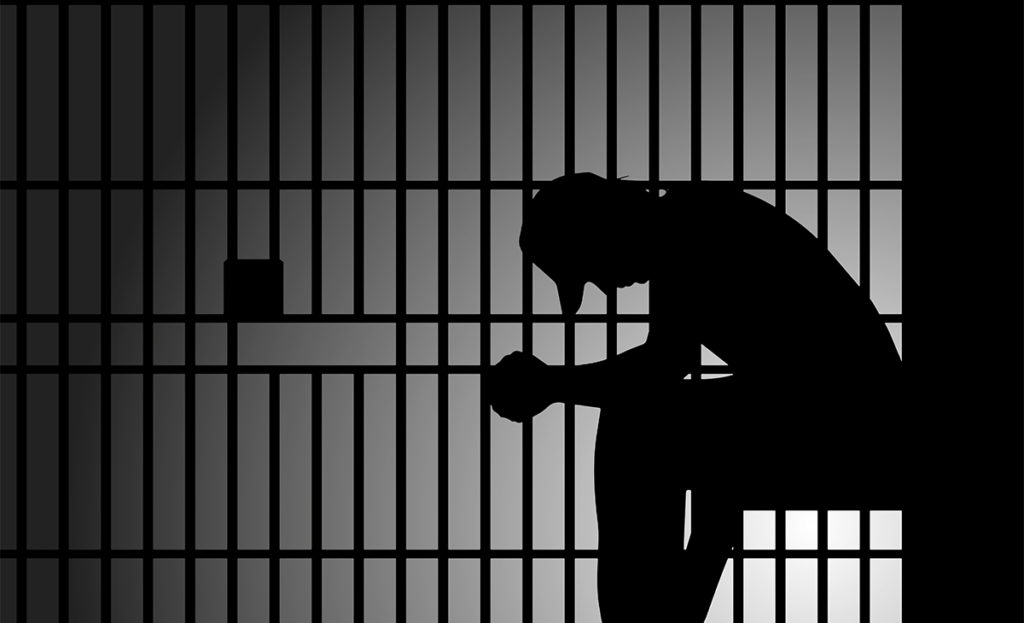
This hate is why arguments appealing to the suffering caused by cannabis prohibition often have no effect. Most elderly or conservative voters think “Cannabis users are suffering? Good! Smash them, crush them, destroy them. Ruin their lives with a criminal conviction. Imprison them so their kids can’t see them. They are the enemy and should be obliterated!”

The psychiatric damage caused to cannabis users by arresting and imprisoning them is considered a bonus by these people. Appealing to the cruelty of it makes as much sense, to elderly and conservative voters, as appealing to the cruelty of shooting the enemy soldiers on the other side of the battlefield. Of course it’s cruel, that’s the point.

Unfortunately, there’s no easy solution to the presence of this malicious streak in New Zealand’s elderly and conservative voters. Hatred is a deep emotion – usually too deep to be influenced by reason. The sight of intelligent young people like Chloe Swarbrick speaking eloquently merely aggravates the elderly and conservative, and further entrenches their prejudice.

At the end of the day, young Kiwis and Maoris can take solace in the fact that the old bastards who hate them are dying off. No amount of hate can stop the aging process, and the old bigots will lose their ability to influence the law once Time puts them in the ground. Absent measures such as forcing the elderly to surrender their voting rights in exchange for a pension, that will have to do.

*

Vince McLeod is the author of The Case For Cannabis Law Reform, the comprehensive collection of arguments for ending cannabis prohibition.

*

If you enjoyed reading this essay, you can get a compilation of the Best VJMP Essays and Articles of 2019 from Amazon for Kindle or Amazon for CreateSpace (for international readers), or TradeMe (for Kiwis). A compilation of the Best VJMP Essays and Articles of 2018 and the Best VJMP Essays and Articles of 2017 are also available.

*

If you would like to support our work in other ways, please consider subscribing to our SubscribeStar fund. Even better, buy any one of our books!
Cannabis Is Considered An Essential Medicine in America – But Kiwis Still Can’t Get It

With New Zealand entering “level 4” of the new Coronavirus national response system, commercial activity is being scaled back to essential services. This has led to some confusion as to what counts as an essential service. An unpalatable truth facing Kiwis is that, by the standards of several places in America, we are having an essential service denied to us.

The COVID-19 alert level is currently set to 3, out of a maximum of 4. This is similar to the American DEFCON system and refers to the current alarm level. A level 3 means that all non-essential services have been forced to close by Government decree, part of a schedule of restrictions laid out on the Government’s own COVID-19 response website.

What counts as an essential service is also listed on that website. The list covers all the skeleton services required to keep a no-frills society running: healthcare operations, food production and sales, security services, postal and courier services etc. The logic is that, despite the coronavirus risk, it would cause even more suffering if these services were stopped, so they have to be kept open.

Most countries worldwide are now moving into some kind of lockdown with movement or trading restrictions as a result of the pandemic. What’s interesting to note is that although all countries agree on the importance of, for example, social distancing, they don’t all agree on what constitutes an essential service.

Access to medicinal cannabis is not considered essential in New Zealand – the New Zealand Government considers growing medicinal cannabis to be criminal conduct. If you have one of the dozens of ailments that can be helped by cannabis, you can go fuck yourself. You’re not allowed to use it, and if you grow it yourself, you go in a cage.

In several places in America, however, medicinal cannabis is considered essential.

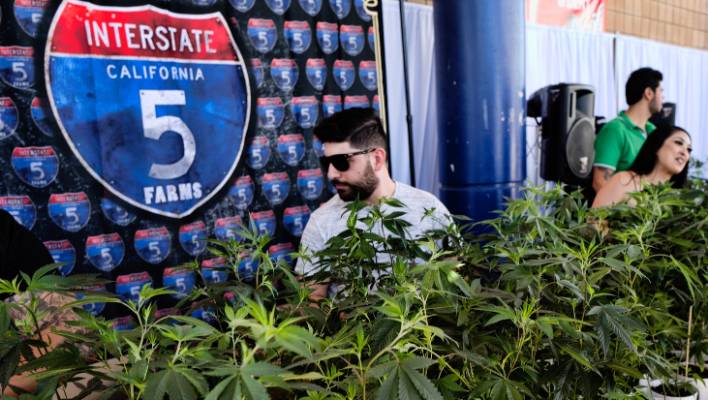
In Los Angeles, county officials declared medicinal cannabis dispensaries to be ‘essential services’ on the grounds that they are healthcare operations like any pharmacy. These officials understand that it is grossly immoral to deny suffering people a medicine that would help them – so immoral that, even in a time of national crisis, cannabis dispensaries need to be kept open.

It’s similar in San Francisco, where cannabis dispensaries are kept open on the grounds that cannabis is a medicine like any other, and that people’s need to access medicine during this time is the same as during any other time. The Dutch also allowed their cannabis cafes to remain open throughout the lockdown, reasoning that closing them would create additional health risks as well as empowering the criminal underworld.

Although the issue is not yet taken seriously by the majority of New Zealanders, accessing medicinal cannabis is a life or death issue for a number of people here. Studies have shown that introducing a medicinal cannabis law decreases the overall suicide rate, and by as much as 11% for men aged between 20 and 29. If one adds to this the lives saved by the application of cannabis to physical medicine, it shows that withholding it from people is causing a significant number of deaths.

It’s incredible that, in some places, the medicinal uses of cannabis are so widely accepted as to be understood by all, yet in New Zealand it’s still impossible to access it. This ongoing denial is a completely unnecessary form of sadism, and one that is entirely unjustifiable given the current state of scientific knowledge about the cannabis plant and its uses.

It’s most galling for those who currently sit in prison for an act deemed to be an “essential service” in other places. New Zealand must seem like a medieval shithole to those who are in cages right now for growing medicinal flowers, when that same act is considered an essential service in more enlightened parts of the world.

Cannabis prohibition is an act of cruelty that only continues because those with the power to change it hate cannabis users, and are indifferent to their suffering. The morally correct thing to do is to recognise that cannabis is a medicine, that people have a legitimate right to use it, and to legalise it straight away.

*

Vince McLeod is the author of The Case For Cannabis Law Reform, the comprehensive collection of arguments for ending cannabis prohibition.

*

If you enjoyed reading this essay, you can get a compilation of the Best VJMP Essays and Articles of 2019 from Amazon for Kindle or Amazon for CreateSpace (for international readers), or TradeMe (for Kiwis). A compilation of the Best VJMP Essays and Articles of 2018 and the Best VJMP Essays and Articles of 2017 are also available.

*

If you would like to support our work in other ways, please consider subscribing to our SubscribeStar fund. Even better, buy any one of our books!
New Zealand Should Legalise Cannabis For The Coronavirus Lockdown

It seems inevitable now that the country will soon end up in lockdown on account of the COVID-19 pandemic. This will cause a great deal of stress not only to our society and to our economy, but also to the minds of individual Kiwis. This essay discusses a simple, easy way that the Government could help the nation avoid much of the suffering coming our way: legalise cannabis.

When the lockdown happens, people are going to be trapped inside their houses for a long time. This sudden, forced, close proximity is going to sharply increase the stress levels of a great number of them. Kiwis are an outdoors people – for us community is found on the sports fields, the tramping trails and the beaches, not inside churches or auditoriums. Being stuck inside will be highly unnatural for us.

The Playstation will help for a while – a few days at most – but that will wear thin quickly. The lockdown will lead to sharply elevated levels of boredom and stress – emotions which, if felt for a prolonged period of time, lead to chaos and destruction.

New Zealand already has a serious problem with domestic violence, mostly due to the fact that alcohol is promoted while more peaceful alternatives are suppressed. In our culture, where most lack the self-confidence to speak eloquently, bashing someone is considered an acceptable way to discipline someone misbehaving.

We can predict, sadly, that the enforced proximity created by the lockdowns will result in a sharp rise in domestic violence. Having to live on top of each other for weeks will lead to more nagging and fighting, especially when some turn to alcohol to beat the tedium. As tempers fray, fists will fly. Because children will be at home from school, they will be exposed to it all. In some cases, this will cause long-term trauma.

The Government could pre-empt a great deal of this suffering today, if they had the wit and will to legalise cannabis.

One of the foremost benefits of cannabis is that it makes boredom easier to deal with. As Doug Stanhope said: “Boredom is a disease. Drugs cure it.” Cannabis can make all kinds of dull things exciting, and can make ordinary things seem interesting. Cannabis enthusiasts have found that weed adds to the appreciation of life in much the same way that salt adds to the appreciation of a meal.

If cannabis were to be made legal today, people could make plans to use it during the lockdown. Although it will not be possible to institute retail sales on such short notice, people could take measures to acquire it from those who already have it, who could themselves be temporarily authorised to sell it while a proper recreational system was being set up (although not to people under 18).

Such a move would ease a great deal of the extraordinary stresses to which Kiwis will be subjected in coming months.

The Government is going to have to deal with the prospect of civil unrest over the next few months. There has already been looting in London, if limited, as a result of the increased tensions. Although the nation is pulling in behind the Government now, this is only because the state of alarm is keeping people in line. As the lockdown wears on, people’s dissatisfaction will change their sentiments.

Legalising cannabis would make this much easier. It would provide relief to the great number of New Zealanders who will be suffering heightened stress and anxiety from the lockdown and from its economic consequences. It would provide relaxation to those disturbed by the disruption to normal life. Not least of all, it would allow for different patterns of thinking in these times of panic and despair.

Jacinda Ardern has already proven that the country is willing to accept extraordinary measures in this time of crisis. We have already accepted a shutdown of the national borders, despite the fact that this measure condemns to bankruptcy a proportion of our tourism, transport and hospitality operators. The general mood is akin to a siege mindset. It’s the perfect time to take bold measures.

A majority of New Zealanders have already accepted that legal cannabis is inevitable. The only holdouts are clinging to prohibition out of stubbornness, spite or malice. The COVID-19 lockdown offers the perfect opportunity to bulldoze through these last recalcitrants and to repeal cannabis prohibition.

Over and above all this, repealing cannabis prohibition would free up some $400,000,000 of Government spending and tens of thousands of Police man hours that is currently wasted every year on enforcing cannabis prohibition. Both of those things will be in desperate short supply over the coming months – time to acknowledge that they’re not well spent persecuting weed smokers.

If the Sixth Labour Government thought intelligently about it, they would understand that the COVID-19 epidemic had temporarily slapped the nation out of its usual slumber, and they would use this opportunity to do things that had previously been made impossible by obstinacy and cowardice. The Cannabis Control Bill that is scheduled to be put to a referendum this September could simply be passed into law by majority vote.

*

Vince McLeod is the author of The Case For Cannabis Law Reform, the comprehensive collection of arguments for ending cannabis prohibition.

*

If you enjoyed reading this essay, you can get a compilation of the Best VJMP Essays and Articles of 2019 from Amazon for Kindle or Amazon for CreateSpace (for international readers), or TradeMe (for Kiwis). A compilation of the Best VJMP Essays and Articles of 2018 and the Best VJMP Essays and Articles of 2017 are also available.

*

If you would like to support our work in other ways, please consider subscribing to our SubscribeStar fund. Even better, buy any one of our books!

The Fall Of Joe Biden Shows That Opposing Cannabis Is No Longer Tenable

Former American Vice President Joe Biden began as the favourite in the ongoing campaign to win the Democratic nomination for this year’s Presidential election. As the contest has progressed, however, he has lost more and more ground, and now Bernie Sanders has supplanted him as the frontrunner. As this essay will show, this fall can best be explained by one massive strategic error on Biden’s part.

It’s common for old people to fail to understand that the younger generations consider cannabis law reform a major moral issue. For the older generation, the anti-cannabis brainwashing was so ruthlessly intense that prohibition was taken for granted. People were so naive back then that anything said by an authority figure was taken as the Word of God.

Joe Biden has certainly failed to understand this. Referring to the contest for the Democratic nomination this year, Rolling Stone described him as “the worst candidate in the race” for cannabis users. He has consistently refused to concede any argument for cannabis law reform, stating repeatedly that he is against legalising cannabis at the federal level.

Even worse, Biden has warmly embraced the War on Drugs. Some could even say he was one of the architects of it. Biden has willingly promoted lies about cannabis, such as that it is a gateway drug, and that more evidence is needed before we can determine whether it should be legal. While Vice President to Barack Obama, he was part of an Administration that happily continued to force prohibition on the American people.

Part of this can be explained by the fact that Biden is old – so old that he’s not even a Baby Boomer. Back in the day, you almost had to expect that your left-wing candidate was going to be lukewarm about cannabis, because the still-brainwashed masses were too numerous, and politicians were forced to placate them. Biden has failed to realise that things have changed.

As is the case in New Zealand, voters for the left-sympathetic Democratic Party tend to be younger than voters with right-wing sympathies. As is also the case in New Zealand, young people are much more pro-cannabis (Dan McGlashan’s Understanding New Zealand has all the details on such matters). This means that Biden has completely missed a trick. Very few Democrats oppose cannabis law reform today.

This refusal to acknowledge the reality of young people’s lives is why the Biden campaign is now failing. He was paying only $3.30 to win the Democratic nomination on BetFair a few months ago – by today that has blown out to $18.00. In other words, the market considers him to have a less than 6% chance of winning the nomination today, compared to a 20% chance only recently.

By refusing to acknowledge the need for cannabis law reform, Biden has shown himself to not be up to the task of understanding the reality facing his constituents. This has left him extremely vulnerable to being out-flanked on the cannabis law reform front by candidates such as Bernie Sanders.

Sanders, by contrast, has made a point of ending the War on Drugs. His official campaign website states his desire to “end the War on Drugs by legalizing marijuana and expunging past convictions.” This clear and principled stand contrasts sharply with Biden’s timid dithering. It’s a message that has resonated with many of the young people who are tempted to not vote on account of that they feel all the candidates are shit.

This had led to Sanders’s support coming in – he is now paying a mere $1.91 to win the Democratic nomination on BetFair. Despite spending most of his political career written off as a kook, he is now odds-on to win the Democratic nomination, and (according to some), if he wins that he will be odds-on to beat Donald Trump in November. We could estimate that he already has a 30% chance of becoming the President at this stage.

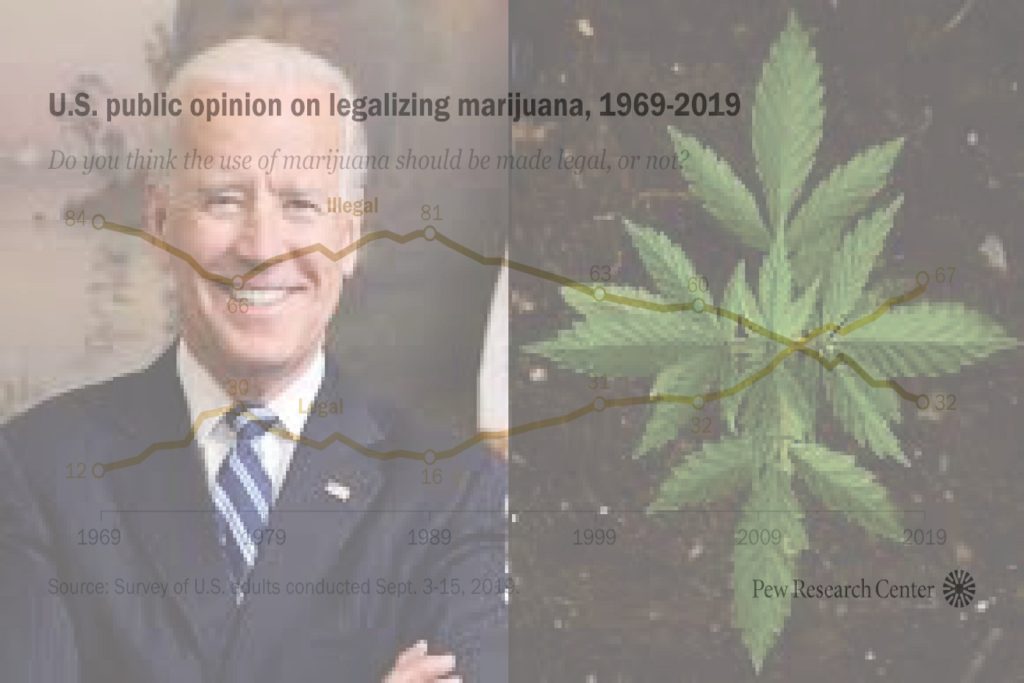
New Zealand is at least a decade behind America when it comes to understanding the reality about cannabis. As shown in the graph at the top of this page, America was about evenly split on cannabis about a decade ago. Since then, the truth has won out, and the majority of people now understand that prohibition causes more suffering than it alleviates.

The pitiful reality is that a great number of people have gone along with cannabis prohibition simply because they had been given the impression that it was the right thing to do. The fact that the rest of their generation followed sheep-like into supporting the destruction of several of their number just seemed natural. It’s not until now that enough public attention has been devoted to the cannabis issue to make people question their assumptions about it.

It has been discovered in New Zealand that, of those undecided about cannabis law reform, the majority of them break in favour of reform once they are presented with accurate facts. Those who don’t question the brainwashing and stand against cannabis have been the majority for 80 years, but the more educated people become, the less likely they are to do so.

All politicians end up falling out of favour if they support a policy long after it becomes unfashionable. There are now very few mainstream Western politicians who openly state support for the criminalisation of homosexuality. The fall of Joe Biden shows that the time is coming when it will no longer be possible to publicly express a belief in imprisoning cannabis users.

*

Vince McLeod is the author of The Case For Cannabis Law Reform, the comprehensive collection of arguments for ending cannabis prohibition.

*

If you would like to support our work in other ways, please consider subscribing to our SubscribeStar fund. Even better, buy any one of our books!