
The Case For Cannabis: It Doesn’t Matter That High-THC Strains Now Exist

A prohibitionist argument beloved of the Police is that cannabis should stay illegal because it now contains much more THC than it used to. This is commonly employed as a counterargument to imply that, even though the dangers of cannabis use have been massively exaggerated, it should still be illegal, because the warnings have become accurate over time. This article explains why this argument is false.

This BBC article is a good example of the ridiculous propaganda that people have been exposed to over the years. It claims that “high-potency cannabis or skunk” is a completely different form of cannabis to the herbal cannabis that people usually smoke. This is done in an effort to make people think that the threat posed by legalisation is categorically more extreme than it was in the past.

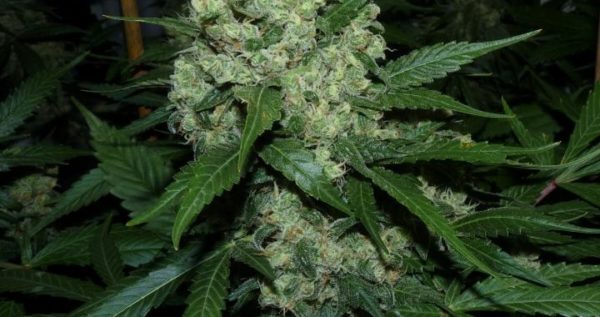
It’s true that some cannabis strains today are much, much stronger than what used to exist, despite the nostalgic recollections of old hippies. Breeders have had decades to experiment with these strains, and some of them have cultivated varieties that are much higher in THC than anything that could have existed previously.

Because a high-THC strain will offer more of a buzz per unit of volume, it naturally makes for a superior product from a criminal point of view. The greater the buzz per unit of volume, the easier it is to transport, to hide and to smuggle. Black market dealers can charge more if their product gets a reputation for being superpowered, and all of this has caused high-THC strains to dominate the market in many places.

Although it’s true that a high-THC strain of cannabis can create unwanted reactions, particularly by producing a more intense experience than desired, this is only a problem if cannabis is sold on the black market. Like many of the arguments for cannabis prohibition that appeal to the harms of cannabis, further investigation shows that the harm is caused by prohibition and not by cannabis itself.

A high-THC strain of cannabis can get a person stoned faster than a low-THC strain, and perhaps also more heavily, but this is not anything close to a legitimate argument in favour of cannabis prohibition. The safest way to protect people from getting a more intense buzz than they wanted is actually to legalise cannabis, for two reasons.

Legal, properly regulated cannabis means that whatever a person consumes must be clearly labelled with a cannabinoid profile. This means that the user will know what they’re getting. If a person is inexperienced with cannabis they might want specifically to avoid a high-THC strain or to use a high-CBD strain. Even if they are experienced, they might want to know they’re using a high-CBD strain.

As mentioned elsewhere, only legal cannabis can make this possible, because only cannabis produced by legitimate white market professionals will be tested and analysed to determine its precise cannabinoid profile. Therefore, only legal cannabis can ensure that the user knows what they’re getting and can take the appropriate measures.

This approach synergises with having honest education about cannabis use at high school level. In the same way the high schoolers are educated about sex, driving and alcohol, an honest approach would see them educated about cannabis as well. Part of this approach would involve being told that high-THC strains can provoke effects that are more powerful than intended.

The second reason is that regulating cannabis makes it possible to pass a law, as has been done in some American jurisdictions, so that the recreational cannabis being sold in shops must contain a minimum percentage of CBD. This is done with the intent of minimising psychotic responses, as there is evidence that the CBD in cannabis has an anti-psychotic effect that balances that psychotogenic effect of the THC.

Regulation means that the circumstances in which people use cannabis can be controlled with a view to preventing adverse outcomes such as overdoses on super high-THC skunk. Even if it was not deemed necessary to legislate for a minimum CBD level for all cannabis, it could be ensured that the cannabis consumed publicly in cafes had such a limitation.

Prohibiting cannabis because of the fear of high-THC strains is like prohibiting alcohol because absinthe exists. It’s a dumb move that just leads to more suffering in the end. It would be much better to legalise cannabis so that people both knew how to use cannabis properly and also the chemical makeup of any strain they may wish to use.

*

This article is an excerpt from The Case For Cannabis Law Reform, compiled by Vince McLeod and due for release by VJM Publishing in the summer of 2018/19.

You Will Never Be Allowed Any Alternative to Neoliberalism

Workers and labourers were disappointed on Wednesday by the news that the Sixth Labour Government had ruled out a capital gains tax. Many working Kiwis felt it unfair that their labour continues to be taxed at such a high rate while unearned income remains untaxed, and felt that the Labour Party had betrayed them. As this essay will argue, they better get used to it, because New Zealanders will never be allowed an alternative to neoliberalism.

Jacinda Ardern had come to power with a promise that “neoliberalism had failed“, and gave every impression that the Labour Party would offer a new approach. The 35-year experiment of putting money above people had only delivered misery, and Ardern and her Labour Party had caused many to believe that their ascent to power would mark a change in attitude.

Like most utterances from politicians, this was total shit.

The reality is that Ardern and her Labour Party are just as much puppets of globalist industrial and finance interests as their National predecessors, and this is obvious if one looks at their actions in the 18 months they have been in power.

One of the first things Labour did was to double the refugee quota, increasing the flow of cheap labour into the country at the expense of New Zealand wage earners. As this newspaper has mentioned elsewhere, neoliberals love refugees, because they work for cheap and because they destroy the solidarity of the native working classes, thereby weakening their negotiating position.

Labour has also ignored cannabis law reform their whole time in power. While Andrew Little enthusiastically fast-tracks all kinds of laws to take Kiwi freedoms away, he lacks the courage even to say that cannabis is a medicine. Neoliberals are almost always materialists, and they fear cannabis because they fear that it will turn people away from the acquisitive greed that our economies are propped up by.

Perhaps the worst slap in the face, though, was when Labour ruled out a capital gains tax. Their refusal to tax the unearned income of property speculators meant that the burden of funding the government had to come from wage earners instead. Effectively, Jacinda Ardern chose to subsidise the unearned income of the rich with the labour of the poor.

The reality for New Zealand voters, who had cast the Fifth National Government out of power after nine years of neglect, is stark. There is no alternative to neoliberalism. It doesn’t matter how much suffering the Kiwi people have to endure; it doesn’t matter if you can never own a house on the average wage. We will never be allowed, within our current political system, to put our own people above money.

A reader might object here that voters could vote for a third party if they didn’t want neoliberalism, but the system is rigged so that only Labour and National can hold power.

Not only is there an electoral threshold of 5%, which has the effect of preventing any alternative to neoliberalism from getting a foothold in Parliament, but funding for electoral broadcasts is apportioned according to party size. Labour and National together get over half of all allocated electoral broadcast funding, which entrenches both these parties and the neoliberalism they represent.

There is no alternative, within our existing system, to neoliberalism. Everything Labour and National do benefits the wealthy at the expense of the poor, and especially the wealthy with no ties to the nation. Nothing they do will benefit the Kiwi worker whose hands build our roads, tend our crops and care for our sick.

Therefore, there is no alternative to skyrocketing rents, falling wages and the mass importation of cheap labour in the form of refugees. The only way that the Kiwi nation can ever get respite from this is revolution.

*

If you enjoyed reading this essay, you can get a compilation of the Best VJMP Essays and Articles of 2018 from Amazon for Kindle or Amazon for CreateSpace (for international readers), or TradeMe (for Kiwis). A compilation of the Best VJMP Essays and Articles of 2017 is also available.

The Case For Cannabis: Cannabis Does Not Make People Impotent

Everyone by now has seen the propaganda image on the back of the tobacco packet that depicts a droopy cigarette, imitating erectile dysfunction. Cannabis has undergone a similar propaganda attack, with many people coming to believe that cannabis can make people impotent. This article shows that the truth, once again, is very different to what we have been told.

Like many things that the authorities want to forbid, cannabis has variously been blamed for pretty much everything that could go wrong in a person’s life. Cannabis causes psychosis, it causes cancer, it causes crime, and we’re also told that it makes people impotent.

Now, it’s certainly true that smoking things is not healthy. Smoking anything, cannabis or tobacco, leads to unhealthy lungs and worse circulation. It also leads to heart disease. All of this makes it much harder for smokers to get healthy erections, as this is a function of the health of the circulatory system.

It’s also true that not all cannabis users are healthy. Part of the reason for this is because they smoke things (as mentioned above), but most of the reason is that cannabis is a medicine, and medicines are not typically used by healthy people. People who aren’t healthy also tend to be sexually dysfunctional, for obvious reasons, so there’s a clear reason to expect the presence of a link between the two.

However, the simple facts are that cannabis does not make people impotent. In fact, like so many of the things that people have come to believe about cannabis on account of the propaganda, the truth is closer to the opposite of what we have been told. In fact, cannabis is an aphrodisiac, and has been employed as such for a very long time.

Indeed, cannabis has been known to be an aphrodisiac for millennia. There are references to it in Ayurvedic folk medicine from 2,500 years ago, and its use as an aphrodisiac may be as much as 3,000 years old. The efficacy of cannabis for such purposes is well-known among young and free-thinking people today.

There are several reasons for this, as any hippie could tell you. Most of the reasons are psychological, the most obvious being one that cannabis shares with alcohol: it’s an anxiolytic. People are often too physically anxious and wound up to be able to make love, because their bodies are in fight mode, and so being touched releases cortisol instead of oxytocin.

Cannabis can change that by putting a person into a calmer, more relaxed mood. It can have the effect of stopping runaway, neurotic or aggressive thoughts and replacing them with more placid and appreciative feelings. Cannabis has the ability to get people into the right mood for sex, probably a combination of its anxiolytic effects and the increased physical sensitivity it offers.

Another psychological obstacle to enjoying the sexual experience is deep religious brainwashing in childhood. Many people have been deeply conditioned, since early childhood, to believe that sex was evil and that enjoying the sexual impulse was an act of evil. For some of these people, it’s no longer possible to enjoy having sex while in a normal state of mind.

Yet another common psychological obstacle is previous sexual trauma. Many women who have been sexually molested or raped have difficulty letting go of the trauma enough to trust a man in bed. Likewise, many men find it difficult to achieve the desired level of responsiveness on account of previous humiliations. These kinds of prior traumas often make it difficult for a person to properly enjoy having sex.

Cannabis can help overcome all of these obstacles, thanks to the deconditioning effect that it has on the mind. Because cannabis is good for breaking down old thought patterns, it can break down the conditioned emotional response that occurs when a person is exposed to a stimulus that reminds them of a previous trauma.

One reason why cannabis has become associated with psychosis is because it makes people more open and more willing to explore. This is also one of the reasons why cannabis does the opposite of making people impotent. Sometimes a person is closed off to the idea of intimacy, and not because of trauma or any of the above reasons, but from sheer natural boringness. Cannabis can be what’s needed to open such a person up.

Of course, all this is part of the reason why cannabis was banned in the first place. It’s the basis for the “Reefer makes darkies think they’re as good as white men” comment that led to the prohibition of cannabis. The deconditioning effect of cannabis is a danger to those who benefit from the initial conditioning. Those brainwashers have a profound influence on our lawmakers.

Again, the correct approach must be one that maximises freedom while minimising new danger and risk. The apparent paradox that daily cannabis use can decrease sexual function, while occasional cannabis use can increase it, needs to be recognised. This can only become possible if our current dishonest approach to cannabis is replaced with an honest one.

From there, it will be possible to both get medical treatment for those who use too much cannabis, and to get medical treatment for those who have problems with impotency and who could benefit from cannabis. The humane thing to do would be to legalise it so that people can get the help they need, when they need it, without interference from the law.

*

This article is an excerpt from The Case For Cannabis Law Reform, compiled by Vince McLeod and due for release by VJM Publishing in the summer of 2018/19.
The Case For Cannabis: One Person Who Smoked Cannabis And Went Crazy Is Not A Pattern

If one talks to many prohibitionists, one argument that comes up over and over again is the argument from personal experience. They will tell a story about how they knew a person who was doing great, until one day they smoked cannabis and just went crazy. This article explain why this is not a legitimate reason to keep cannabis illegal.

It’s a familiar story by now. The straight-A student, the hard-working businessman or the devoted mother, all living amazing lives until they had a smoke of cannabis and then – boom, total mental collapse. It’s a story familiar to anyone who has seen the film Trainspotting, only it doesn’t really happen that way with cannabis.

It’s true that the use of cannabis often occurs at the same time that a person becomes a psychiatric casualty. Inevitably, however, further examination of the lives of these people show that things aren’t as simple as use cannabis, go crazy.

Psychosis isn’t normally something that just breaks out from nowhere. Usually it’s something that develops, quickly or slowly, over a period of time, during which the person becomes more and more agitated. In most cases when psychosis is preceded by cannabis use, there are multiple factors at play, in particular lack of sleep, anxiety, adrenaline and job, health or relationship stresses.

When a person hears about someone they know using cannabis and then having a psychiatric event, what they don’t also hear about is the surrounding life circumstances. Almost always, the supposedly “healthy” person was either starting to feel overwhelmed with the pressure and stress in their lives (which is what turned them to cannabis) or there was a pre-existing psychiatric condition that wasn’t known about and which was exacerbated by cannabis use.

More academically, it is said that the plural of anecdote is not data. Knowing that one person who had a psychotic break happened to have used cannabis at some point leading up to it is one thing. It is not, however, evidence that a wider pattern exists of perfectly healthy people using cannabis and then becoming psychotic.

Even more academically, arguing that cannabis should be illegal because you knew one person who smoked it and went crazy is an example of the fallacy of composition. This is a logical fallacy that states that something that is true of one member of a group (such as one cannabis user) is true of the entire group (all cannabis users).

In other words, even if was true that there was one person who did become psychotic purely on account of cannabis use and no other factor, it wouldn’t make it possible to generalise this experience onto all people who use cannabis. One example is just one example, and it requires many further such examples before one can conclude that using cannabis inevitably leads to psychosis.

However, it’s entirely possible that using cannabis can contribute to psychosis under certain circumstances.

The first common way is that it can bring up traumatic memories. A large number of people, perhaps even a majority, have some kind of suppressed memory. Usually this relates to an early childhood trauma, with violence and sexual assault being the most common. The percolating effect of cannabis on the thoughts can cause such repressed traumas to bubble to the surface, and often in contexts where the user is not prepared for them.

Many people have been forced to suppress these memories in order to have a chance at an ordinary life. So when they suddenly face them again, the stress of this can lead to an episode of mental disturbance. This is particularly true if the memory cannot easily be suppressed again.

The second common way is that it can bring the user into spiritual realms of thought that they may not be prepared for. As discussed at length elsewhere in this book, cannabis is a spiritual sacrament. The dangerous side of this is when people use it expecting a high, and instead find themselves confronted with deep existential or spiritual questions.

It’s normal for people to avoid thinking about the fact that they’re going to die one day. One of the most common ways to break this habit is to have a smoke of cannabis and find one’s mind drifting to unusual places. The deconditioning effect of cannabis can have a greatly beneficial effect on creativity, but push it too far and you can lose touch with the bonds tethering you to collective reality.

Neither of these common ways can be helped by making cannabis illegal. Pushing cannabis underground has only had the effect of making people unaware of the real psychological effects of the substance, and this lack of proper awareness has caused more damage than cannabis itself.

In any case, given the large numbers of people who do use cannabis in New Zealand, and the large numbers of mentally ill people in New Zealand, it’s not surprising for someone to know a person who is in both of these categories. If someone did know a person who used cannabis and later became mentally ill, that’s not indicative of a wider pattern.

Furthermore, this argument ignores all the people who use cannabis and don’t go crazy. If 11% of the population has used cannabis within the past 12 months, that’s a huge number of people. It means that the average person probably knows a couple of dozen cannabis users. If this is the case, then it’s notable that they only knew one person who seemed to have a psychotic episode linked with cannabis use.

*

This article is an excerpt from The Case For Cannabis Law Reform, compiled by Vince McLeod and due for release by VJM Publishing in the summer of 2018/19.