
Bangladesh in New Zealand Test Series 2017, First Test Preview

Facing Trent Boult on a green wicket in Wellington promises to be daunting challenge for the Bangladeshi top order

Bangladesh are currently paying $24 on BetFair to win the First Test of their 2017 tour to New Zealand, beginning tomorrow in Wellington. New Zealand are so heavily favoured that if Bangladesh can manage so much as a draw it pays $6.60.

On the surface of things, there are few areas in which Bangladesh have an advantage over New Zealand.

The Black Caps top order is looking as composed as it ever has done. Jeet Raval may have only played two Tests but across those two he averages 49.33, with two fifties and a not out. By the standards of Black Caps openers since Richardson, that’s as promising as anyone apart from Tom Latham.

Latham, Kane Williamson and Ross Taylor comprise the rest of the top order, and one would have to go back as far as John Wright, Andrew Jones and Martin Crowe to find an equivalent solidity.

In the middle order things are not as certain. If Henry Nicholls cannot impress at No. 5 soon, he might have to return to domestic cricket for a spell while one of the next generation has a turn at trying to fill the Brendon McCullum-sized hole.

Colin de Grandhomme has, like Raval, only played two Tests but he has also looked solid, averaging 32, and also has a strong first-class record. Even though Watling at 7 is a solid pick, the overall feel of the Black Caps middle order is far from settled.

The pitch at the Basin Reserve is expected to be unusually green, which means that Trent Boult and Tim Southee can be expected to pose a considerable danger. In an odd quirk, Boult (12) and Southee (13) are, with Neil Wagner at 11th, grouped together on the ICC Test bowling rankings.

The Bangladeshi batting will depend heavily on certain key players, and if the Black Caps can get a couple of them early they will back themselves to roll the visitors, on a green wicket, for very little.

Although the spine of the Bangladeshi side is much stronger than it has been in recent years, few would expect it to stand strong against the Black Caps’ heavy artillery on a green track.

Opener Tamim Iqbal is the highest ranked of the Bangladeshi bastmen, at 22nd. An opener averaging 40 is an impressive asset for a side of Bangladesh’s reputation, and perhaps the foremost way that the Tigers could claim to have an advantage over their opposite numbers.

With a probable 4-5-6-7 of Mahmudullah, Shakib al Hasan, Mushfiqur Rahim and Sabbir Rahman, the Bangladeshi middle order is a fairly battle-hardened unit. All four of these batsmen are, if not intimidating, skilled enough to make the Black Caps pay for any errors.

The major disadvantage that the Tigers will have is a bowling attack highly unsuited to the conditions they will face in Wellington. Shakib al Hasan may be ranked 2nd of all the allrounders in Tests, but his gentle left-arm spin will pose far less of a threat at the Basin Reserve than in Bangladesh.

If Bangladesh are to win, it will almost certainly take a handful of good spells from Taskin Ahmed, who with an ODI strike rate of 29 is growing into a strike weapon in the shorter form of the game, or from his expected new ball partner Subashis Roy, about who very little is known apart from a respectable first class average of 28.

The best hope for an interesting match might be for Bangladesh to win the toss and put the Black Caps in on a green wicket tomorrow morning, then to ambush the top order with their debutant new ball pair and get into the soft middle order before lunch.
Understanding New Zealand: Tobacco Users

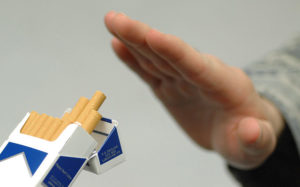
Interestingly, the Electoral Profiles detail the number of people within each electorate who are regular smokers, who are ex-smokers, and who have never smoked. These stats, when added to the correlation matrix, tell us about the tobacco smoking habits of New Zealanders.

This article will assume that the statistics for tobacco use correlate highly with the statistics for cannabis use. The primary reason for assuming this is the size of the correlation between being a regular tobacco user and voting for the Aotearoa Legalise Cannabis Party in 2014, which was 0.88.

This was the strongest of all the correlations between being a regular smoker and voting for a particular party in 2014. For voting Maori Party the correlation was 0.81, for Internet MANA 0.73, for New Zealand First 0.72 and for Labour 0.53. On the not-currently-smoking side were the Greens at -0.19, Conservative at -0.47, ACT at -0.58, and National at -0.75.

Already from this, some clear trends suggest themselves – in particular, that a Kiwi is more likely to be a regular smoker the harder their life is.

There was a correlation of -0.61 with net personal income and being a regular smoker, which is even stronger than the correlation with net personal income and being Maori (-0.48).

On that point, the correlation between being a regular smoker and being Maori is a whopping 0.92. This is even stronger than the correlation between voting Maori Party and being Maori (0.91), which tells us that the smoking-Maori connection is one of the strongest observations that we can make.

Kiwis of European descent are moderately unlikely to be regular smokers – the correlation between the two is only -0.32 – but the correlation between being of European descent and being an ex-smoker is 0.74. Asians are more likely to never have smoked – the correlation between the two was 0.77.

Although there was no significant correlation between median age and never smoking, the correlation between median age and being a regular smoker was -0.53, and with being an ex-smoker it was 0.53. This tells us that regular smokers tend to be much younger than ex-smokers, which fits the observation that regular smokers are usually in their teens, twenties or thirties.

Returning to the idea that people tend to smoke more the worse they are doing, we can observe that the correlation between being a regular smoker and being on the invalid’s benefit is 0.85, and with being on the unemployment benefit it was a whopping 0.87. This is probably because there is little else to do on a long-term benefit other than to smoke!

Also related to this idea, we can see that people doing well are less likely to smoke. Even merely being a student, which is to say, still young and poor but at least hopeful, is not significantly correlated with being a regular smoker. It is, however, correlated with never smoking, even if it was a very mild 0.25.

Perhaps the final word on this line of thinking comes from contrasting the correlation between having no qualifications and being a regular smoker, which is 0.84, with that of having a Master’s degree and being a regular smoker, which is -0.66.

Predictably, given the stats detailed thus far, the working class professions tend to be the ones that correlate positively with being a regular smoker. Agriculture, fishing and forestry (0.35), Construction (0.37), Electricity, gas, water and waste services (0.42), Transport, postal and warehousing (0.52) and Manufacturing (0.58).

And so, the middle and professional classes are inversely correlated with being a regular smoker. These were Information media and telecommunications (-0.34), Rental, hiring and real estate services (-0.38), Financial and insurance services (-0.48) and Professional, scientific and technical services (-0.56).

Finally, there is no significant correlation between any of being a regular smoker, being an ex-smoker and never having smoked on the one hand, and being either male or female on the other. Despite this, the numbers suggest that more females than males are regular smokers.

*

This article is an excerpt from Understanding New Zealand, by Dan McGlashan, published by VJM Publishing in the winter of 2017.

Cannabis and Alcohol Users Must Unite Against the Wowsers and Control Freaks

Some Kiwis might have woken up from a New Year’s-induced stupor long enough to ask: “What happened to the Wellington Sevens?” Well, sit down, folks – I’ve got a bitter and tragic tale to tell.

The short of it, though, is this – New Zealand is full of wowsers, and those wowsers saw Kiwis having a good time and decided that this had to be stomped down as soon as possible, lest anyone get carried away.

The linked article notes that the occasion was essentially “a two day party with a bit of sevens rugby on the side” and it died because “the organisers have slowly strangled the event with tighter and tighter regulations as the years went by.”

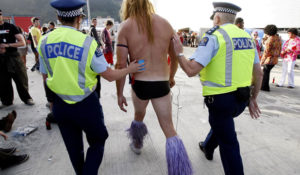
Amazingly, putting several tens of thousands of drunks in a confined space in the middle of summer didn’t end without problems.

But, as this essay will argue, so what?

14 years of what had grown to become the single greatest annual festival in the Kiwi cultural calendar, was destroyed by the Fun Police in a couple of years: “the wowsers have killed off the atmosphere that made the Wellington Sevens so popular.”

This year, an event that used to sell out a 30,000+ seat stadium in minutes has struggled to sell so much as 1,300 tickets. The general attitude towards the event from once-loyal partygoers is that “they can’t have fun at the event in case they upset someone.”

The question is: why do we let them do this to us?

So what if a few drunks caused trouble and created a sub-optimally family-friendly atmosphere. So what? Do we live in a McDonald’s playground?

It’s time to stop the rout! Everyone who enjoys drinking alcohol has to face up to this fact – cannabis is already illegal and tobacco is being made illegal. What’s going to stop the control freaks from cracking down on alcohol once they’ve banned tobacco?

And will Kiwis do anything it when it happens, or just take it up the arse as we have done thus far?

Is it acceptable that it is gradually becoming illegal to have fun? Are we doomed to end up like the Soviet Union, streets full of dour, grey-faced citizens conditioned to be afraid to crack a joke or a smile, lest they fall foul of some bureaucratic juggernaut that comes after them like a pitbull?

New Zealand has to face the very real possibility that, as our population continues to age, we will eventually ban every possible avenue of enjoyment and turn the whole country into a giant old folks’ home.

Pissheads and potheads, its time to acknowledge that we have a mutual enemy that is only growing in power as the population ages and our politicians become ever more out of touch with reality.

This enemy has existed all throughout history, and it waxes and wanes in strength according to the fashions of the age. It’s an enemy that resents all fun, resents all happiness, and which resents life itself.

The New Zealand Wowser is the single greatest threat to our quality of life. If we do not begin to oppose them, we will wake up one morning to find that everything is illegal except for a curated, Health and Safety-approved set of behaviours on a short list.

Virtue Signalling in the Post Truth Age

Observant readers may have noticed an increased awareness of a social phenomenon that has come to be known as ‘virtue signalling.’ This is exactly what is says it is – an attempt on the part of the person expressing themselves to enhance their social standing among the listeners by advocating a particular political viewpoint, and ostensibly on the grounds that it is the morally correct thing to do.

The most recognisable recent example of virtue signalling was all the people who expressed support for allowing Syrian refugees into their country as the Syrian Civil War accelerated.

What made this virtue signalling, as opposed to a genuine regard for the well-being of the Syrians, is that very few of the people making noise about the refugees actually cared about them one way or another. This was evident in two major ways.

The first was that the virtue signallers were mostly young, fashionable people who wouldn’t be seen dead with a refugee or in the kind of neighbourhood that the refugees are going to end up in if they are accepted. Very rarely did any of these people actually volunteer time to refugee services.

The second was that the virtue signallers, rather than making any effort to ensure that anything good happened to the Syrians, simply moved onto the next opportunity to signal virtue (which was opposing Brexit, and then opposing Trump).

These two points explain why, once the refugees are let in, they’re inevitably dumped in a cheap neighbourhood or suburb and forgotten about.

Virtue signalling has always existed. In fact, it is a part of nature. Darwin himself realised that the extravagant, luxurious tail of the peacock was a significant survival disadvantage as it was a beacon for predators and made it harder to escape them. Such a sight could only have evolved if there was some compensatory mechanism, such as if presence of a glorious tail attracted females to a degree that outweighed the increased death rate from having to bear it.

Virtue signalling signals more than just virtue. It also signals being part of the leisure classes, which necessitates the expression of contempt for the labouring classes and their unfashionable and brutal politics and desire for neighbourhood solidarity.

Virtue signalling can therefore be a statement of belonging.

In our society, being cluelessly out of touch with reality is seen by some as a virtue. It suggests that one is from a family wealthy enough to have shielded one from the harsh realities of life, and that one has enough leisure time to indulge in truly wasteful peccadilloes like advocating for the conquest of the West by a hostile foreign ideology.

Note that this has always existed in the human sphere – the previous generation of virtue signallers made a show out of advocating for communism, for the same reasons their descendants advocate for mass Muslim immigration. The generation before that signalled virtue by appeasing Hitler and claiming this was motivated by a sensitivity to the value of peace.

Unfortunately, there is now so much virtue signalling that when someone expresses a political opinion, the listener actually has no idea at all whether this opinion is genuinely believed, or if it is merely a brazen attempt to ingratiate the speaker with the sort of person the speaker presumes will agree with that opinion.

This would explain why mass Muslim immigration has such passionate apparent support from homosexuals, even though Muslims would gladly throw those same homosexuals off the top of buildings as soon as they were given the opportunity.

It may be that what is being signalled is not ‘virtue’ but rather a masculine or feminine orientation. So that a person against mass Muslim immigration is rather expressing themselves in a masculine manner, like when people advocate exercise, and anyone for it is expressing themselves in a feminine manner, like when people advocate veganism.

In the Post Truth Age, you can never take anything at face value, not even your own desires.