

A Step Backwards For New Zealand

Understanding New Zealand: Voting Patterns of European New Zealanders
Who do the honkies vote for? Most people could have guessed that there was a correlation between voting for the National Party in 2014 and being of European descent, but few would have guessed that it was quite as strong as 0.60. The correlation between voting Labour in 2014 and being of European descent is even stronger, but negative: -0.76.
These are strong correlations, and they ilustrate the degree to which the National Party upholds racial advantages as a consequence of upholding class advantages. Being of European descent has a correlation of 0.35 with median personal income, which conflates the effect of race and class in the National vote.
Voting for the Conservative Party in 2014 had a correlation of 0.46 with being of European descent, and the other party that had a significant positive correlation with being of European descent was the Greens – this was 0.24.
Some might find this latter point surprising considering that the Greens produce a lot of rhetoric about being left-wing and about supporting marginalised groups in society. But marginalised groups generally do not vote Green – they vote Labour. The correlation between voting Green in 2014 and median personal income is a significant 0.31.
This tells us that the Green Party is a curiosity in the paradoxical sense that it represents a class that does not often belong to the race it represents and a race that does not often belong to the class it represents.
Voting for any of the remaining four parties in 2014 has a negative correlation with being of European descent. Three of those four correlations can be explained simply by noting that they are parties which get a lot of Maori support: the ALCP (-0.15), the Maori Party (-0.35) and Internet MANA (-0.37).
The ACT Party stands apart from those three on that basis. The correlation between voting ACT in 2014 and being of European descent is a significantly negative -0.28. This suggests that there is a natural division on the right between the heavily European National and Conservative parties, and the heavily non-European ACT Party.
The natural division on the left, meanwhile, is between the also heavily European Green Party, and the moderately non-European Labour Party. Although this has more to do with education than class, it’s noteworthy that barring a token Maori in the leadership position, only Marama Davidson of the Green MPs has any non-European ancestry.
This is the basis for the observation that a National-Greens Government might be possible after 2017. Essentially this would be a European coup of the political system, knocking out the Maoris in NZF and Labour, the Pacific Islanders in Labour and the Asians in ACT.
Media commentators might talk about crucial demographics and the need to win them to capture the middle ground, but the fact is that the vast bulk of New Zealand voters are people of European descent and a small shift of the balancing point within this major demographic can have nationwide consequences.
European people love to vote, no doubt a reflection of their integration into the system and their confidence that their voices will be heard by the eventual representatives. The correlation between turnout rate in 2014 and being of European descent is a strong 0.71, which is enough to say that, as a general rule, white people vote.
Many might have been able to guess that; few could guess the extent that the flag referendum was a mission for people of European descent only. Turnout rate for the first flag referendum had a correlation of 0.85 with being of European descent, and turnout rate for the second flag referendum had a correlation of 0.88.
The correlation between being of European descent and voting to change the flag in the second flag referendum was 0.60 – exactly the same as the correlation between being of European descent and voting National in 2014. This further supports what we already know about the extent that the flag referendum was a National Party vehicle.
*
This article is an excerpt from Understanding New Zealand, by Dan McGlashan, published by VJM Publishing in the winter of 2017.
Australia in New Zealand 2017 ODI Series Preview
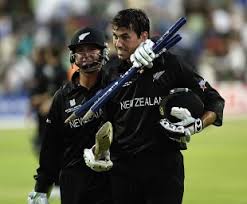
Missing an explosively terrifying opening batsman and a first drop with the hand-eye co-ordination of a god, the Australian cricket team came to New Zealand and got beaten 3-0. Prediction for this week? No, that was what happened the last time we were in that situation, in February 2007.
Building up for a later triumphant Cricket World Cup campaign, Australia rested both Adam Gilchrist and Ricky Ponting for the 2007 Hadlee-Chappell series in New Zealand, and got beaten 3-0.
Absent the usual steel up top, Australia disintegrated in the first ODI to Shane Bond, who took 5-23 from 9.3 overs, and they lost by ten wickets. Chasing 337 in the second ODI, New Zealand won after a brilliant Ross Taylor century and some dogged lower-order batting. Again chasing in the third, only that time 347, the Black Caps won in the last over with the last wicket after a 165-run 6th wicket stand between Craig McMillan and Brendon McCullum.
The 2017 edition of the Hadlee-Chappell will be absent David Warner – who recently took AB de Villiers’s crown as No. 1 ranked ODI batsman, and Steve Smith, who averages 51.90 since the start of 2015.
In the 2016 edition in New Zealand, the Black Caps took the series 2-1: Australia won a close game and was thumped twice. Something similar might be on the cards for this week.
Like 2007, the Australia of 2017 will possess some fearsome bowling. Mitchell Starc, Josh Hazlewood and Pat Cummins make up what must be close to the most dangerous trio ever seen in ODI history. Both Starc and Hazlewood are ranked in the top 5, and although Cummins is only ranked 27th that is a reflection of bad luck with injuries and not an absence of talent.
The Black Caps, for their part, have their own heavy artillery. Trent Boult is today the No. 1 ranked ODI bowler in the world, and Matt Henry is at No. 7. These two bowlers demolished the Australia top order in the first ODI of the 2016 series, leaving them at one stage 6/41.
Tim Southee might only be ranked 26th but he is dangerous with a bit of assistance, and Mitchell Santner is fast becoming like another Daniel Vettori in terms of miserly economy. This series will surely also feature more of Lockie Ferguson, who rocked the speed radar in Australia with a string of 150kph+ deliveries, but whose pace was often to the batsman’s advantage on the hard pitches.
The major difference between the two sides is in the batting. Australia’s best batsman in this series is arguably Glenn Maxwell, ranked 18th.
Because Australia is absent Warner at the top and Steve Smith ranked 8th, New Zealand have the top-ranked three batsmen in this match, with Kane Williamson at 5, Martin Guptill at 9 and Ross Taylor at 16. These three batsmen would all be in a Black Caps all-time ODI top 5.
Tom Latham may only average 33 in ODIs but appears to have now adjusted very well to the white ball game, and he is now averaging 40 in his last 25 ODI matches. As he is still only 24 and improving so rapidly in all forms of the game he is on a trajectory to become as good as the others.
Australia has brought in the reputable Aaron Finch to bolster the batting, but none of the names in the Australian top 5 – weak by historical standards even with Warner and Smith – will stand out to the Black Caps tacticians as a particular threat.
The obvious plan for the Black Caps to win the series, then, is to repeat how they won it in 2016, namely by bowling Australia out for substandard totals.
The market seems to think that this is very likely – the Black Caps are paying only $2.12 on BetFair to take the first ODI at Eden Park tomorrow. At the TAB a 3-0 Black Caps series win is paying only $6.50, which seems minuscule considering that Australia has won five Cricket World Cups.
Considering that the Hadlee-Chappell is fast becoming the ODI cricket equivalent of a marquee series like the Ashes or the Bledisloe Cup, probably the best strategy would be to save your betting money for chips and weed and just kick back to enjoy the degree of skill on display.