
Understanding New Zealand: Voting Patterns of the Non-Religious
Interestingly, the Electoral Profiles do not distinguish between atheist, agnostic and non-religious, lumping all such positions under the appellation of ‘non-religious’. This might not have a major impact here, and it is likely that future versions do make such a distinction.
The non-religious especially didn’t seem to think much of the Labour Party. The correlation between being non-religious and voting Labour in 2014 was -0.50. The major reason for this is the large numbers of Pacific Islanders that vote Labour, because the vast majority of them are religious.
The sort of young person who has grown up after New Zealand made forced religious instruction illegal tends to be a Green voter. The correlation between being non-religious and voting Green in 2014 was 0.56.
Taken with other statistics, that suggests that the bulk of Generation X – the first really post-religious generation in New Zealand – are Green voters.
These two statistics, taken together, suggest a clear fault line between the shared territories of the Labour and Green parties. The former is very religious whereas the latter abhors it. Grimly, the way that this is likely to be resolved is by a further marginalisation of the highly religious working-class Pacific Islanders.
The parties that get heavy support from Maoris did not have significant correlations with being non-religious, but they were positive. The correlation between being non-religious and voting New Zealand First in 2014 was 0.12, with voting Internet MANA it was 0.14, and with voting Maori Party it was 0.20.
This reflects how Maoris have generally grown out of religious belief but not to the same extent that young Kiwis of European descent have.
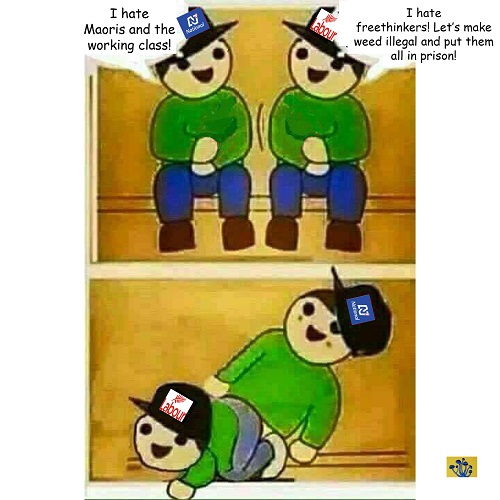
People with no religion don’t seem to think much of the far-right parties either. The correlation between having no religion and voting Conservative in 2014 was -0.04, and with voting ACT in 2014 was -0.23.
Probably the reason for this latter correlation is that the non-religious young middle-class people tend to vote Green, and these heavily outweigh those who vote ACT. Moreover, a very large proportion of ACT voters are from North East Asia and consequently are (at least nominally) Buddhists.
Perhaps demonstrative of a shared interest in free-thinking, there was a significant positive correlation between being non-religious and voting Aotearoa Legalise Cannabis Party in 2014 – this was 0.34.
After all, it’s plausible that if a person rejects the propaganda of one pack of aggressive liars in the form of the priesthood, they might do the some with the propaganda of another pack of aggressive liars in the form of the politicians who have prohibited cannabis.
There was also a significant positive correlation between having no religion and turnout rate in 2014 – this was 0.24. This was probably because of the large degree of disenfranchisment among highly religious Pacific Islander immigrants, as well as the large number of Maoris, in particular solo mothers who are doing it hard and have become religious primarily for the sake of social support.
*
This article is an excerpt from Understanding New Zealand, by Dan McGlashan, published by VJM Publishing in the winter of 2017.
The Four Phases of Knowledge
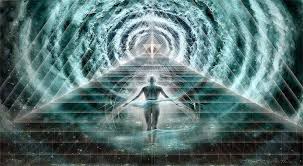
On the path from being completely unknown to being properly understood and all of its implications also understood, knowledge can be seen to pass through four stages, each relating to one of the major alchemical elements of clay, iron, silver or gold. This is true whether we are talking of an individual learning a discrete piece of knowledge or of the entire human species collectively intuiting something.
In the clay phase, little attention is paid to the knowledge. Possibly the knowledge is so poorly understood that it will only be voiced by madmen, and so it is easily ignored or written off as meaningless.
It may also be that the knowledge is hard to come by because the methodology for detecting or replicating it is poorly understood or non-existent, or that it is not appreciated because the people who encounter it are simply too dull to possess the capacity.
During this phase it’s possible that a mediocre mind stumbles upon this knowledge and does not recognise it for its value, perhaps even throwing it away as the wheat with the chaff. It might take a superior mind, one of silver most probably, to recognise the import of this knowledge.
When such a superior mind does come to appreciate the value of this knowledge, and to bring it to the attention of their fellows, then it transmutes from clay to iron.
In the iron phase, the power of the knowledge is appreciated, but not its value or how to use it. It is, however, understood that the knowledge is dangerous, or at the very least has the potential to be disruptive to the established order.
In this phase it is rejected with prejudice, often by making it illegal to promulgate it or any methodology associated with it. This might result in book burnings, or in persecution of anyone who dares to voice what the ruling authorities have deemed to be an excessive subversive opinion, or in making activities associated with it illegal.
This reflects how books and writing were initially repressed by many cultures when these cultures first became aware of them, and especially by Abrahamism in the West, which made a special effort to destroy all knowledge that was not conducive to the thought control system introduced by the priesthood.
The grim nadir of this mindless process may have been the burning at the stake of Giordano Bruno, a Renaissance genius from Italy, who was murdered principally for his belief in pandeism and his allegiance to the Luciferian ideal of fearlessness before death and before the Gods.
If the knowledge is worked enough, which is to say if the heat of illumination is applied to it by means of conscious attention, it might become brilliant, which is to say that it transmutes from iron to silver. This requires that the knowledge be discussed despite the persecution of it – usually in secret.
In the silver phase, knowledge is rejected with thought. In this phase, the knowledge might be debated in the open, but only the wise will debate it correctly; the others will have an agenda. The masses will try to do to this knowledge with silver what was previously done with iron and clay: drive it underground to be forgotten.
Inevitably, knowledge in this silver phase is lied about instead of being countered with violence. Telling lies is, after all, often more efficient than violence because once a person has been successfully lied to they will often promulgate the lie on their own initiative (achieving this effect is the goal of propaganda).
In the same way that silver tarnishes to black, so too is knowledge subjected to dark arts during the phase of silver. There might be concerted efforts to oppose this piece of knowledge through all means of disinformation or misinformation. Propaganda against that knowledge might be widely disseminated with eager help from a variety of media.
If the piece of knowledge survives this phase, the phase of the lunar caustic or perhaps the Dark Night of the Soul, then it will become radiant, and will therefore have transmuted from silver to gold.
In the gold phase, the knowledge in question achieves the state of illumination. This means that the knowledge is fully understood, and so are all of its implications.
This corresponds to the radiance of the light that shines from reflected gold. A piece of knowledge that has achieved the status of gold will radiate its heat through the body and mind of the person possessing it, warming the spirit.
All knowledge passes through these four stages from when it is first dimly perceived to when it is totally personified in all of the body, mind and spirit.
r/K Selection Theory and Political Orientation
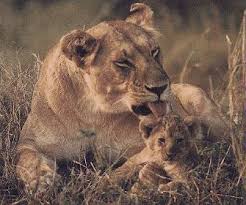
r/K selection theory is an ecological concept that applies to the attitudes that a breeding creature will have towards its offspring. Simply put, all sexually reproducing creatures fall along a spectrum that has zero parental input into the survival of the offspring at one end (the r end) and extremely high parental input at the other end (the K end).
The classic r-strategy is one that has a very high rate of breeding, and a correspondingly very low rate of parental investment, like that of a reptile or a mouse. The classic K-strategy, by contrast, is one that has a low rate of breeding and a correspondingly high rate of parental investment, like that of an elephant or a human being.
As above, so below: the thinking of people can be understood along this exact same parallel. Although biologists don’t look at it like this, it’s possible to view this r/K arrangement as representing the degree of solidarity that exists between human generations.
The r-strategy could be compared to the kind of male that gets a woman pregnant and then disappears from the scene before he is called upon to provide any resources for the offspring. It is even described as “opportunistic”, in much the same way that that kind of male behaviour is.
The K-strategy would then be compared to the kind of male that forms a monogamous pair bond for life, with no intention of finding future female partners to inseminate, and who makes a large investment in terms of time and/or energy in making sure that the offspring of the bond grow up to be fit to deal with the selective pressures of life.
Practically speaking, a male running the r-strategy would have to inseminate more females than a male running the K-strategy, because fewer of the former male’s offspring could be expected to survive to adulthood, on account of the lower degree of parental investment they received.
Moreover, a smaller proportion of those who did survive to adulthood would reproduce, because those who did survive would more frequently be socially or emotionally defective in comparison to those who had a more natural level of paternal investment.
The r/K selection strategy parallels closely the objective of the various political wings. What’s odd, though, is that both wings of the left-right spectrum see themselves as representatives of the K-strategy and their opponents as the representatives of the r-strategy.
Conservatives would consider that the optimal K-strategy would be a monogamous marriage, and preferably a Christian one, and this is the kind of family that appears to be held up in our culture as some kind of ideal. In such a marriage the father would stick around and provide a large amount of investment in a relatively small number of offspring.
They would consider that paying out money in welfare is a mistake because it incentivises r-strategy men to impregnate women and then disappear. In many cases the fear is that welfare incentivises women to get inseminated by dead-beat males and that the rest of us therefore have to carry the burden for children who would not otherwise have existed.
Liberals would consider that the K-strategy involved paying an amount of tax that was sufficient to cover all the requirements every citizen has to grow into a healthy, productive adult. This would mean a high level of investment in every child – schooling, healthcare, freedom from abuse and neglect etc.
They would consider the r-strategy to be what religious conservatives do when they have large numbers of children in adherence to a religious admonition to populate the Earth, and then raise them to be fearful, prejudiced and superstitious.
It appears somehow natural, when reading about the difference, to associate humans and mammals with the K-strategy and reptiles and insects with the r-strategy. Probably this is why both sides of the politico-retard spectrum consider themselves to represent the K-strategy.
Oddly, this gives us a potential way forward for the political system. If both left and right can agree that a K-strategy is morally superior to an r-strategy, then why not forget left and right entirely and run the system along the lines of a K-strategy?