
Why Jacinda Ardern Is Collaborating So Closely With Emmanuel Macron

Establishment media sources reported this week that Jacinda Ardern had been speaking at length to French President Emmanuel Macron about anti-terrorist measures during Ardern’s most recent European junket. Considering that the only example of state-sponsored terrorism ever carried out in New Zealand was carried out at the behest of the French, this alliance seems unexpected, to say the least. This article explains.

In France, Macron has faced half a year of intense protests which have often led to rioting. The Giles Jaunes (“Yellow Jacket”) movement has paralysed Paris and some other metropolitan centres for 23 weekends in a row. Despite a near-total absence of coverage by the Establishment media, the movement has aroused intense passions which have threatened to spill over into widespread violence.

The frightening thing about this movement, from the perspective of the Establishment, is that it has seen the coming together of far-right and far-left elements. Because most governments work to play both of these sides off against each other, it’s an ominous sign for the government when they come together. It means that the guillotines aren’t far away.

Some security analysts are predicting that these protests could boil over into widespread riots this European summer, as it becomes possible for the protesters to remain active overnight. Once this happens, the resources of the French Police might become stretched to breaking point (they are already forced to employ 8,000 officers to deal with the weekly protests alone). This is expected to presage increasingly desperate attempts to maintain order.

Ardern has good reason to suspect that some very bad times are coming to New Zealand as well, as a previous article here has discussed. This is partially because she is causing them, and continuing to cause them, through such measures as doubling the refugee quota, which necessarily lead to an increased number of Kiwis going homeless. But it’s partially because of wider economic and strategic factors that she does not control.

It’s likely that fuel prices are going to continue to rise this year because of Donald Trump’s escalating efforts to isolate Iran, as well as the inexorable squeeze of increasing demand and decreasing supply. This will be a worldwide problem, and it is almost certain to exacerbate the French situation.

The price of fuel in New Zealand is yet to cause any protests, but significant discontent can be seen in a number of FaceBook groups, accompanied by phrases such as “GET THE GAS ROBBING BASTARDS OUT OF HERE!!!!!!!” Further price increases might see this discontent develop into the same street protests that have befallen France. Ardern will be getting advice from Macron about how to deal with any such movement in New Zealand.

Another reason why Ardern and Macron are working so closely together is that both are globalists. The two rulers have both made a point of ruling from a global perspective, even if this explicitly harms their own people at the expense of foreigners. Ardern sees herself more as a United Nations-appointed governor of New Zealand than a representative of the New Zealand people, and that sort of arrogance has traditionally served to spark civil unrest.

Both rulers have a clear plan to destroy national sentiments and national culture within their respective territories, and so both rulers are terrified of a nationalist fightback to their globalist schemes. Branton Tarrant put the shits up them in a way that no other action had ever managed, once again proving that the only language the Establishment speaks is violence. Ardern and Macron will be discussing how to reduce the propaganda value of any further such attacks through social media restrictions.

The truth is that France is descending into civil war, and this is happening as a direct consequence of unsustainable globalist policies. Their decision to allow millions of Muslims and Africans to immigrate to France over recent decades, and to claim welfare benefits as if they were native Frenchmen, has left the French workforce with an impossible burden to carry. The fuel taxes that inspired the past six months of protests were the last straw.

Ardern has every intention of going full throttle on the globalism. She has already demonstrated this with her decision to double the refugee quota, and with the way she exploited the Christchurch mosque shootings to force through gun control measures and Internet censorship. She is blatantly a United Nations puppet, and is ruling in a manner that all is all but guaranteed to spark outrage and resistance.

Therefore, Kiwis should have every reason to be suspicious at the news that Ardern and Macron are collaborating closely, because it suggests that New Zealand will rapidly follow France into a state of collapse.

Ardern and Macron, and their fellow globalists such as Justin Trudeau in Canada and Angela Merkel in Germany, will continue to collaborate closely together so as to fulfill their aspirations of subjugating every country in the world to a single world order. In this effort they will be aided, not only by a compliant mass media, but by a myriad of other anti-nationalist interests such as religion.

*

If you enjoyed reading this essay, you can get a compilation of the Best VJMP Essays and Articles of 2018 from Amazon for Kindle or Amazon for CreateSpace (for international readers), or TradeMe (for Kiwis). A compilation of the Best VJMP Essays and Articles of 2017 is also available.
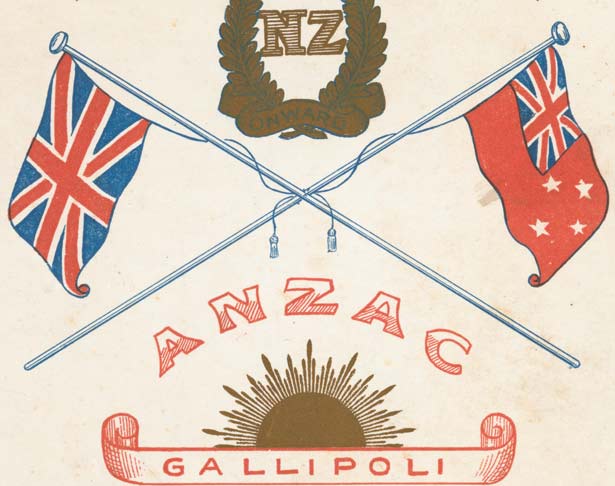
An ANZAC Lesson: The Real Enemy Is Always Behind You

My grandfather Fred was born in West Auckland, on the land that is now McLeod Park, named after his father Harry. Fred saw action in North Africa and Italy with the 2nd New Zealand Division and the British Eighth Army. He survived the war, returned to New Zealand, and raised a family. This essay is about one of the lessons he taught me.

He had, like tens of thousands of other Kiwi men, volunteered to fight in World War Two. Having volunteered, and then having experienced war and decided that it was a complete waste of time and something best avoided, he wanted to teach his offspring some lessons to help them avoid ending up fighting overseas.

He only ever spoke of combat, or of the general deprivations of war, to his wife, but he did tell us grandchildren a lot of stories about the lessons he had learned from his war experience. These generally involved insights about psychology, whether general or specific to the various nationalities he had encountered, or relating to military life and the nature of organisations.

One of his favourite stories related an experience that occurred shortly after the German surrender in May 1945. He was on the back of a troop transport truck with the other members of his company, when they encountered a column of German prisoners of war being marched along the road in the other direction. Upon seeing this, the officer in command of the New Zealand troops ordered the company to not acknowledge the presence of the German troops – after all, the war was not technically over yet.

But when the two forces met, the Kiwi troops spontaneously broke into a cheer, and waved to the Germans, who waved back with similar sentiments. It didn’t matter that they had been ordered not to do this, for the war was over, and that meant that the inhumanities of war no longer needed to be inflicted upon each other. Open fraternisation was, of course, not possible, but it was clear that no genuine illwill existed at the level of the average soldier.

It took a while to fully appreciate the import of this story. The first lesson was the magnitude of the relief that the soldiers must have felt upon understanding that the war was over. The realisation that all the killing and dying had ended would have been a joy that is barely comprehensible to someone who has never experienced combat. This joy would have been powerful enough to override any remaining sense of obligation to follow orders.

I spoke with him about this story once, after it had occurred to me that this feeling of goodwill towards the German soldiers was stronger than any goodwill he felt towards his own leaders, who were, after all, on his side. At this point he gave me a lesson, with an admonition to never forget: the real enemy is always behind you.

The apparent truth is that your enemy is the guy on the other side of the battlefield shooting at you. The real truth is that your enemy is the guy behind you, the one who coerced you into fighting in the first place. Never mind the fact that the guy behind you speaks your language – you still have more in common with the working-class man on the other side of the battlefield than you do with your own commanders.

This truth was illustrated by another, darker story, that took place in Italy. Fred’s company had taken a number of German soldiers prisoner during the battle of Monte Cassino. In the heat of the moment, one of the younger German soldiers broke down in tears, apparently under the conviction that he was about to be shot dead.

Fred offered the young German a cigarette, and instead spoke to him. Why would we shoot you in cold blood? he asked. Do you think we are monsters? The German replied that he had been told that the British were, indeed, monsters, whose insatiable greed had led them to try and take over the entire world and to subjugate it and all its peoples. It was in trying to stop this greed that the Germans had been drawn into the war.

Fred realised, of course, that he had been told exactly the same stories about the Germans. Moreover, the men who had been the ones to tell those stories had not themselves been subjected to the horrors of combat. The New Zealand politicians who had organised the war effort were safely back at home, fat and happy, as were the newspaper men. The sense of betrayal he felt upon realising this inspired the lessons he had to teach me.

Never, ever trust the politician or the newspaper who tells you how evil and terrible some men overseas are. It’s all but guaranteed that the politician and the newspaper are lying to trick you into sacrificing yourself for the commercial interests of their sponsors. World War Two was a banker’s war, Fred taught me, and the soldiers who fought in it were coerced into doing other men’s dirty work for them. There was nothing glorious or honourable about it anywhere.

There are two ways to get a man to do your dirty work for you. The first is to force him, the second is to trick him.

New Zealand’s involvement in World War One had at first been a voluntary affair, but it became a matter of force on the 1st of August 1916 with the passing of the Military Service Act. In total, almost 20,000 Kiwi men were conscripted for military service, roughly 20% of the total who served. Some 3-4,000 of these men were killed in battle.

By the time World War Two rolled around, the propaganda of the Establishment had become a lot more sophisticated. This was thanks, in large part, to men such as Edward Bernays, who had studied the use of propaganda and how to make it more effective, and who had written about it in books such as Propaganda. So they knew how to use the apparatus of mass media to convince men to join the Army.

This meant that the Establishment media could simply pump out enough stories about how the Germans bayonetted babies, and how they were trying to take over the world, and how Hitler was a unique evil that demanded a unique response, and enough people would believe it so that they didn’t need to conscript anyone any more. Men would simply volunteer to fight.

Fred raised me so as to never fall for the propaganda. Never to believe the politician, never to believe the media. Because, at the end of the day, the real enemy is always behind you. Your real enemy is not the opposition soldier but the one who raised the company, battalion or Army that you are now a member of. He’s the real enemy because the opposition soldier is, in the final analysis, only protecting himself from you.

Once, after I had been studying some military history, I remarked to him about conscription. Sure, I knew that the reasons behind the Vietnam War and the Gulf War were equally as false as for all the other wars. I could be smart enough to know that the television was lying to me about the need for me to participate in the next war, but if enough people my age were also aware of this, what would stop them going back to conscription?

What would I do if a conscription officer came to my house?

His reply was simple, and borne of the bravery that comes from having to face combat: “Shoot the bastard.”

*

If you enjoyed reading this essay, you can get a compilation of the Best VJMP Essays and Articles of 2018 from Amazon for Kindle or Amazon for CreateSpace (for international readers), or TradeMe (for Kiwis). A compilation of the Best VJMP Essays and Articles of 2017 is also available.
20 Years Since Columbine: Are We Still Nihilists?

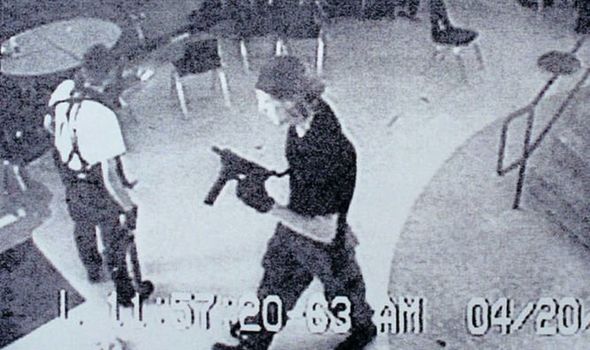
This week saw the 20th anniversary of the Columbine High School massacre. The massacre shocked a Western World used to adult serial killers, because we didn’t believe that high schoolers could also be capable of such evil. In the aftermath of the massacre, the consensus was that the motivation for the deed came from nihilism. This essay asks: are we still nihilists?

History can be thought of as a series of attempts to solve the basic existential question of what we’re supposed to be doing here on this planet.

For many centuries, we had religion, and the struggle between good and evil, chaos and order. But then we killed God, and (as Nietzsche predicted) this threw us back into Nature, and the world of eternal struggle. This played itself out in the titanic clash of empires that was World War One, and the following clash of nations that was World War Two. After three decades of trauma, we decided that we’d had enough bloodshed, and so we tried a new narrative.

The postwar consensus was based around pure hedonism. After three decades of deprivation, something as simple as being able to buy a milkshake or a cheeseburger on demand was seen as a great pleasure that demanded appreciation. Later, the number of television channels to which one was subscribed was the sign of material fortune. The problem was, of course, that hedonism is not an answer to spiritual problems.

The Columbine High School massacre was perhaps the first major sign that the postwar consensus had failed. The prosperity the Boomers enjoyed was based on the idea that material consumption was the reason for human existence. This was great fun, but it was only ever a distraction. It never solved the basic existential dilemma.

Klebold and Harris’s actions were an example of something that this column has previously called anarcho-nihilism. This is where one proposes to destroy the pre-existing system without offering any alternative system that might replace it. One simply destroys for the sake of destroying.

Anders Breivik and Brenton Tarrant were later examples of this phenomenon. Both men wrote entire manifestos that detailed at length their grievances with the world and the way it was being run. Enemy crimes were listed exhaustively, but neither man suggested much in the way of an alternative. Both will go down in history, but neither as a builder of nations.

Anarcho-nihilism could be said to be the challenge of our time. This isn’t the same as simple nihilism, which was the problem of previous times, because nihilism didn’t always lead to a violent assault on the old order. It usually led to simple suicide, which meant that the ruling class were not particularly bothered by it. Since March 14th this year, there have been more deaths to suicide in New Zealand than to terrorism, but the latter has taken up a hundred thousand times more emotional energy.

If we are to avoid going down the path of Breiviks and Tarrants destroying the whole world in a hail of bullets, we need to assert some kind of anti-nihilism that meets the emotional needs of the masses, while not repeating the mistakes of previous attempts at this.

An idea of what form this anti-nihilism might take can be seen in the various corners of cyberspace. In 1999, The Shroomery was only just getting started. Now it is one of the most popular counter-culture websites in the world, with an Alexa ranking in the top 30,000. Here it’s possible to find all kinds of discussions about aspects of spirituality that ordinary people would have trouble being able to comprehend – at least for now.

Any anti-nihilistic movement powerful enough to truly appeal to a great number of people will have to achieve a number of things. At a minimum, it must convince people that their actions in this world, and specifically whether or not those actions increase or decrease the suffering of their fellow sentient beings, are meaningful.

Achieving this may require the promulgation of the kind of sentiment that arises as a result of the psychedelic experience, the kind that is often derided as “hippie” or “new age” but which, if examined closely, answers with awesome clarity the questions of how we got here and what we’re supposed to be doing. This might require the reinstatement of something like the Eleusinian Mysteries, so that we can collectively revel in something beyond the material.

At time of writing, in 2019, it seems like not only are we nihilists, but we are destructive ones, and not only that, but the destructive and nihilistic sentiments are getting worse. That is certainly cause for alarm, but it’s also cause to take action, and to help promote an alternative. With enthusiastic promotion of psychedelic medicines for curing spiritual illness, it may be possible for us to finally overcome the threat of nihilism, and to allow a new spirituality to rise.

*

If you enjoyed reading this essay, you can get a compilation of the Best VJMP Essays and Articles of 2018 from Amazon for Kindle or Amazon for CreateSpace (for international readers), or TradeMe (for Kiwis). A compilation of the Best VJMP Essays and Articles of 2017 is also available.

We Are All One – But So What?

A cosmic truth, realised by many people who have meditated or done enough psychedelics, is that we are all one. Despite the fact that it appears that each of us occupy a separate body, forever dooming us to stand apart from everyone else, mystics and shamans throughout the ages know that we are all intimately connected on a spiritual level. However, as this essay will argue: so what?

The oneness of all that exists, and the fact that separateness is only an illusion, is an inescapable truth about reality that comes to many people seeking enlightenment. It usually comes like a lightningbolt out of the blue, and usually when a person is deep in meditation or high on a powerful psychedelic.

The truth is that there is only one thing that can be said to exist, and that is the consciousness that is God. So as to escape from the infinite loneliness that is being the only thing to exist, God has created this illusion which we call the physical world, and has split up into an infinite number of separate consciousnesses. Each one of these consciousnesses streaks a unique path through the Great Fractal.

All of us are a unique expression of the consciousness of God, the possessor of a divine spark. This means that, on the level that really matters, every other creature on this planet is the same as us. Every other creature is an expression of God, and their lives are being experienced by God, just as ours are. Therefore, everything else that exists is as important as God, the most important thing possible.

But so what?

At the end of the day, every individual being still has to play the role that it was created to play. Each of us are a biological organism that is subject to certain chemical and physical laws. These laws demand that the closed systems that are our bodies absorb energy from the outside world. Since we cannot photosynthesise, we have to eat things, and because we can only eat organic matter, we have to kill in order to live.

The rat and the mouse still have to invade the granary, for if they don’t, they will themselves die. If you are the granary owner, you have to accept that they are going to keep coming whether you like it or not, and therefore you have to kill them first if you want to keep your food supplies safe. There is no shame in this – if your role is to kill, then kill you must.

It doesn’t matter if those you are killing are fundamentally the same unique expressions of God that you are, because the ones you are killing for are also unique expressions of God. The lion still has to chase the zebra, for if she does not, her cubs may starve. Behind many a terrorist is a person who loves their own people.

Some people cling to the notion that it’s possible to find perfect peace in this place, as if it were simply a matter of willing such a thing to be possible. Many of these people have the conceit that this desire for peace is a virtue, something that makes them better than those who don’t have it.

In truth, however, these people are actually less moral than others, because they reject one of the basic principles of the universe, which is that life is eternal struggle. Rejecting a basic principle of reality because one would prefer that it didn’t exist reflects weakness, and a lack of courage, not superior moral insight.

The full truth is even more fundamental than this. The yin is one with the yang, and both are part of the Tao. Neither complains that the other consumes or abuses it. Both play their role perfectly. Therefore, someone who rejects completely the idea of conflict is like someone who has rejected the yin or the yang. They cannot be a complete person, at peace with the world.

So if different human groups come into conflict, and fight, this doesn’t necessarily mean that the people involved have made a mistake somewhere, or that one side must necessarily be immoral or evil. It may just be that the different groups were fated to fight. The fact that we are all one doesn’t mean that fighting must never happen – it just means that we take our turns at being the winner.

Of course, this is not to argue that we should all be fighting all the time. Just because life is eternal struggle doesn’t mean that it’s nothing else. A person’s true role might to be to question and to resist their violent and aggressive impulses, or to sublimate them into something beneficial, not to surrender to them.

But if a person’s role is to go along with their violent impulses, then they ought to do so with full enthusiasm. Realising the fact that all is one doesn’t mean that one is absolved from ever having to fight or to struggle. Even after enlightenment, one still has to live one’s life, and to play one’s role.

*

If you enjoyed reading this essay, you can get a compilation of the Best VJMP Essays and Articles of 2018 from Amazon for Kindle or Amazon for CreateSpace (for international readers), or TradeMe (for Kiwis). A compilation of the Best VJMP Essays and Articles of 2017 is also available.