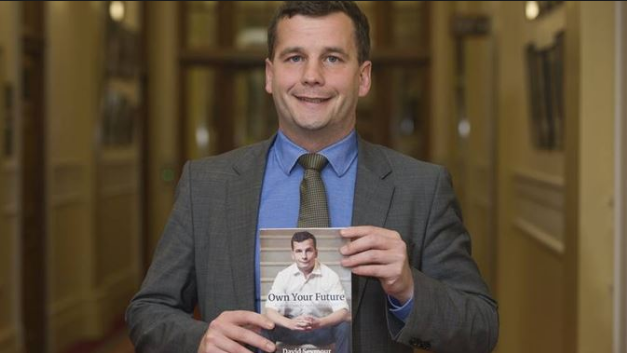
VJMP Reads: David Seymour’s Own Your Future XII (incl. Summary)

This reading carries on from here.

The eleventh, and final, chapter in Own Your Future is ‘Treaty of Waitangi’. Given eight pages at the back of the book, it’s hard to imagine that Seymour takes this issue very seriously. One gets the feeling that it will be a quick virtue signal with one quiet mention of the Resource Management Act and that would be it.

He starts with a story about how the elders at the Te Tii Marae preferred him to the Green Party MPs at a Waitangi gathering on account of that he knew his Ngapuhi genealogy. Dismissing the Green MPs as “up themselves”, he is very much the hero of this story.

True to form, he then launches into the virtue signalling, being careful to place a macron over the a in ‘Maori’ and pushing a warm, fuzzy, globohomo vibe about how much he loves Maori culture. Seymour comes across as revoltingly dishonest and shallow here, considering that his ACT Party supported the Fifth National Government in its destruction of the Maori people. Politicians demand to be judged on their words, not their actions, like all hypocrites.

What Seymour writes here isn’t unreasonable on the face of it. It’s certainly true that many of the land confiscations made by the New Zealand Government were done so on spurious grounds, often outright false, and it is not reasonable for the beneficiaries of this process to get away with it scot free.

The problem is that the same logic can justify a great many other things. What Seymour and his kind like to call “profit”, others like to call “wage theft”. So if it’s true that “if you take something that is not yours, you should give it back” – which is apparently an ACT Party principle – then are the New Zealand working class owed some of their past production that was taken off them in the form of company profits? Why are wages dwindling relative to the cost of living? Seymour doesn’t seems to care about that side of things.

Indeed, the first mention of the RMA comes four pages in. Here, Seymour objects to the idea that local iwis might be allowed to object to land developments under the RMA. This, he cautions, leads to the possibility of Maoris being given a special class of citizenship. So Seymour is happy to virtue signal about how important Maoris and Maori culture are, he just doesn’t want to pay anything extra for it.

Laying down his neoliberal credentials harder than anywhere else in the book, Seymour declares that “New Zealand at its best” can be found at a citizenship swearing-in ceremony, where a bunch of people from other nationalities can be found “uniting as true Kiwis”. Not for Seymour the argument that a true Kiwi is someone who has roots in the country, or someone who can tell stories about his ancestors and their childhoods in the country. Kiwiness is merely another commodity to be bought and sold.

We could bet money that Seymour would profoundly disagree with this article about how being a Kiwi is a matter of the depth of one’s roots in the country.

He is, however, correct when he points that that Maoris have not actually benefit from all the special treatment of the last decades, and in some major measures (such as home ownership) have actually lost ground. He further makes a good point when he mentions that the problems faced by Maoris are the same problems as faced by all New Zealanders to a greater or lesser extent.

In summary, Own Your Future is a terrifying vision of how money and virtue signalling can matter more than heritage, blood links or any other basis for solidarity. David Seymour is the High Priest of New Zealand Neoliberalism, proudly carrying on the ACT tradition of valuing money more than people. He follows Rodney Hide, Richard Prebble and Roger Douglas in the ideology that everything in the nation can be packaged up and bought and sold for cash, people just as well as timber and lamb chops.

In this sense, he is unrepentant: he believes that New Zealand has a moral obligation to take care of foreign refugees out of general taxation money, but has no such moral obligation to take care of its own poor, even though many of them were created by the horrors of neoliberalism, the very same political philosophy he espouses in this book. Own Your Future stands out, even by the standards of political treatises, as an example of absolutely shameless virtue signalling.

Despite this, he makes several very good points about government overreach, especially with regards to its failed War on Drugs. He isn’t wrong when he points out that unnecessary taxation sucks energy unnecessarily from people, and although Seymour could never be a Georgist, he is correct when he labours the link between capitalism, innovation and prosperity. Perhaps, for that reason, there is merit in having an ACT Party seat in Parliament.

*

If you enjoyed reading this essay, you can get a compilation of the Best VJMP Essays and Articles of 2017 from Amazon for Kindle or Amazon for CreateSpace (for international readers), or TradeMe (for Kiwis).

Black Caps in the United Arab Emirates 2018, Second ODI Preview

The BetFair odds have narrowed since the Black Caps’ emphatic 47-run win in the first ODI, a win that included a Trent Boult hat trick. Surprisingly, though, they are still the underdogs, paying $2.26 on BetFair in the second ODI starting midnight tonight in Abu Dhabi. History suggests that this is an excellent bet – New Zealand have won their last 12 ODIs against Pakistan and won the last one with comfort.

The Black Caps will see little reason to tinker with what was a solid and effective side in the first ODI.

The core batting axis of Munro-Williamson-Taylor-Latham did the job for New Zealand, scoring 204 of the team’s 266 runs. Ross Taylor averages 61 against Pakistan and is a rock at No. 4, while Tom Latham averages 45 from his last 20 ODI matches. He struck at 106 over the course of his 68 in the first ODI, and will look to be positive again because of the expected need for high scoring from the middle order in next year’s Cricket World Cup in England.

However, the junior batsmen were poor. George Worker, Henry Nicholls and Colin de Grandhomme contributed one run between them, which meant that the bowlers had to finish the job of getting them over the line.

Worker is in the side as an injury replacement for Martin Guptill, and so the problem of weakness at opener will solve itself, but Black Caps coach Gary Stead will be concerned about that middle-order weakness as well. The balance of the side might demand that the Black Caps choose a batsman at 6 who is a more accomplished hitter than Nicholls.

Glenn Phillips is a major contender for this role, but his returns in the T20 series and in the A series before that were poor. Corey Anderson is another option, and he was excellent here for the Black Caps in the 2015 Cricket World Cup, but has been unfortunate with injury.

As far as the bowling is concerned, far too much is riding on Trent Boult.

Questions must continue to be asked about Tim Southee’s place as the opening bowler of the ODI side. Since the 2015 Cricket World Cup, Southee has averaged 43.34 with the ball, taking 43 wickets from 38 games. He neither swings nor seams the ball to any real extent, and neither is he fast or accurate. By contrast, Trent Boult has averaged 24.70, taking 79 wickets from 40 games.

Matt Henry has taken 39 wickets from his last 20 games at an average of 23.82. Incredibly, Henry only played 4 ODIs in the whole of 2017, which makes his lack of gametime seem like an appalling waste on the part of the Black Caps coaches. Dropping Southee and replacing him with Henry seems like a slam-dunk decision that would give the Black Caps the most dangerous new ball pair outside of India.

The Black Caps appear extremely vulnerable if Trent Boult doesn’t knock the top off the opposition batting order. Lockie Ferguson is a gun bowler and is improving steadily (16 wickets at 23.56 from his last 10 games), but doesn’t yet have the ability to threaten that even Henry has, much less Boult.

With Southee ineffective and de Grandhomme a true part-timer, this means that the only other attacking option is Ish Sodhi. Sodhi is a good bowler and is improving steadily – he has taken 17 wickets at 30.00 from his last 10 ODI matches. The question is whether he can pose enough of a threat with the ball for the Black Caps to not always lose the middle overs.

The big risk is that Pakistan will easily be able to consolidate once Boult finishes his first spell, because there is little threat from the rest of the bowlers. Pakistan had a century stand for the 7th wicket, and the Black Caps should rightly be worried about their ability to finish a game off.

Black Caps (probable):

1. George Worker
2. Colin Munro
3. Kane Williamson (c)
4. Ross Taylor
5. Tom Latham (wk)
6. Henry Nicholls
7. Colin de Grandhomme
8. Tim Southee
9. Ish Sodhi
10. Lockie Ferguson
11. Trent Boult

*

Dan McGlashan is the man with his finger on the statistical pulse of New Zealand. His magnum opus, Understanding New Zealand, is the complete demographic analysis of the Kiwi people.

The Case For Cannabis: Prohibition Raises Prices But Also Raises Incentive to Supply

One of the most common arguments for cannabis prohibition is a microeconomic one. The idea is that making cannabis illegal makes it more expensive, which means less people can afford to use it, which means the harmful effects of cannabis use are minimised. The logic is that people won’t be able to afford to harm themselves. As this article will show, this argument, common though it is, is mistaken.

If one assumes that cannabis use is inherently harmful, then one appears to have a clear-cut case for reducing the amount of suffering in the world by making it illegal (that cannabis is not inherently harmful is another argument, and will not be considered here). Making it illegal means that only the black market is able to supply it, which means that the end user has to pay a risk premium that takes into account the cost of Police harassment of the cannabis grower, and the inefficiencies that this harassment introduces into the growing process.

This risk premium makes cannabis more expensive, because the end user has to pay for all of the product confiscated by Police, or stolen by other criminal actors, or which was never grown because the size of the grow room was limited by the need to keep it clandestine. All of these factors serve to drive the price of cannabis up, which – according to the law of supply and demand – serves to reduce cannabis use.

The mathematics checks out. However, the core economic argument that cannabis prohibition reduces harm by disincentivising people from buying cannabis falls down, for a number of reasons.

It is true that prices fall sharply when cannabis becomes legal. The average price of an ounce in Colorado is NZD259, which means that it has fallen almost by half since legalisation took place. Websites that track the price of cannabis across various American states show that the price has fallen as low as NZD100 an ounce in places like Washington, where it is both legal and where the ability to supply is relatively unconstrained.

It isn’t true that this fall in prices leads to more use. Surveys in Washington have found that teen rates of cannabis use remained the same after cannabis legalisation. It is also noteworthy that teen rates of cannabis use in Holland are unremarkable in any sense. These surveys reveal that cannabis prohibition does not deter use.

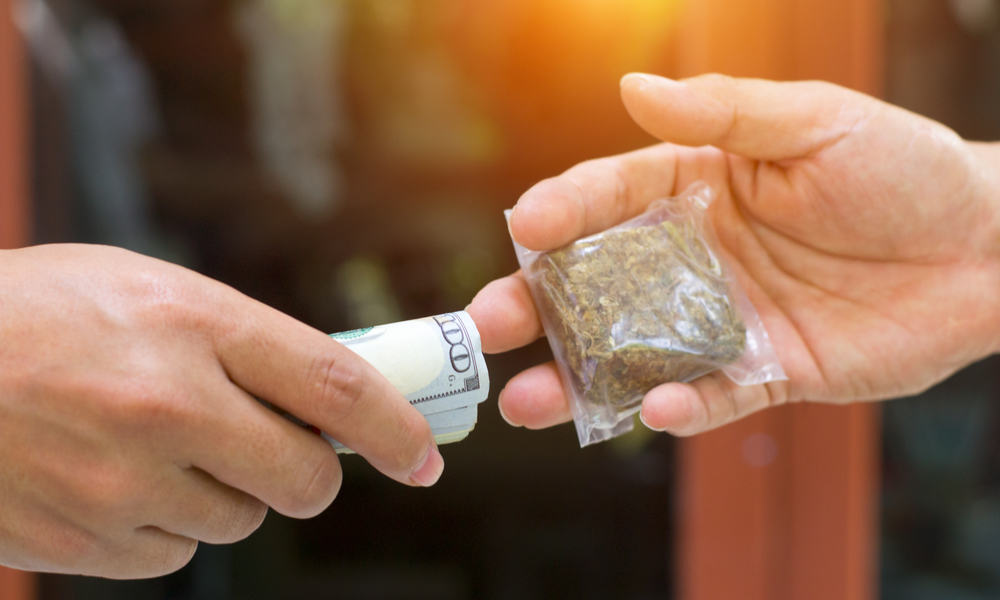
In any case, the most important question to be asked about the high prices of cannabis caused by prohibition is this: who is getting all the money? In the same way that alcohol prohibition made Al Capone and his fellow Chicago gangsters rich, so too does cannabis prohibition funnel consumer wealth into the hands of the black market. This inevitably means criminal gangs, most of whom are deeply unpleasant people who are using the money to fund enterprises that genuinely do cause mass human suffering.

Once criminal gangs start getting involved in the cannabis trade, it means that there is going to be a lot more violence than if they weren’t involved. The black market means fighting for drug turf, which means intimidating other members of the black market away from certain territories through violence and the threat of violence. It means murders, kidnappings, gun violence, and all manner of other low-rent behaviours that lower everyone’s quality of life.

High cannabis prices incentivise all of this. The higher the cannabis prices are, the stronger the pull of the black market for cannabis on the various shady operators out there. Not only that, but the higher the stakes, the more ruthlessly people are willing to behave in order to secure a share of the profits. No-one is going to kill anyone else over the right to sell cannabis for $75 an ounce.

So the fact is that, in the final analysis, the economic equation balances out. The higher the price of cannabis, the lower the demand, true – but the higher the price, the higher the incentive to get into the black market opportunities for cannabis. If you are a criminal, and you don’t want to work, then growing some cannabis to sell to 15-year olds at $400 an ounce seems like an attractive proposition. If those 15-year olds are happy to wait until they’re 18 to buy it legally at $150 an ounce, well then you’re shit out of luck.

Cheap, legal cannabis would take a large slice of the black market, and render all criminal action in that slice uneconomic. This has several advantages, the foremost of which is that criminals can’t make as much money out of cannabis as before and therefore do not dominate the market. Another advantage is that people will be consuming a much higher grade of cannabis once it’s grown by professional horticulturalists and not gang members, and they will be able to do so more safely.

Cannabis ought to be made legal in order to disincentivise criminal actors from moving into the black market for it. Cheap, mass-produced, high-quality cannabis will take away the profit from what is currently a black market enterprise, which will have the effect of removing most of the criminal element from the cannabis trade. This will have the overall effect of reducing crime and suffering, because the criminal element causes more suffering than is prevented by cannabis being too expensive for some people to harm themselves with.

*

This article is an excerpt from The Case For Cannabis Law Reform, compiled by Vince McLeod and due for release by VJM Publishing in the summer of 2018/19.

Black Caps in the United Arab Emirates 2018, First ODI Preview

The Black Caps will be looking to register their first win under the new coaching regime of Gary Stead when they play the first ODI against Pakistan in Abu Dhabi tonight (12am NZT). Returning to a more preferred format, they will be keen to show that they were not deserving of a 3-0 scoreline in the T20s. Having pushed Pakistan very closely in the first two matches of the T20 series, they will back themselves to get a win tonight.

Pakistan are the favourites on BetFair, paying $1.64 to New Zealand’s $2.54. This reflects a large degree of home advantage, because Pakistan have lost the last 11 ODIs in a row to New Zealand, and are ranked 5th on the ODI table compared to New Zealand’s 3rd. It may also reflect some of Pakistan’s red-hot T20 form, although New Zealand would back themselves to win any 50-over contest against a side they have beaten the last 11 times.

The Black Caps will be frustrated that there are some injuries, because they will force some difficult selection decisions. Martin Guptill will not participate in the ODI series on account of still being injured. Neither will Corey Anderson play any further role in the tour on account of a heel injury, which means that Colin de Grandhomme is all but guaranteed a spot in the ODI middle order. Todd Astle will miss this ODI because of knee irritation, which opens a spot at No. 8.

However, the core of the first-choice Black Caps side will be present. Indeed, new Black Caps coach Gary Stead is spoilt for choice in some areas.

For one thing, most of the top order is nailed-on in the form of captain Kane Williamson, Ross Taylor and Tom Latham. The first two are arguably New Zealand’s two finest ODI batsmen ever and Latham, although he might be the junior partner here, averages 42 from his last 20 ODI innings. Ross Taylor averages 62 from his last 50 ODI innings and is essentially now Martin Crowe reincarnate.

Colin Munro, who was very good in the T20 series with a 58 and a 44, will probably be continued with as the white-ball opener despite his lack of success there in the ODI setup. The plan is for him to replicate what Brendon McCullum used to offer and his T20 feats show that he is capable of it. Henry Nicholls has probably done enough to hang on to the No. 6 spot, with Colin de Grandhomme at 7.

The difficult choice comes when it comes to replacing Guptill. George Worker is the favourite, having opened the batting in both 4-day and 50-over formats in the recent New Zealand A tour matches in the UAE. A less likely option is a reshuffle that moves Latham back to opener and brings Mark Chapman or BJ Watling into the middle order, and even less likely (but still possible) is going for two hitters, England-style, and partnering Munro with Glenn Phillips at the top.

There is plenty of choice in the fast bowling stocks as well. Trent Boult returns from paternity leave, which means that Williamson can count on ten overs from New Zealand’s premiere bowler. The other opening bowler will be either the incumbent Tim Southee, who has been poor in ODIs in recent years, or Matt Henry, who was excellent over the winter in England country cricket.

The third seamer, if one is chosen, could be the other one of the two mentioned just now, or the ever-improving Lockie Ferguson, or even Adam Milne, who was arguably the first-choice third seamer at the time of the 2015 Cricket World Cup. Then again, there might not be a third seamer if the Black Caps decide to go with two spinners and to get 10 overs out of de Grandhomme, Munro and Williamson.

In any case, Stead will be forced to leave at least one excellent seam bowler out of the starting XI.

The Black Caps might play only the one spinner, but will probably play two on account of the slowness of the UAE wickets. The first choice is Ish Sodhi, who has become much more consistent with the white ball recently and who is the incumbent, but we are also likely to see Ajaz Patel feature.

New Zealand (probable):

1. George Worker
2. Colin Munro
3. Kane Williamson (c)
4. Ross Taylor
5. Tom Latham (wk)
6. Henry Nicholls
7. Colin de Grandhomme
8. Matt Henry
9. Ish Sodhi
10. Ajaz Patel
11. Trent Boult

*

Dan McGlashan is the man with his finger on the statistical pulse of New Zealand. His magnum opus, Understanding New Zealand, is the complete demographic analysis of the Kiwi people.