
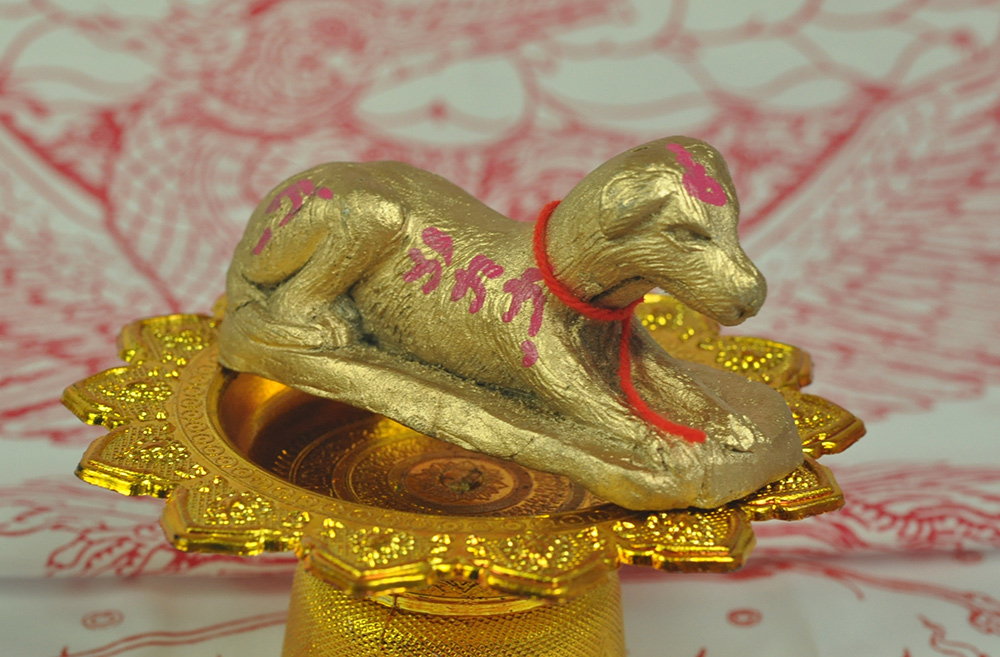
Alchemical Gold, Gold Magic and Gold Magicians

In alchemism, the Elementary Masculine Perspective divides reality into four elements of increasing value: clay, iron, silver and gold. Previous articles looked at alchemical iron and alchemical silver, what they represent, and what sort of person embodies them. This article looks at the fourth of the four masculine elements: the radiant and enigmatic substance known as gold.

The primary masculine division is into precious and base. The secondary masculine division is the further division of the base, as well as the further division of the precious into silver (colourless precious) and gold (colourful precious), with the latter more precious than the former.

That gold is shiny and colourful means that it represents the highest frequency of all, namely that of God, that which makes all things possible. The chemical symbol ‘Au’ comes from the Roman word aurum, which shares a root with the modern word aura. It was believed that the substance possessed an aura such that it was holy, or from God.

Elementary alchemy has it that the division between yin and yang can be represented as the division between clay and iron, with the first passive and soft and the second active and unyielding. Silver relates to a balance of iron and clay that is more correct for the current situation than either extreme, and represents how according with the World of Forms is more valuable than simply being an animal.

Gold is a second order of balance, between and beyond all of silver and clay and iron. What this means is that gold is unafraid to act as pure iron or pure clay, should the situation demand it. This makes it different to silver, which attributes value to the middle ground between the feminine extreme of clay and the masculine extreme of iron, and which is reluctant to act as either.

Silver is prone to a particular form of the balance fallacy called the Conceit of Silver. Essentially this means that silver always believes that it’s of the highest value (i.e. that it is of gold). Gold is willing to place itself below silver – and that is precisely why it is more valuable than silver. Gold is without ego.

Gold represents a kindness that none of the other elements are capable of. Silver is too conceited, iron too harsh and clay too soft. This kindness is something extremely valuable, because without it this world is something of a hell. It is why Aleister Crowley was impelled to write “Love is the law, Love under Will.”

Kindness given of the free will of the giver, and not to secure some future advantage, is real gold, and invaluable. Without it, nothing else in this world can have any real value, for gold gives meaning to things.

Being the most malleable of all metals, gold is softer than both silver and iron. This relates to the fact that it is also the most expansive. One gram of physical gold can be beaten out into a sheet a square metre in size; by similar means, a tiny amount of alchemical gold is enough to make a tremendous number of things possible. Therefore, gold is pliable enough to achieve things that silver cannot (much less iron or clay).

Gold relates to the widest, broadest, most fundamental and most deeply hidden knowledge. It is the esoteric to the exoteric of silver. Knowledge of gold is knowledge of the metaphysical fundamentals, what Plato called the World of Forms. Silver is knowledge of the material world; gold is knowledge of the immaterial. Silver is knowledge of the current state of affairs; gold is knowledge of the eternal.

Metaphorically, gold refers to that of the greatest value. No element is more valuable than gold: therefore, gold is perfection. Gold also relates to God, which is to say that it cannot be described, on account of being more fundamental than language. It is consciousness to the intellect of silver, the muscles of iron and the viscera of clay.

Gold magic relates to a person’s frequency of consciousness. If a person can overcome suffering and come out the other side neither pacified nor cruel, then it can be said that they are in possession of spiritual gold. A human being that has never suffered will be something like the silver. One who has suffered and become cruel as a result is like the iron, and one that has suffered and become meek is like the clay. To remain kind even when one has suffered is like the gold.

Psychological and spiritual healing fall under the rubric of gold magic. Successful gold magic will induce a depressed person to be more happy, an anxious person to be calm, and a despairing person to find meaning. Silver cannot do any of those things because its nature is cold and austere. Silver cannot impress with warmth of kindness. Gold causes those suffering in its presence to feel that everything is going to be okay.

This an esoteric quality possessed by gold magicians. You could never trust a person who said that they were a gold magician, and any gold magician would know this, and therefore they would never say it. Anybody claiming to be a gold magician could be confidently said to actually be a silver magician, because a real gold magician wouldn’t go around bragging about how wonderful they were – they would be content that their behavioural example was such that they would be sufficiently rewarded.

The presence of alchemical gold is felt on such a fundamental level that it causes its possessor to radiate warmth. Unlike silver, which can be measured in IQ tests and university achievements, gold cannot be measured. This is a feature of its divine origin. It can only be sensed – and some people sense its presence where others do not, which is another reason why it defies description.

*

If you enjoyed reading this essay, you can get a compilation of the Best VJMP Essays and Articles of 2017 from Amazon for Kindle or Amazon for CreateSpace (for international readers), or TradeMe (for Kiwis).
Why There’s Nothing, Fundamentally, To Be Afraid Of

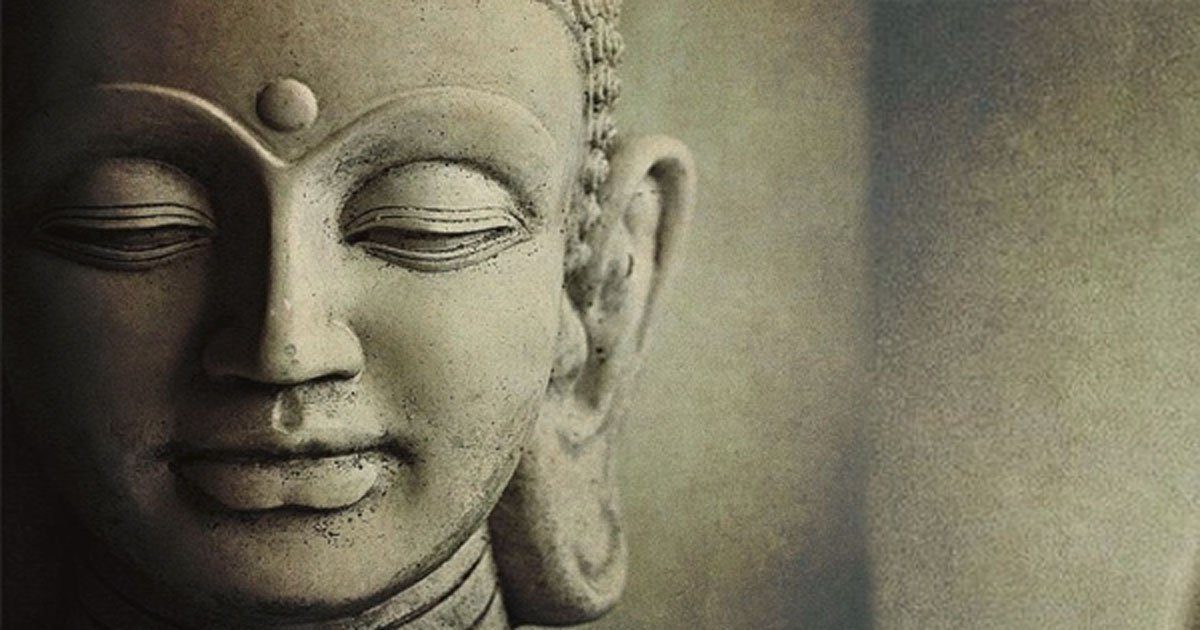
Some people wonder why the great sages, such as Buddha, are always depicted smiling. It seems like there’s some great and uplifting secret that they are privy to, knowledge of which has liberated them from all the suffering in the world. Buddha knew a great many things. One piece of knowledge he shared with Alan Watts: that there’s nothing, fundamentally, to be afraid of.

Essentially there is no reason to ever worry or to feel bad about things that might happen in the future. This seems like an article of faith, and perhaps an irrational one, until one looks at the philosophy behind it.

Most people think that they know what lies in store for them as a human being on this planet. That they will die, and suffer as they do so. What lies in store is growing older, more tired, more decrepit, and eventually more sick, until a major organ fails and one dies painfully. Probably this death will be preceded by several decades of increasing pain in joints and muscles, as well as eyesight, hearing, bowel and bladder failure, and maybe even a stroke or two.

It follows from this that life itself is suffering, and increasingly so as one ages. We can conclude that we know we’re going to die, and that this death is going to be painful. Therefore, we know that an attitude of apprehension and even fear towards the future is rational. This is why almost everyone has one – we know that the future brings immense suffering.

But do we really know this?

One knows that one is conscious. Thinking about it, it’s possible to realise that this is all one really knows. This is the one and only single fact that one can ever state with certainty. Everything else is a matter of probability, even questions like “Will the Sun rise tomorrow?”. It’s not certain that the Sun will rise tomorrow, because the Earth could be destroyed at any time by a comet, rendering the question of sunrise meaningless.

Because nothing else can be known, nothing else can be stated as an eternal fact about reality. Only the fact that one is conscious can be stated as such. All else belongs to the category of contents of consciousness, which is to say that all else is merely “things that one is aware of”. These phenomena are not facts in the same way that one can state “I am conscious” as a fact. Rather, they are probabilities.

Let’s say that life is suffering. Fair enough, life is suffering, and it gets worse until the physical body dies. So what? There is no reason to think that one will still be aware of the suffering of one’s physical body after its expiration. One is conscious now, and one is conscious of a physical body, and this physical body suffers – so what?

There is no reason to think that consciousness is still aware of the suffering of the physical body after death. Indeed, consciousness might then become aware of a new body, or might dream up something else entirely. Therefore, any physical suffering can never be any more permanent than any other phenomenon of Nature, such as the ebb and flow of the tides. Birth, death, doesn’t matter: all is just an oscillation from pain to pleasure, with high points and low points.

For this reason, there is no need to fundamentally be afraid of the decay and death of one’s physical body. There’s every reason to think that on the other side of death is the absence of all suffering, and all pain is just a shadow of death. All suffering is an effect of material phenomena, which are all transitory in nature. If there is no reason to fear death, then there is no reason to fear pain either. All suffering will pass.

Note that the argument here is that there is nothing fundamentally to be afraid of. There might be plenty of things to be superficially afraid of – death and pain being the foremost of these. It makes sense to be afraid of getting hit by a train, not because the consequences of getting hit by a train would be permanent, but because one has a role to play here in this dimension of reality in which we find ourselves, and one’s role is (in all likelihood) one that avoids getting hit by trains. Not to be fundamentally afraid does not imply that one ought to behave recklessly or without regard for one’s physical well-being.

There is no reason, fundamentally, to be afraid of anything, because all suffering is a phenomenon that will pass. We do not need to be afraid of pain merely because pain is painful – this is sufficient reason for pain to be avoided, but not for it to be feared. We can appreciate that pain, like all natural phenomena, comes and goes, and that we remain the observer of it, as we remain the observer of all material phenomena.

*

If you enjoyed reading this essay, you can get a compilation of the Best VJMP Essays and Articles of 2017 from Amazon for Kindle or Amazon for CreateSpace (for international readers), or TradeMe (for Kiwis).

The Case For Cannabis: Cannabis Is Not A Gateway Drug

A common argument for cannabis prohibition asserts that cannabis is a gateway drug, in that using it inevitably leads people to using harder and harder drugs. The idea is that we need to keep cannabis illegal so as to keep people off the pathway that leads people onto truly destructive substances. As this article will examine, there is a modicum of truth to the gateway effect, but not in the way it’s usually presented.

The usual way that the gateway drug theory is portrayed is as follows. An individual tries cannabis for the first time, and experiences a cannabis high. This is a pleasurable sense of peace and euphoria that the user decides they want to have again. So they try cannabis again, and have a good time again. So they use it some more, and soon find that they need more and more of it to get the same level of hit.

Eventually the user is addicted to cannabis. After a while, cannabis is no longer able to do the job. At this point the drug user naturally comes to seek out harder drugs, such as methamphetamine, cocaine and heroin, in the hope of getting a chance to relive the original amazing high that cannabis gave them. For some reason, the idea that cannabis use leads to heroin use is particularly prevalent in some circles, especially among the elderly (which reveals that the genesis of the gateway drug theory is in old-fashioned superstition).

The logic is that cannabis prohibition should prevent people from getting exposed to that initial cannabis high, by way of making the substance harder to get hold of. The harder it is to get hold of, the fewer people get addicted, and so the fewer people who seek out really hard and destructive drugs. Therefore, cannabis prohibition protects people from the harmful effects of, for example, methamphetamine or heroin addiction.

The reality is that the gateway effect is a phenomenon that is caused entirely by cannabis prohibition, and which would mostly disappear if there was cannabis law reform, except for in the case of people who have a deathwish.

Many drugs are illegal. Of those, cannabis is particularly badly suited to serving as a contraband substance. It has a strong smell, is bulky and doesn’t generate much raw profit if one considers how much time and expense goes into cultivating, transporting and storing it. Most other contraband substances are much easier to deal with and more profitable, especially those of the powdery kind.

For this reason, many unscrupulous cannabis dealers use cannabis as a kind of lure, by which customers can be induced to buy more profitable (and/or addictive) substances. It’s common in New Zealand for cannabis dealers to suddenly “run out” of cannabis when a particular customer comes around, only to offer a hit of methamphetamine by way of compensation. If the customer decides that they do like it (and this is very common), the dealer is right there to sell them a point bag.

When the would-be cannabis user is then hooked on methamphetamine, they are much more profitable than they would have been if the only other option was to sell them an ounce of weed every two weeks or so. A person who is into methamphetamine is able to burn through thousands of dollars in a week. A dealer can potentially make twenty times as much money selling methamphetamine to a person than they could selling cannabis.

So the idea that cannabis is a gateway drug is untrue. There is such a thing as the gateway effect, but this only exists because of prohibition, in particular because of the opportunity that prohibition creates for drug dealers to get naive cannabis-seeking customers hooked on harder drugs. Far from being a gateway drug which leads to people recklessly doing coke, crack, meth, smack and anything else they can find in search of a buzz, cannabis has shown promise as an exit drug for conditions like heroin addiction and even alcoholism.

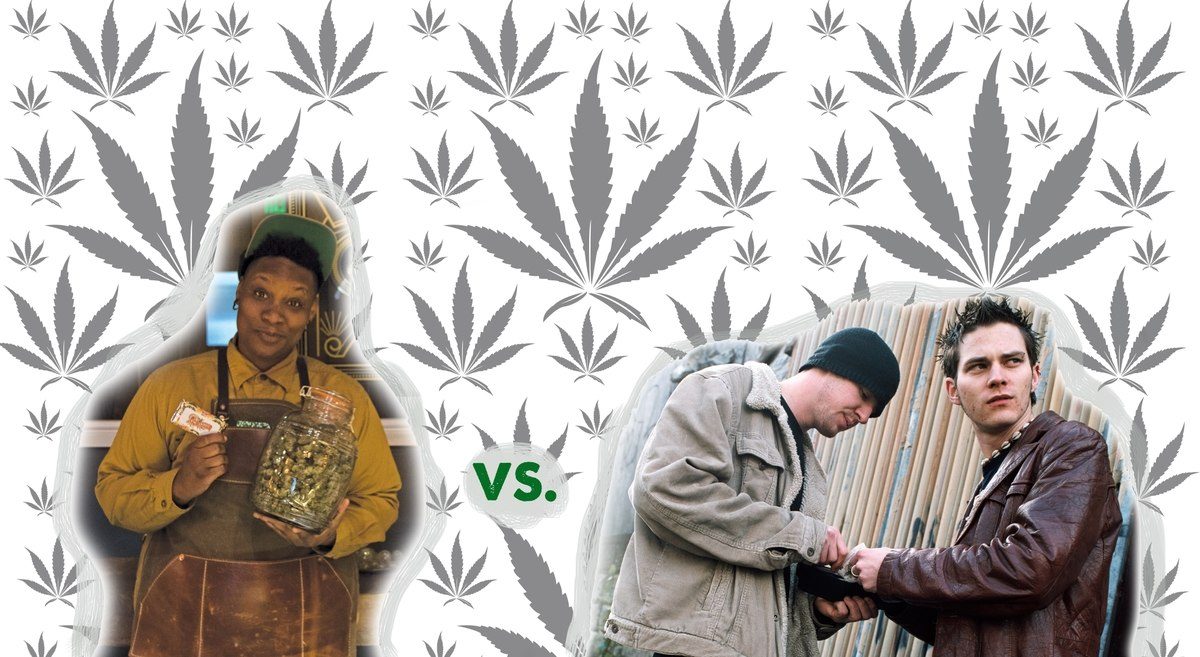
If cannabis was legal, people who want to use it could simply go to a cannabis cafe or cannabis store, buy their sativa or indica as desired, and then go home without being exposed to methamphetamine or heroin or anything else. A clerk at a cannabis store is no more likely to offer the customers methamphetamine than a bartender would. After all, they already have a steady and secure income through selling a legal drug to a set market, so why would they want to screw that up?

The truth is that cannabis prohibition forces people into the arms of criminals. This is the true causal origin of the gateway effect. Repealing cannabis prohibition would mean that the people who want to buy cannabis don’t need to encounter criminals in order to so, and consequently never get exposed to a dealer offering to sell them a truly destructive drug.

*

This article is an excerpt from The Case For Cannabis Law Reform, compiled by Vince McLeod and due for release by VJM Publishing in the summer of 2018/19.

The New Zealand Student Media is Just as Gutless as the Mainstream Media

It’s rare for a Kiwi to look towards the New Zealand media establishment with reverence or even anything approaching respect, on account of that the profession is little more than a bunch of corporate whores cheerleading for neoliberalism. Even so, it is sometimes astonishing to learn quite how gutless the New Zealand media is, as local anarchist Rick Giles found out earlier this week.

The depths to which the New Zealand yellow press is willing to sink can be observed by the treatment of Giles by Auckland radio station bFm. bFM had Giles on their live show, where he was interviewed by Laura Kvigstad. The segment was called “Anarchy in Aotearoa” and featured Kvigstad and Giles talking about Giles’s interest in anarchy and some of the realisations that had led him to anarchism, and some of the things that anarchism had led him to believe.

This was a part of a wider series called “Wire Worry Week”, which was a week at bFM dedicated to “focusing on the concept of anti government; expanding upon how movements that have worked against governmental systems have influence on the current state of the world.” Giles, as the man behind AnarKiwi, was invited onto the show to speak freely about his political opinions. Readers can listen for themselves to decide whether Giles said anything genuinely worthy of specific repudiation.

In response to – presumably – the shrieking of upper-middle-class Social Justice Warriors all over Auckland, bFM made the following statement:

NB: Following the broadcast of this interview it has come to 95bFM’s attention that the subject of this interview, Rick Giles, espouses political and historical views that the station finds particularly unsavoury. We will not be removing or editing the interview, but wish to make it clear to all listeners that 95bFM does not support or align itself with the personal politics of the interviewee. Our decision to provide Mr. Giles a platform during a week-long discussion on anti-government movements was one that, with hindsight, would not have survived greater scrutiny and vetting process. The station, its volunteers and wider associates do not wish to endorse Mr. Giles’ particular brand of historical revisionism in any way, shape or form and we sincerely apologise for any concern or aggravation caused via our negligence in this case.

It is an incredibly pathetic measure for a radio station to go to these lengths to repudiate a New Zealand intellectual who is guilty only of wrongthink. So gutless are bFM that even when they decide to specifically give a platform to the counterculture they can’t bring themselves to allow alternative points of view to pass without condemnation. Even worse, they are not even decent enough to say exactly which of Giles’s political opinions were so heinous as to be worthy of deplatforming.

What’s hilarious is that you know if Hillary Clinton wanted to appear on bFM to speak to the students of Auckland, they would fall over themselves to provide her a platform, despite that she has killed at least 2,500 more people than Giles, and that’s only counting one of her many crimes. After all, they’re happy to happy to give Peter Dunne a platform, despite the fact that the lies he told about cannabis and about synthetic drugs are responsible for the deaths of hundreds of young Kiwis.

The really terrible part about all of this is that bFM, and by extension the University of Auckland, have failed in their primary purpose of being a university. The primary purpose of a university is to provide a safe space for free-thinkers to discuss ideas that might otherwise be too controversial to discuss in public, on account of that the public would chimp out upon being asked to consider (not accept, just consider) some of the assertions that are necessary to discuss such things.

Apparently the fashionable trend in mainstream media circles right now is to take the exact opposite approach to VJM Publishing; we believe that dialogue is the way to destroy ignorance. The mainstream media don’t care about ignorance; they believe that destroying dialogue and virtue signalling is the way to greater profits. bFM, by making a statement repudiating Giles, are simply learning how to be good, obedient corporate whores. This is, after all, what they will be after graduation.

Part of being a corporate media whore is deplatforming anyone not part of the Establishment (such as Giles) while happily platforming anyone who is part of the Establishment, no matter how many people have died as a result of their negligence or dishonesty (such as Dunne). bFM are willing to give a platform to a Government agent whose ham-fisted cruelty caused New Zealanders to die, but Giles is “particularly unsavoury”.

What bFM did to Rick Giles is a microscopic example of what the mainstream media does to New Zealand all day, every single day. They take uncontroversial ideas, and they sell them as rebellious and controversial so that the desire of some individuals to portray themselves as free-thinkers can be satisfied. In every case, genuinely controversial ideas are ignored as “loony” and their purveyors deplatformed, as happened to Giles. They are a pack of absolute fucking whores, and the alt-media will continue to be a thorn in their side.

*

If you enjoyed reading this essay, you can get a compilation of the Best VJMP Essays and Articles of 2017 from Amazon for Kindle or Amazon for CreateSpace (for international readers), or TradeMe (for Kiwis).