
The Three Failed Political Models of Our Time

There are three very popular political models in the West at the moment, each one promising utopia through its own path, if only it is followed. The problem is that these three popular models have all failed catastrophically, and furthering any of them only brings more misery into the world. This essay explains these models, why they have failed and what we can do about it.

Elementalism holds that there is an ideal form of everything, and a practically infinite number of degraded forms all throughout the Great Fractal. The ideal form and the degraded forms exist along the Great Masculine Axis, which is itself divided into the masculine elements.

If we take a perspective that divides the Great Masculine Axis into four masculine elements, we can see one ideal political form and three major groups of degraded political forms. These three groups correspond to the three sub-golden elements of clay, iron and silver.

Clay refers to Communism or Democracy. These two terms can be equated because the masses will always tend towards desiring the redistribution of resources, and will always vote for people who promise this when given the opportunity. This is essentially the hyperfeminine model, or the slave morality model. According to this model, the collective – and the needs of the collective – are paramount.

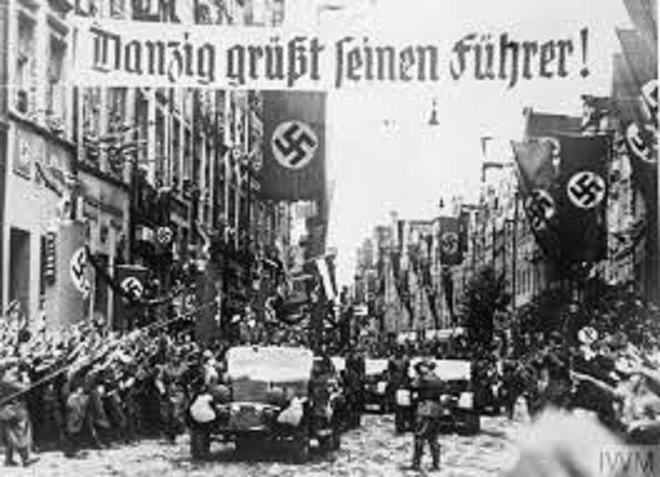
Iron refers to Fascism or Ethnosupremacism. This is the political model that has failed because is it hypermasculine. Like a severely autistic child, the iron model seeks to put the rest of the world to order by force, and doesn’t care if the world consents. The resentment and resistance that this model provokes is usually its downfall.

Silver refers to the hedonistic consumer capitalism that the vast majority of VJM Publishing readers live in (whether they wish to or not). This model is neither hyperfeminine nor hypermasculine, but is characterised by being an insipid compromise between the two. Its fundamental problem is that it is not enough of either. Hence, people who follow this model are usually nihilists or hedonists of some sort.

All these models oppose each other, and so the world seems to be forever at war, pulled between three different poles depending on which primitive instinct holds the most sway at the time.

The clay model of Communism, true to the slave morality that motivates it, resents those who follow the iron model (who are dismissed as “racists” or “fascists”) and those who follow the silver model (who are dismissed as “greedy”). The basic motivation of those who follow this model is to rip down those who distinguish themselves either physically, mentally or socially.

This model could be described as extremist horizontalism. It fails by destroying itself, because once all the capable people are sufficiently hindered then the society becomes incapable of anything. If anyone making an effort is ripped down, people come to adapt by not making any effort for any reason. When they do this, society can no longer be maintained by the free will of its members.

The iron model of Supremacism opposes both the clay model and the silver model for being soft – the former for being natural weaklings (“subhumans”), the latter for being moral weaklings (“degenerates”). The iron model is not compromising, and people who follow it intend to kill their opponents rather than work with them. Failing that, it’s enough to intimidate them into submission.

This model could be described as extremist verticalism. In this sense, it’s naturally very similar to military rule, in which every participant knows their rank and therefore their place. As mentioned above, this model fails because of the massive resentment it provokes. It seems to be human nature to seek revenge for acts of cruelty, and the iron model eventually falls under the weight of its many enemies.

The silver model of neoliberal Capitalism is a very centrist mentality in all sorts of bad ways. This model considers the clay model and the iron model to be two poles of the same axis – the axis of brain-dead, brutal state authoritarianism. Neoliberal Capitalism, therefore, is the path of freedom. The silver position has a lot of merit – but their solutions are far from complete.

This model sees the followers of the clay model as dumb and weak, and the followers of the iron model as dumb and strong. The latter may be more dangerous as individuals and in small groups, but the former are capable of gathering by the multitude and enforcing their will through sheer numbers. It isn’t entirely wrong – followers of ethnosupremacist or collectivist ideologies tend to be dumb. For this reason, the silver model tends to destroy itself rather than get destroyed from the outside.

It was neoliberal Capitalism that arose first from the carnage of World War II, the iron model having exhausted itself, and the clay model having been crippled in the process. As a consequence, we are currently living under the silver model. It’s certainly much nicer than being in a deathcamp or gulag, but unfortunately for we who live in it, the silver model is currently hitting its limits in every sense.

The American opioid epidemic is currently killing 150 people every day, a body count that cannabis and the psychedelics put together haven’t managed in over a century. In New Zealand, the suicide rate gets higher every year, and this upwards progression shows no sign of stalling. A sense is spreading that we are living in the End of Times, as when the Western Roman Empire was falling.

These political models may all have great differences, but they also have one quality in common – they are all materialist. This is why they have all failed.

The three great political models of our age have all sought materialist solutions to the problem of human dissatisfaction, not realising that spiritual suffering is equally as important as material suffering. The clay and the iron fight each other while the silver looks on from a pile of cheeseburgers – but none are happy.

What’s missing is the gold model, one that takes into account the Will of God.

The gold model is not such a thing that can be easily described. Plato had a go, at length, in The Republic, and this essay cannot hope to come close. In short, however, it can be said that the gold model will incorporate knowledge that reflects the true, eternal and untarnishable nature of consciousness. It will return the political realm to its rightful place, under God.

Organising civil society around a ritual that reconnected people with God – something like a reborn Eleusinian Mysteries – would allow for people to suffer less in the spiritual realm. Absent this spiritual suffering, they will be less inclined to attempt to satiate themselves through control of the material world, which is the mentality that underpins all of the three failed political models.

*

If you enjoyed reading this essay, you can get a compilation of the Best VJMP Essays and Articles of 2018 from Amazon for Kindle or Amazon for CreateSpace (for international readers), or TradeMe (for Kiwis). A compilation of the Best VJMP Essays and Articles of 2017 is also available.
The Young Perish, and the Old Linger

In the Lord of the Rings trilogy, King Theoden uses the phrase “The young perish, and the old linger,” to describe the accursed state of his kingdom of Rohan. The phrase strikes a chord, because most people can intuitively understand that society ought to exist to further the young, and that the old ought to gracefully let go of power when their time is up. As this essay will examine, New Zealand has become a place every bit as rotten as Tolkien’s fictional kingdom.

Provisional suicide statistics released this week by the New Zealand Chief Coroner are frightening in many ways. Not only do they reveal the highest suicide numbers on record (685 deaths in one year), but they also reveal a number of patterns once you drill down a level or two. The data is broken down by demographic factors, and these can be compared to previous years’ statistics.

Perhaps the most disturbing of these patterns is that the young are committing suicide at greater rates, while the old are committing it less.

The suicide rate for Kiwis aged between 20-24 was 26.87 deaths per 100,000 people last year. By way of comparison, the murder rate in Mexico was 24.80 deaths per 100,000 people in 2017. Some might be shocked to hear that, even with all the cartel violence and gang warfare in Mexico, our young adults are killing themselves at an even greater rate than Mexicans.

The suicide rate for Kiwis aged between 65-69 was 8.72 per 100,000 people – less than a third of the rate for people aged between 20-24. Old people in New Zealand don’t start to kill themselves in significantly higher numbers than this until they get to 90. The quarter century between the ages of 65 and 90 is now the prime of life for a New Zealander.

Compared to 2010, young people are killing themselves more often – the suicide rate among 20-24 year olds in 2010 was only 21.23 per 100,000. For all Kiwis aged between 15 and 29, the suicide rate was 18.88 in 2010 and 23.62 in 2018. All this means that young people are now killing themselves about 25% more often than they were in 2010.

However, old people are killing themselves less often. The suicide rate in 2010 for people in their golden years (between 65 and 84) was 9.20 per 100,000. By 2018, this had fallen to 8.36 per 100,000 – a decline of some 10%. The young perish, while the old linger.

These suicide statistics reveal a fact about our society that is rarely spoken of: New Zealand is an awesome place to be old, and is increasingly getting more awesome for old people as the economic balance tilts ever-further in their favour. However, it is a truly shit place to be young, and is increasingly getting more shit for young people.

New Zealand is an awesome place to be over 65 because there is a universal basic income for such people, of $370 a week. As Dan McGlashan showed in Understanding New Zealand, there is a correlation of 0.82 between being on the pension and living in a freehold house in New Zealand. This means that the vast majority of pensioners don’t have to worry about paying rent out of that $370 – most of it is disposable income.

If you already own a house, getting paid $370 a week just to hang out in it for a quarter century when you are aged between 65 and 90 is a sweet deal. Anyone owning their own house also has a permanent community, and therefore gets a strong sense of social inclusion. To get $370 a week, no questions asked, to enjoy that lifestyle is an incredible privilege.

There’s little wonder that the suicide rate is so low among people who have got it so good.

New Zealand is a shit place to be young, on the other hand, because they are the ones who have to work and pay for the luxurious retirements of the old. In order for our elderly to get $370 a week of free money for a quarter century, the young have to be taxed brutally. This makes it much harder for them to pay back their student loans, to own their own house or to raise a family.

Most pensioners in New Zealand are homeowners because it used to be possible to buy a house on the average wage in this country. Analysis shows, however, that the average wage would now have to be almost $80 an hour for young people to have the same chance of owning a house that their parents’ generation had. Young people nowadays face a level of financial desperation that their parents never came close to experiencing.

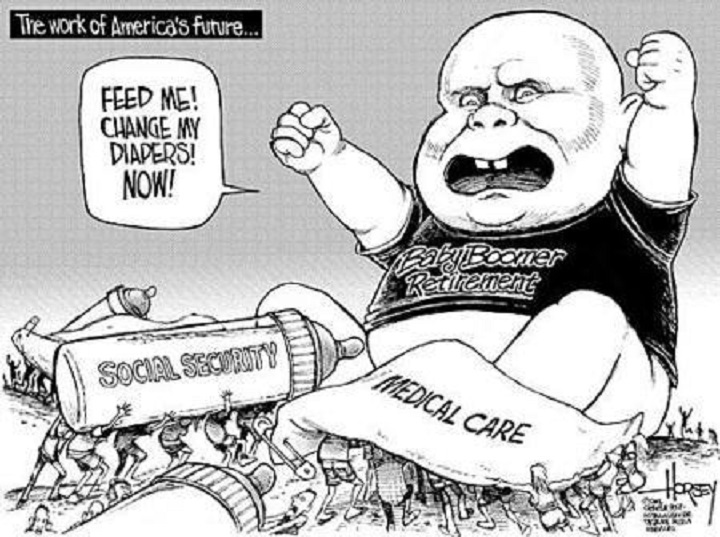
Studies have shown that financial pressures are the second most common contributing reason to suicide attempts, behind only depression. Stressful life events are powerful predictors of future suicide attempts. These stressful life events are much more common for the young, who face unprecedented levels of uncertainty over housing and employment. Unfortunately for them, high stress is all but inevitable as the Boomers demand to be catered for to the level at which they are accustomed.

In a normal, properly-functioning nation, the elderly will happily sacrifice themselves so that the younger generations can prosper. Knowing that the young are the next generation of themselves, the elderly are happy to lay the foundations for the prosperity of the young, even at their own discomfort. This has always been the case in healthy nations.

In New Zealand, the elderly throw the young to the wolves so that they can have more for themselves. Many of the suicides of young people could be prevented if we had a properly-funded mental health system. The old people who control the national purse strings, however, have directed almost every penny towards ensuring their own comfort, and have left the young to go without.

New Zealand spends $15,000,000,000 a year on pensions, much of that going out to people who don’t need it. Many people in their sixties and seventies run a business and get $370 of pension money a week on top of that. This colossal expenditure is evidence that our society is run to the benefit of the old, at the expense of the others.

Precise figures for mental health funding are impossible to find for New Zealand because of our district health board system. In Australia, though, some 5% of total health spending goes on mental health care specifically. We can assume a similar figure for New Zealand. Because we spend about $17,000,000,000 a year on healthcare, 5% of our total health budget works out to be about $850,000,000.

It’s not clear exactly what percentage of funding goes to those aged between 15 and 29, but assuming a figure roughly equal to that age bracket’s proportion of the population, we arrive at roughly $200,000,000 per year. Considering that New Zealand spends $400,000,000 per year on enforcing cannabis prohibition, $200,000,000 for the mental health care needs of an entire generation seems absurdly little.

And it is – it’s an absolute disgrace.

The solution to this state of injustice, and a partial solution to our increasing suicide rates among young people, is to lower the age of universal basic income from 65 to 18. This would allow relief from the insane financial stresses that are now levied on those young people.

Lowering the universal basic income age from 65 to 18 necessitates that today’s wealthy Boomers will have to share their pie with others, so we can expect that they will fight this suggestion tooth-and-nail to the bitter end. The overall outcome, however, would be a reduction in suffering, as the Boomers’ loss of luxury would be compensated for by the younger generations’ emancipation from poverty.

*

If you enjoyed reading this essay, you can get a compilation of the Best VJMP Essays and Articles of 2018 from Amazon for Kindle or Amazon for CreateSpace (for international readers), or TradeMe (for Kiwis). A compilation of the Best VJMP Essays and Articles of 2017 is also available.
The Government Should Legalise Cannabis For The Rugby World Cup

Kiwis are rejoicing at the news that our owners have permitted us extended hours to drink alcohol on licensed premises while Rugby World Cup games are on this Spring. It’s true that anything that facilitates New Zealanders coming together in a spirit of goodwill is a good thing, and VJM Publishing applauds this move for the sake of the nation’s mental health. The really great move, however, would be to legalise cannabis for the Rugby World Cup.

A famous half-truth about New Zealand culture is that rates of domestic violence spike every time the All Blacks lose. The full truth is that domestic violence rates spike when the All Blacks win, too, because every time the All Blacks play, men get together and drink alcohol. When they do this, a certain proportion of them will end up bashing their wives and girlfriends (or kids, parents, brothers/sisters etc.).

Alcohol is great fun, and the value it has in facilitating socialisation and enjoyment of life cannot be measured. It’s impossible to quantify the quality of life improvements that follow having a really excellent time partying with alcohol, or the warm memories that come from having a great time drinking with friends, or the value of the friendships made because alcohol broke the ice.

On balance, alcohol is a good thing – but the negatives of it are considerable nonetheless.

As mentioned in Chapter 12 of The Case For Cannabis Law Reform, alcohol is present in an estimated 30% of domestic violence incidents that the Police attend, and is believed to be responsible for 3.9% of all deaths in New Zealand. Including sicknesses caused by it and lost work days to hangovers or other alcohol-related conditions, the monetary cost of alcohol use runs into the billions.

Again, in no way is this to make the argument that alcohol is bad or should be further restricted. The problem is that there is no recreational alternative to it. You’re not allowed to go into town and watch the All Blacks at a cannabis cafe, and you’re not allowed to sit in a town square and watch a public big screen while smoking a joint. You’ll get arrested and put in a cage.

If you want to socialise with other people this Rugby World Cup, you get the same deal as at all other times. Drink alcohol or just fuck off back home.

Imagine a Rugby World Cup where Kiwis could come together without being pressured into consuming alcohol in order to socialise. This would finally mean that there was a recreational alternative for all those people who knew that they weren’t good on alcohol (arguably some 20% of the population).

It’s not a secret that the participants in most of those 30% of domestic violence incidents will be people who already know that sometimes they don’t behave well on alcohol. Imagine if these people were able to use a recreational substance that allowed them to be part of the festivities but which did not have the side effect of inducing them to get violent or aggressive. Many of them would take it – to everyone’s benefit.

Liberalising drinking hours for the duration of the Rugby World Cup might lead to more violence, sexual assaults and people killed in car wrecks, but it need not do so. If the purpose of liberalising such laws is to create a festival atmosphere for the duration of the tournament (and nothing can bring the country together like a Rugby World Cup), then it is possible for us to have our cake and eat it.

The way to achieve this is to legalise cannabis for the duration of the Rugby World Cup.

This would not mean a repeal of cannabis prohibition, at least not yet. What it would mean is a moratorium on arrests for public outdoors cannabis use for the duration of the tournament (or at least for as long as the All Blacks are still in it). We could pass a law that said, while the World Cup was in progress, Police would ignore public possession, use and personal trading of cannabis (although commercial enterprises would still be illegal).

This would mean that people could smoke cannabis in public as they can now smoke tobacco. They could meet in bonds of love, and share good cheer with a smile and a laugh, as alcohol users are permitted to do.

One can confidently predict the result of such a move, because one can observe how people behave in places where cannabis is already legal. Making cannabis legal for the duration of the Rugby World Cup would serve to create a relaxed, convivial, celebratory atmosphere for what is arguably the Kiwi nation’s most cherished quadrennial religious festival. It would create many good memories.

This will have several benefits over and above creating a festive atmosphere. It would also show New Zealanders that they don’t necessarily have to shit and piss their pants in fear at the thought of cannabis law reform. If cannabis users were given the opportunity to show that their behaviour was preferable to drunks they would probably take it. It would allow for a much better-informed cannabis referendum debate.

*

If you enjoyed reading this essay, you can get a compilation of the Best VJMP Essays and Articles of 2018 from Amazon for Kindle or Amazon for CreateSpace (for international readers), or TradeMe (for Kiwis). A compilation of the Best VJMP Essays and Articles of 2017 is also available.

The War Criminal’s Apprentice

The great disconnect between the rhetoric and the reality of the Sixth Labour Government has confused many people. Many people have been taken in by the mainstream media’s propaganda about kindness, and are therefore at a loss to explain what’s currently going on in our society. This article seeks to explain the psychology of Jacinda Ardern – the War Criminal’s Apprentice.

It was reported yesterday that New Zealand now has the highest suicide rate in its history, with 685 people taking their own lives last year. This is a figure greater than one Christchurch mosque massacre’s worth of deaths every month, and is almost double the road toll (especially if one considers that many road deaths in single-car accidents are disguised suicides).

This will surprise some, in particular those who expected the rate to go down after the 2017 General Election. After all, the mainstream media has made it very clear to us that the Sixth Labour Government is motivated by kindness, and that fixing New Zealand’s failed mental health system is a priority for them. But not only has Ardern’s Government not taken the correct measures to reduce suicide rates, they have purposefully taken measures that will raise them.

It might seem outlandish to the reader, even horrifying, to hear the claim that our politicians are literally willing to sell their own people out for personal gain. It is, however, true. Although the ideal is that politicians will represent the interests of their nation much as if they were the head of some great family, the reality is that politicians represent their own interests and consider the people and their votes much like a dairy herd and its milk output.

Some are even willing to cosy up to ideologies of hate if those individuals calculate that doing so will advance their career.

Jacinda Ardern has been willing to do this in multiple ways. Right from the beginning of her career, she demonstrated that not even a nine-figure body count was enough to make her willing to repudiate an ideology, whether that ideology be Communism or Islam. This she showed most infamously with her “Comrades” speech to the International Union of Socialist Youth in 2008, the year she was elected President.

Graduating from university in 2001 with a Communications degree, Ardern took a role as a staffer to Helen Clark. She must have been dutiful in this role, because she quickly ended up in London as a Senior Policy Adviser to Tony Blair’s Labour Government. This is presumably a role in some demand, and therefore not given lightly to people in their 20s unless they show special promise.

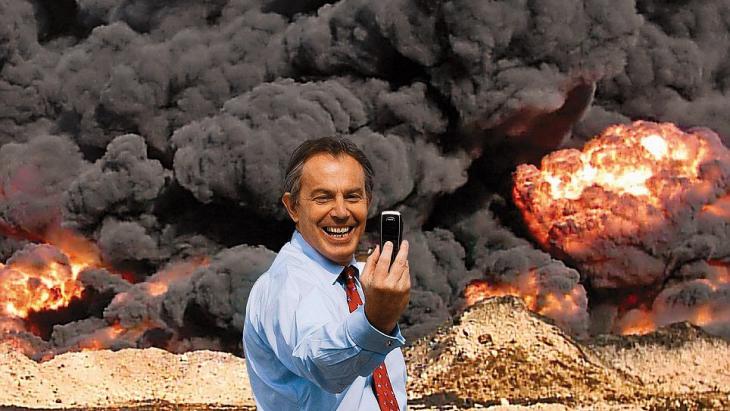
British Prime Minister Tony Blair committed the British Armed Forces to the invasion of Iraq in 2003. This was done despite the fact that his plan to do so caused the largest protests in the history of the world – one million gathered in London to voice their disapproval, and three million gathered in Rome.

One million was also roughly the number of people killed by the invasion of Iraq, which means that Blair (alongside fellow warmongers George W Bush and John Howard) takes a position in the second tier of history’s greatest murderers. Ardern knew all this when she offered to work in his office, but it didn’t stop her. This fact is crucial to understanding her mentality.

It might seem incredible that a person supposedly committed to kindness would volunteer to work for a mass murdering war criminal – but Ardern did so in order to study his methods. She is every bit a willing apprentice to a war criminal. Anyone who considers the globalist wrecker of nations Tony Blair a model to base themselves on can only reasonably be treated with the deepest suspicion.

The reason why Ardern is opening the gates to mass Muslim immigration, as Blair did in Britain (Britain’s Muslim population increased 70% during Blair’s ten years in power), is twofold.

The first reason is that it strengthens the electoral position of the Labour Party. As Dan McGlashan showed in Understanding New Zealand, there was a significant correlation between being Muslim and voting for the Labour Party in 2017. Moreover, the average Muslim in New Zealand currently has qualified through normal immigration channels and is therefore more likely than usual to be educated and wealthy, and therefore less likely than usual to be a Labour voter.

Opening the borders to poorer and less educated Muslims than what New Zealand currently has is to all but guarantee that the majority of the newcomers will vote Labour. As has been seen in Britain, most Muslims already vote Labour, and can be relied upon to do so. Opening the borders to them, therefore, is to import a loyal voting bloc.

They also know that the more problems they can create, the more they can justify Government intervention. It’s no secret that mass Muslim immigration will bring with it widespread poverty, violence, property crime and sex crimes like child grooming gangs. This is only a drawback for the victims of those crimes. For politicians, it’s an opportunity to convince the public those politicians are needed to solve the public’s problems.

The second reason is that it promotes Ardern’s personal ambitions for future United Nations honours. Ardern is fully aware that one quarter of the world’s population is Muslim, and therefore that her desire to one day get a powerful role in the United Nations is heavily dependent on Muslim goodwill.

If Ardern’s psychology is to be understood, it has to be understood that she considers herself to be acting on the world stage, not on the New Zealand stage. This is the reason why she is dismissed, in some quarters, as the “Part-time Prime Minister.” Her audience is global, and far more important than mere Kiwis. Trivialities like running New Zealand can be delegated to Andrew Little.

Part of the reason for the brutal free speech crackdowns on New Zealand citizens (crackdowns that are in violation of existing New Zealand human rights law) is to maintain her appeal to the Muslim section of the globe. It’s also why the Sixth Labour Government doubled the refugee quota despite New Zealand’s worst ever housing crisis.

Putting followers of a foreign hate ideology above her own people is all but guaranteed to provoke immense resentment among New Zealanders. The bitter irony – that it’s precisely this kind of favouritism that leads to things like the Brenton Tarrant shooting – is lost in the hubris. So there’s every sign that New Zealand could be in for a tumultuous decade.

The desire to impress globalist interests is also why she doesn’t care about cannabis law reform, despite that there is an extremely strong desire for it among New Zealanders. There are simply no pro-cannabis blocs of voters at the United Nations, therefore no favour to be won by supporting the issue. It doesn’t matter that it would alleviate the suffering of large numbers of Kiwis.

It has to be emphasised at this point that Ardern simply doesn’t care about the human suffering that she causes through her ambition to become World Princess. It’s not an exaggeration to say that Ardern is the closest that New Zealand has ever had to a Hitler or a Stalin. The will to sacrifice any number of their own people to achieve personal goals is the common factor.

Who she most compares to is Blair himself, who was perhaps one order of monster lower than Hitler or Stalin. Nevertheless, like his fellow war criminal George W Bush, Blair is many times worse than even the most destructive serial killer. That Ardern willingly apprenticed herself to such a man, to learn his methods and strategies, speaks to an obscene degree of megalomania, perhaps exceeding anything New Zealand has ever previously produced.

*

If you enjoyed reading this essay, you can get a compilation of the Best VJMP Essays and Articles of 2018 from Amazon for Kindle or Amazon for CreateSpace (for international readers), or TradeMe (for Kiwis). A compilation of the Best VJMP Essays and Articles of 2017 is also available.