
The Negrification of the New Zealand Maori

The New Zealand Maori is in a much better position than 120 years ago. Before World War One, many people did not expect Maoris to survive for much longer, or expected them to wind up in a condition as wretched as that of the Australian Aborigine or North American Indian. Through will and intelligence, he escaped this fate – but grave dangers remain.

The greatest risk facing the New Zealand Maori in 2019 is the risk of his ongoing negrification. By this, it is meant that the Maori continues to be reduced to a dependent population, one that has no chance of surviving without government welfare, as has become the fate of the Black man around the world.

The American Negro is no longer a slave in the realm of iron. No more does he have to bear iron fetters, manacles and chains. However he is now, more than ever, enslaved mentally and spiritually. His grand narratives about vital enjoyment of life have been replaced with narratives about how the world is a hateful place that owes him. He is the eternal victim.

These new narratives do him an immense disservice. Instead of putting the emphasis on his own agency and capacity to create the conditions in which he can thrive, they put the responsibility for his well-being on a great and impersonal system which he has no capacity to change, and on the people who populate this system. This naturally leads to a sense of victimhood, which is a kind of aggression.

The New Zealand Maori risks going down the same path.

The greatest danger the New Zealand Maori faces is further mental enslavement. This is a peril that he shares with everyone else in the world, not least White people in New Zealand. But the greatest enslaving force in the world is no longer a totalitarian ideology or Abrahamic religion. Today it is the culture that has been created by the collective will of accumulated capital.

Accumulated capital, and the financial interests it serves, has reshaped the world to further its own interests. It does this through a variety of means, not least its near-total control of the apparatus of propaganda, the mainstream media. It uses this media to manufacture consent for a variety of policies and cultural values that further the interests of accumulated capital.

One way is the normalisation of mass Third World immigration so as to reduce wages to a minimum, and demonisation of its opponents as “racists” and “white nationalists”. Another is the normalisation of narratives of resentment and slave morality so that only weaklings stand up to be leaders.

If one looks at the plight of the American Negro, one is immediately struck by the lack of quality leadership arising from among them. Instead of people who genuinely care to end the suffering of the people they claim to represent, there are a bunch of grifters who profit from stoking division and a grievance narrative. This is, as mentioned above, the consequence of a massive propaganda campaign to normalise slave morality narratives.

Such a campaign also targets the Maori people. A minority can only hate the majority to the benefit of an ever smaller minority, never to themselves. This is why it can be observed that all of the Maori leaders stoking an anti-White narrative (Hone Harawira, Tariana Turia, Metiria Turei, Marama Davidson) have gone on to become extremely wealthy, while the people they claim to represent have not.

The New Zealand Maori has Winston Peters, and the non-racist Kiwi nationalists of the New Zealand First Party. Apart from these and a few others, the majority of Maori leaders are the same sort of shit-stirrer that has led the American Negro down the path of mental and spiritual enslavement.

In order to avoid extreme suffering, the New Zealand Maori needs to produce leaders capable of keeping their people free in the realms of silver and gold.

Regarding the realm of silver, it’s necessary to, as Sir Apirana Ngata said, “ko tō ringa ki ngā rākau a te Pākehā.” An imperative has arisen to use the tools of technology to provide a living, and therefore to educate and to stoke the desire to learn and to understand. This imperative does not in any way suggest that it’s necessary to be grateful for the introduction of technology by the Pakeha. However, it does mean that grievance narratives must be abandoned.

It’s ridiculous for a Maori to feel a genuine sense of grievance about colonisation when he is five times wealthier than the citizens of neighbouring countries who were never colonised, such as Tonga. All narratives that put the moral emphasis on someone else to set right the balance of grievances are doomed to fail, because such narratives merely stoke new grievances elsewhere.

Black people in America have by and large failed to realise this, and this has led them down a precarious path. Now, not only are they still poor, but they have much less goodwill in the eyes of the majority. For Maoris to go down this path would be a disaster. Much better to have a narrative like Esoteric Aotearoanism, according to which all can move forwards together according to their strengths.

Regarding the realm of gold, it’s necessary to return to the original practices and traditions that existed before Abrahamism imposed itself on these lands and exterminated all competing faiths. These spiritual methodologies are what Sir Apirana Ngata referred to when he said “ko tō wairua ki te Atua, nāna nei ngā mea katoa (your spirit with God, who made all things).”

This means that Maori leaders have to come to accept the role that spiritual sacraments such as cannabis and magic mushrooms play in connecting their people to God. After all, it is through separation from God that all misery and suffering flows. Unfortunately, this is another area in which the current Maori leadership has been poor. Their general reluctance to admit that cannabis prohibition causes immense suffering to Maori families has been disgraceful.

A return to God, and a return to a positive narrative that emphasises the strengths of the Maori people and their own agency in finding ways to end their own suffering, is the way to avoid the negrification that will leave Maoris a slave race. The dual temptations of alliance with short-term grifters and Marxist anti-Whites need to be resisted.

*

If you enjoyed reading this essay, you can get a compilation of the Best VJMP Essays and Articles of 2018 from Amazon for Kindle or Amazon for CreateSpace (for international readers), or TradeMe (for Kiwis). A compilation of the Best VJMP Essays and Articles of 2017 is also available.

The Black Caps ODI Bowling and Batting in 2019 Compares Well To Great Players of the Past

The 2019 Black Caps are arguably the best ODI side that New Zealand has ever produced. But how good are they in comparison to their historical peers of other nations? Numbers man Dan McGlashan, author of Understanding New Zealand, looks at how our bowling and batting compares to some great lineups of the past.

Some people call Trent Boult the ‘White Akram’ for his relentlessly accurate line and mastery of seam and swing at 140km/h. If you compare Boult’s numbers to Akram’s, Boult comes out looking very well indeed.

Wasim Akram’s ODI career stretched from 1984 to 2003. Over these two decades, he racked up a truly phenomenal 502 wickets at an average of 23.52. Compared to the bowlers of his era, Akram had a bowling average 24% lower that the average of all bowlers from those same years (the overall bowling average between 1984 and 2003 was 29.19).

Compared to the bowlers of his era, however, Boult’s bowling average of 24.80 is 28% lower (the overall bowling average between 2012 and 2019 is 31.92). This is extremely impressive if one considers that it means that Boult is even more of an outlier in comparison to his international ODI fast-bowling peers than Wasim Akram was.

Despite the memories of him as an outstandingly destructive bowler, Akram’s strike rate is not as impressive as his economy rate. Akram’s strike rate of 36.2 is only 6% better than the average strike rate of his era (38.5). His economy rate of 3.89, however, is a full 16% better than the average economy rate between 1984 and 2003.

This is not so much true of Boult. The Kiwi paceman’s strike rate of 29.3 is 23% better than the average strike rate during his career, and his economy rate of 5.06 is 5% better than the global economy rate of 5.31 during this time. He is like Akram in that his accuracy allows for both economy and strikepower, only Boult has more of the latter and Akram more of the former.

If Boult is the White Akram, then Matt Henry is the White Waqar Younis. As Younis was to Akram, Henry is more expensive than Boult but also more destructive with the ball.

Compared to the bowlers of his era, Younis had a bowling average 23% lower than the average of all bowlers from those same years (the overall bowling average between 1989 and 2003 was 29.40). This is roughly similar to Akram, but where Younis was really impressive was his strike rate of a wicket every 30.5 balls. This was 26% better than the 38.4 average global strike rate during Younis’s career.

Compared to the bowlers of his era, Henry has a bowling average 29% lower than his peers (the overall bowling average between 2014 and 2019 is 32.27). Incredibly, his strike rate of 27.2 is 32% better than the global average of 35.9 during his career. This means that, statistically, Henry is an even more destructive bowler than Waqar Younis was – even after you account for the fact that strike rates are lower nowadays.

Some of Henry’s detractors claim that he is hittable, but this is no more true of Henry than it was of Younis. Younis was 1.8% more expensive than the average of his era; Henry is 1.7% more expensive. These are very slim margins compared to the average bowler, and more than compensated for by the vastly superior strike rate.

If you’re surprised that the Black Caps’ ODI opening bowling duo has stats that back up well when compared to arguably the best new-ball pair of all time, get ready for another surprise. Their top-order batting trio of Martin Guptill, Kane Williamson and Ross Taylor have stats that back up well when compared to those of Mathew Hayden, Ricky Ponting and Damien Martyn.

Guptill and Hayden have almost identical batting averages: 43.87 vs. 43.80. For Guptill, this represents being 40% above the average cost of a wicket over the years of his career (31.28). For Hayden, it represents being 48% above the average cost of a wicket over the years of his (29.66).

When it comes to strike rate, Hayden’s 78.96 was right on the average strike rate of his time (79.28), despite his reputation as a massive hitter. Guptill is worth an extra couple of runs per 100 balls, with a strike rate of 87.99 compared to the global average of 86.96 during his career.

For Guptill to have roughly equal stats to those of the Australian opener from their greatest ever batting era is amazing enough, but there are two others in the Black Caps lineup who compare just as favourably to their counterparts in that great Aussie side.

At No. 3, Williamson’s numbers come out looking very good compared to Ponting’s. The Kiwi captain’s average of 45.85 is 45% above the average wicket during his career. The former Australian captain’s average of 42.03 is slightly behind this benchmark, at 40% above the average.

Ponting’s strike rate was relatively better, however: his 80.39 is right on the era strike rate of 80.66. Williamson’s 82.32, by contrast, is 6% slower than the average batsman of his time. In Williamson’s favour, though, he is still only 29, and therefore only just now entering the peak of his career. His numbers might well be even more impressive in six years’ time.

At No. 4, Taylor has fashioned a record that compares well to players in any time and era. His average of 48.55 is 56% higher than the average batting average throughout his career (31.05). Martyn’s average of 40.80, while much higher than the 29.66 global average during his career, was only 38% higher.

That means that, as much as Martyn was a rock at 4 for Australia, Taylor is even more so for New Zealand.

Overall, when one compares the statistics of some of our current crop of Black Caps to their contemporaries, the distance they are ahead of the average compares well to some of the great players of days past. Not only is this a highly underrated Black Caps side, but they have an entirely realistic chance of winning the World Cup this year.

*

Understanding New Zealand, by Dan McGlashan and published by VJM Publishing, is the comprehensive guide to the demographics and voting patterns of the New Zealand people. It is available on TradeMe (for Kiwis) and on Amazon (for international readers).

The Case For Cannabis: Amotivational Syndrome Is Not Reason To Prohibit Cannabis

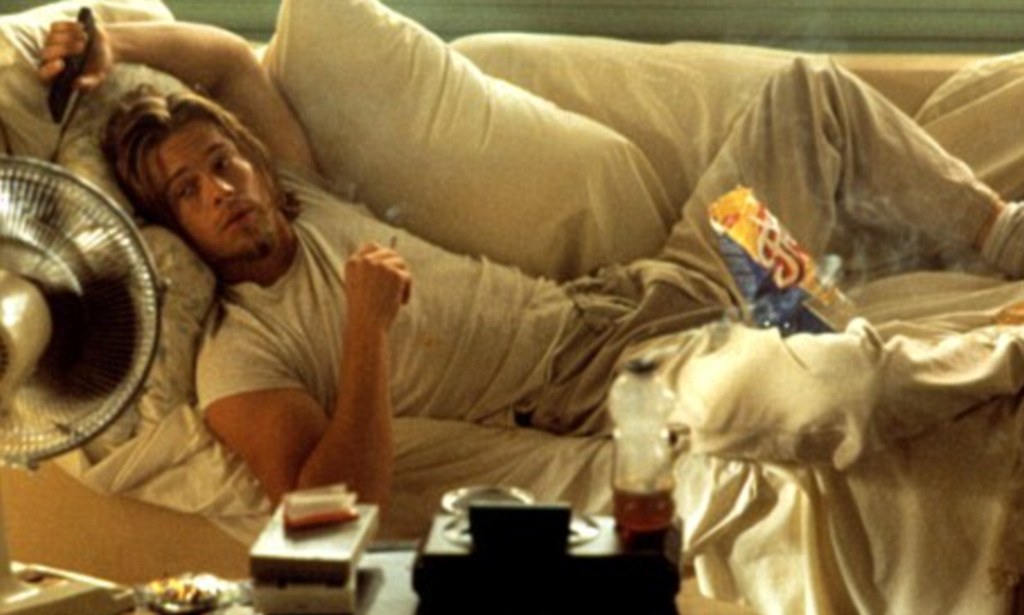
One of the major harms of cannabis, we are told, is the dreaded amotivational syndrome. This raises the spectre of A students and gifted athletes who get the reefer madness and end up lying around on the couch all day watching television and playing with themselves. As with many arguments for cannabis prohibition, this one is based upon a sliver of truth, blown out of proportion.

According to this 2012 paper, the supposedly characteristic symptoms of amotivational syndrome are general passivity and apathy, loss of desire to work or to be productive, loss of energy, depression, moodiness, lack of stress tolerance and slovenliness.

If you think that this sounds like most mental illnesses, and that a person with these problems probably uses cannabis as a medicine to deal with them, you’d be right – for the most part.

However, there is such a thing as amotivational syndrome.

It’s worth noting here that this book is not about advocating for cannabis use per se. This book advocates for a reduction in human suffering by way of repealing cannabis prohibition. So there’s no problem in admitting that it’s entirely possible that cannabis smoking is a bad idea for a particular individual, and that there are many situations where many people shouldn’t use it.

The neurobiology of amotivational syndrome is not difficult to understand, because it’s essentially the same thing as burnout. Amotivational syndrome can arise when a person gets so high, for so long, that their brain circuitry gets used to that greater level of stimulation. This can lead to a situation where a person is no longer receptive to normal sources of stimulation.

Most people can relate to this feeling. After all, it’s little different to the same burnout a person gets after partying too long or being too long in combat or under high levels of stress. Some studies have shown decreased response sensitivity after periods of heavy cannabis use, but this is only part of the story.

As is the case with tobacco, decreased response sensitivity is often the reason why people use cannabis. For many people, the decreased sensitivity that comes with cannabis use is what is keeping them sane. These people use cannabis so that they are more relaxed and calm when they have to interact with others.

Thus, amotivational syndrome is far from a good reason to make cannabis illegal. In fact, it’s even more support in favour of legalisation.

Because some strains decrease sensitivity, while other strains appear to increase it, the best approach is to let people safely experiment with accurately and clearly labelled products purchased from a legal supplier, so that they can find the right proportion of cannabinoids for them. If amotivational syndrome is a problem, it can be best be avoided by avoiding those high-THC, low-CBD strains that tend to overload the mind.

Another point worth emphasising here is that one culture’s “amotivational syndrome” is another culture’s correct level of relaxation.

This was written about as far back as 1976, when a study pointed out that Jamaican culture had no concept of amotivational syndrome. That linked study refutes the idea of amotivational syndrome more generally, pointing out that the very idea of it is rooted in prejudice against cannabis users (as is the idea that cannabis causes psychosis).

It’s already clear that the rate at which our societies are consuming the natural resources of the Earth is not sustainable. The 8 billion people on this planet cannot sustainably consume more resources than does the average Western beneficiary, and these limits are not the result of political forces but hard natural ones. These inexorable forces pose immense problems for our culture in the West, which glorifies production and consumption.

It could be that, far from being destroyed by laziness and apathy, cannabis users have simply reduced their consumption to sustainable levels. The motivation to do this perhaps arose through a greater appreciation of the interdependence of all life on Earth, a common consequences of cannabis use.

Amotivational syndrome, then, could be said to only be a problem in the context of a modern society that demands maximum productivity from everyone. So the unwillingness to work and to be productive might really be a turn away from the consumption/production mania of the industrialised world and a return to the sanity that existed before it (when everyone used cannabis regularly).

In any case, the best way to deal with all this is to tell people the truth. If it’s true that high-THC strains of cannabis overload the brain’s reward pathways and make them insensitive to everyday stimuli, then this needs to be explained honestly to people. Conversely, if a person is happy using cannabis so that they become more relaxed and don’t consume the planet as voraciously, that also needs to be accepted.

If the Government and its departments told the truth about cannabis, then people would have confidence that their doctors were telling the truth when they tried to explain amotivational syndrome. This would make it far more likely that those who had proper cause to stop using cannabis would listen to people advising them to do so.

*

This article is an excerpt from The Case For Cannabis Law Reform, compiled by Vince McLeod and due for release by VJM Publishing in the summer of 2018/19.

Matt Henry Is Now The Most Underrated Player In The Black Caps

In 2017, numbers man Dan McGlashan explained how Ross Taylor was the most underrated player in the Black Caps. In 2018, he explained how that mantle had passed to Henry Nicholls. This year, as McGlashan will show in this article, the most underrated player in the Black Caps is Canterbury’s Matt Henry.

Trent Boult is undoubtedly the hero of the Black Caps bowling attack. In ODIs, he has taken 148 wickets at an average of 24.83. Currently ranked No. 2 in the world for ODI bowling, many would go as far as to argue that Boult was the Black Caps’ most influential player. Everyone knows that his opening spell is crucial to the team’s success.

Few such accolades fall on Matt Henry. Far from being considered the spearhead, his place in the side seems far from certain. Many fans appear to prefer Tim Southee or even fringe candidates such as Scott Kuggeleijn or Hamish Bennett. However, much like Henry Nicholls a year ago, Henry has put up some excellent numbers that, if considered in context, mark him as a potentially world-class option.

If one looks simply at the numbers, Henry is not far behind Boult. From 44 games, he has taken 81 wickets at an average of 25.60. He hasn’t had as much gametime as many think he deserved, but this has kept him hungry and injury-free, and I’m predicting we’ll see some New Zealand records broken by him in the future.

He’s been especially good against the Asian teams, with 20 wickets against Pakistan at 20.25, 21 wickets against Sri Lanka at 18.38, and 11 against India at 19.09. Considering that the 2023 Cricket World Cup will be hosted in India, that marks him out as one to watch.

Henry doesn’t just threaten records on the smaller scale. He is also threatening Shane Bond’s record of 54 matches for the fastest Black Caps bowler to 100 ODI wickets. Henry has taken 81 wickets in 44 games, meaning he has to take 19 in nine to break the record and 19 in 10 to equal it.

At his current rate of 1.84 wickets per match, Henry will reach the milestone in 55 games, one more than Bond and one fewer than Boult.

Another Shane Bond-related stat is that Henry has a better strike rate – Bond took 29.2 balls per wicket compared to Henry’s 27.9. Bond took four wickets or more 11 times in 82 matches, while Henry has already done so 8 times in only 44 matches. Bond did it once every 7.5 matches, Henry has done it once every 5.5 matches.

In fact, Henry has one of the ten best strike-rates of all time for a bowler who has taken 50 or more ODI wickets. Measured by strike rate, he’s ahead of Waqar Younis, Brett Lee, Shaoib Ahktar and Allan Donald.

The only criticism that one might level at Henry, in comparison to Bond and Boult, is that he is hittable. When people make this argument, they refer to his economy rate of 5.50, which is expensive in comparison to the 5.07 of his contemporary Boult (let alone Bond’s truly excellent economy rate of 4.28). Henry has yet to earn the respect of opposition batsmen playing him out as Bond, Boult and Vettori had.

In any case, I’m not arguing that Henry is an all-time great just yet. Despite the stats and despite his excellent lines and seam movement, he’s certainly not above criticism when it comes to mastery of length. His predictable hit-the-top-of-off approach, while difficult to play effectively, makes it possible to premeditate slogs down the ground or over midwicket.

However, I’m certainly not arguing that Henry is the finished product just yet either. Being only 27 years old, he still has plenty to learn when it comes to canniness and cunning. Although a weapon with the new ball, his bowling at the death has exposed his lack of variations. I am predicting for him to learn these variations and to become a great.

In the end, the fairest way is to rate Henry is according to the standards of his peers.

Since the last Cricket World Cup, Henry is 15th on the list of bowling averages for players from the major nations (minimum 40 wickets). Weighing more heavily is his current ranking in the top 10 of ODI bowlers, reflecting the large proportion of top-order wickets he has taken. If one considers that he was as high as 4th in 2016, the last time he got a consistent run in the side, then it’s already apparent that he’s underrated.

But there’s more. Henry currently sits 43rd on the list of all-time lowest bowling averages for players who have taken 75 or more ODI wickets. His average of 25.60 puts him ahead of Shane Warne, Dale Steyn and Pat Cummins. This century, his average puts him 25th. That’s an excellent return for a player who some think doesn’t deserve a spot in the Black Caps’ starting XI.

By any meaningful statistical measure, the performances that Matt Henry has delivered in the ODI jersey are almost as good as Trent Boult’s. If one considers that Henry’s role in the team is to take wickets with the new ball, then the danger he represents is roughly equal.

All of this is enough to declare him the most underrated player currently in the Black Caps side.

*

Understanding New Zealand, by Dan McGlashan and published by VJM Publishing, is the comprehensive guide to the demographics and voting patterns of the New Zealand people. It is available on TradeMe (for Kiwis) and on Amazon (for international readers).