Te Reo With Mnemonics: Protest and Politics Words

Protest – porotēhi

A bunch of protesters are sitting by a fence. A young man walks up to them, points at a teddy bear they have, and says “I don’t want to disturb your protest, but can I borrow your teddy?”

Solidarity – kotahitanga

A number of workers form a line of solidarity where their arms are linked inside a giant coathanger.

Clash/Battle/Conflict – pakanga

Two cars clash over a parking spot. Their occupants get out and start fighting, and then bystanders join in, until it’s a big battle.

Validity/Legality/Authority – whaimana

A Police officer goes in to make an arrest, but a fireman stops him and says “Sorry, only firemen have any authority here.”

to elect/appoint/place – whakatū (-hia,-ngia,-ria,-tia)

A elderly minister appoints a man as his official sheep shagger. He says “This job requires you to fuck one sheep every day.” The man says “Hell, if you appoint me, I’ll fuck two.”

to have a stake/claim, to possess a right/interest – whaipānga

A giant pie sits on a table, and a number of vipers bite into it to stake their claim for a piece of it.

Stakeholders – hunga whaipānga

In a corporate boardroom, a row of men are lined up holding stakes. In front of them, a man uses a stake to hang a dead viper on the wall. He turns to the others and says “If you want to be a stakeholder, you first have to hang a viper.”

Strike, to go on strike – porotū

A woman dressed as a nurse knocks on a man’s door and says “We’re going on strike tomorrow, so I want to borrow a placard.” The man says “Sure,” and shows her his collection of placards. She then says “Actually, can I borrow two?”

to answer/reply/respond – whakautu

A man gazes out a window through a pair of binoculars. “Can you see a far truck or a far train over there?” a woman asks, but he does not respond. “Hey, answer me!” she says. The man replies: “I can see a far car or two.”

Trouble/Dispute/Problem – raruraru

A woman is sitting in her car talking to a mechanic. He asks “What is the problem?” She tries to start the motor and, instead of starting, it just goes raruraruraruraru…

to arrange/organise/put in order – whakarite

A pornographic film director is speaking to one of his actors about the filming schedule. He motions to a naked woman and explains “Now, I’ve arranged for you to fuck Rita…”

Organiser – kaiwhakarite

The organiser of a karate festival, an effusively homosexual man, explains that the festival slogan challenges people to go “Gay for karate.”

to make good/better, to commend/praise/approve of – whakapai

On television, a man holds up a pie and says “They’ve improved these pies so much that I no longer go to the bakery to eat a pie – now I go there to fuck a pie!”

*

This wordlist is an except from Learn Te Reo With Mnemonics, a book being compiled by Jeff Ngatai for an expected release at the beginning of 2020.

New Zealand Can No Longer Look to Britain For Moral or Cultural Guidance

New Zealand is a small country of fewer than five million people, and we do not have a lot of intellectual depth, neither presently nor historically. For these reasons, it has been tempting, perhaps even necessary, to look for moral direction from overseas. All well and good, but this essay argues that New Zealand ought to immediately stop looking to Britain for it.

Our history of looking to Britain for guidance is a long one. After all, we’re a British colony.

The problem is that today’s Britain is fucked. It’s not even a shell of the great Empire it once was, the one that unified the trade routes of the whole world into a single maritime system and which did so much to diminish the practice of slavery in the world. The culture that produced great minds such as Watt, Hume, Smith, Faraday, Wilberforce, Darwin, Mill, Locke, Dickens, Whitehead, Orwell and Huxley has rotted away. Only a carcass remains.

One could argue (as we have done elsewhere) that the British exported most of their alpha males to the colonies, because only the hardiest and most adventurous preferred hewing a new life out of untouched wilderness to sitting comfortable in Europe. This had a heavily dysgenic effect for the remaining British population, which is now every bit the dystopia depicted as Airstrip One in 1984.

Jacinda Ardern spent several years serving as a senior policy adviser in Tony Blair’s Government. Incredibly, Ardern wasn’t put off by the fact that Blair had helped to orchestrate the invasion of Iraq – an event that killed over a million people. The War Criminal’s Apprentice was happy to work under this mass murdering psychopath and learn his, and the modern British, ways of governing.

Like so many Kiwis, Ardern has returned from Europe with the idea that New Zealand ought to do things a lot more like they do things. This was a great thing up until the turn of the century, because Europe was the result of thousands of years of great minds working to determine the best way to live. Ever since then, Europe has rapidly gone down the toilet. This process has intensified in recent years, and nowhere more so than Britain.

Scottish comedian Mark Meechan, stage name Count Dankula, was found guilty of a hate crime in 2018 and risked six months’ imprisonment for posting a YouTube video of his dog giving a Nazi salute. Despite that the video was clearly a joke, he was still put in a cage for his impudence. The country that produced comic luminaries like John Cleese, Rik Mayall and Rowan Atkinson now arrests people for making the wrong jokes.

Attracting Police attention from one’s social media posting has become an everyday occurrence in modern Britain.

Getting arrested for making an anti-Muslim post has been a fact of life for several years now, with thousands of people being charged with public order offences like “inciting religious hatred” for criticising Islam. Ardern seems more than happy to adopt this totalitarian mentality wholesale, instituting a mass harassment campaign of her critics.

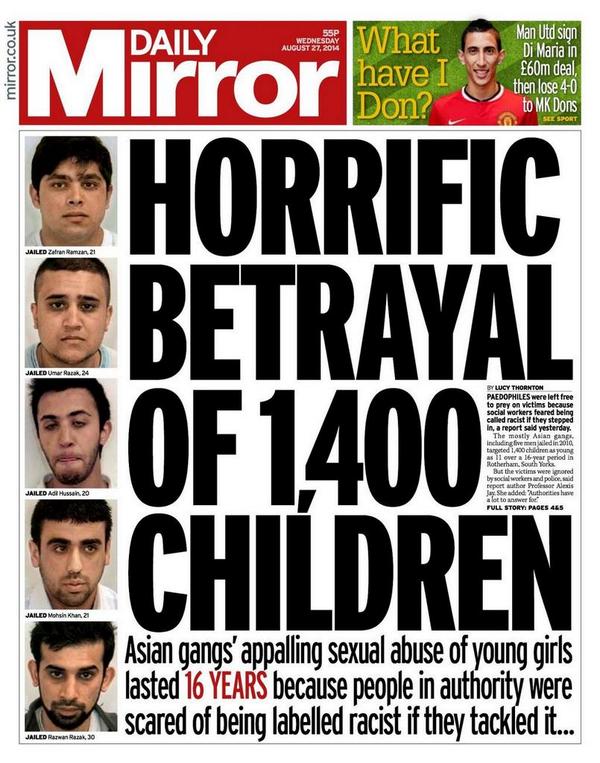
Worst of all, however, are the numerous child rape gangs that have flourished in Britain because of a national unwillingness to investigate Muslim criminals, out of fear of being seen to be prejudiced (a form of dhimmitude). The most infamous of these was the Rotherham child exploitation scandal, which saw 1,400 British girls raped by a Muslim grooming gang over a period of 35 years.

Britain has completely lost its moral compass, and we should not be following them anymore. Better to take our lead from places in Far East Asia. 60 years ago, South Korea had near-African levels of poverty, and as recently as 1980 the GDP per capita was barely over USD2,000 per year.

As of 2017, their GDP per capita is now higher than New Zealand’s. This they achieved not by inflating the housing market through mass immigration but from adding value through improving human capital and investing in technology, research and development. They have done much that we could learn from.

Some will argue that these Far East Asian countries are doing well because of their high native IQs. But that’s precisely the point. South Korea, China, Hong Kong, Japan, Singapore and Taiwan make high-IQ decisions, and because of those decisions their standard of living is now significantly higher than that of Western countries.

We need to stay a high-IQ people, and we can’t do that by following the British obsession with the mass importation of cheap labour. Therefore, it’s time to go it alone.

We Kiwis are the offspring of two of the most adventurous and masculine races in the history of the world. The Polynesians that rowed here from other Pacific islands, and the Northern Europeans who sailed here and provided the impetus to build New Zealand into a wealthy modern nation, comprise two of the hardiest and most alpha peoples .

The hybrid vigour of these two makes us something truly special – special enough that we can rely on our own abilities to navigate the world and to determine our path forwards. We can turn our backs on the soulless, materialistic greed and nihilistic apathy of modern Britain, while aspiring to maintain the spirit of adventure that made New Zealand into a First World country.

Fundamentally British we might still be, but we can no longer look to them for inspiration. Great Britain is no more; what remains is fit to be euthanised. We need to cut our cultural ties with Britain immediately, and decide for ourselves what the way forward is going to be. This will involve intelligent public discussions about political issues, instead of blindly following international trends in the hope of getting approval from someone in a big country.

*

If you enjoyed reading this essay, you can get a compilation of the Best VJMP Essays and Articles of 2018 from Amazon for Kindle or Amazon for CreateSpace (for international readers), or TradeMe (for Kiwis). A compilation of the Best VJMP Essays and Articles of 2017 is also available.

Clown World Chronicles: What is A ‘Dhimmi’?

With a world being thrown into upheaval, many concepts once thought forgotten are making a resurgence. This is often a good thing, as VJM Publishing has tried to show with our work on alchemy, elementalism and esotericism, but it can also be a bad thing. As this essay will explain, one of the concepts we will again have to familiarise ourselves with is that of the dhimmi.

Growing up with stories about World War II, an idea of what constituted an awful person arose. It wasn’t good to be a coward, and it wasn’t good to be the sort of person who shot prisoners, but the worst sort of person was the kind that collaborated with the enemy. These collaborators were a particular kind of traitor, but of the lowest possible sort.

The actions of men such as Vidkun Quisling, the Norwegian who collaborated willingly with the Nazis during the Norwegian Occupation, became infamous. When Germany invaded Norway in 1940, Quisling volunteered to lead a local version of the Nazi Party, with him as head. This was considered such an obscenity that Quisling was executed as soon as the Nazis were expelled.

Warfare has always had collaborators, a consequence of the depravities that it inflicts upon soldier and civilian alike. The first enemy of warfare may be the truth, but the second might be common decency, as people are flung into situations where they are forced to do terrible things or die. The conditions of warfare mean extreme shortages of food, medicine and safety, and that means desperation.

Sometimes there is so much warfare and so many collaborators that a specialist vocabulary arises to describe them. During the Islamic conquests, collaborators were so common that they were given the title dhimmis (“protected person”). A dhimmi was given certain rights, such as exemption from persecution, as long as they paid the jizyah, or special tax. This was a form of protection money and therefore a sign of submission.

A dhimmi, then, is one who collaborates with an invading Islamic force to secure personal benefits at the expense of their people as a whole. Because the Islamic conquests were so vast, there are many stories of dhimmis in different cultures, but all of them share the quality of being considered execrable cowards.

Becoming a dhimmi isn’t necessarily a dumb move, even if it’s a morally deficient one. As many of the Norwegian women who hooked up with Wehrmacht soldiers during the Norwegian Occupation discovered, collaboration can secure food and other resources if the enemy ends up being triumphant.

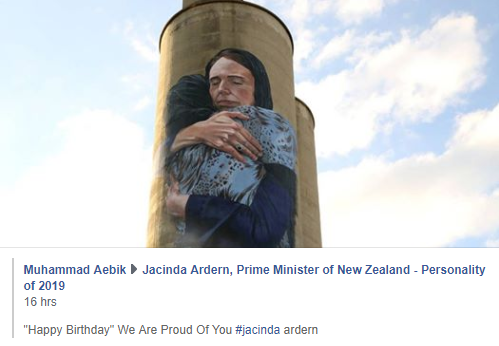
Dhimmitude could be considered a kind of prostitution. As can be seen by the image above, anyone who becomes a dhimmi can expect to be praised in the most effusive of terms. The most gratifying thing a jihadist can experience is to see an infidel submit to the will of Islam, whether that be conversion or paying tribute. It’s the same sort of gratification a man feels watching a woman suck his cock.

A lot of Westerners feel that they can already see the writing on the wall, and believe that some form of Islamic conquest is inevitable. It was being seriously asked 15 years ago if France was on its way to becoming a Islamic state; now people just shrug their shoulders and await the inevitable.

A dhimmi in a modern context would be someone who actively supports Islamic interests ahead of those of her own people, in exchange for the hope of goodwill from Muslims as a whole. This could be for a variety of reasons, such as votes from the Muslim voting bloc within the country or support from Muslim countries when it comes to fulfilling future United Nations ambitions.

British Member of Parliament Jo Cox was a classic example of a dhimmi. Elected to serve the Batley and Spen constituency of West Yorkshire, she instead spent most of her time campaigning for refugees and ethnic diversity. Many considered her assassination a predictable response to her support of foreigners over her own people.

Jacinda Ardern is another example of a dhimmi. Ardern could be said to be “The world’s favourite dhimmi” on account of her response to the Christchurch mosque shootings, which was to excoriate white men in general while opening the door to further Muslim immigration. Her crackdowns on the rights of New Zealanders to possess firearms and to free expression made every jihadist in the world grin from ear to ear.

These young women have calculated that Islam will be much more influential, perhaps even dominant, in a few decades, and therefore the time to ingratiate oneself with them is now. They want to show themselves to be great friends of Islam, in the hope that Muslims will treat them more favourably when they assume power. They have deeply internalised a sense of dhimmitude, the condition of accepting being a dhimmi.

The left-wingers who prioritise Muslim refugees over their own homeless are deep into dhimmitude. As is often the case with slaves, dhimmitude can become so deeply internalised that the dhimmi thinks their behaviour is natural, even admirable. But the actions of women like Cox and Ardern are little different to those of the women who prostituted themselves to the victorious Nazi armies. After all, human nature hasn’t changed in many thousands of years.

In any case, the West is likely to see a lot more dhimmitude in coming decades, as the Muslim population – and therefore their militancy – continues to increase. Soon it will become important to identify dhimmi politicians like Cox, Ardern and Angela Merkel, so that they can be counteracted before they destroy our societies from the inside.

*

If you enjoyed reading this essay, you can get a compilation of the Best VJMP Essays and Articles of 2018 from Amazon for Kindle or Amazon for CreateSpace (for international readers), or TradeMe (for Kiwis). A compilation of the Best VJMP Essays and Articles of 2017 is also available.
Te Reo With Mnemonics: Time Words

Beginning – tīmatanga

A rugby coach is showing his new assistant the ropes. The assistant has a massive, hound dog’s tongue hanging out. The coach points to his team and says “To start with, I’d like you to give my team a tounging.”

End/cease – mutu

A man is auditioning for a stage role, and is demonstrating a wide range of barnyard noises: chicken clucks, pig oinks, sheep baas etc. The man running the audition says “Ok, enough, stop, end, cease! Can you moo too?”

in the future – ā tōna wā

A man looks into the future, and sees himself running. The future man suddenly pulls up lame and says “Ah’ve torn a – Waaah!.”

the Future/the time to come – ā mua

A father and son stands looking at a mooing cow in a storefront window. “One day in the future, in the time to come,” the father says, “that will be our mooer.”

right now/presently/currently – i nāia nei

An iron sculpture in the shape of the letter A is being appraised by a crowd. A woman says “Right now, this is an iron A, but with the right magic we can make it a silver or even a golden one.”

Past – pāhi

A woman meets a slim man and exclaims “Trevor! You used to be so fat!” The man replies “Yes, in the past I ate a pie every day.”

Time – tāima

Two terrorists are sitting on a park bench. One of them asks “What’s the time?” The other one opens up a suitcase containing a bomb to get a look at the timer.

before – i mua atu/nō mua atu

Two art patrons go to an art gallery, only to find that the walls are all blank and empty. One of them looks to the other “There used to be a lot more art before.”

during – ai

A cyclops is talking to a friend on a telephone. He says “Yes, it was during my eye surgery that I realised…”

after – i muri iho

A Maori man says “I yell into the hills, and after that I hear a Maori echo.” He faces the hills and yells “Ka mate!” and the hills echo back “Ka ora!”

since – mai rānō

An old man sitting on a tame rhinoceros tells a daring story about how he broke it out of captivity. He concludes with “ever since then, he’s been my rhino.”

long time ago – noa atu

A man is sitting on a bench when another man comes up to him, being closely followed by the R2D2 robot from Star Wars. The second man gestures to R2D2 and asks “Have you met?” The seated man replies “I’ve known R2 since a long time ago.”

*

This wordlist is an except from Learn Te Reo With Mnemonics, a book being compiled by Jeff Ngatai for an expected release at the beginning of 2020.