Why The West Should Replace China With India

It’s apparent to all that the world is currently undergoing a strategic realignment. When the COVID-19 dramas have settled down, we will be left with a new set of alliances and global political arrangements. This essay will argue that the Western World should use this opportunity to replace the economic ties it currently has with China.

To a major extent, those who are powerful in the non-Western world are only so because of the favour of Western elites. China’s economic miracle is chiefly the result of the transfer of manufacturing capacity from the West since the early 1980s. After forty years of this, China has grown into a major world power.

In 1990, China had a smaller economy than Canada. Their GDP per capita was a pitiful $349 per year, putting them in the same class as Uganda, Mali and Rwanda. Today, China is second only to America by total economy size. Their GDP per capita is now in the same class as fringe Western nations such as Russia, Argentina and Bulgaria.

This development has brought with it great wealth, not only to China but also to their major trading partners. But with this wealth has come power, and with that power has come ambition.

China’s strategic goals in the South China Sea are evident: to take control of the entire region. As their economy continues to develop, their ability to actualise these goals increases. They are now wealthy enough to devote a vast sum of surplus capital to military outfitting and development. Some of this has been devoted to building artificial islands – rightly considered forward military bases – in the South China Sea.

Given that Chinese strategic goals often don’t align with ours, and that Indian strategic goals often do, it might be time for the West to make an immense pivot away from China and towards India. There are several reasons why this might be a good idea.

The most obvious strategic reason to replace China with India is the aforementioned military one. A close alliance with India would all but guarantee Western control over the Straits of Malacca, which is the jugular vein of Chinese shipping and trade. This would minimise the potential for China to get tempted into further expansionism.

Existing tensions on the shared border between India and China have flared in recent weeks. China has already moved a brigade’s strength of men into territory India claims as its own. This is an extreme provocation by any measure, if not an outright act of war. India’s response could lead to a wider conflagration.

If it does, it would be the perfect time for the West to throw our lot in behind India. Not only would it enable us to impose a collective will upon China in a weak moment for them, but giving assistance to India in their time of need would engender the greatest amount of long-term goodwill from their side.

More subtle are the economic reasons. China’s economy has advanced to the point where it is a competitor to the West in many ways, whereas India’s has not. Many Chinese firms have been able to drive Western ones out of certain markets by way of having a superior product. The general level of scientific knowledge in the Chinese population is now high enough that Chinese firms are likely to pose a consistent threat into the future.

It would be much better to co-operate with Indian firms, and to raise them to the level where they can compete with the Chinese ones, than to continue to raise Chinese firms so that they can compete with ours in the future. We can help India to adopt technology that both the West and China already have, at no strategic loss to ourselves.

As mentioned above, Chinese GDP per capita has increased sharply in recent decades. Today, it is over twice as high as the GDP per capita in India. This has brought with it increasing expectations of living standards, such that India now offers better opportunities to employ cheap labour. Factories could be set up in India at competitive prices.

The greatest reasons to pursue an alliance with India at the expense of China are cultural.

India is culturally superior to the West in several ways. Here we are not merely talking about lamb saagwalas. Their compassion for animals is such that India has more vegetarians than the rest of the world put together. This compassion is a feature of Dharmic religions such as Buddhism and Hinduism.

The sadistic Abrahamic religions have no such restrictions, and neither does Chinese culture with its hellish wet markets. As such, there is an opportunity for us in the West to learn from Indian culture and from the Indian approach to life, and to use its inspiration to better ourselves.

The Indian spiritual culture fills a need in the Western soul for answers about how to morally conduct ourselves in this life. This is not to claim that all Indians conduct themselves perfectly, or even better than Westerners do on average. It is merely to suggest that there is great value to Westerners in the spiritual traditions of the Indian people, in particular Buddhism and Hinduism.

Because India has cultural advancements that we in the West ought to learn from, there is the possibility of genuinely reciprocal trade. We have scientific, technological and commercial knowledge that they would benefit from learning, and they have spiritual knowledge that we would benefit from learning. It would be a two-way exchange.

A further point relating to culture is the shared love of cricket. That cricket is popular in India as well as in Britain, Australia, South Africa and New Zealand means that men from all of these places have a shared bond, and this naturally allows for some degree of solidarity. After all, it’s through sport that men learn to conduct themselves in wartime, and men bonded in such a fashion are bonded deeply.

No such bond is shared with China.

In summary, an entire spectrum of reasons suggests that the West ought to take the economic bonds that tie us to China, and to replace them with bonds that tie us to India. This would not only make a great deal of natural sense, but it would also strengthen the strategic position of the West deep into this century.

*

If you enjoyed reading this essay, you can get a compilation of the Best VJMP Essays and Articles of 2019 from Amazon for Kindle or Amazon for CreateSpace (for international readers), or TradeMe (for Kiwis). A compilation of the Best VJMP Essays and Articles of 2018 and the Best VJMP Essays and Articles of 2017 are also available.

*

If you would like to support our work in other ways, please consider subscribing to our SubscribeStar fund. Even better, buy any one of our books!

Writing Characters Of Copper

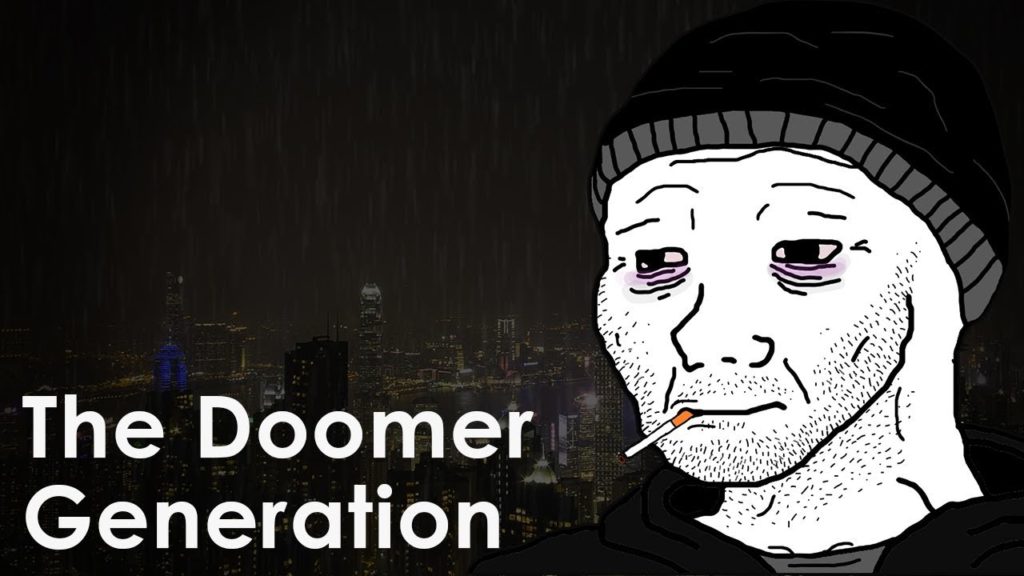
With a moderate amount of spiritual energy, a character becomes a character of copper. At this level, someone will have roughly half of the spiritual spectrum below them and half above them. A character of copper has developed a sense of love or compassion. As such, they are of a significantly higher frequency than the three base elements.

Copper has several noteworthy characteristics compared to the base metals of lead, tin and iron.

Most apparently, copper is colourful. Lead, tin and iron are all grey, but copper is a shiny reddish brown. This makes it desired. A necessary aspect of characters of copper is that they start to become desirable to other characters. Copper is described as a semi-precious metal. This reflects the fact that copper was once used as a currency.

Copper was associated with the goddess Venus in the ancient world. Hindu Yogis associate it with the heart chakra, from where people learn to express compassion. A character at the level of copper can begin to hear whispers of the Word of God. Consequently, they are able to follow their hearts, instead of needing to be led or directed.

In that copper occupies the centre of the spiritual ladder, it represents the union of opposites. In uniting above and below, copper serves as that which brings different elements together in joy. This gives it a harmony with the party-loving element of tin, only copper is less debauched. The characteristic action of copper is a man and woman coming together to make love – at the level of copper one no longer merely has sex, as the baser elements do.

The realm of copper, then, is the realm of courtship, chivalry and romance. This is the realm in which a physically dominant person begins to value something other than physical control. Here they learn to yield to people despite being able to kick their arses. It begins when rising spiritual energy cannot go further towards the masculine and so moves upwards and back towards the feminine. As such, it is where true compassion begins to enter the spiritual ladder.

It could be argued that boundary of the transition into copper comes when the physically dominant character realises that further advancement can only come in metaphysical realms. The character of copper learns that they can tactically choose to yield to the baser elements in the short term, for the sake of being better able to assert themselves in the long term.

The word copper gives us the word ‘capricious’, this being perhaps the characteristic quality of a beautiful woman, around who the world revolves in many ways. A character of copper, knowing themselves to have more value than the base elements, can become capricious if it goes to their head. A beautiful woman who knows that she is desired can come to make unreasonable demands on her suitors.

The combination of tactically yielding to the baser elements and being a beautiful woman suggests motherhood. The attitude of copper is the attitude of a mother towards her young child. The raw, biological essence of copper can best be appreciated by observing the lengths that the females of mammalian species will go to protect their offspring. The baser elements do not have a concept of self-sacrifice for a higher goal.

Thinking in these terms, the difference between copper and lead becomes obvious. A woman at the level of lead will breed without any concern for the well-being of her offspring, whereas a woman at the level of copper will make sure that any offspring she has are well cared for. In life history theory, this approximates very closely the difference between the r-selected and the K-selected.

The difference between copper and iron also becomes clear. A character of iron might be tough, loyal and honourable, but ultimately they fight for fighting’s sake. A character of copper, on the other hand, can have the aforementioned qualities plus the capacity to fight for a higher value. The character of iron finds their greatest expression in killing; the character of copper prefers to capture his enemies so as to ransom them off.

The characteristic neurotransmitter of copper is oxytocin. This is the “love drug” that leads to the formation of pair bonds. The formation of pair bonds creates a space for the higher elements to come into being. A character of copper will have a greater capacity for love than any of the baser elements. This capacity causes them to be cherished.

As is true with characters of iron, there is nothing stopping a character of copper being of either gender.

A male character of copper might be a chivalrous knight. Having proven himself in the realm of iron, the knight might have realised that further achievements in that realm are meaningless. As such, he aspires to achieve in a new realm – that of the nobles. Seeing the nobles display chivalry inspires him to imitate them.

A female character of copper could be a young mother or a striking beauty. If the former, her overriding concern will be the welfare of her family, which distinguishes her from the often neglectful or cruel mothers of the baser elements. If the latter, her beauty might be such that other men come to desire her so powerfully that they compete for her attention. In this sense, a female character of copper will invoke Aphrodite.

It’s worth noting that copper, although yielding to iron as tin does, does so in a different manner. Tin yields on account of that it is softer and is indifferent. Copper yields on account of that it takes a longer-term view. Where iron charges ahead out of rashness, and tin cowers back out of timidity, copper intelligently sums up the situation and makes the correct decision. This is a quality that copper shares with all of the precious metals.

If a character of copper is really a character of copper, they ought to be able to stay one step ahead of characters made of the baser elements. The baser characters might be able to get the jump on a character of copper, of course, but they must do so by underhanded means (or luck). Characters of copper can fight, but like characters of silver they prefer to find other ways to impose order upon the world.

The more precious elements still have an intellectual and spiritual edge over the characters of copper, however. The characters of copper might have intelligence and compassion, but at their frequency it’s hard for them to express either beyond the boundaries of the immediate family. Once issues of higher learning come into play, the character of copper has to yield.

Characters of copper love the idea of being matchmakers. Having risen above the baser elements, they are no longer motivated purely by egoic instincts. As such, they don’t get jealous when two other people form a pair bond. A character of copper, unlike the baser characters, understands that love and goodwill between two people makes the lives of all around them easier, and so they encourage it.

The archetypal situation of copper might be a middle-aged matriarch of the minor aristocracy arranging a marriage between her daughter and a famous knight. After a great party, involving many characters of tin who add a bawdy touch to provide a contrast, they all live happily ever after. It’s not until a character starts to value education that they enter the realm of silver.

*

This article is from Viktor Hellman’s The Alchemy of Character Development, the sixth book in VJM Publishing’s Writing With Psychology series. This book will show you how to use alchemy to create deep, realistic and engaging characters for your creative fiction.

*

If you enjoyed reading this essay, you can get a compilation of the Best VJMP Essays and Articles of 2019 from Amazon for Kindle or Amazon for CreateSpace (for international readers), or TradeMe (for Kiwis). A compilation of the Best VJMP Essays and Articles of 2018 and the Best VJMP Essays and Articles of 2017 are also available.

*

If you would like to support our work in other ways, please consider subscribing to our SubscribeStar fund. Even better, buy any one of our books!
Clown World Chronicles: What Is An ‘Ethnostate’?

The term ‘ethnostate’ comes up again and again, and it will come up even more often as Clown World intensifies. People like talking about whether instituting one is possible, and they like arguing about who would be let into one if it existed. This article tells you what you need to know.

Of all the thoughtcrimes that people get accused of nowadays, being a racist is the worst. Of the all the racist thoughtcrimes one can commit, the worst is supporting an ethnostate (one would think that supporting genocide would be the worst, but in Clown World overt hatred is sometimes not considered actual hatred, for reasons mysterious).

An ethnostate is a country where citizenship is limited to members of one particular nation or ethnicity. The countries of Europe started out as ethnostates, as did most of the nations of the Old World. It’s only in empires, such as Rome or the countries of the New World today, where different races are tasked with living in harmony.

America is not an ethnostate, and nor is any other Western nation today. As such, the concept only exists as an ideal – one that existed in the past, and which some wish would exist in the future.

The ethnostate is usually thought of as an imagined liferaft that will keep white people safe from The Muttening. This term refers to the continual increase of people with undefinable ethnic ancestry, to the point where Western nations are no longer identifiable separate breeds but rather a mass of mongrels.

In its American conception, the usual idea is that white people would pull back to the Pacific Northwest, this being the furthest away from where the bulk of the blacks and Hispanics live. The reasoning is that this part of North America is so cold and rainy that only white people could handle living there. This would also allow for California to be used as a buffer zone.

In its European conception, the usual idea is that all non-natives will be encouraged to leave, otherwise expelled. An ethnostate will thus be created from within. In principle, it doesn’t really matter where the non-natives are expelled to, but the usual idea is “back to the Middle East and Africa.”

The Alt Right, in particular, is obsessed with the idea of an ethnostate, believing it to be the solution to most of society’s problems. They believe in resegregation, which would entail American whites and American blacks living apart from each other. For the Alt Right, blending together different human groups is a recipe for social chaos. Segregation is as necessary to good order as private property laws.

They are particularly fond of quoting crime statistics that demonstrate black Americans committing homicide at a much higher rate than white Americans. “13/52” is a popular phrase, referencing the fact that blacks make up some 13% of the American population but commit some 52% of the homicides. Multiple studies show that American blacks are some six times as murderous as American whites.

They are also fond of quoting sex crime statistics. In Sweden, native Swedes make up some 97% of victims of sexual homicides but at most 58% of the perpetrators. A Norwegian study found that 36% of rapes in Norway are committed by men born outside of it. Another study showed that the number of first-generation immigrants in a European country was significantly positively correlated with the number of rapes in that country.

The Alt Right argues that if Western nations would simply get rid of all their non-whites, everything would be golden. Removing this 10-15% of the population would reduce by half the number of sex crimes and homicides, they argue.

It’s certainly true that there are scientifically documented disadvantages to a lack of cohesion.

As Aristotle described, a lack of commonalities leads to infighting within groups that would otherwise be harmonious. Diversity leads to factionalisation, which is when one subgroup starts putting its own interests above that of the wider group. This inevitably leads to everyone else doing the same, meaning that overall social solidarity and trust are lessened.

Even worse, diversity gives tyrants the ability to play factions of the people off against each other. Aristotle noticed already 2,300 years ago that multicultural societies were inevitably ruled by tyrants, as their inability to agree on anything was exploited by demagogues. It’s often as simple as favouring one group unfairly, and the whole population can be induced to fight itself.

Despite all this, problems with the ethnostate idea are multiple.

For one thing, many non-whites occupy a lowly niche in Western societies that would otherwise be filled by whites. In Western countries, there’s a need to completely shit on one segment of society, so as to induce the others to stay in line. This is usually the cheap labour segment, which must necessarily be filled by whites in any white ethnostate.

This is true at the other end of the scale as well. If all of the Jews were kicked out of the West, the niches that they currently occupy would end up being filled by white people. Evidence for this comes from the fact that Japan and South Korea have also descended into Clown World, in many ways even worse than what the West has. But Japan and South Korea already are ethnostates, with hardly a Jew to be seen anywhere.

Even more crippling to any ethnostate proposal is the fact that, even with a will to institute one, the existing presence of mixed-race people would make it impossible to draw ethnic boundaries that could be agreed upon. Apartheid in South Africa had the advantage that whites and blacks were distinct people. But in America, the number of mixed-race people is so great that no clear lines could possibly be drawn.

If there is to be any hope for future dreams of an ethnostate, it might have to be run on a Selectionist basis. Some dwellers of cyberspace joke about a “Hapa ethnostate”, but the groundwork for one has already been laid in Hong Kong, Singapore, British Columbia, Sydney, Melbourne, Auckland and a few other places.

*

This article is an excerpt from Clown World Chronicles, a book about the insanity of life in the post-Industrial West. This is being compiled by Vince McLeod for an expected release in the middle of 2020.

*

If you enjoyed reading this essay, you can get a compilation of the Best VJMP Essays and Articles of 2019 from Amazon for Kindle or Amazon for CreateSpace (for international readers), or TradeMe (for Kiwis). A compilation of the Best VJMP Essays and Articles of 2018 and the Best VJMP Essays and Articles of 2017 are also available.

*

If you would like to support our work in other ways, please consider subscribing to our SubscribeStar fund. Even better, buy any one of our books!

Conservative Parties In Every Western Nation Will Eventually Become White Parties

The National Party has revealed its party list for this year’s General Election, stoking outrage. In an age when it’s not okay to be white, the racial composition of their top ten list candidates is unrepentantly vanilla. This essay will argue that this outcome was not only inevitable, but is likely to intensify in the future.

In the age of social justice, racism is the Original Sin of the white race. The fight against racism, many believe, is one of the most pressing of all social issues. Anyone who doesn’t think so stands alongside Adolf Hitler as a public enemy motivated by sadism. Practically any action can be justified, no matter how ludicrous, if the intent is “anti-racist”.

The social justice warriors seems to think that the best way to fight racism is to minimise the number of white people in positions of power. The best way to achieve this is to oppose white people at every turn. Consequently, Labour and the Greens have become openly anti-white parties.

18 out of Labour’s 46 current MPs are non-white – 39% of the total. This is a much higher percentage than the percentage of non-whites in New Zealand, which is 29%. 11 of those 46 are Maori – 24% of the total. This is also a much higher percentage than the percentage of Maoris in New Zealand (16%). These figures are even more remarkable if one accounts for the size of the Maori presence in the New Zealand First, Maori and Mana parties.

There is nothing wrong with having Maori MPs (or white ones). But if the Labour Party wants to have a disproportionately high number of non-white or Maori MPs, then no-one can be surprised if their opponents in the National Party have a disproportionately low number of non-white or Maori MPs.

This essay predicts that things aren’t going to end there. The problem is that it’s now all but inevitable that National eventually becomes the white person’s party.

As diversity increases in any white country, the in-group solidarity of the white people in that country also increases. This can be extrapolated from known laws of social psychology. As the position of white people gets weaker, and closer to minority status, the more this in-group solidarity will intensify out of a concern to protect their position. Hence, the strongest white in-group solidarity is seen in places like Brazil and South Africa.

As all other Western counties become more like Brazil and South Africa, the white people in those countries will come to face a certain calculus: the more their local social democrat party becomes non-white, the more it makes sense for them to rally behind the local conservative party. This calculus explains why the National top ten is now all white.

This phenomenon is perhaps most advanced in America, where the Republican Party is now the White Party in all but name, while the Democrats are the Party of The People of Colour. The image at the top of this page shows the reality clearly.

If only non-white Americans voted in Presidential Elections, the Democrats would win every single Electoral College delegate. Something similar is true in all other Western countries – namely, that if only non-whites voted, the social democrats would always win. It is certainly true in New Zealand, as Dan McGlashan showed in Understanding New Zealand.

Conservatism has always been about maintaining the status quo. The logic is that things came to be the way they are by way of the collective applied wisdom of our ancestors. But if progress is equated with a smaller and weaker white presence, then conservatism will necessarily come to be equated with maintaining and protecting that presence.

The National Party top ten might be all white, but this is hard to avoid when Labour positions itself as the brown party. What’s also hard to avoid is that increasing anti-white aggression on the part of Labour and the Greens will intensify these sentiments, making National come to seem like the white man’s last stand.

What would really be a coup, from the perspective of Todd Muller, would be for National to take advantage of these pressures to win working-class whites to their side. If National accepted the inevitability of the grim calculus outlined above, they might realise the need to act upon it immediately, rather than be acted upon.

The Labour Party was founded by working-class whites for working-class whites, but its grip on that constituency has never been weaker. The Labour movement has turned its back on working-class whites all throughout the West, preferring to champion middle-class browns and blacks. This has made it highly vulnerable to being split in two, as it has been in places like Sweden.

The National Party could swoop in here – not from introducing racist measures themselves, but from winding back previously-introduced measures that were motivated by anti-white racism. A broad commitment to get rid of all policies based on skin colour and not need would be a good start.

If the National Party promised to scrap the Ministries of Maori and Pacific Island Affairs, as well as to scrap race-based education and health funding, as well as to scrap all race-based differential treatment in the Justice System, they would steal a march on a Labour Party that expects working-class white people to go to the back of the queue behind recent immigrants.

It would provoke fury from the globalist mainstream media, who are committed to propagandising for cheap labour and its importation. However, it might benefit National’s electoral chances, as did Don Brash’s Orewa speech in 2005. More importantly still, such a move is bound to entertain the gods, upon whose favour we all rely.

*

If you enjoyed reading this essay, you can get a compilation of the Best VJMP Essays and Articles of 2019 from Amazon for Kindle or Amazon for CreateSpace (for international readers), or TradeMe (for Kiwis). A compilation of the Best VJMP Essays and Articles of 2018 and the Best VJMP Essays and Articles of 2017 are also available.

*

If you would like to support our work in other ways, please consider subscribing to our SubscribeStar fund. Even better, buy any one of our books!