
How A Kanye West Run Could Win Trump Re-Election

The 2020 American Presidential Election just got even wackier with news that Kanye West has thrown his hat into the ring. West has no realistic chance of winning the American Presidency, but if he runs as an independent he could still impact the outcome. This article explains how.

In the 1992 American Presidential Election, third party candidate Ross Perot, running as an independent, won almost 19% of the popular vote. Although he didn’t win any Electoral College seats, he won over half as many votes as Republican candidate George W Bush, who lost to Democratic candidate Bill Clinton.

In retrospect, it seems that Clinton’s win was a total fluke, because the right-wing parties won about 59 million votes to his 45 million. Clinton only won thanks to Perot’s run, which split the right-wing vote, as many natural Bush supporters voted for Perot. Their mutually assured destruction saw Clinton coast home.

The same thing happened in the 2000 election, only for the other side. Al Gore won about half a million more popular votes than George W Bush, but Dubya won the election by five Electoral College votes. Gore probably would have won had it not been for Ralph Nader, who won almost three million votes for himself on a Green Party ticket. The vast majority of these votes would have gone to Gore had Nader not contested.

The Nader influence was felt most acutely in Florida. George W Bush won Florida, and its 25 Electoral College votes, after an infamous recount process that dragged on for weeks. In the final tally, Bush carried the state by 537 votes, but Nader won 97,488 votes there. Had Nader not stood in Florida, it’s all but certain that Gore would have carried the state – and with it America.

It can be seen from these examples that arguably the single most important factor for success in an American presidential election is not having a third party candidate running on the same half of the electoral spectrum to you. Because each state in the Electoral College is won on a winner-takes-all and first past the post basis, third party runs do little but split the vote.

So back to Kanye West.

One of the biggest obstacles to Trump’s re-election bid is his low support among blacks. Blacks have always been disinclined to vote Republican, on account of the Republican Party’s support for the War on Drugs and their opposition to welfare. 89% of them voted for Hillary Clinton against Trump, and an even higher percentage supported Barack Obama against his opponents.

Polls suggest that blacks intend to vote heavily for Joe Biden this year. This is for two reasons. The first is that Biden is a Democrat. The second is that blacks remember how Biden was a dutiful and competent Vice President to Obama for eight years. Biden never went against his man or undermined him, and this is remembered by those who were Obama’s strongest supporters.

Kanye West appears to intend to run as an independent. He is 43 years old, black, and works in a creative role. His biggest supporters are from similar demographics. Being one of the world’s most popular musicians, West’s name recognition among Millennial and Zoomer voters is immense. A great number of them will vote for him on this basis alone.

In appealing to these demographics, a West run will split the left-wing vote. The young, the black, the creative voters who will support West are all groups that would have otherwise supported Joe Biden. In other words, a West presidential bid would cost Biden a lot more potential votes than it would cost Donald Trump.

Biden is well ahead of Trump in the polls right now, but the reality is that an incumbent American president hasn’t lost a presidential election since Clinton beat Bush in 1992. Trump was rubbished by the mainstream media leading up to the 2016 election and still won. At worst for Trump, 2020 might be a close loss.

All this means that a Kanye West presidential bid has a very real chance of tipping the balance of this November’s election from a Joe Biden win to a Donald Trump win. West would only need a small percentage of blacks to support him for Biden to risk losing some states – and after Biden’s “if you don’t vote for me, you ain’t black” gaffe, such an outcome is fully plausible.

*

If you enjoyed reading this essay, you can get a compilation of the Best VJMP Essays and Articles of 2019 from Amazon for Kindle or Amazon for CreateSpace (for international readers), or TradeMe (for Kiwis). A compilation of the Best VJMP Essays and Articles of 2018 and the Best VJMP Essays and Articles of 2017 are also available.

*

If you would like to support our work in other ways, please consider subscribing to our SubscribeStar fund. Even better, buy any one of our books!
Who Are The New Zealand Public Party?

The New Zealand counterculture has been surprised recently by the sudden rise of Billy Te Kahika and his New Zealand Public Party. His appearances on the Vinny Eastwood Show have brought his name to everyone’s awareness, but who is Billy TK and what is his party about? This article explains.

Most of the details about the party can be found at their website. This offers a fairly comprehensive overview of NZPP policy.

The NZPP is transparently a protest movement. The ‘About Us’ section of their website states “The New Zealand Public Party was formed by Billy Te Kahika in response to the blatant injustice and tyranny being hurled upon the New Zealand people by the Labour/NZ First/Green government.” Their main intention appears to be to change the system.

Billy TK himself is a mysterious man. Rumours swirl that he was an SAS soldier, a 33rd-degree Freemason, a former United Nations lackey and even an NZSIS operative who is acting to mislead anti-Establishment voters. His rise has been swift, and out of the blue – there is no indication that he has previously been a member of any other party.

Te Kahika has recognised the difficulty of surmounting the 5% threshold, and to that end has made an effort to unite the smaller parties. The NZPP has already absorbed the Reset New Zealand Party, who had many of the same aspirations regarding a national Bill of Rights. He has also approached the New Zealand Outdoors Party, the Aotearoa Legalise Cannabis Party and the Social Credit Party with offers to unite.

The bulk of NZPP philosophy can be found on the ‘What We Stand For‘ page of their website.

Their commitment to “Rebuild New Zealand Back Into A Democracy” promises to write a new New Zealand constitution, one for the people. This process will involve writing a “real Bill of Rights”. This Bill of Rights would underpin all other laws, so that other laws would have to accord with it. This would be very different to today’s system, where any supposedly guaranteed human rights can be abrogated whenever the government feels like it.

It seems from this, and from the disinclination to appear in the mainstream media, that the NZPP is a people’s movement and not another Establishment vehicle. Other minor parties have blatant agendas: the Maori Party wants to stir up racial tensions; the New Conservatives want a theocracy where everyone is forced to worship Jesus. The NZPP has no obvious agenda.

The NZPP would enshrine in law the superior importance of human rights over corporate profits. This would mark a radical departure from today’s model, where the people are effectively serfs who exist solely to meet the labour needs of the projects dreamed up by the ruling classes. No doubt such a proposal will be met with horror by New Zealand’s wealthy, for who human rights are impediments to profitability.

Housing is another major priority for the NZPP. They have identified the poor standard of New Zealand housing as one of the primary contributors to the suffering of the New Zealand people, stating that “healthcare begins at home”. This, when coupled with the human rights drive, would seem to pigeonhole the NZPP as an alt-left party.

This would be inaccurate, though, as they also have conservative policies, such as their stance on abortion. They think that the law recently passed by the Sixth Labour Government (which allows abortion up to birth) is extreme. Here they emphasise that people have the right to prevent unwanted conception, but also that they “cannot grant the killing of a person as a method of birth control”.

Christianity perhaps also influences Billy TK’s stance on legal cannabis, which he thinks New Zealand is “not quite ready for.” Despite this reluctance, he was more than happy to relate an anecdote to Vinny Eastwood about a family member benefitting from the use of it, and was more than happy to admit smoking it himself when younger. He may be lukewarm on legal cannabis, but is no Bible-thumping New Conservative.

It might also influence their most obviously alt-centrist policy, which is opposition to usury. Billy Te Kahika is strongly against usury, which means that he will be despised by the Establishment. However, in opposing usury he has the potential to win the support of large number of Kiwis, in particular the more conspiracy minded.

The NZPP approach seems like it is to cast a wide net, with the intention of bringing a large number of people together for the sake of forcing change on the Establishment.

What the NZPP offers is a centrist and anti-Establishment platform. This means that they avoid the major weaknesses of the previous anti-Establishment movements, who have shown themselves to be either too left-wing for the public (The Opportunities Party, the Aotearoa Legalise Cannabis Party, Social Credit) or too right-wing for the public (New Conservatives, ACT to a lesser extent).

Predictably perhaps, Billy TK has already generated a few enemies. These are mostly members or supporters of other parties who feel that the NZPP is acting to split the anti-Sixth Labour Government vote.

The NZPP’s most aggressive enemies are the New Conservatives, who, until now, had a lock on the anti-United Nations and anti-abortion voters. It’s likely that the NZPP steals many of these voters from the New Conservatives, on account of that Te Kahika is clearly more intelligent than either Leighton Baker or Elliot Ikilei. The NZPP also doesn’t have any awful policies, like New Conservatives’ proposal to increase penalties for cannabis use.

As of right now, it’s hard to say how well the NZPP would do in the election. They are striking all the right chords among New Zealand’s alternative thinkers, but it’s not certain that they will be able to register in time to contest the vote. Nominations for the election close on 21 August, about six weeks away. If Billy TK and the NZPP are to contest it, they will need to build momentum fast.

*

If you enjoyed reading this essay, you can get a compilation of the Best VJMP Essays and Articles of 2019 from Amazon for Kindle or Amazon for CreateSpace (for international readers), or TradeMe (for Kiwis). A compilation of the Best VJMP Essays and Articles of 2018 and the Best VJMP Essays and Articles of 2017 are also available.

*

If you would like to support our work in other ways, please consider subscribing to our SubscribeStar fund. Even better, buy any one of our books!

Clown World Chronicles: Who Is The Great NPC?

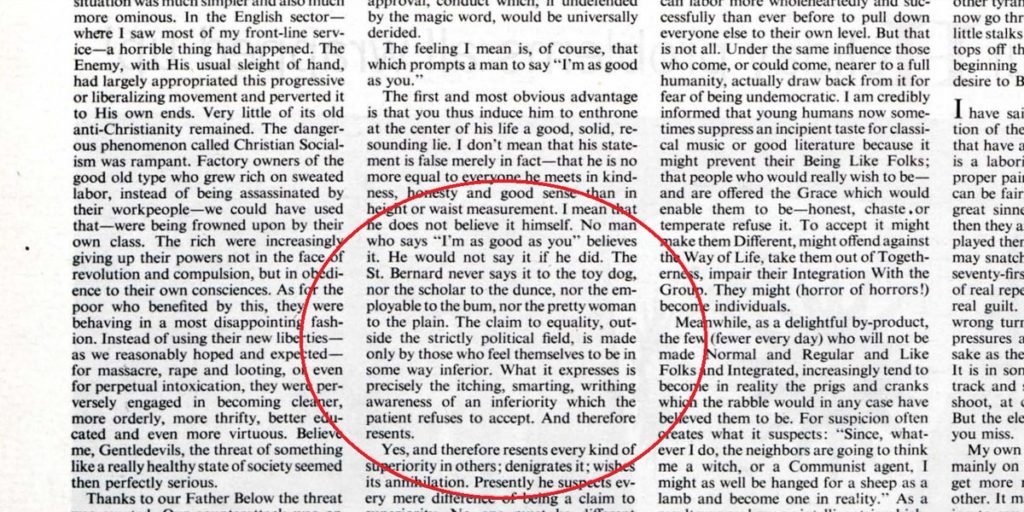
His eyes are black dots peering lifelessly out from a pallid grey face. His nose is nothing more than a triangle; his mouth is nothing more than a straight line. Hairless on crown, hairless on face, he casts a ghoulish and nightmarish figure. He is the Great NPC, one of the Younger Gods of the Clown World pantheon.

NPC stands for Non-Player Character. It’s originally a Dungeons and Dragons term, and it refers to characters who are played by the Dungeon Master and not by one of of the other players (who play PCs, or Player Characters). With the rise of video gaming, NPC came to refer to a game character that was controlled by the computer.

In either case, NPC came to be understood as a metaphor for an apparently human being that had no mind of its own. The main characteristic of NPC behaviour is that it is extremely predictable. Having no mind of their own, NPCs don’t have motivations, intentions or aspirations above that which their controllers imbue them with. They are every bit the programmable machine.

An NPC has been so completely programmed – whether by the television, by their schooling, by their religious indoctrination or by peer pressure – that they have no original ideas of their own. Everything they say, and everything they think, is simply repetition of something they had been programmed to believe.

The NPC can never question the mainstream narrative. They are incapable of making their own truth judgments. Any time they are asked a question, they respond with what the herd thinks. If the herd wants to zig, then the NPC will say that it’s time to zig. If the herd wants to zag, then they will say that it’s time to zag.

Being so dumb, the NPC is prone to paralysing bouts of cognitive dissonance, something which is heavily mocked by Clown World denizens in meme form. At maximum intensity, this cognitive dissonance can cause the NPC to suffer an NPC Error, which is when the NPC’s central processing unit is overwhelmed by the demands placed on it and crashes.

Encountering an NPC can be a terrifying experience if one isn’t used to it, akin to encountering a zombie or something else that isn’t human. Like a Terminator, one can never be sure that they’re not about to turn on you, pitilessly tearing you apart for a reason only their controller understands. Not being in possession of a soul, the NPC cannot be in possession of empathy.

Fortunately, NPCs are harmless in most cases, at least when it comes to direct violence. The real danger is that their mindless repetition of programming can lead to the normalisation of inaccurate ideas, which can lead to harmful consequences. If the television can program enough NPCs to believe something, the dead mass of their bleating will penetrate into every corner of society, causing everyone else to believe that thing too. If that belief is wrong, people will suffer.

It isn’t easy to tell if any given person one encounters is an NPC (as has been discussed at length here, determining an NPC from a conscious person is far from straightforward). So it’s usually necessary to rely on one’s intuitive sense of whether there’s anyone home. An NPC can say any number of things that hint at deep thought and intelligence. But all of it is mere programming.

The number of NPCs in the world appears to be growing larger. One of the characteristic phenomena of Clown World is that the divine spark within us all has begun to weaken. If this spark weakens enough, a person no longer has the will to do good things in the world. At this point, they will simply drift through life on the waves of social fashions. If uninspired by the divine, Wojak falls down the Fundamental Axis, and declines into an NPC.

All NPCs are avatars of the Great NPC himself, the Younger God of the Negative Pole of the Fundamental Axis. He is a reminder of what can happen to Wojak if he falls under the influence of the Merchant. The Great NPC hates all freethinking and all questioning of dogma. If the Merchant is the owner of the Clown World plantation, the Great NPC is its overseer.

The Great NPC is the god that represents the power of the mindless masses. His ultimate goal is to turn the entire world into NPCs. The reason why NPCs get angry when conscious people disagree with them is because the NPCs are trying to intimidate those people into silence. The Great NPC wants the entire world marching to a single drummer, too afraid to break step.

In this sense, the Great NPC is fundamentally opposed to Pepe, the Younger God of the Positive Pole of the Fundamental Axis. Pepe’s role in Clown World is to break down the cancer with spontaneous humour and good cheer. His meme magic is the antidote to NPC thinking, because NPC’s can’t understand it. Much of the cultural warfare in Clown World boils down to shitposters loyal to Pepe taking on normieposters loyal to the Great NPC.

*

This article is an excerpt from Clown World Chronicles, a book about the insanity of life in the post-Industrial West. This is being compiled by Vince McLeod for an expected release in the middle of 2020.

*

If you enjoyed reading this essay, you can get a compilation of the Best VJMP Essays and Articles of 2019 from Amazon for Kindle or Amazon for CreateSpace (for international readers), or TradeMe (for Kiwis). A compilation of the Best VJMP Essays and Articles of 2018 and the Best VJMP Essays and Articles of 2017 are also available.

*

If you would like to support our work in other ways, please consider subscribing to our SubscribeStar fund. Even better, buy any one of our books!
Why Corporations Support Black Lives Matter When They Didn’t Support Occupy Wall Street

Western corporations are falling over themselves to show their support for Black Lives Matter. Professional sportsmen proudly display BLM logos on their shirts, television shows hold moments of silence for George Floyd, and the FaceBook and Twitter accounts of countless large entities have paid their respects. But no corporation did anything like this for Occupy Wall Street. This essay explains why.

The Occupy Wall Street movement began in September 2011 with a campout protest at New York’s Zuccotti Park. The protest was sparked by rising inequality in America, something that had increased sharply after the Global Financial Crisis of 2007-08. Bank bailouts had ensured that the wealthy avoided any of the suffering from the crisis, and that the poor took the entire burden.

OWS’s most famous chant was “We are the 99%”. This referred to OWS’s belief that the top 1% of Americans were hoarding a grossly disproportionate amount of resources and power. Their fundamental motivation was to express outrage at this state of affairs in the hope of forcing change to a more equitable system. They made demands such as getting corporations and corporate lobbyists out of politics, granting the working class a greater share of production and reforming the banking system to restrict speculation.

The movement appealed to an entire generation of young people, who were just then beginning to understand that they were going to have a lower standard of living than their parents did. These young people saw in OWS the potential to arrest the relentless decline of their living standards by enabling them to come together to assert their collective interests.

This terrified the American Establishment.

If there’s any one single thing that the Establishment fears, it’s poor people coming together on the basis of class. Class solidarity is the only way that the people can form a broad enough front to work against inequality without being divided and conquered into impotence. The formation and expression of class solidarity, then, is a direct threat to the interests of the ruling class.

In the wake of Occupy Wall Street, the 1% came together and decided upon a strategy to prevent this from happening again. They realised that they had to pre-emptively divide and conquer the people because, left to their own devices, the people would inevitably organise and demand their right to an equitable share of production.

The greatest fear of the Establishment was the coalescence of the 99% under one banner. Having previously observed the degree of animosity that existed on account of racial tension, a plan became apparent: to divide the 99% up along racial lines. This was primarily to be achieved by pushing a racial oppression narrative that claimed that white people owed blacks reparations for past injustices.

Because the 1% owns the mainstream media, they simply directed their employees in the media to start pushing that narrative. And they did. The mainstream media everywhere stopped reporting on class issues entirely, and started reporting only on racial ones. Any case of racial injustice was blown up to seem an atrocity, and overcoming it a pressing issue, while class inequality was ignored completely.

After some years of this, OWS’s narrative of the 99% versus the 1% was overwhelmed by the Establishment’s narrative of black versus white. People stopped thinking in terms of class solidarity, and started thinking in terms of race. This was all by design.

Thinking in terms of race can never, ever lead to justice for the simple reason that many blacks and browns are middle-class while many whites are working-class. Fighting to improve the position of middle-class blacks and browns instead of that of poor people is unjust, and fighting to worsen the position of working-class whites instead of that of rich people is unjust. This fact is understood deeply by intelligent people.

So all attempts to increase racial consciousness must be treated with the deepest suspicion, as suspected attempts to destroy class consciousness. Every time someone pushes race conflict or a racial issue, the astute observer ought to ask if this is an attempt to distract from class issues. In the vast majority of cases, any racial issue being pushed will not really be worth attention.

This divide and conquer has now been ramped up to such a degree that the mainstream media now acts as if each person is their race first and foremost. If you are white, you’re on team Bad Guy and have to pay compensation. If you are black, you’re on team Good Guy and get to claim compensation. Your skin is your uniform, and your moral standing is dictated at birth by that skin’s melanin content.

The 1% more or less succeeded in their scheme to destroy class consciousness after Occupy Wall Street. Today, more people are concerned about what happened to George Floyd than by the unaffordability of housing (which is now out of control). Thanks to the mainstream media, most people can tell you about Black Lives Matter but few know how far their house-buying power has fallen in recent decades.

This is the reason why all of the big corporations support Black Lives Matter when they didn’t support Occupy Wall Street. Black Lives Matter pushes a narrative of racial division, of Team Black against Team White, and in doing so it splits the 99% down the centre, leaving them powerless against the predations of the 1%. Anyone who decries this racial narrative in favour of a class one is accused of not paying full respect to the oppression of blacks and browns, and is smeared as a racist.

It’s a perfect recipe for rendering the working class incapable of taking collective action against their rulers.

The basic rule is that any future movement seeking to bring the lower classes together against the Establishment will be opposed, and any future movement seeking to set the lower classes against each other will be supported. It can be predicted that any future movement promoting racial grievances, gender grievances or grievances relating to sexual orientation will be promoted widely by the mainstream media and supported by major corporations.

*

If you enjoyed reading this essay, you can get a compilation of the Best VJMP Essays and Articles of 2019 from Amazon for Kindle or Amazon for CreateSpace (for international readers), or TradeMe (for Kiwis). A compilation of the Best VJMP Essays and Articles of 2018 and the Best VJMP Essays and Articles of 2017 are also available.

*

If you would like to support our work in other ways, please consider subscribing to our SubscribeStar fund. Even better, buy any one of our books!