
Clown World Chronicles: What Is A ‘Behavioural Sink’?

The story of Clown World is a story of collapse. Therefore, it’s unsurprising that all of the signs and symptoms of social collapse in other mammalian species can also be observed in our societies today. The concept of the ‘behavioural sink‘ is an ethological observation that applies just as well to human society.

In the 1950s and 1960s, ethologist John Calhoun ran a series of experiments with Norwegian rats. This involved creating a controlled environment where the rats could thrive – food and quality shelter were limitless. These are sometimes called the Mouse Utopia Experiments on account of that the environment was so conducive to life.

In one of these experiments, known as “Universe 25”, the easy nature of life led to a population explosion, as the natural birth rates of the r-selected rodents (mice in this instance) were not kept in check by the natural death rate that would have existed had they lived in the wild. The overpopulation eventually reached such an extreme degree that the inhabitants of Universe 25 began to exhibit some strange behaviours.

Beyond a certain degree of overpopulation, asocial and then antisocial behaviour became much more common.

First the rodents would start to become asocial. The typical expression of this was a passive form of withdrawal. Some rodents would avoid the others during the daytime, only becoming active at night when the others had settled down. Other rodents, dubbed the “beautiful ones”, came to devote all of their time to grooming, withdrawing from social interaction completely.

If overcrowding became worse than this, the rodents would become aggressive. They would start to randomly attack each other, sometimes fatally. The slightest irritation could trigger a murderous assault. At its worst, infant mortality came close to 100%, as the rodents came to completely neglect their parental duties. Eventually the population would collapse on account of all this homicidal and suicidal behaviour.

Calhoun coined the term ‘behavioural sink’ to describe this societal collapse. He described it as a kind of “spiritual death” that preceded physical death. Observing the disintegration of rodent society on account of this overpopulation gives us great insight into the nature of Clown World. The terrifying truth is that the human animal in Clown World is not so different from the rat and the mouse in the Mouse Utopia Experiments.

The human animal did not evolve in a state of overcrowding. For the vast majority of the 100,000 or so years that humans have existed on this planet, we did so in small bands like the other primates. These bands rarely exceeded 150 or so – if the population of one band would swell beyond this, part of it would split off and form a colony elsewhere.

Because living conditions were so harsh during this time, there was never a time when the birth rate was significantly higher than the death rate. Hunger, disease, natural disaster, tribal warfare and predation from larger animals all worked to keep the human population in check.

This all changed when sanitation and then modern medicine were invented. These two advances meant that the death rate dropped sharply. Because the birth rate initially stayed the same, the human population ballooned. The human population has quintupled since 1900, and most of that growth has been concentrated in urban areas close to the major international trading hubs.

By 2019, the human animal is presented with a set of living conditions very similar to the rats in Calhoun’s study. Perhaps inevitably, we have responded in a similar fashion. The essence of Clown World is the collapse in social behaviour that has come about from the massive overpopulation on our planet. We are exhibiting the same behaviours as the rodents of Universe 25.

In Clown World, many people have withdrawn from social contact completely. This phenomenon is one that we share with the Mouse Utopia. The overpopulation of Clown World has led to a sense that all possible social niches are filled, therefore striving for social success is futile. Many of these people have turned to cyberspace, which offers social contact without being forced into close physical proximity with extremely unpleasant people.

The phenomenon of the beautiful ones is replicated with the rise of the hipster. The 21st century hipster, with his grooming obsession, is simply the result of heavy overcrowding. This is why he is only seen in urban areas. As with the rodents, the modern hipster does not pursue females for reproduction and he does not fight for dominance with the alpha males. He simply withdraws.

Parental incompetence is another feature of overpopulation that the Mouse Utopia shares with Clown World. In the Calhoun experiments, rats in heavily overcrowded pens failed to look after their offspring properly. It was as if the rats became even more r-selected, and adopted attitudes to their offspring normally held by reptiles and amphibians.

This shift towards r-selected patterns of child rearing is also replicated in humans. There have never been a higher proportion of deadbeat dads than there is today. Never before have there been so many single mothers on welfare. Despite the protestations of many conservatives, this isn’t because the welfare system is too generous. It’s because people no longer give a shit.

Consequently, a number of children are growing up feral in Clown World. Their parents have all but given up on life, and so the children wander the streets of their neighbourhoods looking for entertainment. Many of these children end up joining the recluses on the Internet. Others, as in A Clockwork Orange, turn to mindless crime. This breakdown of social order is at the core of Clown World.

A third feature that the Mouse Utopias share with Clown World is this mindlessly random violence. Just this week there was a diversity incident in London where two passers-by were killed by a knife-wielding Muslim. These incidents are becoming so common that they are hardly news anymore. It’s just taken for granted that people are under so much stress nowadays that some will randomly flip out and start killing others.

It’s impossible to understand Clown World without understanding the concept of the behavioural sink. Calhoun’s Mouse Utopia Experiments gave us the chance to observe the behaviour of social mammals in a state of extreme overcrowding. Now, with 8,000,000,000 people on the planet, we can see those same behaviour patterns arising in humans.

We’re going down the plughole of the behavioural sink.

*

This article is an excerpt from Clown World Chronicles, a book about the insanity of life in the post-Industrial West. This is being compiled by Vince McLeod for an expected release in the middle of 2020.

*

If you would like to support our work in other ways, please consider subscribing to our SubscribeStar fund.
Hard Eugenics And Soft Eugenics

In the aftermath of World War II, certain ideas came to be blamed for the war, and so became extremely unfashionable. Anti-Semitism, supremacist nationalism and eugenics were among the foremost of these ideas. However, much like slavery after the American Civil War, some of these ideas just changed form rather than disappear.

When the Industrial Revolution swept over the Western World, it brought with it a godless kind of materialism. It taught us that the way to wealth and power was mastery of the material world and its laws, and that spirituality was merely a distraction. In the wake of this came an entirely new set of moral values that had not previously existed.

One of these new moral values was the idea of productivity. This meant that the people who did more work for their masters were prized higher than those who did less. This idea of productivity meant that the world became divided into the deserving productive and the undeserving unproductive. The idea of getting rid of people who weren’t productive enough followed in short order.

Within a few hundred years, this latter idea had evolved into what was called eugenics. This is the deliberate effort to improve the genetic stock of the nation by encouraging the breeding of those considered to have good genes, and discouraging the breeding of those considered to have bad genes. The idea is that the lazy, dumb, infirm etc. will become fewer in number if those likely to produce them are coerced into breeding less.

The breeding restrictions that come with eugenics are motivated by a variety of reasons, but what those reasons boil down to is an appeal to the greater good. Usually this means that the continued existence of the person killed would have been a detriment to the greater good because of the waste of the resources necessary to keep them alive. Sometimes it is suggested that it’s cruel to keep people alive when they appear to be suffering.

Although the idea of eugenics is most typically associated with the Rassenhygiene of Germany before and during World War II, the idea was first popularised in America just after World War I. Adolf Hitler even referenced the work of Americans such as Margaret Sanger as an example of how Germany ought to carry out eugenics programs against their own population.

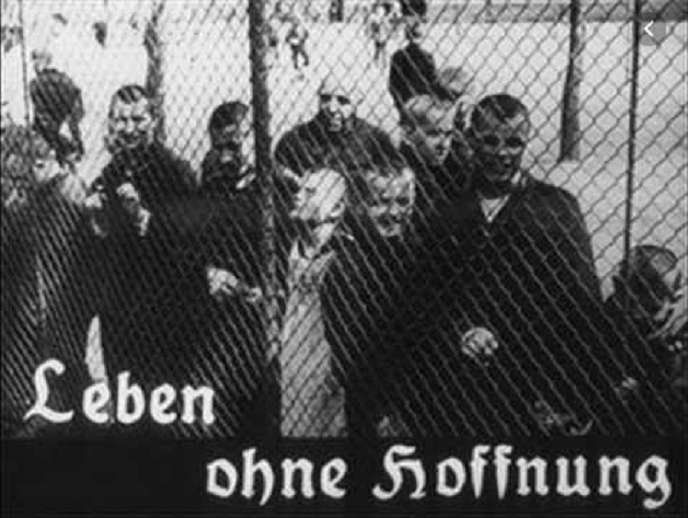
In Germany, the Aktion T4 program saw the sterilisation, and then the extermination, of several hundred thousand people who were deemed to be either physically or mentally defective. This occurred in a variety of ways, from lethal injection to gas chambers (the idea of exterminating people in gas chambers was first thought up for use on schizophrenics).

This approach can be described as hard eugenics. This is when the Government kills you outright.

As mentioned above, hard eugenics became extremely unfashionable thanks to the German loss in World War II. But the desire of the ruling classes to commit eugenics on their populations did not go away. The fundamental desire to be in charge of a productive population, rather than an unproductive one, didn’t change.

It was observed, after hard eugenics became unfashionable, that the people who had been slated for extermination all had one quality in common: they were poor. Being mentally or physically infirm makes it all but impossible for one to trade one’s labour for a decent wage. In all but the most exceptional cases, it guarantees a life of impoverishment on society’s fringes.

Therefore, it was possible to institute measures that didn’t directly kill people, but which made their lives so miserable that they killed themselves. All that was necessary was to institute measures that made it hard to be poor. The modern way to do this is by applying constant stress over housing, healthcare and job security.

Soft eugenics, then, is when the Government makes your life so shit that you either kill yourself or withdraw from attempting to reproduce.

Like hard eugenics, this is also achieved in a variety of ways, although the fundamental element to it is the weaponisation of despair. Life is made to appear so hopeless, so meaningless and so pointless, that withdrawal from it seems like the only reasonable option. Despair is used as a weapon, to drive people whose survival is already marginal to suicide.

This has the same eugenic effect as hard eugenics without all the drama.

Soft eugenics has become so fashionable today that average life expectancy is now starting to decrease in America. This decrease is because of the sharp increase in what are called “deaths of despair”. Many of these deaths are suicides by gunshot, and many are quasi-suicides in the form of opiate overdoses. Their common factor is a person who gave up on life.

Making people give up on life is how soft eugenics works. This is primarily achieved by paying shitty wages, so that workers are always in a state of financial precarity. It’s also achieved by destroying communities through mass immigration, so that no-one knows their neighbours. A further tactic is a democratic political system that transparently doesn’t give a fuck about anything other than lobbyist dollars.

The tendency to give up on life is accelerated by a popular culture that only permits discussion of the lowest common denominator of thought. In our current society, anyone who thinks for themselves will be ostracised to such a degree that proper human function becomes very difficult. It’s only permissible to march in lockstep with the hordes of morons – the alternative is to get bullied towards suicide.

Political correctness plays its part in soft eugenics, especially nowadays. The more politically correct a society becomes, the greater the cognitive resources that each individual member of it must devote to self-policing. This means fewer cognitive resources left over for actually living. Therefore, the more politically correct a society is, the more heavily it practises soft eugenics.

Cannabis prohibition has been a central plank in governmental efforts to get the more vulnerable elements of their populations to kill themselves. Many people on the margins have found that cannabis is an essential tool for dealing with the depression that comes with a tough life. Making it harder to get hold of this medicine only serves to push vulnerable people towards suicide. This is the plan.

In the case of New Zealand, we do not practice hard eugenics but the practice of soft eugenics is very strong. New Zealand is a paradise for the wealthy, but a hell for the poor. Our practice of soft eugenics is taken to an extreme degree here, which is why we have the highest youth mortality rate in the entire OECD, even ahead of places like Mexico and Turkey.

We no longer kill the mentally and physically infirm – now we just make their lives so shit that they kill themselves. Because we’re not directly responsible for the suicides, we can claim that it isn’t a form of eugenics. But it is – it’s just a softer form of what the Nazis did.

*

If you enjoyed reading this essay, you can get a compilation of the Best VJMP Essays and Articles of 2018 from Amazon for Kindle or Amazon for CreateSpace (for international readers), or TradeMe (for Kiwis). A compilation of the Best VJMP Essays and Articles of 2017 is also available.

*

If you would like to support our work in other ways, please consider subscribing to our SubscribeStar fund.

The Equalitarian Dogma – The World’s Most Damaging Lie

The most strenuously defended falsehood in the world today is not a religion (at least not a recognised one), but a pseudo-scientific dogma. It is the dogma of Equalitarianism. This is the assertion that there are no inherent differences between different human groups, or at least no psychological ones. This dogma, as this essay will show, is the world’s most harmful lie.

There is no doubt that there is large variation among and between almost all human groups in almost all measures. Over a hundred years of scientific literature establishes that this is the case. Not only is there great variation in physical traits such as height, body build and skin colour, but there is also great variation in psychological traits such as IQ and proclivities towards certain behaviours.

The question that does get debated is whether or not this variation is natural or whether it is a function of the environment. This is the great debate in psychology, and is known as the nature versus nurture debate. It’s an extremely important question, because a person’s answer to it is strongly related to their political beliefs. As has been discussed here before, people’s beliefs about human nature are closely tied to their political beliefs. One often predicts the other.

One could argue that the elementary political question is: should the differences between people be made smaller?

The response to that question is usually “It depends.” More specifically, most people usually feel that the answer depends on whether those differences between people are natural or not. Responses to the elementary political question tend to vary based along these lines.

Those who think that the differences between people are natural tend to think that it’s pointless to try and make them smaller. These people would point to the clear differences in height between different races, even when you control for environmental factors such as wealth – just compare the Japanese and Koreans with the Russians and Mongolians. Nature throws up a great amount of variation, and it’s more efficient for us to just let it be.

Those who think that the differences between people are unnatural tend to think that it’s immoral to let them continue to exist. If differences are unnatural, then they must be the result of prejudices inherent to the structure of society. Therefore, we’re morally obliged to restructure society such that those prejudices no longer exist. The favoured strategy for achieving this is mass brainwashing campaigns.

The trouble is that an elementary grounding in science is enough to know that different races will be different in all kinds of ways, it’s just a question of by what measure, in which direction, how much and how meaningfully.

By the time most people are eight years old, they have learned that no two snowflakes are the same. The reason for this is that there are no two identical things anywhere in Nature. There are no two identical people, or mountains, or even worms. All are different by virtue of the fact that there are no two identical things anywhere in the material world.

A more advanced understanding of Nature, in particular evolution, teaches us that no two subgroups of the human species will have gone through precisely the same selective pressures over the course of their biological past, and therefore no two subgroups of the human species will be the same either. This is true no matter which measure one uses. In order words, all subgroups of the human species are different, despite the presence of underlying similarities.

Therefore, we can conclude that the Equalitarian Dogma doesn’t stand up to even the most basic scientific scrutiny. It’s not just that the evidence doesn’t support it – elementary scientific principles rule it out from the beginning. However, the Equalitarian Dogma and its supporting dogmas such as the Blank Slate Theory still hold immense sway among the vast majority of people unqualified to understand the science.

The Blank Slate Theory holds that genetics have no influence on a person’s behaviour or personality – all of their behaviours can be best explained by reference to the environment in which they were raised. Humans are born into the world as if a tabula rasa – or blank slate – upon which practically anything can be inscribed.

This is the basis of the Equalitarian Dogma. If we are all the same, then the only way to explain our transparent differences is by appeal to the different environmental influences that have been present during the lives of each person.

A corollary to the Blank Slate Theory is that, as people are simply the products of their environment and nothing else, it’s possible to shape them into anything at all, simply by controlling the schedule of rewards and punishments under which they are raised. Any child could become a university professor or a gang member – it all depends on what shapes their minds when they are growing up.

It’s true that human infants are born into a state of extreme juvenility, and that they learn very quickly by mimicking their elders. It’s also true that the human brain at birth is the most plastic organ of any invertebrate creature. This means that human personalities are supremely malleable – but only up to a point.

The reality is that human behaviour can be shaped by the environment, but only with the bounds of possibility determined by genetics.

For example, the precise height of a man may be influenced by the quality of the nutrition that he received as a child, but this influence only applies to a particular range of height. A lack of nutrition might mean a man grows up stunted, skinny or even sickly, but it won’t make him a dwarf. Likewise, it’s not possible to reliably produce seven-foot tall giants simply by feeding them great quantities of food as children.

The reason why this is so important is because incorrectly understanding the reality about the human condition causes us to make terrible decisions.

The popularity of the Blank Slate Theory among political leaders in Europe caused them to open their borders to millions of Muslim and African immigrants this century, in the belief that those people could simply be conditioned into becoming the same as the native Europeans. Everyone knew they were different, but because of the Blank Slate Theory it was assumed that their children would grow up just the same as any European.

The idea was that, owing to the immense gratitude they would have from being so generously raised from the filth of their home countries, the Muslims and Africans would throw off their old cultural values like so many iron shackles, and embrace the cultural values of Europe. Having done so, they would then be identical to other Europeans.

The reality, of course, was that these Muslims and Africans behave differently to the natives for genetic reasons, and cannot simply be conditioned to suppress their sexual and violent urges the same way a European can. Consequently, all the education didn’t do much. Europe has learned this the hard way, through suffering hundreds of millions of sex crimes and crimes of violence, but they did not need to suffer in this manner.

They only suffered because they made incorrect assumptions about the nature of the human animal.

The Equalitarian Dogma has caused, and continues to cause, tremendous suffering to the people of the West by exposing them to the presence of people who aren’t the same as Westerners when it comes to civility or natural empathy. The assumption that all people are exactly the same implies the assumption that all people commit sex and violence crimes at the same rate as Westerners. It leads to a failure to correctly discriminate between relatively harmful and relatively harmless influences.

The Equalitarian Dogma is the greatest evil in the world because it causes more suffering than any other dogma.

The most evil thing about it is that, like all dogmas, it makes violence between those who submit to it and those who don’t all but inevitable. Those who submit to it truly believe that they are morally superior to those who don’t, and that their opponents are Nazis who only believe in human biodiversity out of pure hatred. This sneering superiority makes dialogue with them all but impossible, and therefore makes violence all but inevitable.

The Equalitarian Dogma has led to a situation where there are now forty million Muslims and Africans in Europe who cannot realistically be integrated, and their continued and growing presence in Europe means continued and growing misery. Eventually one of two things will happen – this population will be expelled violently, or the ruling classes will be destroyed in the native people’s desire to punish someone for what’s been done to them.

Inaccurate, dogmatic conceptions of reality must be opposed at every turn. No matter how virtuous a person may feel for holding them, they cause nothing but misery.

*

If you enjoyed reading this essay, you can get a compilation of the Best VJMP Essays and Articles of 2018 from Amazon for Kindle or Amazon for CreateSpace (for international readers), or TradeMe (for Kiwis). A compilation of the Best VJMP Essays and Articles of 2017 is also available.

*

If you would like to support our work in other ways, please consider subscribing to our SubscribeStar fund.

How Long Until White People Become A Minority in New Zealand?

The recent release of the final statistics from the 2018 New Zealand Census has kept stats nerds across the country busy. One of the busiest has been VJM Publishing numbers man Dan McGlashan, author of Understanding New Zealand, who is compiling the data for a third edition of his demographic masterpiece. In this analysis he asks: how long until white people become a minority in New Zealand?

The New Zealand Stats website is a treasure trove of demographic data. There are thousands of tables of information on this page, many of which are customisable. This makes it easy to compare data between groups or between time frames. Often, the data is extrapolated into the future.

The white proportion of the New Zealand population has been falling for some time, as is true of all Western countries.

At the time of the 1991 Census (around when the average VJMP reader was born), there were 2,783,028 white people in New Zealand, out of a total population of 3,373,929. This means that New Zealand was 82.5% white at this time. Neo-liberalism had all but completed its stranglehold over the New Zealand mindset by 1991, and it was at that point that the mass importation of cheap labour began in earnest.

The New Zealand ruling class had figured out, by this time, that labour costs were their primary expense. The mass importation of foreign cheap labour not only lowered labour costs directly, by introducing what was effectively scab labour into the workplace, but it also lowered labour costs indirectly by destroying the solidarity of the native working class and thereby making it harder for them to organise to negotiate fair wages.

Although the New Zealand people were never asked for their consent to it, the advent of the mass importation of cheap labour would set in motion a course of events that would lead to the Brazilianisation of New Zealand.

At the time of the 2013 Census, there were 3,312,100 white people in New Zealand, out of a total population of 4,442,100. This means that New Zealand was 74.6% white at that time.

At the time of the 2018 Census, there were 3,357,744 white people in New Zealand, out of a total population of 4,793,358. This means that New Zealand was 71.7% white at the time of the most recent Census, a fall of 10.9% over the 27 years since the 1991 Census.

According to the NZ Stats national ethnic population projections, there should be 3,781,500 white people in New Zealand at the time of the 2038 Census, out of a total population of 5,769,800. This will mean that it will be 65.5% white one generation from now.

Over the 25 years from 2013-38, we are expected to see a decline in the white proportion of the New Zealand population, from 74.6% to 65.5%. This is a total decline of 9.1% over 25 years, or 0.36% per year.

So, over the 47 years from 1991-2038, we are expected to see a decline in the white proportion of the New Zealand population from 81.5% to 65.5%. This would be a total decline of 16%, or 0.34% per year.

Thus, the white proportion of the New Zealand population has fallen by about 0.35% per year since the advent of neoliberalism. So extrapolating forwards from 2038, when the white proportion of the population is expected to be 65.5%, the white population would need to fall a further 15.6% before white people become a minority in New Zealand.

At the current rate of falling 0.35% a year, this suggests a further 45 years from the end of 2038.

In other words, white people ought to become a minority in New Zealand sometime in the early 2080s. That means that the bulk of people reading this article should be dead. This prediction is line with when other Western countries are predicted to end up with white minorities, which exposes the fact that the imposition of neoliberalism was a globalist endeavour.

Of course, all of these projections assume that the current rulers of New Zealand – the international banking and finance class – see fit to keep importing cheap labour at roughly the same rate they are currently doing. This importation of cheap labour will likely continue to be profitable because it drives up house prices and causes demand for mortgages. Therefore, the bankers and financiers will keep pushing it on us until they are stopped.

Although it seems unlikely today, a future nativist movement could come to power in New Zealand and turn the cheap labour taps off. In Sweden we have seen the rise of the Sweden Democrats from 3% 12 years ago to 25% today, where they are now the largest polling party. This is despite the fact that some Sweden Democrats are openly neo-Nazi.

This reasoning also ignores the fact that many Pacific Islanders and Asians, and in principle all of the Maoris, will be at least part white, with some of them being more white than anything else. The average Maori is only 80% as Maori as they were the generation previously, owing to heavy interbreeding with other Kiwis. By the 2080s there may no longer be a distinct Maori race.

At the moment though, with current trends the way they are, the idea of a Great Replacement of white people in New Zealand isn’t a conspiracy theory. It’s apparent from the statistics on the New Zealand Government’s own statistics page that white people ought to become a minority in New Zealand some time around 2083.

However, Brenton Tarrant was wrong when he said it was all about the birthrates (at least in New Zealand’s case).

The NZ.Stat website also tells us the projected fertility rates of the various ethnic groups in New Zealand. The Asian fertility rate was 1.61 in 2018, compared to the white fertility rate of 1.82. The Maori fertility rate was 2.36 and the Pacific Island fertility rate 2.4. This Asian fertility rate is well below replacement level, and the Maori and Pacific Islander rates are barely above it.

The Asian fertility rate is expected to fall further, to 1.55, by 2038, whereas the white fertility rate is expected to remain at around 1.8 by this time. By this time the Maori and Pacific Island fertility rates will have fallen to sub-replacement level, at 2.1 and 2.2 respectively. Considering the higher death rate among the Maori and Pacific Island populations, this is hardly a demographic threat.

It’s not about the birthrates – it’s about border control.

There probably isn’t a plan among New Zealand’s ruling elites to commit white genocide, but there doesn’t need to be. White New Zealanders are capable of selling the country out from under their grandchildrens’ feet for the sake of a fat pension. The bankers and finance interests that control the mainstream media, for their part, are more than happy to encourage this short-sighted greed for the sake of the mortgage profits it brings.

*

Understanding New Zealand, by Dan McGlashan and published by VJM Publishing, is the comprehensive guide to the demographics and voting patterns of the New Zealand people. It is available on TradeMe (for Kiwis) and on Amazon (for international readers).

*

If you would like to support our work in other ways, please consider subscribing to our SubscribeStar fund.