
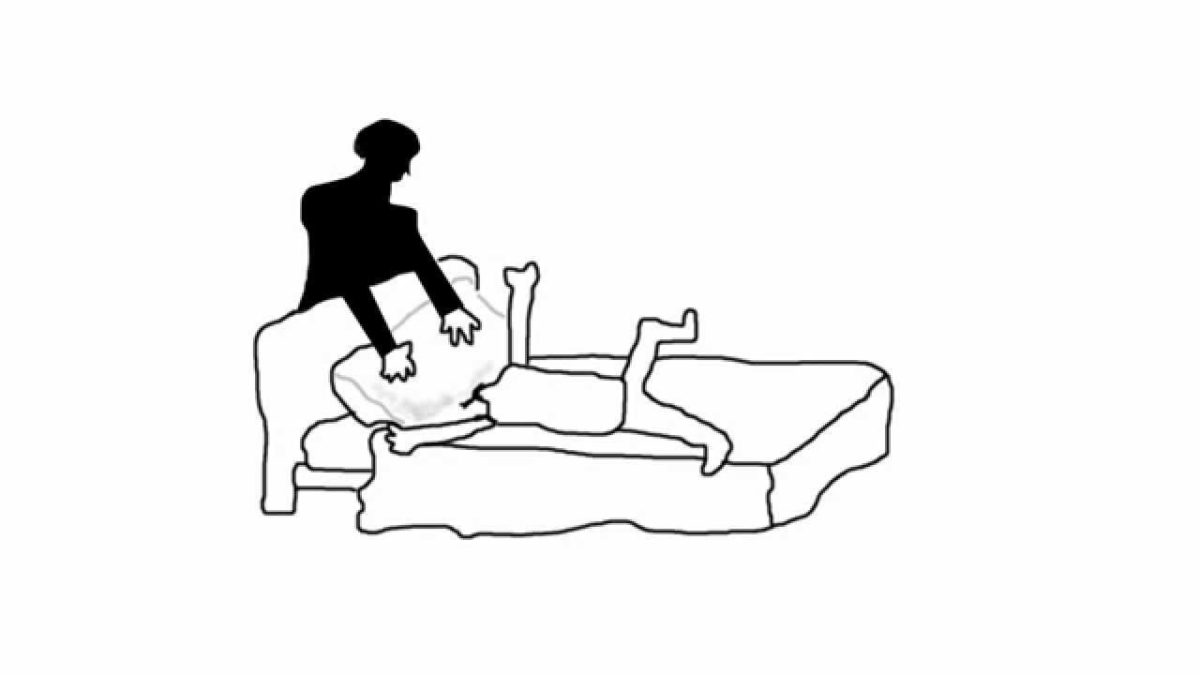
Day of The Pillow

The Western World has a severe structural problem, and it’s getting worse. We have a great millstone around our necks in the form of the Baby Boomers. This economic burden has grown much heavier in recent years, and it promises to keep growing heavier, perhaps until the rest of us are crushed. This essay discusses how we can solve the Boomer problem.

In New Zealand alone, it is believed that pensions will cost the taxpayer over $16,000,000,000 this year. It’s impossible to say how much they cost “every year” because the cost keeps sharply rising. By 2023, a mere four years away, Government pension spending is expected to rise by another $4,800,000,000. This total figure would represent almost a quarter of total Government spending.

The Supported Living Payment, by contrast, which is the welfare given to all the disabled people in the entire country, was a little over $1,500,000,000 in 2016. In fact, all of the other benefits put together are less than a third of what the Government pension costs. Many people find this fact astonishing, as we are constantly being fed stories about lazy bludgers on the unemployment benefit. The truth is that the vast majority of lazy bludgers are on the pension.

The younger generations are being sucked dry by the Boomers. Many Boomers are retiring at age 65 in full health and with 20-30 years left to live, and usually with a freehold house to their name, but are still claiming their $370 per week. It’s an obscene theft of resources.

Boomers claim that they’re merely getting what they’re due, that they were promised a pension and by Christ they’re going to get one, even if it means the impoverishment of every generation to follow. But there was never, ever any agreement on the part of the young that they would get sucked dry to provide an extravagant retirement for Boomers.

Moreover, this fifteen-billion dollar redistribution of wealth in favour of the Boomers doesn’t take into account how much extra health spending they absorb. In Britain, the over-65s take up two-fifths of all health spending. Crown spending on health in New Zealand is currently running at about $16,000,000,000 per year, and two-fifths of that would represent about another $6,500,000,000. What’s more, this figure, like overall pension expenses, is also rising sharply.

This means that the over-65s already impose a twenty billion-dollar burden on the rest of us Kiwis. The yearly cost for the entire West runs to multiple trillions. For the average taxpayer, this represents an individual burden on the order of $8,000 yearly. That every working adult gets taxed several thousands of dollars yearly to pay for pensions is one of the reasons why birthrates are so low among Westerners in their 20s.

It isn’t just that Boomers are old. They’re also morally defective. Never in the history of the West has there been a generation that was happy to sacrifice the wellbeing of their children for their own comfort. Never before has there been a generation that willingly left their offspring worse off. The self-centred and egotistic nature of the Boomers is simply unparalleled. They are not anything like the generations that won World War II.

However, there is historical precedent for dealing with situations like this.

Sometimes, when an old person is hanging on to life well beyond the point where life can be meaningfully lived, they become subject to a “mercy killing”. In American Indian culture, people who got to this point were left for the wolves. In Old Norse culture, people who got to this point were put on an ice floe and pushed into the sea. In Anglo culture, people who get to this point are often smothered in their sleep by pillows.

This essay suggests that the time may be approaching when we need to do this on a generational level. It’s time for the Day of the Pillow.

Involuntary euthanasia might sound harsh. However, the Boomers brought this upon themselves. You can’t enslave an entire population and expect them to work themselves to death to finance an extended, luxury retirement for you. If you do, you have to hope that you can keep getting away from it, because if that population ever manages to throw the shackles off they will come looking for revenge.

This is not to suggest that Boomers need to be euthanised en masse. There could be a law that says, for example, that once you accept an old-age pension, you have 5 or 10 years before you get euthanised. This would discourage intergenerational theft by ensuring that only the people who had genuinely come to the end of their working lives would claim the pension.

A more civil way of ending the stranglehold that Boomers have on the West would be stripping the right to vote from anyone who took a Government pension (this newspaper has argued this point at length elsewhere). Retirement should mean retirement. If a person is too infirm to work, then they’re too infirm to be making decisions about the future of the nation.

Yet another solution is to introduce a universal basic income for all at a rate similar to the unemployment benefit, and to lower the pension to this new figure. This would ensure that the younger generations were no longer subjected to indignities for the benefit of the old. Everyone would then be on an even playing field.

The Day of the Pillow is not something that needs to happen. There are much less brutal ways to free the young from the unreasonable burden that the Boomers have placed on them. However, if the Boomer generation continues to exploit the rest of us unnecessarily, we will need to take measures to defend ourselves and our ability to pay for our own needs.

*

If you enjoyed reading this essay, you can get a compilation of the Best VJMP Essays and Articles of 2018 from Amazon for Kindle or Amazon for CreateSpace (for international readers), or TradeMe (for Kiwis). A compilation of the Best VJMP Essays and Articles of 2017 is also available.

Te Reo With Mnemonics: Recreational Drugs Words

Cannabis – tarukino

The Queen sits on a throne smoking some cannabis. A truck backs up to her and dumps a pile of tar in front of her. The cannabis is being smoked by the Tar Queen.

Beer – pia

A man walks along a pier while skulling a bottle of beer.

Tobacco – tupeka

A pouch of tobacco lies on the ground while two chickens peck at it. The tobacco is under attack by two peckers.

Wine – wāina

A family sits at a table in a restaurant. The young boy of the family is sipping from a glass of wine and screwing up his face. He says “But Mum, I don’t like shiraz!” His mother says “Drink up and don’t be such a whiner.”

to smoke – auahi

A man sits at a table, smoking one cigarettes after another out of a pack. A woman comes up to him and says “Where did you cigarettes go?” The man replies: “I smoked them all away.”

to drink – inu

A man sitting at a bar skulls a bottle of hard liquor and then falls on the ground unconscious. Another man asks the barmaid if the man knew he was drinking hard liquor and not lemonade. The women shrugs and says “He knew.”

Spirits/Hard Liquor/Alcohol – waipiro

A man sits in a car drinking hard liquor from a paper bag. It’s raining, and although the car is parked the window wipers are going full tilt.

Methamphetamine – tioata whakaihi

Two men are sitting at a table, smoking meth out of lightbulbs and chewing on rocks in their mania. One of the men says “Chewing all these rocks is making me hungry.” The other man fixes him with a baleful stare and says “Chew harder! Fuck eating!”

Cigarette – hikareti

If you know anyone named Eddie, imagine them hiking along a trail. Then they stop and pull out a cigarette, light it and smoke it. The cigarette is being smoked by Hiker Eddie.

Rolling papers – pepa hikareti

If you know anyone named Eddie, imagine then hiking along a roadside. He comes to a tree that has cigarette rolling papers instead of leaves. A strong wind blows, and it blows the papers off the tree and into Eddie’s face. The rolling papers pepper Hiker Eddie.

to be drunk – haurangi

Two drunks are sitting around in a flat, drinking. The phone rings, and one of them tries to answer it but ends up knocking the phone out of the wall and then falling on his face. The other drunk looks up and slurs: “Who rang?”

to be stoned/high – māngina

Two stoners are sitting around smoking from bongs. One of them says: “I think this weed has got us more stoned than the last stuff.” The other one looks back, shrugs and says “It’s marginal.”

*

This wordlist is an except from Learn Te Reo With Mnemonics, a book being compiled by Jeff Ngatai for an expected release at the beginning of 2020.

The Labour Government is Trying to Abolish Prisons by Stealth

New Zealanders in recent weeks have been astonished by some extremely soft sentences handed out to the perpetrators of some heinous crimes. Unfortunately, this isn’t just a handful of fluke occurrences, but the product of a calculated strategic shift. This essay describes how and why the Sixth Labour Government is trying to abolish prisons.

This week saw a Northland man sentenced to eight months’ home detention for punching a homeless man to death. Michael David Nepia punched Eddie Townsend in the face over an argument caused by some dogs, causing him to fracture his skull and suffer severe brain bleeding. Nepia then left, leaving Townsend to die in the street.

Last month saw an equally incredible verdict, with Christchurch man Marcel Sydney Geros avoiding jail for the attempted bladepoint kidnapping of a jogger. Despite earlier having been sentenced to seven years’ imprisonment for bashing an elderly man almost to death, and despite that kidnapping female joggers often ends in rape and murder, Geros was only sentenced to intensive supervision. He essentially got away with it entirely.

Perhaps the most disgusting of all was the case yesterday in which a teenage rapist got off completely scot free. The rapist is apparently a talented sportsman who has represented New Zealand, and despite initially denying the offending, was sentenced to nothing. Not only did this individual not get sentenced to prison for rape, but he was also given automatic name suppression.

These verdicts cannot simply be explained by the fact that our justice system is rotten (although it is) and our judges scum (although they are). It reflects sustained pressure from the Sixth Labour Government on judges to not send criminals to prison. Any pretence that the justice system is there to protect the community has now been abandoned. The needs of criminals now come first.

Social Justice Warriors have had an interest in prison abolition for some time now. A common motivation among prison abolitionists is “challenging the belief that caging and controlling people makes us safe.” Much like other social justice issues, prison abolitionism is based on a quasi-Christian slave morality, according to which rapists and pedophiles are imprisoned only because of state oppression.

Justice Minister Andrew Little has gone on record last year as saying that “New Zealand needs to completely change the way criminal justice works.” His goal is to reduce the New Zealand prison population by 30% over the next 15 years, saying that the sentences being handed out under the ACT Party’s three strikes law amounted to “fascism”.

The Sixth Labour Government has shown itself more than willing to adopt every stupid but fashionable leftist movement. They doubled the refugee quota shortly after coming to power, despite that the housing waitlist is already 12,000 places long. They have also taken measures to strip away firearms rights and free speech rights, two long-held goals of the authoritarian left.

We can safely assume, therefore, that the Sixth Labour Government is right behind the prison abolition movement. Andrew Little’s comments confirm as much.

What New Zealand is likely to see in coming years are softer and softer punishments until none are given out at all. A variety of excuses will be made, all relating to the perpetrator’s diminished capacity for responsibility over their actions (brain damage, PTSD, early childhood neglect or abuse and colonialism will the be favourites). We already have a system where some people don’t get jail time for killing, kidnapping or raping New Zealanders, but it will get worse.

Curiously, most of the people getting soft sentences for brutal violent crimes are non-whites, as in all three cases given above. This year has seen brown people get lighter sentences for killing someone than what certain white people were given for sharing a video. This makes a mockery of the commonly-stated idea that the justice system favours white people.

The justice system isn’t biased; the justice system is fucked.

What this misguided and astonishingly naive movement will eventually lead to is vigilante justice. Sooner or later, a judge will let a person get away with murder, manslaughter or rape when the victim has a dangerous family. Someone in that dangerous family will do what dangerous people have always done when they feel the need for revenge.

It’s easy to imagine that one would feel pure outrage at a person getting away with raping one’s sister or cousin. It’s easy to imagine that the brothers and father of such a victim might feel that the only recourse was to take the law into their own hands. It can be seen in places with unreliable justice systems that relatives of crime victims do precisely this.

After all, blood feuds and constant revenge attacks were the nature of life before the justice system came into being.

No matter how well-intentioned the idea behind it, prison abolition goes against most people’s inherent instinctual idea of justice, which demands reciprocity for abuses. Therefore, one can predict that it’s only a matter of time before a judge – or perhaps Andrew Little himself – becomes the victim of a revenge attack by a relative of a crime victim.

What New Zealand needs is a justice system based on the principle that the punishment delivered is commensurate with the amount of suffering caused. This is necessary so as to avoid causing further suffering to the victims of crimes, who regularly feel humiliated and unvalued by light sentences given to their abusers. This would also prevent obscenities like people being sentenced to prison for growing cannabis.

*

If you enjoyed reading this essay, you can get a compilation of the Best VJMP Essays and Articles of 2018 from Amazon for Kindle or Amazon for CreateSpace (for international readers), or TradeMe (for Kiwis). A compilation of the Best VJMP Essays and Articles of 2017 is also available.

How and Why to Use the TOR Browser

Censorship in New Zealand is reaching levels that would be unbelievable to Kiwis a few years ago. The latest involves the New Zealand Chief Censor pressuring local Internet Service Providers to block access to sites that the Censor deems not to be in the public interest, such as 8chan. This article discusses how to circumvent censorship of online free expression.

New Zealand is not the first country whose Government has suppressed our natural right to free speech. Power trippers and control freaks all around the world have given in to the temptation to do so, reasoning that free speech is a potential risk to their authority. As Joseph Stalin once said: “Ideas are more powerful than guns. We do not let our enemies have guns, so why would we let them have ideas?”

Unfortunately for us Kiwis, the Sixth Labour Government has chosen to exploit the atmosphere of terror created by recent mass shootings both here and overseas. They have used this as an excuse to strip away our rights, in particular our firearms rights and our right to free expression. As this column has mentioned elsewhere, they simply don’t care about such things.

It’s not clear that the Labour Government directed the Chief Censor to pressure ISPs into banning 8chan, but they have shown no indication that they disapproved. In any case, the censorship fits neatly into the wider Labour Party goal of cracking down on free expression. It’s all but certain that the Chief Censor knew that his actions had the approval of the War Criminal’s Apprentice and her Cabinet.

Even though 8chan hosts orders of magnitude less violence and hate than any of FaceBook, Twitter or mainstream television news, and even though Section 14 of the New Zealand Bill of Rights Act establishes that all New Zealanders have the right to freedom of expression, including the freedom to seek, receive, and impart information and opinions of any kind in any form, 8chan has been targeted. They will not be the only ones. The day may come when VJM Publishing, despite being alt-centrist, gets banned.

Luckily for those who value free speech, there are technological ways around these governmental abuses. One of the foremost of these is the TOR browser.

TOR stands for The Onion Router. This isn’t the place for a technical description, but it’s enough to say that TOR confuses surveillance attempts so thoroughly that the user can surf the Internet anonymously. The purpose of it is to conceal the user’s identity and online activities from surveillance and data tracking. If someone is trying to spy on what websites you are visiting, all they will be able to see is that you are using TOR.

Another advantage of using TOR is that it’s possible to access sites that are censored. Although this currently applies to little other than 8chan, you could bet money on the fact that the Sixth Labour Government are going to censor everything they can, and anyone who disagrees will be labelled a white supremacist collaborator alongside Brenton Tarrant, Anders Breivik and Adolf Hitler.

Getting hold of the TOR browser is a simple matter of going to the TOR Project website at www.torproject.org and downloading the 54MB file. This is an install file, so double-click it once downloaded and follow the instructions like you would any other program. The installation isn’t difficult, it’s just a matter of running it and letting it do its thing.

Once installed, the purple TOR icon will be available. If you click on that, it will open the TOR browser, which is very similar to the Mozilla browser on which it is based. From there, it’s a simple matter of typing what you want to look for in the search bar, as you would any other browser. TOR is a bit slower than other browsers, owing to the methodology it uses to anonymise the traffic.

That’s about all there is to it – TOR is otherwise like a normal browser. While on the TOR network, it’s possible to find access to all kinds of illicit goods and services, not merely information. It’s not a good thing from the Government’s perspective that people become exposed to material of that nature, but that’s the risk they run when they violate our human right to free expression.

See also: The Basics of VPN Use, And Why Every Kiwi Needs to Know Them

*

If you enjoyed reading this essay, you can get a compilation of the Best VJMP Essays and Articles of 2018 from Amazon for Kindle or Amazon for CreateSpace (for international readers), or TradeMe (for Kiwis). A compilation of the Best VJMP Essays and Articles of 2017 is also available.