
Why The West Should Replace China With India

It’s apparent to all that the world is currently undergoing a strategic realignment. When the COVID-19 dramas have settled down, we will be left with a new set of alliances and global political arrangements. This essay will argue that the Western World should use this opportunity to replace the economic ties it currently has with China.

To a major extent, those who are powerful in the non-Western world are only so because of the favour of Western elites. China’s economic miracle is chiefly the result of the transfer of manufacturing capacity from the West since the early 1980s. After forty years of this, China has grown into a major world power.

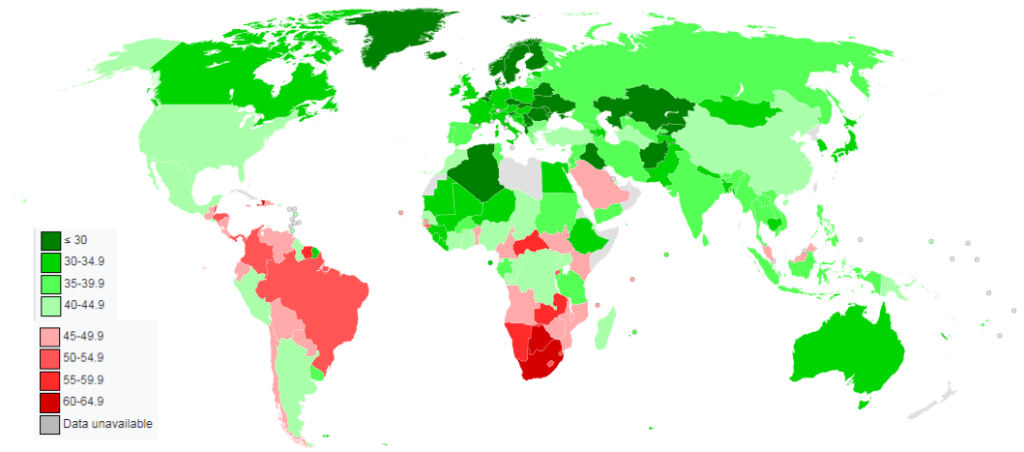
In 1990, China had a smaller economy than Canada. Their GDP per capita was a pitiful $349 per year, putting them in the same class as Uganda, Mali and Rwanda. Today, China is second only to America by total economy size. Their GDP per capita is now in the same class as fringe Western nations such as Russia, Argentina and Bulgaria.

This development has brought with it great wealth, not only to China but also to their major trading partners. But with this wealth has come power, and with that power has come ambition.

China’s strategic goals in the South China Sea are evident: to take control of the entire region. As their economy continues to develop, their ability to actualise these goals increases. They are now wealthy enough to devote a vast sum of surplus capital to military outfitting and development. Some of this has been devoted to building artificial islands – rightly considered forward military bases – in the South China Sea.

Given that Chinese strategic goals often don’t align with ours, and that Indian strategic goals often do, it might be time for the West to make an immense pivot away from China and towards India. There are several reasons why this might be a good idea.

The most obvious strategic reason to replace China with India is the aforementioned military one. A close alliance with India would all but guarantee Western control over the Straits of Malacca, which is the jugular vein of Chinese shipping and trade. This would minimise the potential for China to get tempted into further expansionism.

Existing tensions on the shared border between India and China have flared in recent weeks. China has already moved a brigade’s strength of men into territory India claims as its own. This is an extreme provocation by any measure, if not an outright act of war. India’s response could lead to a wider conflagration.

If it does, it would be the perfect time for the West to throw our lot in behind India. Not only would it enable us to impose a collective will upon China in a weak moment for them, but giving assistance to India in their time of need would engender the greatest amount of long-term goodwill from their side.

More subtle are the economic reasons. China’s economy has advanced to the point where it is a competitor to the West in many ways, whereas India’s has not. Many Chinese firms have been able to drive Western ones out of certain markets by way of having a superior product. The general level of scientific knowledge in the Chinese population is now high enough that Chinese firms are likely to pose a consistent threat into the future.

It would be much better to co-operate with Indian firms, and to raise them to the level where they can compete with the Chinese ones, than to continue to raise Chinese firms so that they can compete with ours in the future. We can help India to adopt technology that both the West and China already have, at no strategic loss to ourselves.

As mentioned above, Chinese GDP per capita has increased sharply in recent decades. Today, it is over twice as high as the GDP per capita in India. This has brought with it increasing expectations of living standards, such that India now offers better opportunities to employ cheap labour. Factories could be set up in India at competitive prices.

The greatest reasons to pursue an alliance with India at the expense of China are cultural.

India is culturally superior to the West in several ways. Here we are not merely talking about lamb saagwalas. Their compassion for animals is such that India has more vegetarians than the rest of the world put together. This compassion is a feature of Dharmic religions such as Buddhism and Hinduism.

The sadistic Abrahamic religions have no such restrictions, and neither does Chinese culture with its hellish wet markets. As such, there is an opportunity for us in the West to learn from Indian culture and from the Indian approach to life, and to use its inspiration to better ourselves.

The Indian spiritual culture fills a need in the Western soul for answers about how to morally conduct ourselves in this life. This is not to claim that all Indians conduct themselves perfectly, or even better than Westerners do on average. It is merely to suggest that there is great value to Westerners in the spiritual traditions of the Indian people, in particular Buddhism and Hinduism.

Because India has cultural advancements that we in the West ought to learn from, there is the possibility of genuinely reciprocal trade. We have scientific, technological and commercial knowledge that they would benefit from learning, and they have spiritual knowledge that we would benefit from learning. It would be a two-way exchange.

A further point relating to culture is the shared love of cricket. That cricket is popular in India as well as in Britain, Australia, South Africa and New Zealand means that men from all of these places have a shared bond, and this naturally allows for some degree of solidarity. After all, it’s through sport that men learn to conduct themselves in wartime, and men bonded in such a fashion are bonded deeply.

No such bond is shared with China.

In summary, an entire spectrum of reasons suggests that the West ought to take the economic bonds that tie us to China, and to replace them with bonds that tie us to India. This would not only make a great deal of natural sense, but it would also strengthen the strategic position of the West deep into this century.

*

If you enjoyed reading this essay, you can get a compilation of the Best VJMP Essays and Articles of 2019 from Amazon for Kindle or Amazon for CreateSpace (for international readers), or TradeMe (for Kiwis). A compilation of the Best VJMP Essays and Articles of 2018 and the Best VJMP Essays and Articles of 2017 are also available.

*

If you would like to support our work in other ways, please consider subscribing to our SubscribeStar fund. Even better, buy any one of our books!

Why Stuff Is Worth Less Than VJM Publishing

Many New Zealanders were surprised last week by reports that the Stuff news portal at www.stuff.co.nz was worth less than one dollar. How could it be possible that our foremost media portal, which employs hundreds of people, has a lower net value than a ramshackle outfit like VJM Publishing? This essay explains.

Stuff has a world Alexa rank in the top 4,000, and was ranked 7th in New Zealand at time of writing. They get hundreds of times more traffic than VJM Publishing does. They have been legitimised in most people’s minds as the “mainstream media” and, despite being shit, are considered to be “proper” journalism.

So how can they make less money? The simple answer comes down to who owns Stuff and what they have bought ownership for.

The VJM Publishing strategy is not to churn out vast numbers of shitty articles, with clickbait headlines, about vapid celebrities, in the hope of tricking some pleb into clicking on some more clickbait in the form of an advertisement.

No wonder advertising revenue is plummeting, if that is the business model.

VJM Publishing doesn’t make money from spamming Google ads through every page or by having banks of them at the bottom of every article like Stuff does. In fact, we don’t make any money from advertising revenue – we make it from selling books. Every page on this website has a set of links to our book sale pages on Amazon and TradeMe.

Making a living selling books is tough, but it’s possible. The trick is to produce material of a high enough quality that it promotes and advertises itself. This is the secret to ranking well in the Google algorithm, because that algorithm can estimate a page’s quality by measuring the responses of its readers. If the readers tend to click away quickly, it’s probably a low-quality page, and vice-versa.

This is a different business plan to that of Stuff, but we are in fact a publishing company, not an advertising seller (or reseller). As such, we compete on quality and not on volume.

This company operates under the logic that if we can provide quality articles about esoteric subjects and alternative psychology, as well as intelligent political commentary from an alt-centrist perspective, that this will give us an edge. As long as this edge leads people to become aware of our books, some people will buy them, and we make profits.

All of this sounds so obvious, that the question has to be asked: why doesn’t Stuff do similar?

The first thing is to look at who owns the New Zealand media: essentially it’s owned by international banking and finance interests. This was demonstrated by us here at VJM Publishing, in an example of the kind of journalism that the mainstream media will never give you.

These international banking and finance interests don’t care if they lose money from Stuff. They gain something of far, far greater value: control of the narrative. Thanks to having control of the narrative, they can normalise all kinds of things that are in their benefit. In principle, every article on Stuff has been calculated to suit the agenda of its owners.

By directing Stuff to constantly cry and scream about racism, those owners achieve several objectives.

The international banking and finance interests make enormous profits from mass immigration. Not only does every new immigrant push the price of housing up and generate one new mortgage account, but their cheaper labour also pushes the cost of running a business down. On top of all that, their presence destroys the solidarity of the host nation, making it easier to rule over. Win-win-win.

The major opponents to the mass importation of cheap labour are the native working class. They lose the most heavily as they don’t tend to own houses, and they tend to sell rather than hire labour. As such, the mainstream media makes a great effort to paint these people as ignorant bigots who oppose mass immigration out of nothing but pure hatred.

It has to be understood that the mainstream media stokes up hysteria about racism for money. Not only does it generate clicks and traffic, but it also normalises the idea that mass immigration is normal and that anyone objecting to it is evil. Multiculturalism destroys the ability of the host nation to resist the predations of the international banking and finance classes – and the latter know this intuitively.

By directing Stuff to fill space with crap about Meghan Markle, they also achieve several objectives.

Foremost of these are wasting people’s time and conscious awareness on shit. If the mainstream media informed people about issues that directly impacted their well-being, it would agitate them. This might lead to chaos, which is bad for business. Much better to have a passive population who can be milked for profits without protest.

The best thing for business is for the populace to be induced into maximum docility. Perfection would be a herd of consumers that only get excited when the next product is released. So the mainstream media is directed to fill their pages with fluff pieces about irrelevant people. Meghan Markle, who has no connection to New Zealand at all, is the ideal subject.

All of these objectives serve one greater meta-objective: to gain control over our minds. Whoever controls the mainstream media – otherwise known as the apparatus of propaganda – controls the minds of the people. They control what the people hear, what the people think, what the people consider normal. Effectively they control how the people react to every stimulus that is put before them.

It’s an enormous power, perhaps the archetypal modern expression of what Elementalists call silver magic.

In summary: the international banking and finance interests who own the mainstream media are happy to lose money from it as long as they gain control of the narrative, because this confers a great deal of power. The elites run Stuff as a loss-leader to capture the attention of the masses in the same way that supermarkets run chocolate specials as loss-leaders. The losses from it are written off against greater profits elsewhere.

VJM Publishing, by contrast, is run as an actual business, whose mission is to provide quality information, forecasting and analysis in exchange for money. As such, we have to maintain a net worth above zero.

*

If you enjoyed reading this essay, you can get a compilation of the Best VJMP Essays and Articles of 2019 from Amazon for Kindle or Amazon for CreateSpace (for international readers), or TradeMe (for Kiwis). A compilation of the Best VJMP Essays and Articles of 2018 and the Best VJMP Essays and Articles of 2017 are also available.

*

If you would like to support our work in other ways, please consider subscribing to our SubscribeStar fund. Even better, buy any one of our books!

Spirituality Is Bad For The Economy

Many people feel that spirituality is a taboo topic. Part of the reason for this is because it reminds people of death – questions of God and life’s meaning go hand-in-hand with questions about the afterlife. Therefore, talking about spirituality is bad because it reminds people that they will die one day. As this essay will show, this is only part of the reason.

The purpose of spirituality is to reduce suffering.

The objective of the Buddhist path is to achieve nirvana, the objective of the Hindu path is to achieve moksha and the purpose of the Western esoteric traditions is to achieve ataraxia. In all cases, this state of ultimate enlightenment offers a liberated existence independent of material acquisition, status anxiety, social anxiety or attachment to food, sex or power – a state in which one no longer suffers.

Buddha was motivated to end the suffering of all sentient beings, and his conception of the Eightfold Path was an attempt to teach how an individual could achieve this for themselves. He taught that happiness could not be found in the material, which was an illusion. Every person had to look within themselves.

Buddha is famous for advocating meditation as an avenue to enlightenment, but all true spiritual traditions teach that happiness (or at least an end to suffering) is found within. Analects 15:20 quotes Confucius as saying “The Superior Man seeks within himself. The inferior man seeks within others.” The Tao Te Ching, likewise, is replete with admonitions to find satisfaction in everyday life and not to strive for it.

Looking within is the secret to ending suffering. From society’s perspective, however, a dilemma lies therein.

In our society, the most important thing of all is money, and getting money requires jobs. In order for a job to exist, there has to be demand for goods and services. This demand comes from only one place: human dissatisfaction. Without human suffering, there could not be money. Therefore there must be human suffering.

Many people have never comprehended the fact that other people exist, and that they are conscious, and that this consciousness suffers just like one’s own does. These people act as if the world was a virtual reality game that only they were playing, and everyone else was just an NPC. In life they are as hungry ghosts, their insatiable appetites causing them to lurch from one instinct-fueled lust to the next.

In our culture, the dissatisfaction of these unfortunates has been channelled towards buying stuff. New clothes, new cars, new toys, new foods – and all of it greases the wheels of commerce. Consumerism is therefore powered by this dissatisfaction, by suffering. It follows that anything that stops people consuming is bad.

Spirituality, though, tends to have a profound effect on people’s consumption habits. Once a person starts to look within, they start asking questions like: did that most recent purchase really increase my happiness? Or did I get more happiness from the chance social encounter I had in town last week? Once a person starts thinking like this, their lives start to change profoundly.

When a person becomes skilled at meditation, it’s easy for them to feel a more powerful sense of satisfaction from meditating than from buying new stuff. Meditating is the ultimate activity in many ways, and one of the main ways is that it is anti-consumerist. The dissatisfaction that people feel in everyday life is assuaged by meditation. So people who are into meditating are seldom the same people who line up overnight for the next iPhone release.

It follows from all of this that the engine of consumerism runs on godlessness. The further a person is from God, they more they suffer, and the more they suffer the greater the volume of goods and services they consume. The ruthless logic of the markets has led to a horrific outcome: genuine spirituality has deliberately been attacked in order to power the capitalist machine.

People with genuine spiritual insight have been persecuted for thousands of years, but this has intensified in recent centuries according to the demands of capitalism. Witches have been burned at the stake and hippies – their cultural descendants – have also been attacked. True spiritual sacraments such as cannabis and psilocybin have been criminalised, those who grow or gather them locked in cages.

Worse, false spiritual traditions have been promoted to distract people from the true ones that would help them. There are hundreds of different Christian churches who teach that wealth is evidence of God’s grace, and hundreds of millions of other Abrahamists who mutilate the genitals of their children, persecute homosexuals and who consider women and non-believers to be subhumans.

This combination has obliterated the spiritual wealth of the masses. In doing so, however, it has caused the material wealth of the elites to overflow. Thus, it is perpetuated. Spirituality is bad for the economy, and that’s why it’s been suppressed.

We can hope that, in the coming years, the economy will be considered less important, and human suffering more important. At the least, we can hope that it will be remembered that the economy is a means for ending human suffering, and that human suffering is not a fuel that should power the economy.

*

If you enjoyed reading this essay, you can get a compilation of the Best VJMP Essays and Articles of 2019 from Amazon for Kindle or Amazon for CreateSpace (for international readers), or TradeMe (for Kiwis). A compilation of the Best VJMP Essays and Articles of 2018 and the Best VJMP Essays and Articles of 2017 are also available.

*

If you would like to support our work in other ways, please consider subscribing to our SubscribeStar fund. Even better, buy any one of our books!

Why Is Rent-Seeking Legal?

Our legal system has many quirks and contradictions that defy easy explanation. It seems strange that doctors are allowed to mutilate the genitals of infant boys, yet they are not allowed to prescribe medicinal cannabis products that would save lives. This article will discuss another activity of questionable morality: rent-seeking.

Rent-seeking is an attempt to increase one’s personal wealth without creating or producing any. It is the use of resources, such as land, to extract economic benefits (known as rents) from others without making any contribution to the overall economic good.

The most common form of rent-seeking today is found in residential property. There are some 625,000 rented houses in New Zealand today, and the average weekly rent is $390 a week for small houses and $525 for larger ones. Assuming an average rent of $480 per week, rents on residential property bring in some $15,600,000,000 every year in New Zealand alone.

Rent-seeking is correctly understood to be a form of parasitism. As with other forms of parasitism, rent-seeking is a net negative for the overall health of the system. Not only does it suck money away from the productive and gift it to the unproductive, it also incentivises anti-social behaviour. Economically, it disrupts market efficiencies, limits competition and creates artificially high barriers to entry for market participants.

Despite being a form of parasitism, rent-seeking is a long and honoured tradition in New Zealand. Many a fortune has been built in this country by taking advantage of people’s need for shelter from the elements. As a previous essay here has discussed, there’s nothing as profitable as human suffering, and being exposed to the elements is one of the worst kinds of suffering.

The beauty of rent-seeking is that it carries little risk. All you need to do is to own property and the Police will keep people away from it unless those people pay you money. As long as there are men willing to enforce other people’s claims to property in exchange for a wage (and there always will be), then owning some of that property is effectively a licence to print money.

In reality, there’s little difference between a landlord charging someone rent on the threat of throwing that person out into the street, and an armed robber charging someone their wallet on the threat of stabbing them in the guts. In both cases, the power to charge a fee or levy comes from the power to cause extreme physical suffering. Both are a form of extortion.

Given the apparent net harm of trying to extract wealth from the system instead of creating it, the question has to be asked: why is rent-seeking legal?

The main reason why rent-seeking is legal is simply because the rent-seekers make the laws. It was they who, way back in the day, invented Government by paying some weak-minded arse-lickers to defend their property against outsiders (this is all that Government is). Those arse-lickers bifurcated into the Police and security services (whose prime directive is to protect and serve property owners) and the Government (whose prime directive is to organise the protection of property owners).

At the end of the day, the Government is there to manage the affairs of the rich, and they don’t care if the poor are impacted adversely. People too poor to own property don’t have a seat at the table. This is the same reason why businesses were compensated directly in the form of wage subsidies, rather than workers being given a universal basic income – the wealthy take the lion’s share, the poor get the scraps.

This arrangement has created a great deal of resentment, however. Those forced to pay rent on threat of being thrown into the street don’t feel much less resentful about it than those forced to give up their wallet on threat of being stabbed. The fact that rent-seeking is socially accepted in our culture barely softens the blow. It still feels like a robbery.

As is usually the case for such abuses of power, this resentment has built to the point where it threatens to spill over.

The Sixth Labour Government has made it illegal to evict tenants from residential property for the next three months at least. Some groups of tenants have realised that, if they collectively refused to pay rent until the end of the coronavirus crisis, they could pretty much get away with it. There’s no way to enforce an eviction during the lockdown, so anyone who refuses to pay rent from now on can get at least three months of living rent-free.

Other people and places overseas have already declared rent strikes on account of that the coronavirus has made earning their usual income, and therefore paying their usual expenses, impossible. Housing Minister Megan Woods has said “there was also an obligation on tenants not to abuse the situation,” but it’s hard to see why, other than the possible threat of being blacklisted in the future.

The only reason why property owners can get tenants to pay them rent in the first place is because they have the power to force them to on threat of eviction. If that power is taken away, there’s little reason for those who had been coerced into paying rent to continue playing ball.

Perhaps the fairest outcome would be to continue to allow the extraction of rents, but to levy a 90% tax on incomes derived from it. An outcome similar to this was discussed in a previous article here that proposed the introduction of Georgist-style taxes on rent-seeking activity.

In short, rent-seeking is legal because it always has been, and because we’ve never questioned it. We’ve never been able to, because not only did the rent-seekers control the law enforcement forces but they also controlled the apparatus of propaganda, and these combined to normalise the practice. The legitimacy of rent-seeking doesn’t survive scrutiny, and there is a very real chance that it will be as illegal as armed robbery later this century.

*

If you enjoyed reading this essay, you can get a compilation of the Best VJMP Essays and Articles of 2019 from Amazon for Kindle or Amazon for CreateSpace (for international readers), or TradeMe (for Kiwis). A compilation of the Best VJMP Essays and Articles of 2018 and the Best VJMP Essays and Articles of 2017 are also available.

*

If you would like to support our work in other ways, please consider subscribing to our SubscribeStar fund. Even better, buy any one of our books!