Most of us can accept that we’re in a world that is a twisted parody of what life should really be like. The world seems like a bizarre three-ring circus, with marching lines of honking clowns reflecting the people’s dumbfounded surrender to it all. It’s permanent absurdity. It’s Clown World. But how did it get like this?
Certainly life was not always this way. Reason used to prevail. Anyone old enough to remember the 1990s remembers a time when things mostly made sense, and the world generally appeared free of malice. There were plenty of bad things in the world then – as there always have been – but the common approach to solving these human problems was logical.
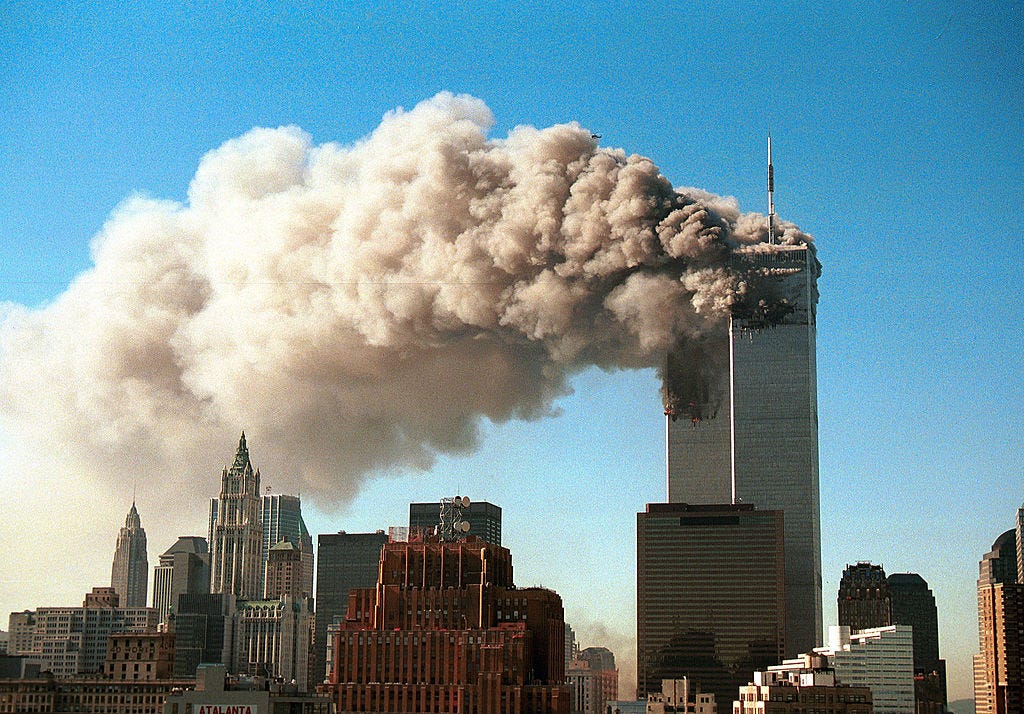
The contention of this author is that Clown World began on September 11th, 2001, with the World Trade Centre bombings in New York City.
Ever since this date, the world has been in a state of mass hysteria. This was first apparent from the lack of resistance to George W Bush’s PATRIOT Act, a set of laws that took away basic human freedoms from the American people. Some of those freedoms had, until then, been considered protected constitutional rights, but the degree of panic was so high that such concerns were ignored.
The West seemed to collectively decide that security concerns now weighed higher than liberty concerns.
The panic continued in the form of an intense fear of further attacks. With the American-led invasions of Afghanistan and Iraq in the years following 9/11, anxiety about Muslim reprisals spiked. Indeed, there were many Islamic terror attacks in the West since 9/11. But there were also a great number of school shootings, which suggests that there was a general trend towards increased political violence.
This increase in spectacular violence (even as everyday violence decreased), coupled with a sharp increase in the presence of Muslims and Africans in the West, led to a level of tension that had never previously existed. This state of panic has now lasted for so long that it has been normalised.
This ongoing hyperanxiety has placed most people in a state of learned helplessness. Passivity and fear are now the default modes of being. The average person submissively and apathetically awaits further instruction from the television, daring not to think through the issues themself or with their friends. Desperation for relief for the anxiety keeps people engaged with the mass media.
Perhaps even worse than the terror threats has been the intensification of technological intrusions into our lives. Many people are now welded to their smartphones from the moment they wake up to the moment they go to bed, inhabiting a world which is often more digital than physical. This has inevitably led to a population which is disconnected from the natural world and its workings.
Most people under the age of 30 cannot remember what life was like before Clown World began. For them, the heightened panic and complete technological absorption is normal. The world has simply always been a paranoid, tense place with widespread surveillance. Any older person who claims otherwise is dismissed as viewing the world through rose-tinted glasses.
The history of Clown World has been the collapse of solidarity, the festering of political corruption, the relentless forward creep of the surveillance state and an intensification of the all-round fear of everything, pushed by a monomaniacal mass media in pursuit of a share of dwindling profits. This began with 9/11, and became a global affair thanks to the Madrid train bombings of 2004 and the London bus bombings of 2005.
Clown World intensified with the Global Financial Crisis of 2007-2008. The collapse of American mortgage markets led to unprecedented economic measures, such as bank bailouts measuring in the hundreds of billions. After this crisis, it became impossible for the average worker to maintain the standard of living that they had become accustomed to.
This crisis was followed by record low interest rates, which allowed speculators to bid up the price of housing to the point where it was unaffordable for most people. Since 2010, Clown World has observed a sharp increase in the number of people who have moved back in with their parents. Today, more young people live with their parents than during the Great Depression.
From about 2015 onwards, it started to become apparent that the West had lost its greatest gamble, namely when it gambled on being able to assimilate millions of Third World immigrants. Those who assumed that Third World immigrants would simply adopt Western values out of gratitude were proven flat wrong.
It turned out that the leaders of Western countries, since opening the borders to the whole world in the 1960s, had effectively imported gigantic hostile elements that were now engaged in a low-level war of attrition with their host populations. The quality of life in every Western country was permanently lowered. It was the sort of mistake that could never be openly admitted to, lest the enraged populace drag the people responsible for it out into the street.
Unfortunately for the ruling class of the West, the Internet made it possible for the masses to share information that did not appear in the mainstream media. People became aware that they lived in a Clown World, and not one that was being run according to principles of wisdom or justice. The predictable consequence of widely recognising this truth: extreme anger on the part of the peoples whose countries have been destroyed.
In attempting to suppress this anger, so that it doesn’t boil over into violence, the ruling classes have pushed the intense brainwashing and narrative control that exists in Clown World at the time of writing, at the end of 2020.
At the end of 2020, the mainstream media is 24/7 brainwashing. The ruling class is doing everything they can to keep the ponzi scheme going, but the inexorable reality of currency depreciation means that the average worker in the West now has a standard of living comparable to the average Chinese worker. Young Westerners don’t have it any easier than young Chinese people when it comes to buying a house and raising a family.
2020 has seen widespread rioting across the Western World, amid immense despair at our future prospects. This is the current state of Clown World. Whether it gets better or worse from here on out is, at least partly, a matter of how well we understand the situation we’re in. This requires that we look at Clown World from both a specific and a general point of view.
*
This article is an excerpt from Clown World Chronicles, a book about the insanity of life in the post-Industrial West. This is being compiled by Vince McLeod for an expected release in the middle of 2020.
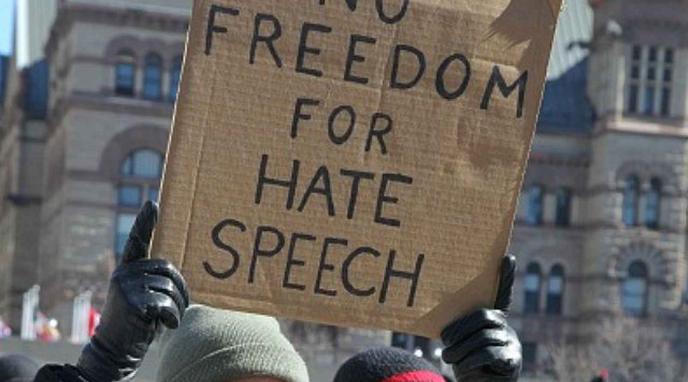
Libertarians across New Zealand were dismayed by news last month that Jacinda Ardern’s Labour Government intends to press ahead with so-called “hate speech” legislation. This is widely expected to entail European-style restrictions that could see a person imprisoned for saying that mass immigration is like an invasion, as French author Renaud Camus was earlier this year. But those putting their hopes in the National Party to fix it will be disappointed.
Right-wingers, in general, were also dismayed at Ardern’s confirmation that the Sixth Labour Government will introduce “hate speech” laws if they are re-elected on the 17th of this month. The conservative argument is that free speech is a fundamental part of New Zealand culture, and there’s no good reason to throw this away.
Judith Collins responded by saying that National “would not add further” to the loss of free speech, but would not commit to rolling back any free speech violations that the Labour Government might commit. Neither did she affirm that free speech was a fundamental Kiwi value that needed to be defended.
The reality is that National can sense a political advantage in acting as if they are in favour of free speech, but they don’t really care about it, for two major reasons.
The first is that they’re not, in any sense, a libertarian party. In fact, they are transparently authoritarian in several ways. National likes to pose as if they’re against government interference into the private lives of citizens, in contradistinction to Labour, who want a nanny state. But if they were libertarian they would work to legalise cannabis.
Being in favour of legal cannabis is no longer a radical position for a right-wing party in the Anglosphere. 55% of American Republicans are in favour of cannabis legalisation, and even a state as Republican as Alaska, where Donald Trump beat Hillary Clinton 51%-37%, now has legal cannabis. Part of the reason for this is the libertarian streak possessed by American right-wingers.
This libertarian streak doesn’t exist in New Zealand conservatism, which is why we are some 20 years behind America when it comes to cannabis. But the absence of these libertarian sentiments among New Zealand conservatives suggests that they won’t make an effort fighting for free speech either. Why would someone who thinks you should be in a cage for growing medicinal cannabis fight for your right to free speech? They wouldn’t.
The second major reason why National don’t care about free speech is because they are influenced by people who are against it.
British Conservative Leader Boris Johnson is bringing in draconian anti-free speech laws under the guise of child safety. The proposed bill will make it illegal to cause “online harms”. The Centre for Policy Studies declared their opposition to the bill, stating that it was wrong to let an unelected communications regulatory body decide what people were allowed to write on the Internet.
If the British equivalent of the National Party is restricting free speech in the same way that the New Zealand Labour Party intends to do, that is evidence that the moves are not inspired by left-wing or big government sentiments but by globalist ones.
Because the National Party is just as beholden to globalist interests as Labour is (even if those interests are slightly different), there’s no reason to think that they would be much different to Labour when it comes to free speech. Globalist interests want few things more than to shut down criticism of mass immigration – the less resistance, the higher house prices can be pumped, the more mortgage profits can be raked in.
In fact, one can predict that even if National wins the election this month they will introduce some kind of free speech restrictions anyway. There is transparently a wider globalist agenda to abolish free speech and, with it, dissent and criticism in general. This agenda has arisen because we are in the democracy to tyranny part of the political cycle.
No matter who wins this month’s election, New Zealand will lose our rights to free speech, as we have already lost our firearms rights and our rights to use spiritual sacraments. And in the same way that neither Labour nor National rolled back firearms restrictions or restrictions on the use of cannabis and psilocybin, nor will either party roll back any restrictions on free speech that might get passed in coming years.
“If by ‘democracy’ we mean the form which the Third Estate as such wishes to impart to public life as a whole, it must be concluded that democracy and plutocracy are the same thing under the two aspects of wish and actuality, theory and practice, knowing and doing. It is the tragic comedy of the world‑improvers’ and freedom‑teachers’ desperate fight against money that they are ipso facto assisting money to be effective. Respect for the big number—expressed in the principles of equality for all, natural rights, and universal suffrage—is just as much a class‑ideal of the unclassed as freedom of public opinion (and more particularly freedom of the press) is so. These are ideals, but in actuality the freedom of public opinion involves the preparation of public opinion, which costs money; and the freedom of the press brings with it the question of possession of the press, which again is a matter of money; and with the franchise comes electioneering, in which he who pays the piper calls the tune. The representatives of the ideas look at one side only, while the representatives of money operate with the other. The concepts of Liberalism and Socialism are set in effective motion only by money. … the Jacobins had destroyed the old obligations of the blood and so had emancipated money; now it stepped forward as lord of the land. There is no proletarian, not even a Communist movement, that has not operated in the interests of money, in the directions indicated by money, and for the time being permitted by money—and that without the idealists among its leaders having the slightest suspicion of the fact. The great movement which makes use of the catchwords of Marx has not delivered the entrepreneur into the power of the worker, but both into that of the Bourse.”
Oswald Spengler, The Decline of the West, Volume 2, pp 401
Dissidents who live within the GDP zone formally known as New Zealand face a perplexing array of institutions and individuals which are opposed to their interests. Within the state, without the state, in the academia, in the realms of business and the bourse, we face coalitions of groups and interests which we need to understand properly in order to achieve our objectives. In this essay and others which are to come, I will detail provide insight into our enemies, who they are and what motivates them. First, I will provide a rundown of what we know of the person. Second, I will explore why they do what they do and what their objective is.
Today, we will talk about Marc Daalder. Who is Marc Daalder? Well, from what I have been able to establish here is a timeline of Marc Daalder:
1996 – Marc Daalder is born to Ivo Daalder and Eliza Harris. Ivo Daalder was serving as Director for European Affairs on the National Security Council staff under President Bill Clinton. He has one sibling. 2012 – Marc writes articles for the high school newspaper at the International School of Brussels, a school which costs approximately $70,000 NZD per year for 2020 fees. His father is posted to Brussels as the United States Permanent Representative to NATO. 2012/2013 – Marc graduates from high school. 2013 to 2018 – Marc attends Amherst College, an extremely selective private liberal arts college with a $USD82,008–$84,458 ($NZD123,022-126,710) tuition fee per year (2020 fees). He writes for the Amherst Disorientation Guide and is later the editor in chief of the publication. He is also an organizer for the Amherst United Left. 2017 – Marc spends either one or two semesters at Victoria University of Wellington. 2018 – Marc graduates from Amherst College with a Bachelor of Arts majoring in History. 2018 – Marc begins to work for the Detroit Free Press as an intern journalist. 2018 – Marc emigrates to New Zealand, to work as a freelance journalist and to work as a research assistant investigating education reform in New Zealand. 2019/2020 – Marc writes extensively on issues within New Zealand, with a focus on the dissident right.
What can we say about him from this? He comes from an incredibly privileged background. Even on his father’s federal government salary, I do not believe he could afford to send his son to such unbelievably expensive school without the assistance of interested parties wishing to purchase favour with Marc’s father. From my analysis, further work into Marc’s connections and influence via his family or friend networks is not possible at this stage. It is fair to say he is a rich globalist with Jewish privilege from his international upbringing.
The Views of Marc Daalder
Now that we have this timeline out of the way, what can be said about Marc? I will derive what he believes from an analysis of his written material. I will prove three things with this analysis.
His strong Jewish identity, which deeply defines his writing.
His objective to write for gentile audiences and frame issues in favour of Jewish perspectives, often at the expense of white goyim.
His endless pursuit of ethnic self-interest.
From this, I wish to demonstrate to the reader that he should not be taken seriously as a journalist, that he is pushing a pernicious agenda against the people of New Zealand and should not be listened to accordingly.
Marc on Israel
On the subject of Israel, Marc is strongly in favour of the Jewish state. He fully believes that Ashkenazi Jews, who are heavily admixed with Europeans, are the indigenous people of Palestine. This delegitimises and colonises the indigenous Christian and Islamic peoples of Palestine, who have resided in that land for millennia. In the same article, he advocates for Jews to work with ‘indigenous’ peoples of the world against the majority white population.
In a display of mental gymnastics or Talmudic pilpul, he says “Jews have been fortunate in what we have achieved, in part because we have not been subjected to quite the same colonialist and imperialist attitudes that mark Western interactions with indigenous people. Nonetheless, if we are to seriously embrace our identities as an indigenous people, we must commit ourselves to helping those without our privilege.”
Contemplate this statement for a moment. He is saying that Jews pass as white while he denies that Israel is a settler-colonial state of European Jews, instead they are native to the land. He argues in turn that Jews should engage in a strategy of Bioleninism as well as subversion of their host populations, a.k.a. the native people of whatever nation they are burrowed in. For an explanation of Bioleninism, see thesereferences.
On the actual issue of Israel and Palestine, Marc seems to advocate for a two-state solution and recognizes that the security situation within Israel is untenable. It is an oddly principled stance and after reading every article I could find on the matter by Daalder, I confidently do not believe he wishes for continued military conflict between Israel and Palestine. However, he believes that the confiscated land of the Palestinians upon which Israel’s colonial-settler state exists today is completely legitimate in the hands of the settlers; while he seems to believe the European peoples of New Zealand do not share a similar legitimacy despite a significantly longer history of existence.
Such is his standard hypocrisy on these matters.
Marc on Genetics/Ancestry
On the subject of genetics and ancestry, Marc seems to believe Jewishness is an ethnoreligious matter. He states his nose and dark curly hair as genetic factors he inherited from his ancestors. He also wrote about the Jewish genetics of a Washington woman in a 2018 article on the accuracy of ancestry tests. It is worth remembering there were accusations at the time that these genetic testing companies were inserting false ancestry information into genetic tests ordered by white people. In these articles, he seems to believe that Jewishness is an ethnic matter.
Marc on POX
On the subject of people of colour, Marc seems to believe in the antisemitic canard of the Jewish alliance with blacks. He assumes POX must vote for the Democrats, and he reports alternative facts of voter intimidation and violence preventing POX from voting. He also reveals an oddly conspiratorial belief in Jews backing or running black organizations such as the NAACP, SPLC and BLM.
He extensively refers to the blood libel of Leo Frank, the rapist and murderer of a 13-year-old white girl, Mary Phagan. Leo Frank, who was eventually brought to justice in a fit of raging anti-Semitism, had been represented by the best white gentile lawyers available, who attempted to pin the murder on an innocent black janitor.
In another piece, he wrote of promoting an alliance between Muslims and Jews against the white majority on the basis of the racial history of being denied entry into the United States during the 1930s. This is on the grounds that the United States refused to take more than 30,000 Jews during an economic depression, then the door must be held open for other alien peoples. This would be a reasonable position for an ethnic minority struggling against the tide of cultural domination if it were not for the fact that Marc believes he is “white-passing” and therefore can pretend to be a fellow white gentile.
From the article: “For a long time, this change was minimized by the adoption of ‘Judeo-Christian’ as a new adjective for American religion. Jews, in this view, might not actually celebrate Christmas, but they could be comfortably grandfathered in as honorary members of the Christian tradition. But in recent years, this tolerance has been eroding as the notion of a ‘War on Christmas’ gains traction, to the point that even so benign a figure as Garrison Keillor could complain about the Jewish conspiracy to replace Christmas carols with non-denominational holiday songs, like ‘White Christmas'”. It is worth noting that the vast majority of Christmas songs were written by Jews, so it is odd that he attacks these carols.
When Christians United for Israel, a good goyim organization, came out speaking of George Soros as a “Nazi Collaborator”, Marc wrote an article condemning goys for not knowing that it is anti-Semitic to attack someone on the grounds that they were a Nazi. Regardless of the ridiculous ideological knots that Conservatives must tie themselves in to talk about values, policies and ideas imposed by Jews without talking about Jews; the Soros is a Nazi meme is the result of wanting to appeal to white audiences about issues they have an interest in while attempting to placate Jews, who often advocate for the other side. Pro-tip: Call them out on being ethnonarcissist Jews advocating against white people.
Marc on Demographic Shift
Marc seems to believe in the concept of intentional demographic shift when writing for the Jewish Magazine, The Forward. He says at the end of an article: “The War on Christmas is really a War for Inclusivity, and it is essential as we look towards remaking and repairing American culture going forward from this divisive election. To abandon multiculturalism or identity politics because Middle America (White) rejected them is to simply surrender after years of hard work. No, the work must continue and the war must be fought”. For a man who vehemently denies the ‘White Genocide conspiracy theory’, why does he seem to be promoting it in the Jewish Forward?
Marc on the Shoah
Marc seems to believe that gentiles must be policed for their thoughts by Jews or else it becomes a dangerous world for Jews. He writes extensively on Pewdiepie, normalising Nazism while marginalising others. Stating his perspective on the media: “The realm of cultural media, and particularly that oriented at young people, ought to be the focus of Jews and allies concerned about Nazism and anti-Semitism . . . . we must be vigilant and strenuous in our assertions that (noticing Jews) is not acceptable discourse”.
He also implies that without the Shoah myth, Jews would somehow be threatened, saying the following: “But just as dangerous to Jews is the way that the Holocaust is regularly disrespected and denied in a variety of cultural media.”
Speaking of the author Jonathan Green’s discussion of the death of Anne Frank, he wrote: “Even if we put aside the fact that Green once said that Frank ‘just died of illness like most people’ while ignoring the conditions of the concentration camp she died in.” There is nothing untrue about the statement that she died of typhus during March 1945. Yet he continues, accusing Green of “his continual de-Judaizing of Anne Frank and the Holocaust.” How does mentioning the nature of the unfortunate death of a teenage girl remove the Judaism from her?
This strong religious belief in the Shoah and the extreme elevation of the event into a holy status is evident in his blogposts on the Holocaust Centre of New Zealand Website. Gentiles joking about or diminishing the Shoah is an attack on the legitimacy of the event according to Marc. I wonder whether Jews like Sacha Baron Cohen contemplate this as they attack whites through comedy?
Marc on Spanish Colonisation
With his devout faith in the Shoah, he also believes that a few hundred to a few thousand Spanish adventurers managed to genocide 7 million natives in Hispaniola. What is it with 6 ± 5 million? It is a ridiculous claim to make, yet he throws this accusation at white people in an act of vile contempt.
Having read the History of the Conquest of Mexico by William H. Prescott, it is worth noting that the 500 Spanish conquistadors exploit the assistance of 200,000 natives who didn’t enjoy the brutal oppression of the Aztecs. Even then, such a genocide was not a logistical possibility.
Marc’s History of Doxxing
Marc has a long history of targeting white working-class men, starting with a police officer in Detroit. This seems to be part of a long trend – targeting white men who act in favour of their own people in the same spirit as Daalder himself acts in favour of Jewish ethnic interest. He has actively doxxed other people using his privileged position as a journalist.
Marc on Censorship
It is worth noting that he believes there must be censorship of “extremist” content, yet he believes in an ethnocentric Jewish-focused world view. He has written in a blog article that he is explicitly motivated in pushing for censorship of Holocaust fact-checking. This might also explain the desire to suppress all other conspiracies for fear that allowing silly conspiracies to flourish may open people to questioning the Shoah and in turn diminishing Jewish power. He openly discusses the desire to engage algorithmic suppression and artificial intelligence for suppressing perspectives which do not agree with the journalistic consensus. To quote Spengler: “What is the truth? For the multitude, that which it continually reads or hears.”
This is a cunning trick by a clever sleight of hand, in which articles are “fact-checked” against journalist sources, which report on matters in accordance with what the media ownership, stakeholder interests and writer desires. A journalist is in so doing given the power to decide what is fact and what is not. Yet this can be abused, as was the case with the fairy-tale WMDs used as a pretext to justify the invasion of Iraq by neoconservative political actors and journalists such as Jeffrey Goldberg.
It is worth reminding the reader that Newsroom, the current employer of Marc, is owned by Oaktree Capital Management at the time of writing. When media promote these new standards of censorship, it is acting in the interest of empowering these journalists, the neoliberal status quo and the bourse. He cries out for such censorship to retrench as a gatekeeper of the truth, to be given the privileged position of fact-checkers and not the fact-checked. He will not be fact-checked by other journalists as we goyim are, we are instead to be censored and suppressed via algorithmic gatekeepers as Marc insists.
What to ask from here?
So why does Marc Daalder believe in censorship? Does Marc debate censorship of the discourse for the benefit of all people, or solely for the benefit of his ethnic group? Why is he so intent on ensuring certain views are not seen by others? Is he trying to conceal the truth so that he may wield more influence and power? Does he not insist on the right to attack others for their beliefs which are often controversial, while he acts in an ethnocentric fashion, something widely condemned by contemporary liberal society?
In the assessment of this author on the beliefs of Marc Daalder, he is a vile, privileged and ethnonarcissistic Jew who uses his position as a journalist to advocate for the suppression of other peoples.
*
Themistocles is a writer and thinker with an interest in history, philosophy, mathematics and investigative journalism.
Of all the hideous creatures of Clown World, El Goblino is the most repulsive. His hunched shoulders, shambling gait, misshapen face and genderless appearance make people wonder if he is a genetic freak or a throwback to a more primitive form of life. He is both of those things, and worse – he is El Goblino.
El Goblino takes a human form, but that form is very similar to the form of a goblin. Like the goblin, El Goblino lives on the margins. His role in society is akin to that of a scavenger. He lives in a band with others of his kind, known at the 56%ers. These others are known by names such as La Creatura, La Luz Extinguida, Dios Mio and El Ogro de las Americas.
In the mythology of Clown World, El Goblino is the result of rampant miscegenation. He is a long-distant child of Boomer. Legend has it that Boomer once impregnated a Filipino prostitute, then the resulting son moved to Tijuana and impregnated a Mexican prostitute, and then the resulting daughter moved to California and got impregnated by some random Amerimutt. The child that resulted from that is El Goblino.
El Goblino may be ugly, but what he represents is even uglier – the total McDonaldsisation of the American gene pool, and its reduction to an 85IQ mulatto slave race who never thinks further ahead than the weekend sportsball match. This Amerimutt is the perfect consumer. He is just intelligent enough to run the machines, but not intelligent enough to organise a rebellion.
Like Tyrone, El Goblino is a demigod that represents a particular force. The power of El Goblino is not something that simply manifests. It is actively brought into existence by the malicious indifference of the denizens of Clown World. Also like Tyrone, El Goblino serves primarily as a warning.
When people don’t look after their communities or neighbourhoods, or when they let their family connections fall away to watch Netflix instead, El Goblino grows in power. He always grows in power when social connections weaken. When people can’t be fucked socialising with their friends, El Goblino moves in.
El Goblino represents the space between the Great NPC and Corona-Chan, i.e. a double negative feminine. This suggests a mindless reproductive energy that got out of control. El Goblino is the result of the remorseless sexualisation of popular culture and the idea that busting a nut is the highest of all actions. Roasties, in particular, bring the energy of El Goblino into the world, as does the energy of Virgin.
El Goblino is not nearly as dangerous as Tyrone, at least not on an individual level. El Goblino might occupy society’s margins, but he is not particularly malicious or prone to outbursts of aggression. Having said that, you wouldn’t want to leave your wallet out of your sight while he was around. Neither would you want to leave your back door unlocked.
On a collective level, however, El Goblino represents everything getting a little bit worse. If Tyrone brings intense tragedy to a small area, El Goblino brings minor tragedy to a large area. Manifestations of El Goblino are signs that your wages are about to go down, and that your rent’s about to go up. His presence is a sign that everything’s getting just that little bit shittier.
In Clown World, the average person has been taught to have no connection with their heritage. They know nothing of their ancestors, living only for the next cheeseburger. Even worse, the average person has no connection with their own kin. This has led to an advanced spiritual decay.
This spiritual rot is the power that El Goblino feeds upon to become more numerous. The excessive self-interest of people who have given up on cultivating social connections powers him to multiply into the hundreds of millions. Being overrun by the offspring of El Goblino is the inevitable fate of all nations that put material and commercial concerns above spiritual ones.
The solution to the threat posed by El Goblino is to summon the power of Chad and Stacy. A really good party, one that the attendees look back on fondly and with a will to reconnect with the people they met, is the kind of magic that keeps El Goblino away. So does hosting a weekly poker night for members of the neighbourhood, or any public festival.
This is a specific example of the general approach that needs to be taken to Clown World. Whereas Doomer has impulsive visions of shooting up a shopping mall full of goblinos with an automatic rifle, Chad shows the real way forward. An effort must be made to actively bring good energy into the world if Clown World is to end.
*
This article is an excerpt from Clown World Chronicles, a book about the insanity of life in the post-Industrial West. This is being compiled by Vince McLeod for an expected release in the middle of 2020.