Part II is titled ‘The Solution of the Economic Problem: Socialism’. This is divided into seven chapters.
In the first, ‘The Economic Basis Of The Third Universal Theory’, Gaddafi calls for the abolition of the wage system. He states that “Wage-earners are but slaves to the masters who hire them.” The producer has a right to that which they produce – a secondary benefit through the improvement of society or through wages is inadequate. Inequality cannot be tolerated as it leads to exploitation.
Gaddafi repeats Adam Smith’s rule that economic production is the result of raw materials, capital input and human labour. He claims that all three of these components are necessary to produce anything, and therefore all three should get an equal share. Gaddafi also notes that the working class is declining owing to scientific and technological advancement. People are, however, the basic component in any production process.
In the second, ‘Need’, Gaddafi notes that a person cannot be free if their needs are controlled by others. Need leads to the enslavement and exploitation of those who need. Conflict is caused by one group controlling the needs of a second, giving that second an incentive to rebel. Need is a problem inherent to life.
In the third, ‘Housing’, Gaddafi opens with “Housing is an essential need for both the individual and the family and should not be owned by others”. A person cannot be free while living in a home owned by someone else, whether or not they’re paying rent. Fiddling with rents won’t help – the important thing is ownership. People won’t have the right to own multiple houses, because to do so is to control the needs of others, which is exploitation and cannot be permitted.
In the fourth, ‘Income’, Gaddafi declares that income is an imperative need. In a socialist system, there are no wage-earners, only partners in the production process. Income should not be a wage in exchange for having one’s production taken away.
In the fifth, ‘Means Of Transportation’, Gaddafi declares that transportation is also a necessity. Therefore, it’s subject to the same restrictions from being controlled as housing and income. Like housing, transportation may not be owned for the sake of renting it out.
In the sixth, ‘Land’, Gaddafi begins by stating that “Land is the private property of none.” He believes that the land ought to belong to whoever works it. Gaddafi’s aspiration is to create a society that is happy because it is free. This comes about via the liberation of people’s material and spiritual needs from the control of others.
Gaddafi is aware that wage-earners have little incentive to work. Neither do poeple who work for the common good. The self-employed, however, have plenty of incentive to do so. Gaddafi sees the economy as a zero-sum game, because, for him, there is no reason to produce beyond one’s needs. The industrious and skillful have no right to lever this advantage to take from the shares of others.
An especially diligent or intelligent person may meet their needs with less effort, but they may not acquire more than they need. Happiness is a matter of material and spiritual freedom. Profit itself must be eliminated, as it inevitably will be as the socialist process continues to evolve.
In the seventh, ‘Domestic Servants’, Gaddafi states that domestic servants are a type of slave. The Third Universal Theory offers freedom to both wage-earners and domestic servants. Household services should be carried out by employees, not by domestic servants. He concedes that it isn’t easy to assign a share of production to service workers.
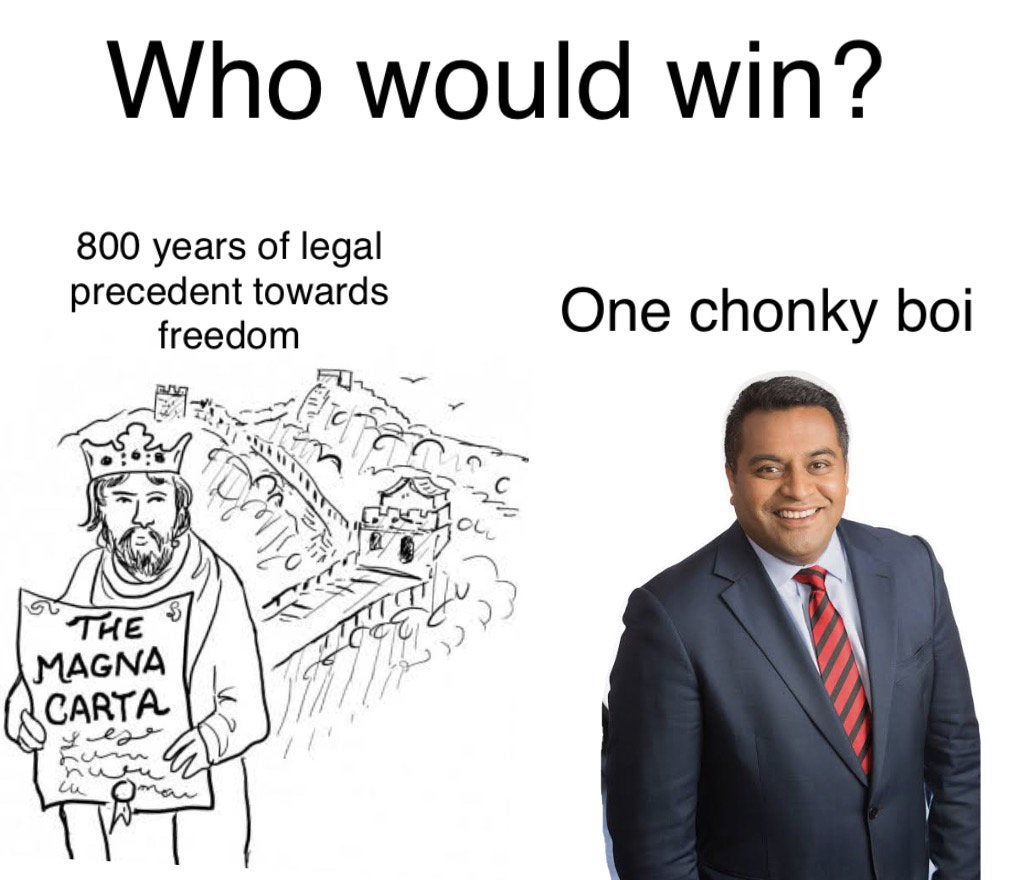
Kiwis were disappointed last month to hear that the Sixth Labour Government is taking away our rights to free speech. Any speech that the Government hates will now be “hate speech” and subject to criminal sanction. As is the case in Scotland, an immigrant Justice Minister, from a culture that doesn’t value free speech, has stripped those rights away from a population that has cherished them for centuries. But, as this essay will show, free speech is just one of the many rights we’ve lost thanks to mass immigration.
Free speech is the fundamental value of Western civilisation. Without it, society cannot self-correct. So without free speech, small problems snowball into catastrophes. Legal recognition of the importance of free speech is one of the main reasons why Western countries are so stable in comparison to others.
But the value of freedom is generally only understood by Westerners.
The reason why men like Kris Faafoi and Scotland’s Humza Yousaf can so glibly annihilate one of the most important aspects of Western culture is that they weren’t raised to respect it. Their cultures do not have a history of struggling to assert freedom at all, and so they were not raised to value free speech. It was inevitable that making these men Justice Ministers would lead to a loss of those freedoms.
Import the Third World, become the Third World – and the Third World does not have a culture of free speech. If the Justice Minister of New Zealand had been a proper Kiwi, raised in Kiwi culture to appreciate the Greco-Roman-Anglo heritage that made New Zealand worth living in, we would still have our rights to free speech today. But that’s only the beginning.
Our right to use cannabis was also lost because of immigration.
In the 2020 cannabis referendum, the No side of the vote got 1,474,635 votes, and the Yes side got 1,406,973. This equals a difference of 67,662 votes. This narrow margin was enough for the Sixth Labour Government to declare that Kiwis wanted to keep locking themselves up for growing medicinal plants. But that margin would have been in favour of Yes if it wasn’t for immigrant voters.
An article in the South China Morning Post referenced a survey that found 80% of ethnic Chinese voters intended to vote No in the cannabis referendum. Some simple maths is enough to show that these Chinese voters alone tipped the overall outcome from a Yes to a No.
There are some 231,000 ethnic Chinese people in New Zealand. If we assume that 80% of them are eligible to vote, and that 80% of those actually did vote, that suggests some 147,840 ethnic Chinese voters voted in the cannabis referendum. If 80% of those voted No, that means 118,272 ethnic Chinese voted No and 29,568 ethnic Chinese voted Yes, for a balance of 88,704 more No voters than Yes voters.
The maths tells us that non-Chinese Kiwis voted Yes in the cannabis referendum, by a margin of some 21,000 votes. But these votes were cancelled out, and more, by the heavy Chinese opposition to cognitive liberty. And the Chinese weren’t the only immigrant group to vote to imprison cannabis-using Kiwis.
Pacific Islanders also voted against cannabis freedom, mostly out of religious sentiments.
The three electorates with the most Pacific Islanders in 2020 were Mangere at 59%, Panmure-Otahuhu at 46% and Manurewa at 39%. These were also among the electorates with the lowest Yes vote in the cannabis referendum: Mangere 38.7%, Panmure-Otahuhu 41% and Manurewa 39.5%. Many of the Pacific Islanders who voted against cannabis freedom were mindlessly following the orders of their pastors.
Religion also inspired Muslim immigrants to vote our rights away. The New Zealand Muslim Association came out in favour of Kiwis getting locked in cages for using cannabis, and the Federation of Islamic Associations of NZ proudly allowed their logo to be displayed on the Say Nope to Dope supporters page. For them, tolerance and respect is an entirely one-way street: Kiwis are obliged to tolerate and respect Islam, but Islam is in no way obliged to tolerate and respect cannabis-using Kiwis.
If the cannabis referendum had been left up to white people and Maoris, it would have passed with around 60% in favour. But the mass importation of cheap labour from backwards cultures ultimately tilted the balance in favour of a No vote.
Our rights to use other spiritual sacraments are likewise gone. As a recent article in the Australian and New Zealand Journal of Psychiatry noted, there is now ample evidence that sacraments such as psilocybin have immense therapeutic potential, “However, Australia and New Zealand are currently failing to acknowledge such evidence and, as a result, are falling behind in this crucial time of biomedical research and innovation.”
As noted in the article, the refusal to acknowledge the evidence for psychedelic therapy is political. Sadly, because conservative Third World immigrants now make up a significant proportion of our voters, we can kiss all research into psychedelic therapy goodbye. The Islanders don’t want it because of Jesus, the Muslims don’t want it because of Allah and the Asians don’t want it because drugs are bad.
Immigration also cost us our rights to free assembly, as was observed when Lauren Southern and Stefan Molyneux tried speaking about the consequences of mass immigration in Auckland.
Even though the NZ Bill of Rights Act explicitly states that Kiwis have both the rights to receive information and to free assembly, we were banned from assembling to listen to the Canadian duo at Auckland Council venues because Phil Goff, the Auckland mayor, was afraid of losing support from Muslim voters. Thanks to the mass immigration of conservative cheap labour, we’re no longer free to gather to discuss certain topics in public.
Most of our firearms rights were stripped from us after an Australian immigrant shot up a mosque full of Muslim immigrants on March 15, 2019. Even though no Kiwis were involved until Brenton Tarrant was arrested, the incident was used as an excuse to confiscate semi-automatic rifles all across the country.
Had we not opened the borders to the same cult of hate responsible for the Rotherham rape gangs and for the Drottninggatan truck attack, and had we not sat impotently while the Al Noor Mosque produced multiple terrorists, we would never had suffered such an atrocity on our shores. But, as many other Western nations had already learned, mass immigration from violent, supremacist cultures inevitably leads to violence.
The worst loss of freedom from mass immigration, however, was the loss of our right to own a home and raise a family.
In 1992, the average New Zealand house cost around $105,000, and the average wage was close to $15, which meant that a person had to save about 7,000 hours of labour at the average wage to own the average house. After three decades of mass immigration, the average house now costs $820,000, while the average wage has only risen to $35. This means a person now has to save over 23,000 hours of labour at the average wage to own the average house.
Mass immigration means more people competing to bid up the price of housing, as well as more people competing to bid down the price of wages. Anyone with a high school economics education could have told you that mass immigration would lead to higher house prices and lower wages. The combined effect of these two phenomena is that it’s now impossible for the average Kiwi worker to buy a house and to support a family with their own wage.
The loss of the freedom to buy a home and to support a family with one’s wage is the worst loss of all, because it effectively makes us the slaves of the bankers who hold our mortgages, and of the employers whose $20/hour we need to pay those mortgages off. Yet this loss is the inevitable consequence of mass immigration, the last thirty years of which has reduced us to this wretched condition.
We were told that mass immigration wouldn’t cause the loss of any freedoms because the immigrants would become like us – appreciative of the freedoms of Western culture and willing to defend them. However, we were lied to. The immigrants we let in never had any intention of respecting our culture and our values. In reality, we lost everything. We lost all our rights, all our freedoms, we lost our entire culture.
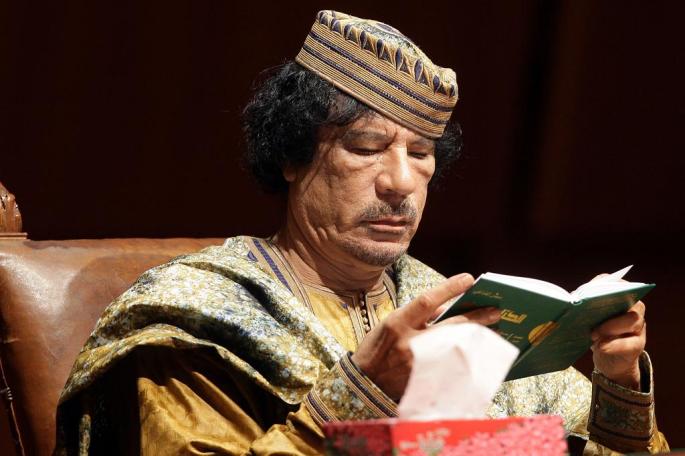
Muammar Gaddafi’s The Green Book was published in 1975, and was intended to be read by everyone. Gaddafi was murdered in 2011 for opposing the same people that Abraham Lincoln and John F Kennedy opposed, i.e. globohomo. This book is therefore of immediate interest to anyone else who opposes globohomo.
Part I is titled ‘The Solution of the Problem of Democracy: The Authority of the People’. This is divided into ten chapters.
In the first, ‘The Instrument of Government’, Gaddafi points out the inherently tyrannical nature of electoral democracy as practiced in the West today. Up to 49% of the population can have a government that they did not vote for imposed on them. He writes that “dictatorship is established under the cover of false democracy.”
In the second, ‘Parliaments’, Gaddafi decries the parliamentary system as a “misrepresentation” of the people. Democracy must mean the authority of the people, and not an authority that presumes to act on behalf of the people. As soon as the election is over, the representative assumes sovereignty from the people. The people have the right to destroy the parliamentary assemblies that have taken their sovereignty away.
“The most tyrannical dictatorships the world has known have existed under the aegis of parliaments.”
In the third, ‘The Party’, Gaddafi decries the modern political party as “the dictatorship of the modern age”. He states that “A party’s aim is to achieve power under the pretext of carrying out its program.” Any party not in power will seek to harm the nation so as to undermine their opposition. Moreover, a country governed by one party is not meaningfully different to countries governed by one sect or by one tribe.
In the fourth, ‘Class’, Gaddafi argues that leadership based on class suffers the same problems as leadership based on party, tribe or sect: it can only ever represent a minority. Even if the working class replaced the others, differences in material wealth or prestige between working-class factions would soon lead to the old class system reasserting itself. As before, so after.
In the fifth, ‘Plebiscites’, Gaddafi observes that the people’s expression is limited to ‘Yes’ or ‘No’. Referendums are often used to cover up for the failures of democracy. The solution lies, he writes, in finding an instrument of government that is not subject to either internal conflict or underrepresentation of the people it governs. This instrument can only be the authority of the people.
In the sixth, ‘Popular Conferences And People’s Committees’, Gaddafi declares that direct democracy is indisputably the ideal form of government. It’s just impractical. Gaddafi’s Third Universal Theory divides the population into Basic Popular Conferences, each of which chooses a secretariat from among their number. The population then appoints People’s Committees to replace government administration.
In the seventh, ‘The Law of Society’, Gaddafi contends that the natural law of any society must be based in either tradition or religion. Constitutions are artificial, thus invalid. He argues that human beings are essentially the same everywhere, and therefore natural law is applicable to all. Ruling systems must follow natural law, and not the reverse. So all laws must be grounded in tradition or religion.
In the eighth, ‘Who Supervises The Conduct Of Society’, Gaddafi appeals again to his Basic Popular Conference model. No one group can claim the right to police society, therefore society has to police itself. If the people organise themselves into Popular Conferences, however, they can supervise themselves.
In the ninth, ‘How Can Society Redirect Its Course When Deviations From Its Laws Occur’, Gaddafi notes that if a system is dictatorial, resistance to it must take the form of violence. Because the use of Basic Popular Conferences and People’s Committees means that the system is not dictatorial, it can be reformed without violence. Because the system encompasses all, there are no outsiders to direct violence against.
“Violence and revolution are carried out by those who have the capability and courage to take the initiative and proclaim the will of society.”
In the tenth chapter, ‘The Press’, Gaddafi states his belief that the press is primarily a means for society to express itself, and therefore does not belong to individuals or corporate interests. He points out that media sources can only ever speak for their owners and not for society. As such, private publishing or information enterprises must be banned. Only People’s Committees are permitted to act as the media.
Gaddafi finishes this first part of the book by noting that the strongest party in the society is always the one that rules.
Many Kiwis were shocked by a video circulating this week depicting a mass brawl at Te Aro Park in Wellington. The scene made it appear like public violence is now just part of everyday life in New Zealand. The nihilism reflects the rotten state of our economy – a rot that began with the Fourth Labour Government’s introduction of neoliberalism.
Neoliberalism came to New Zealand under the friendly name ‘Rogernomics‘. The Fourth Labour Government, following the trends established by Ronald Reagan and Margaret Thatcher overseas, adopted a number of neoliberal measures that would supposedly increase New Zealand’s economic performance. To some extent, they did. The real suffering didn’t begin until after Labour’s 1990 election defeat.
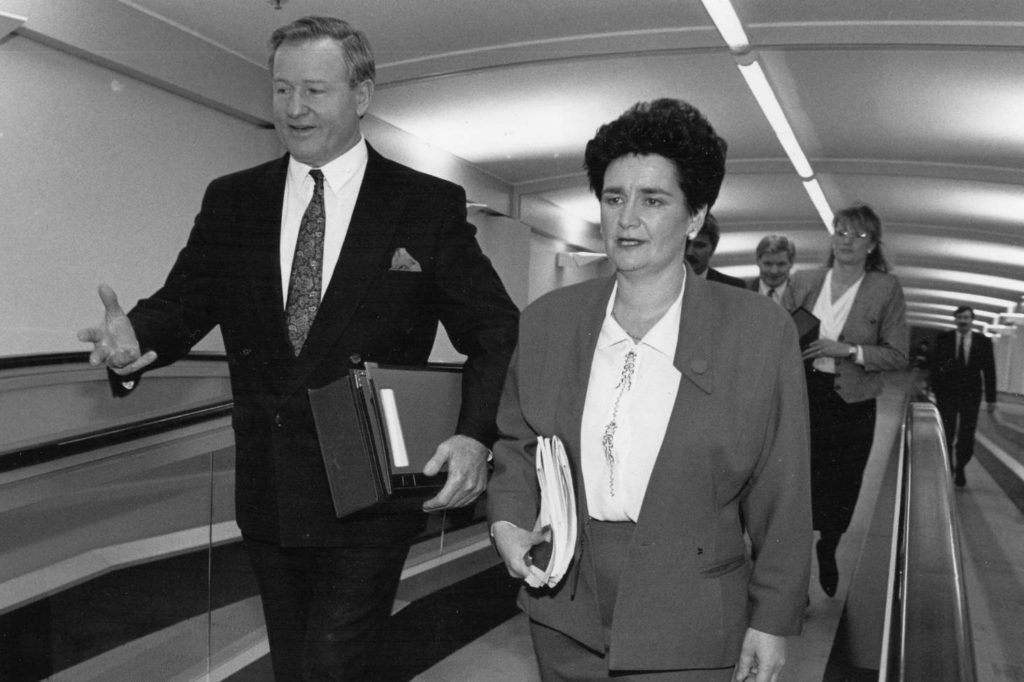
The Finance Minister of the Fourth National Government, Ruth Richardson, took the scythe to New Zealand’s poor with the 1991 Budget. The combination of the $14/week cut to the unemployment benefit, the $27/week cut to the sickness benefit, the $25 to $27/week cut to the families benefit and the abolition of universal payments for family benefits was a kick in the guts to those already at the bottom of society.
The act was dubbed ‘Ruthanasia’. In the same way that a useless old person is put to death with euthanasia, the useless lower classes were put to death with Ruthanasia. The narrative from the media was that beneficiaries were lazy, thieving scum anyway, and cutting their benefits should motivate them to get off their arses and into work. If not, they could die, it would be just as good.
The measures were particularly brutal to solo mothers, who found themselves $40/week or more worse off. The idea was that solo mothers were society’s filth, and in breeding outside of a stable marriage they were responsible for all of society’s ills, and needed to be punished for it. Their children were surplus to economic requirements, and therefore should be made to understand that they were not needed or wanted.
To a major extent, this strategy succeeded. Today, New Zealand’s youth suicide rates are the second-highest in the developed world. Every year, 14.9 out of every 100,000 Kiwi adolescents decide permanently that their life isn’t worth living. The vast majority of those are from the poorer classes. This is a direct consequence of the fact that the abuse and neglect of New Zealand’s poor was normalised by Ruthanasia.
However, the children that Ruth Richardson threw to the wolves in 1991 mostly survived.
Some are now the ironhearted gang leaders who hold the loyalties of other violent young men. Winning the favour of such hard men may have been the reason for the fight in the video link in the first paragraph. Such mindless aggression might sound barbaric, but that’s the reality for young men in Clown World.
The children born into beneficiary families between 1980 and 1995 are now Generation Ruthanasia. Many of these children killed themselves as adolescents. Many more turned their hatred outwards and mutilated others. Too many of them are missing some of the part of the mind that allows humans to feel empathy with other living beings.
This absence of empathy is an inevitable consequence of the way they themselves were treated – as before, so after. Yet therein lies a great danger for New Zealand society over the next couple of decades.
Generation Ruthanasia might be outnumbered by people who were raised well, but they are still numerous enough to have a significant influence upon the nature of our society and upon the minds and the values of the following generations. It is their nihilistic cynicism that one sees expressed in the gang brawls at Te Aro Park this week, and in other places.
The now-adult men of Generation Ruthanasia don’t know how to love, neither themselves nor others. The loving parts of the mind and heart have long since been closed off for only bringing sorrow. But these men are already old enough so that the next generation looks up to them. As such, there’s a risk that their absence of empathy becomes normalised.
The natural, logical realisation that went through the minds of Generation Ruthanasia as children is that human life is without value. If children are worth so little that it’s fair to withhold money from their parents so that those children can’t eat, then what does have value? Certainly not this society. This logic is why the savagery of the gang lifestyle is no longer enough to scare everyone away.
This way of thinking is not dissimilar from that of the generations raised in places like inner-city America and Brazil – and that’s what New Zealand is now on track to become like, if the process of social decay is not arrested. But solving the problems posed by this cohort of severely mentally and spiritually damaged people will take decades.
The least part of any effective solution will be a massive financial investment – one large enough to reset the mental health situation. A universal basic income, to give people time to mentally recover, might be necessary here. Any government refusing to consider such measures would do well to bear in mind Machiavelli’s maxim that “If an injury has to be done to a man it should be so severe that his vengeance need not be feared.”