

Why The Government Lets Violent Criminals Run Rampant

Many were stunned by the news this week that Daniel Havili, who killed Fau Vake with a coward’s punch in Auckland, was sentenced to a mere 33 months’ imprisonment. Havili will, in all likelihood, be released after serving a little over a year. Considering the historical severity of sentences for killing people, this is very close to getting away scot free.

This incredibly light touch comes in the wake of other soft sentences for violent assaults. In one notorious recent case, Mongrel Mob chapter president Terry Berryman was sentenced to 23 months’ imprisonment for an 18-man gang home invasion that stomped on a man’s head in front of his children. Most of the gang members involved were not prosecuted.

This has prompted many to ask: why such light sentences for such barbaric crimes?

These sentences seem incongruous with the fact that cannabis growers such as Harley Brown get a similar amount of time in prison for growing medicinal cannabis. Brown was sentenced to 27 months’ imprisonment for a piddling amount of cannabis – at most $100,000 worth. This is for an “offence” that not even 51% of the New Zealand population believes should be an offence.

Other working-class whites, like Philip Arps, don’t even have to grow cannabis. Arps was sentenced to 21 months’ imprisonment for sharing the Christchurch mosque shooting video.

So why do violent criminals almost get a free ride from the courts, when peaceful people get smashed? Why would sharing a video attract a similar sentence to a gang leader doing a home invasion in which children are subjected to the sight of their father getting his head stomped?

The answer lies in understanding the motivations, intentions and aspirations of the ruling class.

Everyone who knows anything about psychology knows that violent criminals cheer at such weak sentences as the ones listed above. For professional criminals, arrests and prison time are just part of the cost of doing business. The lighter the sentencing, the lower the expenses. Therefore, the lighter the sentencing, the more crime pays.

These weak sentences mean that criminals can freely intimidate other people with threats of violence, knowing that the judicial consequences will be minimal. When sentences are as weak as they are in the West today, violent criminals get to reign in terror over the vulnerable (usually working-class) communities in which they reside. Even if the Police deal to them, they’ll be out again soon enough, and in most cases barely inconvenienced.

This end result – widespread terror – is not accidental. It is, in fact, the entire goal of having a justice system in which violent criminals are left to run rampant. In a state of terror, both individuals and populations are unusually willing to forfeit their rights, needs and desires. As such, it’s easier to rule over a terrorised population than a free one.

The Government allows violent criminals to run rampant in New Zealand for one simple reason: to terrorise the rest of us into submission.

VJM Publishing wrote in a previous article why the Government lets in terrorists like the New Lynn supermarket stabber Ahamed Samsudeen. The reason is the same. They let violent criminals run loose for the same reason that they let terrorists run loose: to maximise the degree of fear the average person feels.

Widespread fear makes the population submissive, and is necessary for any authoritarian government to maintain control. Without the fear, the population would rise up against authoritarianism and overthrow it. The fear beats them down and makes them suspicious of their neighbours and workmates, so that no-one organises any resistance.

The control system has many ways of spreading fear through the populace – the foremost of which is the mainstream media – but violent criminals serve this purpose as well as terrorists do.

The surge of adrenaline people get from seeing a patched gang member in public, and the adrenaline fatigue that inevitably follows it, primes people’s minds to submit. Engendering this submission, as George Orwell showed us, is the end goal of all political action and is the ultimate aspiration of the control system.

*

If you enjoyed reading this essay/article, you can get a compilation of the Best VJMP Essays and Articles from 2021 from Amazon for Kindle or Amazon for CreateSpace (for international readers), or TradeMe (for Kiwis). A compilation of the Best VJMP Essays and Articles of 2020, the Best VJMP Essays and Articles of 2019, the Best VJMP Essays and Articles of 2018 and the Best VJMP Essays and Articles of 2017 are also available.

*

If you would like to support our work in other ways, subscribe to our SubscribeStar fund, or make a donation to our Paypal! Even better, buy any one of our books!

Most Westerners Are Now Slaves

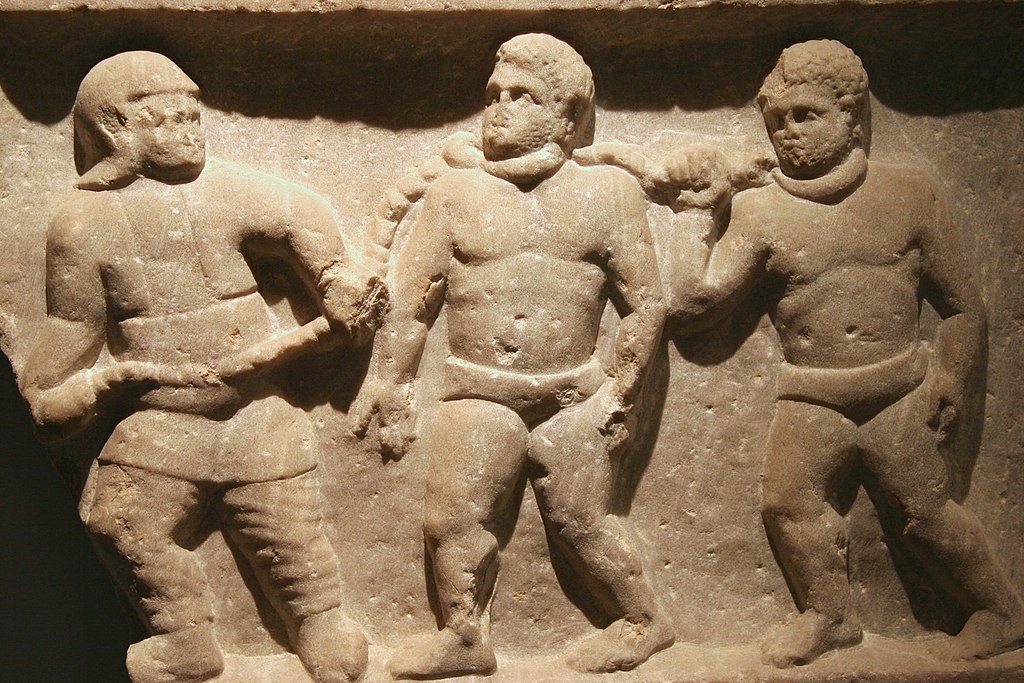
New Zealand was appalled yesterday by the news that a Samoan chief named Joseph Matamata had been convicted of enslaving 13 of his fellow Samoans. Matamata had brought the slaves to New Zealand as cheap labour to work in vineyards and orchards, and had kept for himself the vast bulk of their wages. New Zealand may have been appalled, but the average Western worker is a slave anyway.

A slave is defined as a person “who is someone forbidden to quit their service for an enslaver, and who is treated by the enslaver as their property. Slavery typically involves the enslaved person being made to perform some form of work while also having their location dictated by the enslaver. Historically, when people were enslaved, it was often because they were indebted, broke the law, or suffered a military defeat.”

The position of the average worker in the current economic and political paradigm of the West fits this definition. We currently live in a system where the average worker can labour all week long and have all of their productivity taken off them so that they are left with nothing at the end of it all. They might, in theory, be able to choose their location, but in practice they either don’t have enough money to change location or the remuneration is no better anywhere else.

The chattel slavery of the American South before the Civil War is held up as one of history’s worst human rights abuses. We are told that slaves in America were treated so poorly that they had every moral right to kill their enslavers. This is a belief with potentially serious implications, given that chattel slaves weren’t treated significantly worse than the average Western worker, who also labours all week to be left with nothing.

Profits, taxes and rents are so high in New Zealand that even those earning above the median wage are left with almost nothing that they can put towards owning their own house one day. Not only is the average house price now close to a million dollars, and not only is saving any real money restricted to the very wealthiest of income-earners, but what little savings one can accrue is getting rapidly eaten up by interest.

According to the New Zealand Government’s own cost of living calculator, a general practitioner living in Auckland with a partner and two children and making $133,000 per year will run a $317 deficit every week if they want an average standard of living. So not even a qualified doctor can afford to save anything towards a house now.

If a qualified doctor, in the top 1% of the population by education, can’t afford a house, that effectively means that no worker can. The only people who can afford houses now are those who already have money and those who manage the workers on their behalf, and the rest of us are just slaves, doomed to labour our entire lives for a standard of living lower than that our ancestors enjoyed 100 years ago.

Some might argue that the situation of the New Zealand worker is different today because, although the New Zealand worker is left with nothing after their workweek, at least they don’t have to endure the physical abuse that chattel slaves did.

But physical abuse has simply been replaced with psychological abuse. The New Zealand worker isn’t hit with whips, but they are told every day in the media that they are racist, sexist, hate speakers, wrongthinkers and generally a river of filth. This psychological abuse has a similar end effect to physical abuse: it depresses the spirit into a state of abject submission.

Moreover, at least a slave in the American South could rely on the solidarity of his fellow slaves. The New Zealand worker can’t even rely on that. Should the New Zealand worker complain of their poor situation, they’ll be told to “suck it up” or “just work harder”. As if how hard one works means anything when all one’s productivity is taken away!

Although workers have an easier time of it in other Western countries (Europe, North America and Australia), these countries are all also trapped in the low wage/high house prices and inflation death spiral.

Goethe once said that “None are more hopelessly enslaved than those who falsely believe they are free.” Workers of the West don’t have physical shackles around their ankles, but they have psychological shackles around their minds. These shackles have made them submit to a system where the vast majority of workers are left with no surplus for even the most physically or psychologically challenging work.

*

If you enjoyed reading this essay/article, you can get a compilation of the Best VJMP Essays and Articles from 2021 from Amazon for Kindle or Amazon for CreateSpace (for international readers), or TradeMe (for Kiwis). A compilation of the Best VJMP Essays and Articles of 2020, the Best VJMP Essays and Articles of 2019, the Best VJMP Essays and Articles of 2018 and the Best VJMP Essays and Articles of 2017 are also available.

*

If you would like to support our work in other ways, subscribe to our SubscribeStar fund, or make a donation to our Paypal! Even better, buy any one of our books!

A System That We Can All Be Proud Of

In a fiery exchange between a mainstream media lackey and CounterSpin Media host Kelvyn Alp, Alp summarised the desire of the Wellington protesters and the freedom movement more generally: a system that we can all be proud of. In the absence of any better suggestion, this essay outlines what such a system might look like.

There is one big problem with the current New Zealand system: the vast majority of the benefits from all the work performed go to a very small number of people. Under our current economic arrangement, the benefits of labour don’t go to the labourer but to the owner of the land upon which the labour was performed. This is called capitalism, and if you don’t like it you’re responsible for tens of millions of deaths by starvation in Russia and China.

It’s an ugly system. It’s not much different to medieval feudalism, in which the vast majority of people were serfs beholden to a lord. The serfs worked all day, and then the lord came in and took their productivity away for his own purposes, leaving the serfs with barely enough to get through to the next tax day (if they were lucky).

Being a New Zealander is a constant humiliation.

Not only must one deal with the fact that one’s wages hardly go anywhere, but one must also deal with the pettiness of average New Zealanders. This pettiness follows from being a small, isolated country infested with the slave morality of Christianity. There’s nothing we love more than ripping our neighbours down once they make something of themselves. Anyone with any self-esteem has to be destroyed.

Nothing about the way our system is run engenders pride. We have to aim higher.

A system that we can all be proud of would entail change from the ground up. It would require a total paradigm shift from a mentality of profit before all, to a mentality of alleviating the suffering of the New Zealand nation. It would require raising solidarity between the various communities of New Zealand, rather than setting them against each other.

The first step in bringing this about is to restore basic dignity to the average worker by making it possible for them to get ahead.

As of right now, the average New Zealand worker has no chance of ever owning their own home. Wages are so low in comparison to house prices and rents that the average house now costs over 25,000 hours of labour at the average wage. This contrasts rudely with the average house price in 1992: 7,000 hours of labour at the average wage. Not only does the average worker have trouble buying a house, they have trouble saving at all.

It’s impossible for the average worker to be proud of a system that exploits them to such an extent. It’s like asking a plantation slave to be proud of the plantation system. Our economy must be completely redesigned, so that it once again becomes possible for the average worker to buy a house and raise a family on their wage.

To this end, the Reserve Bank of New Zealand ought to be given an entirely new remit: to alleviate the suffering of the New Zealand people. This new remit would replace the existing focus on inflation and unemployment. The problem with this existing focus is that it inclines the Reserve Bank to drop interest rates to the floor for the sake of encouraging borrowing (and thereby spending), but these low interest rates just lead to ballooning house prices.

Also to this end, the mass importation of cheap labour must stop immediately. There is nothing that has lowered the standard of living of the average Kiwi worker more than having been forced to compete with imported cheap labour. Increasing the supply of cheap labour inevitably lowers the price of that labour, and New Zealand’s historical addiction to it is one of the prime reasons why our wages are in the toilet. We have to go clean.

A final step is that tax incentives must be used to attract investment in productive capital. A land tax must be introduced to shift investment from land banking to business. New Zealand’s productivity is infamously low, the result of many things, but foremost among them is the lack of capital investment. Because New Zealand employers have historically always been able to import cheap labour, they have not been incentivised to invest in productive capital.

None of these suggestions require jingoism, supremacy or xenophobia. New Zealand doesn’t need to denigrate other nations in order to create a system that we can all be proud of. But we have to give our own people a fair deal. And this starts with giving the everyday Kiwi a fair standard of living for full-time work. That a full-time worker can afford a decent house that they can raise a family in could be the basis of a system that we could all be proud of.

*

If you enjoyed reading this essay/article, you can get a compilation of the Best VJMP Essays and Articles from 2021 from Amazon for Kindle or Amazon for CreateSpace (for international readers), or TradeMe (for Kiwis). A compilation of the Best VJMP Essays and Articles of 2020, the Best VJMP Essays and Articles of 2019, the Best VJMP Essays and Articles of 2018 and the Best VJMP Essays and Articles of 2017 are also available.

*

If you would like to support our work in other ways, subscribe to our SubscribeStar fund, or make a donation to our Paypal! Even better, buy any one of our books!

The Three Layers Of The Control System

There are three layers to the control system which rules over us and which keeps us in a state of submission. These layers reflect the basic strategies that the rulers of the control system use to paralyse our ability to resist the abuses they heap upon us. The three layers can be arranged in descending order, from the most subtle coercion to the crudest.

The first and most subtle layer of coercion involves the the priesthood, which imitates gold.

This layer is subtle because it relates to the spirit. Here, the control system takes measures to sap the will of their victims, making them unwilling to resist or avenge abuses. These measures are made possible through being dressed in the trappings of spirituality. The incomprehensibility of divinity means that such measures, associated with the transcendent and eternal, are ever-effective.

One of the most effective of these measures is brainwashing people to think that, if they don’t obey the priests, they will reincarnate in Hell. Anyone disobeying the dark priesthood of the control system is told that they risk the wrath of God. The masses are told that they are morally obliged to kneel down and submit to the established powers, by divine order.

Spiritually brainwashing people to be submissive is most apparent in the constant preaching in favour of weakness and passivity. The top layer of the control system always preaches that the right course of action is to do nothing and wait for Jesus to come back, or to wait for the End Times. Meanwhile, the rulers of the control system wage war after war, massacring people in Iraq, Afghanistan, the Balkans, Vietnam, Korea, Europe and dozens of smaller theatres.

The priesthood admonishes us to forgive our abusers, even when those abusers have no intention of ceasing. In doing so, they condition us to accept being abused. Through the workings of the dark priesthood, the control system induces us to submit to evil. The trouble for the controllers is that, today, most people no longer follow priests, which is where the second layer of the control system comes in.

The second layer of coercion is the mainstream media and major banking and financial interests, representing the silver.

The dark priesthood works to subjugate people’s wills, but if the people are intelligent enough, they will see through the lies of false religions. This is when the mainstream media steps in. If the priesthood is there to weaken people’s souls, the mainstream media is there to weaken their minds. This mental destruction is achieved in two major ways.

The first is by spreading fear, uncertainty and doubt. For all the politicians crying about misinformation being spread by foreign actors on social media, the number one source of misinformation is the mainstream media itself. Mainstream journalists and reporters only tell the Establishment’s side of the story, normalising the control system and its objectives at the expense of the people controlled.

The second is by destroying the reputations of anyone who resists the control system. As soon as any genuine leaders stand up among the people, the mainstream media deploys every slur it can think of – Nazi, white supremacist, nutjob, terrorist, extremist, radical – to induce the masses to withdraw their support.

The banking and financial interests also play a role here. Not only do they fund the mainstream media, but they also work to subjugate the population with debt. The mainstream media normalises the idea of half-million dollar mortgages, and then the banking and finance interests suck labour out of people for decades. The average person’s gigantic debt makes them unwilling to take risks to upset the status quo.

The third layer of coercion is the law enforcement bodies, representing the iron.

If the control system can’t subjugate the population by weakening their souls or their minds, the population will tend to become enraged. The worse they are governed, the more enraged they become. If things get really bad, people often start demonstrating and protesting physically, by occupying public space. This terrifies the controllers of the control system because they’re afraid of a revolution in which they get guillotined.

In such cases, the control system sends the hard iron of the Police forces in to smash dissenters physically – a low-frequency defence to a low-frequency threat. Examples abound, most recently with the Wellington lawn protests getting broken up by Police (or, as Anarkiwi phrased it, the February Revolt was put down).

The layer of iron is the control system’s most fundamental layer. As Robert A. Heinlein put it, violence is “The supreme authority from which all other authorities are derived.” Although the control system tries to engender submission first with spiritual lies and then with intellectual lies, these both stop working once people become wise to them. At this point, the control system sends in the batons and water cannon.

The control system knows that the more subtle the control, the less resentment it generates, and that resentment is liable to spill over into civil unrest. Hence, in libertarian societies they tend to be reluctant to send the Police in to smash protesters. The smart approach – and the control system is smart, even if it’s evil – is to suppress the masses with the most subtle measures first.

The danger for the control system in the short term is that faith in both mainstream religion and mainstream media have never been lower. This means that general satisfaction with the control system has never been lower, and therefore that the risk of severe unrest has never been higher. The immediate future of Clown World is likely to involve more violence.

*

If you enjoyed reading this essay/article, you can get a compilation of the Best VJMP Essays and Articles from 2021 from Amazon for Kindle or Amazon for CreateSpace (for international readers), or TradeMe (for Kiwis). A compilation of the Best VJMP Essays and Articles of 2020, the Best VJMP Essays and Articles of 2019, the Best VJMP Essays and Articles of 2018 and the Best VJMP Essays and Articles of 2017 are also available.

*

If you would like to support our work in other ways, subscribe to our SubscribeStar fund, or make a donation to our Paypal! Even better, buy any one of our books!